 Send
Send Share
Share
 Details

 Download
 Similars
 Diaporama
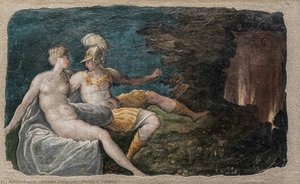
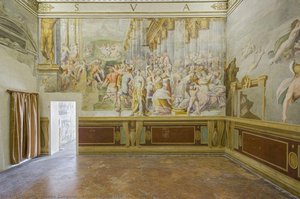
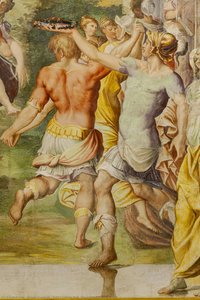
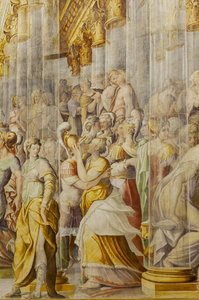
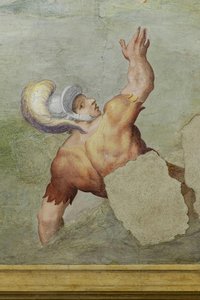
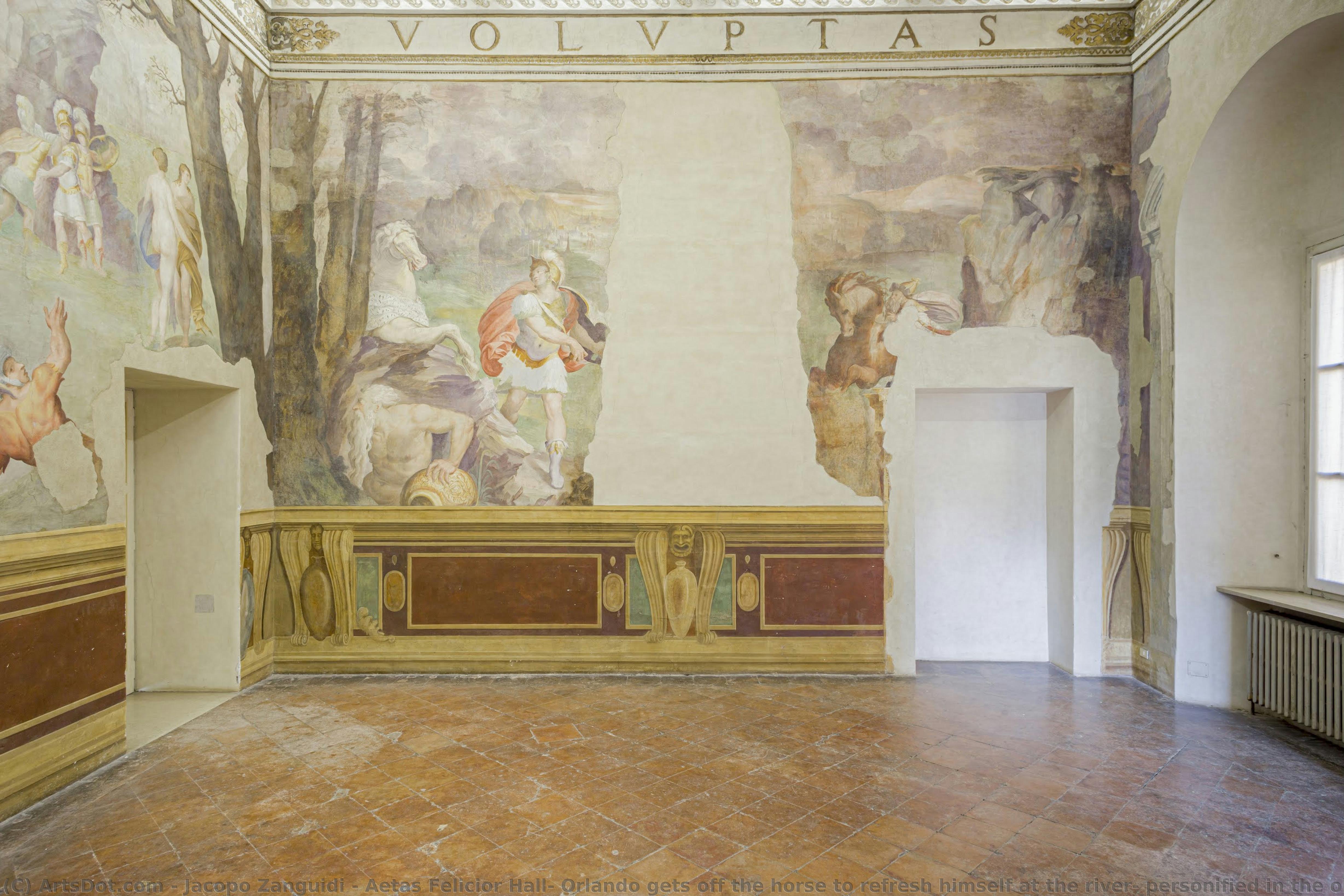
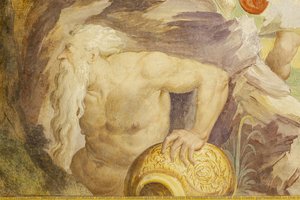
Aetas Felicior Hall: Orlando gets off the horse to refresh himself at the river, personified in the old man


 Read More
Hand Made Oil Reproduction
Hand-painted oil on canvas in your size and frame, made to order by our artists. ( Buy Print Buy Image)




































Pick from our preset sizes that match the artwork's original proportions.

You may enter your own dimensions to fit a specific frame or space. If your selected size does not match the original image's proportions, we will either crop the artwork or extend the painting with additional hand-painted elements. A digital mockup will be sent for your approval before production begins.
Please note that the on-screen preview does not reflect the actual cropping or extension. Only the mockup will accurately show the final composition.
While custom sizes are available, we recommend selecting a dimension from the predefined list to preserve the original proportions.
After order, ArtsDot.com team will email client for instructions and provide a mockup preview
Worldwide Delivery () in 3/4 weeks instead of standard 5 weeks. (2 September). No compromise on quality.

Free Worldwide Express Shipping

High-Quality Linen Canvas

Full Shipping Insurance

Customs Tax Refund Guarantee

True Color Matching Guarantee

60-Day Return Policy (Defects Only)

100% Money-Back Guarantee

Bulk Discount Offer
 Glass option is only available in size under 110 CM

Aetas Felicior Hall: Orlando gets off the horse to refresh himself at the river, personified in the old man
Reproduction Medium
Reproduction Size
-


Total Price
$ 263
A Moment of Serenity Amidst Legend
In the grand tapestry of the Parma Renaissance, few works capture the delicate intersection of heroic myth and quiet introspection as beautifully as Jacopo Zanguidi’s fresco, Aetas Felicior Hall: Orlando gets off the horse to refresh himself at the river, personified in the old man. This masterful composition invites the viewer into a narrative moment that feels both monumental and deeply intimate. As the legendary Orlando dismounts his steed to seek respite by the water's edge, the painting transcends mere storytelling; it becomes a meditation on the necessity of pause within the relentless pursuit of glory. The scene is bathed in a soft, natural light that pours through an imagined window, illuminating the textures of the landscape and the weary grace of the figures, creating an atmosphere of profound peace that lingers long after the first glance.
The technique employed by Zanguidi, often known as il Bertoja, showcases the sophisticated mastery characteristic of the School of Parma. Through his skilled use of fresco, he achieves a sense of depth and volume that breathes life into the muscularity of the figures and the fluid movement of the river. The artist utilizes a subtle interplay of light and shadow to define the physical presence of Orlando and the personification of time, the elderly man. This mastery of chiaroscuro does more than just create realism; it directs the emotional gaze of the observer toward the symbolic weight of the scene. The brushwork, though part of a larger architectural scheme, possesses a rhythmic vitality that guides the eye from the central action to the peripheral figures, ensuring a cohesive and immersive experience for anyone standing before this Northern Wall masterpiece.
Symbolism and the Weight of Time
Beyond its surface beauty, the artwork is rich with allegorical significance, making it a profound choice for collectors who value intellectual depth in their decor. The presence of the old man, personifying the river or perhaps the inexorable passage of time, serves as a poignant counterpoint to Orlando’s youthful vigor and martial legend. This juxtaposition explores the cyclical nature of life—the strength of the hero meeting the wisdom and stillness of age. For an interior designer, this piece offers more than just a visual focal point; it provides a conversational anchor that speaks to themes of endurance, reflection, and the fleeting beauty of a well-earned rest. It is a work that invites contemplation, turning a room into a sanctuary for thought.
Integrating a high-quality reproduction of this fresco into a contemporary or classical space allows for the infusion of historical grandeur and Renaissance splendor. Whether placed in a sunlit library or a sophisticated dining hall, the painting’s ability to evoke a sense of "Aetas Felicior"—a more fortunate age—can transform the emotional resonance of an environment. It serves as a reminder of a time when art was used not just to decorate, but to elevate the human spirit and connect the viewer to the eternal rhythms of history and myth.
Related Artworks

Artist Biography
Jacopo Zangiardi: A Paragon of Parma’s Renaissance Splendor
Jacopo Zangiardi, also known as il Bertoja (1544 – ca. 1578), stands as a cornerstone figure within the vibrant School of Parma—a regional manifestation of Italian Renaissance art that flourished in Emilia-Romagna during the mid-sixteenth century. Born in Parma, Italy, Zangiardi’s artistic journey coincided with an era defined by humanist ideals and breathtaking architectural innovation, shaping his oeuvre into a testament to both stylistic refinement and profound spiritual contemplation. While biographical details remain somewhat sparse—primarily gleaned from archival records—his legacy endures through the monumental frescoes adorning churches and palaces across Parma and beyond, cementing his place as one of the most celebrated painters of his time.- Early Life & Training: Precise information regarding Zangiardi’s formative years is elusive. However, he was apprenticed to Giovanni Battista Dolce in Parma, absorbing the stylistic precepts of Dolce’s workshop—characterized by a meticulous attention to detail and an embrace of classical influences. This training undoubtedly instilled within him a foundational understanding of disegno (drawing) and perspectiva (linear perspective), crucial elements for achieving artistic mastery.
- The School of Parma: Zangiardi's association with Dolce propelled him into the orbit of Parmigianino, Andrea Cerri, and Battista Brustoloncelli—artists who collectively championed a distinctive aesthetic that diverged subtly from Florence’s dominant Mannerist style. Unlike the exaggerated poses and distorted proportions favored by Florentine painters like Bronzino, Parma’s School prioritized clarity of form and harmonious color palettes, reflecting the humanist desire for rational beauty.
- Notable Frescoes & Artistic Style: Zangiardi achieved renown primarily through his monumental frescoes—particularly ‘Aetas Felicior Hall,’ commissioned for the Crystal Palace in London during the Great Exhibition of 1851. This ambitious project showcased Zangiardi’s unparalleled skill in illusionistic painting, employing masterful techniques to create immersive landscapes and architectural vistas that captivated audiences worldwide. His style is marked by a serene elegance, imbued with luminous colors and delicately rendered drapery—a hallmark of Parma’s artistic tradition.
Key Achievements & Artistic Influences
Zangiardi's artistic vision was profoundly shaped by the humanist spirit of his era, mirroring the intellectual currents that propelled advancements in science and philosophy. He drew inspiration from classical sculpture and architecture, incorporating idealized forms and harmonious compositions into his paintings. Furthermore, Zangiardi’s work demonstrates a notable sensitivity to Venetian painting—particularly Tintoretto's dramatic chiaroscuro—though he tempered Venetian exuberance with Parma’s characteristic restraint. The influence of Andrea Cerri is evident in Zangiardi’s meticulous attention to detail and compositional balance.Legacy & Historical Significance
Jacopo Zangiardi’s contribution to the artistic landscape of the sixteenth century transcends mere stylistic innovation; he embodies the humanist ideals that underpinned Renaissance culture. His frescoes—particularly ‘Aetas Felicior Hall,’ stand as enduring symbols of Parma’s grandeur and artistic prowess, captivating viewers centuries later with their breathtaking beauty and technical virtuosity. As a representative of the School of Parma, Zangiardi helped to establish a distinct regional aesthetic—one characterized by clarity, harmony, and luminous color—leaving an indelible mark on Italian Renaissance art history. His enduring fame testifies to the power of artistic excellence to transcend temporal boundaries and inspire admiration across generations.Further Exploration
For deeper insights into Jacopo Zangiardi’s life and work, consult resources such as Wikipedia (
jacopo zanguidi
1544 - 1578 , Italy
Quick Facts
- Artistic Movement Or Style: Parmese School Renaissance
- Artists Or Movements Influenced By This Artist: ['Jacopo Bassano']
- Date Of Birth: 1544 Parma Italy
- Date Of Death: ca. 1578 Parma Italy
- Full Name: Jacopo Zangiardi
- Nationality: Italian
- Notable Artworks: ['Aetas Felicior Hall']
- Place Of Birth: Parma Italy
Related Articles

Jacopo Tintoretto's Masterpieces: 25 Paintings That Define Venetian Drama | ArtsDot
Explore 25 breathtaking masterpieces by Jacopo Tintoretto, the Venetian master of drama and light. Discover the stories behind iconic Renaissance paintings & find museum-quality art reproductions to elevate your home decor on ArtsDot.com.

The Fresco as Family Legacy: Preserving Heritage Through Wall Art
Explore the rich history & enduring legacy of fresco painting. Discover how to preserve family heritage through stunning wall art. Expert insights & restoration guidance.

The Enduring Legacy of Fresco Painting: Techniques, History & Contemporary Relevance
Explore the rich history & enduring artistry of fresco painting – from Giotto to Michelangelo! Discover techniques, conservation efforts, & modern applications. Learn how ArtsDot brings this timeless art form to your home.

The Enduring Legacy of Fresco: Technique, History & Artistic Expression Across Cultures
Explore the rich history & enduring legacy of fresco painting! Discover ancient techniques, Giotto's masterpieces, and modern applications. Expert insights for art lovers & professionals.

Art That Lives With You: The Emotional Power of a Custom Interior Fresco
Discover the emotional power & timeless beauty of custom interior frescoes. Explore history, design tips & expert guidance from – creating lasting legacies.