 Preview
 Send
Send Share
Share
 Details

 Download
 Similars
 X-Ray
X-Ray Diaporama
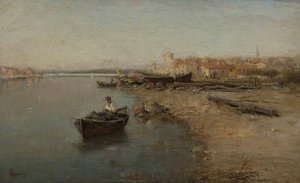
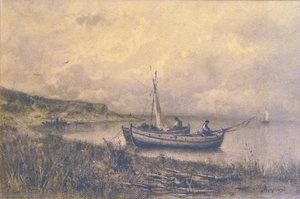
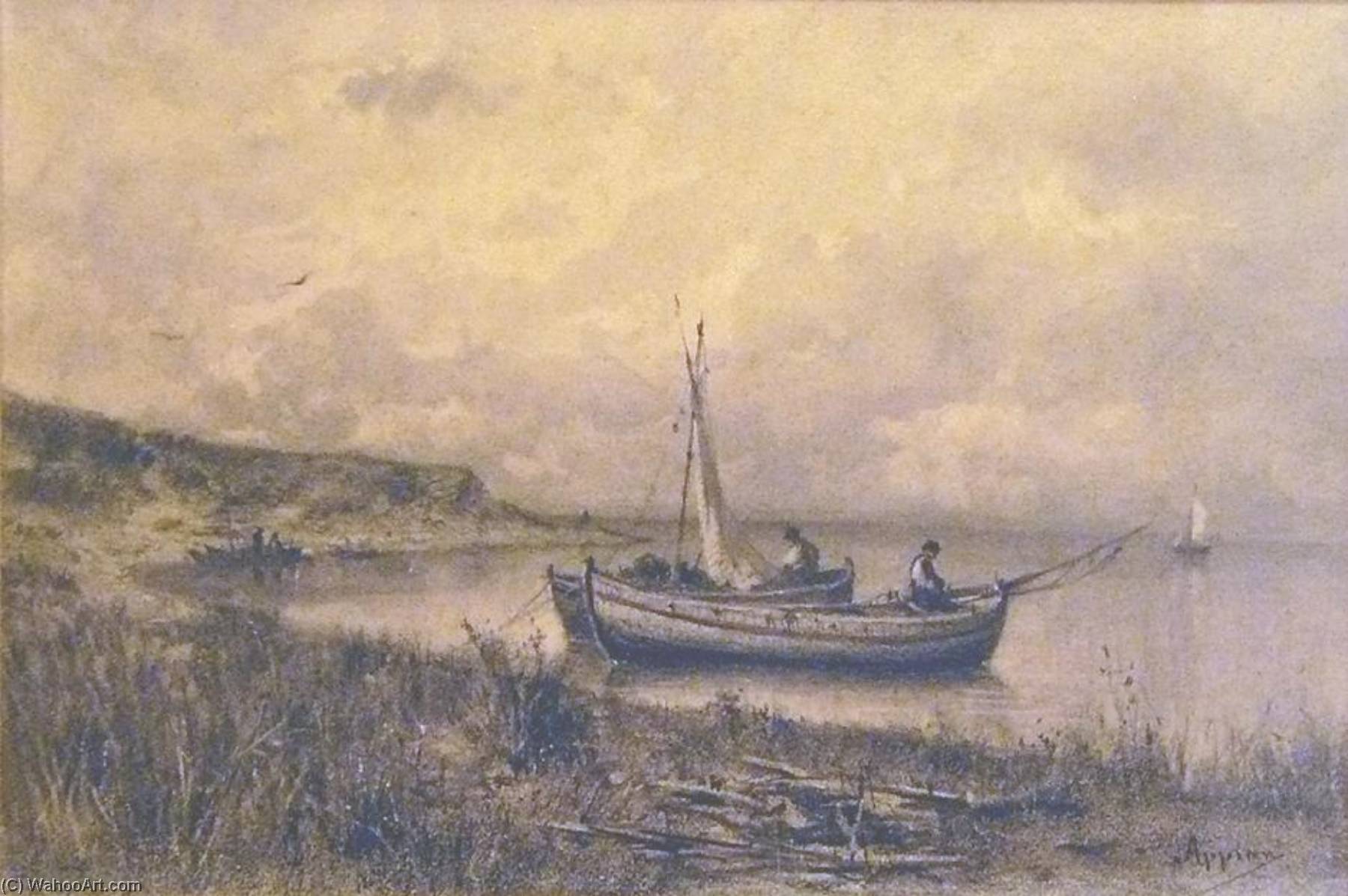
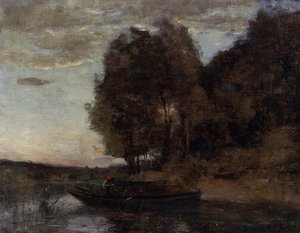
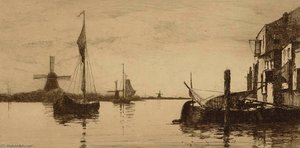
Landscape with small boats and fishermen
 Realism
 34.0 x 50.0 cm
 Read More
Giclée / Art Print
Museum-quality giclée or canvas print with fast production and flexible finish options. ( Buy Hand Made Painting Buy Image)




































Pick from our preset sizes that match the artwork's original proportions.

You may enter your own dimensions to fit a specific frame or space. If your selected size does not match the original image's proportions, we will either crop the artwork or extend the image with a mirrored or solid-fill edge. A digital mockup will be sent for your approval before production begins.
Please note that the on-screen preview does not reflect the actual cropping or extension. Only the mockup will accurately show the final composition.
While custom sizes are available, we recommend selecting a dimension from the predefined list to preserve the original proportions.
Worldwide Delivery () in 2 weeks instead of standard 4/5 weeks. (26 August)

Free Worldwide Express Shipping

High-Quality Linen Canvas

Full Shipping Insurance

Customs Tax Refund Guarantee

True Color Matching Guarantee

60-Day Return Policy (Defects Only)

100% Money-Back Guarantee

Bulk Discount Offer
 Glass option is only available in size under 110 CM

Landscape with small boats and fishermen
Giclée / Art Print
Reproduction Size
-


Total Price
$ 63
Related Artworks
Artist Biography
The Soul of the French Landscape: The Life and Art of Jacques Barthélemy Appian
In the quiet, sun-drenched corners of the nineteenth-century French countryside, there existed a painter capable of capturing not just the light, but the very breath of the land. Jacques Barthély Appian, often known by his later name Adolphe Appian, was a master of atmosphere whose work bridged the gap between the disciplined traditions of the Beaux-Arts and the emotive depths of Symbolism. Born in Lyon in 1818, his early life was shaped by the vibrant artistic energy of his home city. Though he initially turned his gaze toward architecture, the call of the canvas proved irresistible. His journey led him from the specialized art schools of Lyon to the prestigious École Supérieure des Beaux-Arts in Paris, where he refined a technique that would eventually allow him to translate the ephemeral qualities of nature into enduring works of art.
Appian’s artistic evolution was a profound dialogue with the changing tides of French art. In his early years, his palette was often monochromatic and subdued, focusing on the atmospheric subtleties of the Rhone riverside and the southern reaches of France. This period of his work reflected a deep engagement with the Barbizon school, emphasizing a quiet, observational realism. However, as his career matured, Appian underwent a remarkable stylistic transformation. By 1870, he began to embrace brilliant, striking colors, moving away from the somber tones of his youth toward a more vibrant and luminous expression. This shift allowed him to explore the Symbolist movement's fascination with subjective experience, using light and color not merely to replicate reality, but to evoke psychological states and dreamlike landscapes.
Mastery of Line and Light
To study an Appian work is to witness a masterclass in technical versatility. He was as much a virtuoso of the etching needle as he was of the paintbrush. His etchings, such as the celebrated Les Source de l’Albarine, demonstrate an incredible command of cross-hatching and delicate line work, creating textures that feel almost tactile to the viewer. This precision extended to his use of charcoal and powder, where he achieved a sense of ethereal light that seemed to glow from within the paper itself. His ability to manipulate medium allowed him to capture the following elements with unparalleled grace:
- Atmospheric Depth: The way mist clings to a riverbank or how sunlight filters through a canopy of trees.
- Serenity and Solitude: A recurring theme in his depictions of fishermen and lonely boats, evoking a sense of peaceful isolation.
- Symbolic Resonance: Using the natural world—a quiet pond, a fruit tree, or a winding stream—to represent deeper, more contemplative emotional truths.
His influence was not confined to the borders of France; his skill as an etcher left a distinct mark on international artists, including the American painter Stephen Parrish. This cross-continental impact underscores the universal appeal of his vision—a vision that found beauty in the stillness of a moment.
A Legacy of Tranquility
The historical significance of Jacques Barthélemy Appian lies in his ability to harmonize the competing impulses of his era: the rigorous observation of the Realists and the emotive, inward-looking spirit of the Symbolists. He did not merely document the Provençal countryside; he imbued it with a sense of myth and memory. His works, such as Fisherman in a Boat at the Edge of a River, serve as nostalgic windows into a nineteenth-century world that felt both grounded in the earth and touched by the divine. Even as the art world moved toward the fractured perspectives of Modernism, Appian’s dedication to the beauty of the natural landscape remained a steadfast anchor for those seeking solace in art.
By the time of his death in Lyon in 1898, Appian had secured his place as a painter of profound tranquility. His legacy survives in the museums of the world, where his landscapes continue to invite viewers into a realm of quiet reflection, reminding us that there is a deep, symbolic language written in the light and shadows of the natural world.
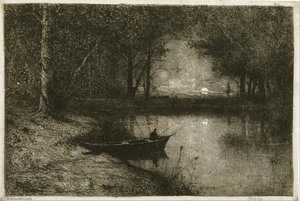
jacques barthélemy appian
1819 - 1898
Quick Facts
- Artistic Movement Or Style: Symbolism
- Artists Or Movements Influenced By This Artist:
- Symbolism
- Romanticism
- Impressionism
- Artists Who Influenced This Artist:
- Jean Louis André Théodore Géricault
- Eugène Delacroix
- Charles Émile Jacque
- Camille Pissarro
- Henri de Toulouse-Lautrec
- Joseph Felon
- Charles Meryon
- Date Of Birth: 1818
- Date Of Death: 1898
- Full Name: Jacques Barthélemy Appian
- Nationality: French
- Notable Artworks:
- Les Source de l’Albarine
- Fisherman in a Boat at the Edge of a River
- Landscape with small boats and fishermen
- Saint-Barthélemy
- Adolphe Appian. French 1818-1898 Les Sources e l’Albarine / The ...
- Tiger Ready to Spring
- Yvette Guilbert
- Tourelle de la rue de la Tixeranderie.
- A Cliff in the Parish of Rix
- Landscape with small boats and fishermen
- Place Of Birth: Lyon, France
Related Articles
Watercolor Wonders: 10 Masterpieces That Redefined Art History | ArtsDot
Journey through 10 legendary watercolor masterpieces by Sargent, Turner & Homer! Explore iconic landscapes, portraits & floral art that redefined history. Find museum-quality reproductions and curated decor ideas at ArtsDot.com.
Ephemeral Visions: Exploring the Artistic Legacy & Contemporary Practice of Watercolor Painting
Explore the captivating world of watercolor painting! Discover its rich history, essential techniques, influential artists & collecting tips. A comprehensive guide for art enthusiasts from ArtsDot.
Ephemeral Visions: Exploring the Artistic Legacy & Nuances of Watercolor Painting
Explore the captivating world of watercolor painting! Discover its rich history, essential techniques, influential artists & collecting tips from art experts. A comprehensive guide for enthusiasts.
Ephemeral Visions: Exploring the History & Emotional Resonance of Watercolor Painting
Explore the captivating history of watercolor painting, from ancient techniques to modern masters like Kandinsky & Blake. Discover essential artists, collecting tips & the emotional power of this luminous medium. Expert insights for art enthusiasts.
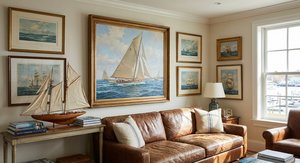
Boats on Canvas: 10 Masterpieces of Maritime Art for Your Home Decor
Sail away with 10 iconic boat paintings! Explore masterpieces by Monet, Van Gogh & Turner. Discover the stories behind these timeless seascapes and find museum-quality art reproductions for your home decor at ArtsDot.com.