 Preview
 Send
Send Share
Share
 Details

 Download
 Similars
 X-Ray
X-Ray Diaporama
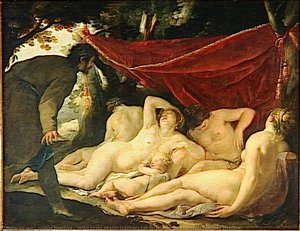
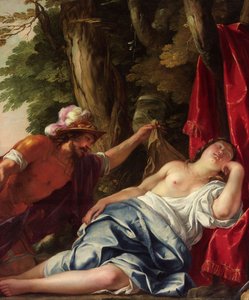
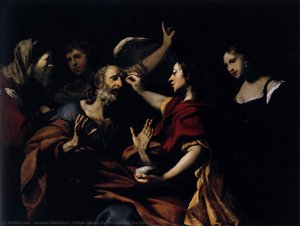
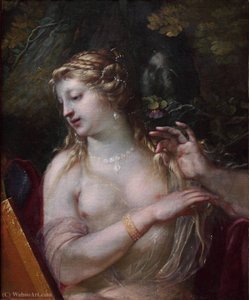
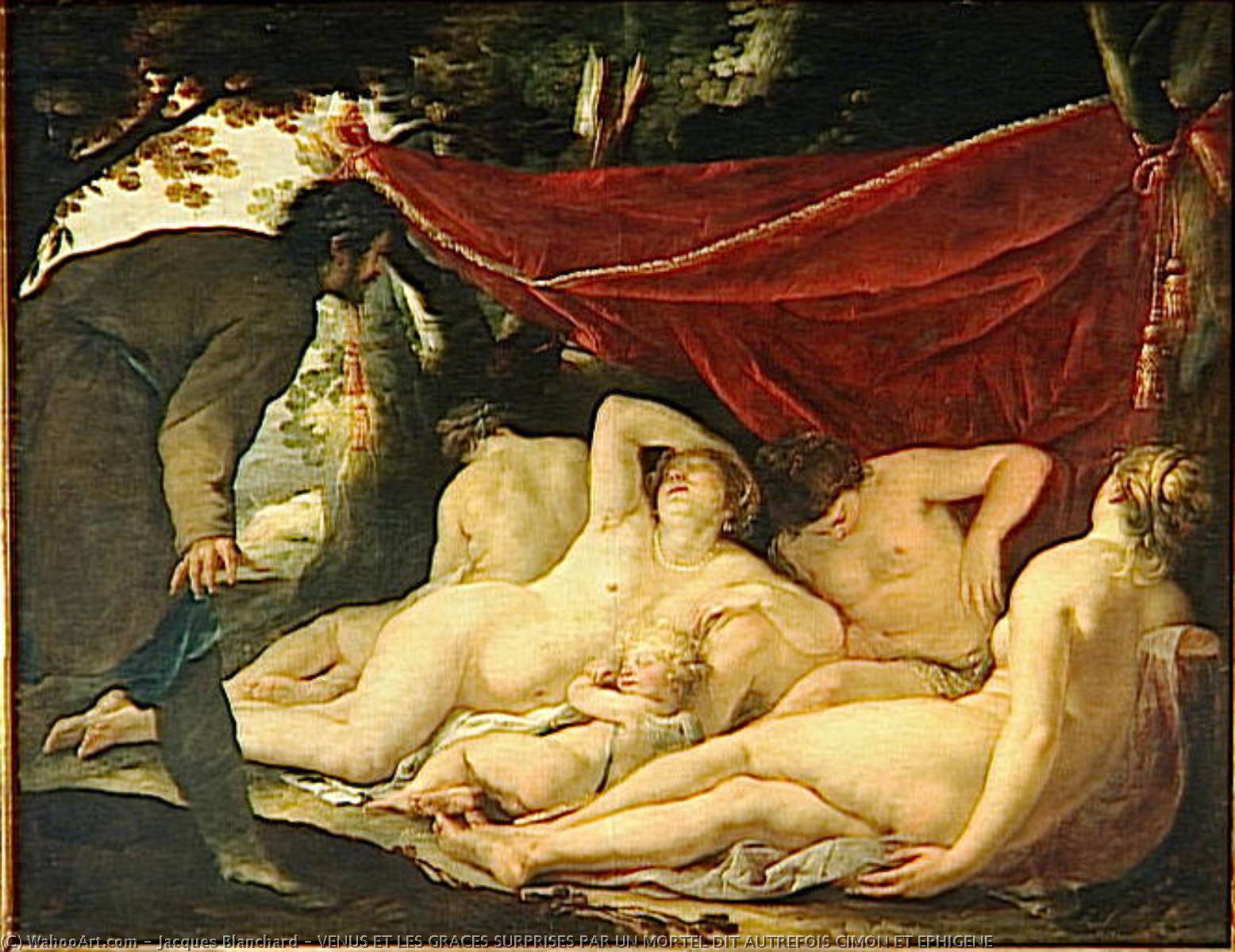
VENUS ET LES GRACES SURPRISES PAR UN MORTEL DIT AUTREFOIS CIMON ET EPHIGENE


 Read More
Hand Made Oil Reproduction
Hand-painted oil on canvas in your size and frame, made to order by our artists. ( Buy Print Buy Image)




P118B $10

P118H $10

P118W $10

P438Z $10

P508JH $12

P508YH $12

P805H $10

P805Z $10

P919BZ $10

P919G $10

P919XJ $10

P959ZH $10

P968JZ $12

W106C $8

W218G $10

W218JH $8

W218Y $10

W307PJ $10

W316G $10

W316PJ $8

W316Y $10

W398PJ $8

W4111J $10

W500HY $15

W500JH $15

W692G $12

W849H $8

W940BG $15

W953PJ $8




Pick from our preset sizes that match the artwork's original proportions.

You may enter your own dimensions to fit a specific frame or space. If your selected size does not match the original image's proportions, we will either crop the artwork or extend the painting with additional hand-painted elements. A digital mockup will be sent for your approval before production begins.
Please note that the on-screen preview does not reflect the actual cropping or extension. Only the mockup will accurately show the final composition.
While custom sizes are available, we recommend selecting a dimension from the predefined list to preserve the original proportions.
After order, ArtsDot.com team will email client for instructions and provide a mockup preview
Worldwide Delivery () in 3/4 weeks instead of standard 5 weeks. (23 August). No compromise on quality.

Free Worldwide Express Shipping

High-Quality Linen Canvas

Full Shipping Insurance

Customs Tax Refund Guarantee

True Color Matching Guarantee

60-Day Return Policy (Defects Only)

100% Money-Back Guarantee

Bulk Discount Offer
 Glass option is only available in size under 110 CM

VENUS ET LES GRACES SURPRISES PAR UN MORTEL DIT AUTREFOIS CIMON ET EPHIGENE
Reproduction Medium
Reproduction Size
-


Total Price
$ 263
Artwork Description
A Baroque Reverie: Jacques Blanchard’s “Venus and the Three Graces Surprised by a Mortal”
Jacques Blanchard, born in Paris around 1600, stands as a beacon of artistic fervor within the vibrant tapestry of seventeenth-century French painting. His lineage traces back to a family deeply entrenched in artistic pursuits; his brother Jean-Baptiste Blanchard and son Gabriel Blanchard continued the familial tradition, cementing Blanchard’s legacy as a prolific painter. Early training unfolded under Nicolas Baullery, fostering a foundational understanding of classical techniques – knowledge that proved invaluable as Blanchard embarked on his own distinctive creative journey. By 1618, he ventured to Lyon, joining Horace le Blanc's studio where his burgeoning talent swiftly gained recognition. He skillfully resurrected unfinished works by Le Blanc, notably “Virgin and Child with a Bishop and a Woman,” demonstrating an adeptness for reviving artistic visions.- Subject Matter: Blanchard’s masterpiece depicts a captivating mythological scene – Venus, the goddess of love, reclining gracefully on a couch alongside her attendants, the Graces. They are confronted by Cimon, a mortal figure embodying admiration and desire.
- Style & Technique: Executed in oil paint on canvas, the artwork exemplifies Baroque artistry. Blanchard’s masterful use of chiaroscuro—the dramatic interplay of light and shadow—creates an atmosphere of opulent grandeur and emotional intensity. The meticulous attention to detail in drapery, facial expressions, and the surrounding foliage underscores the artist's commitment to realism within a stylized framework.
- Historical Context: Created during Blanchard’s formative years (approximately 1629), “Venus and the Three Graces Surprised by a Mortal” reflects the prevailing artistic sensibilities of its time—a period marked by grandeur, religious fervor, and an obsession with idealized beauty. It aligns perfectly with the Baroque aesthetic's penchant for theatrical compositions and emotive storytelling.
A Luxurious Reproduction
A high-quality reproduction of Blanchard’s “Venus and the Three Graces Surprised by a Mortal” offers an exceptional opportunity to bring this Baroque masterpiece into your home or studio. ArtsDot presents meticulously crafted reproductions that faithfully capture the artwork's luminosity, texture, and emotional depth—allowing you to experience its timeless allure firsthand. Explore our collection today!Related Artworks
Artist Biography
A Life Immersed in Baroque Splendor
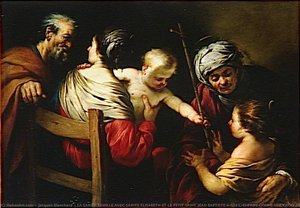
Jacques Blanchard, a name resonating with the elegance and sensuality of 17th-century French painting, emerged from an artistic lineage in Paris around 1600. Though biographical details surrounding his early years remain somewhat elusive, we know he was nurtured within a family deeply rooted in the arts; his brother, Jean-Baptiste Blanchard, and son, Gabriel Blanchard, both followed the painter’s path, ensuring a continuing legacy of creativity. His initial training unfolded under the watchful eye of his maternal uncle, Nicolas Baullery, a Parisian artist who instilled in him a solid foundation in classical techniques – a grounding that would prove crucial as Blanchard embarked on his own artistic journey. By 1618, he had ventured to Lyon, joining the studio of Horace le Blanc, where his burgeoning talent quickly became apparent. He soon took over unfinished works left by Le Blanc, including the compelling “Virgin and Child with a Bishop and a Woman Holding a Baby,” signaling an early promise that foreshadowed his future success.The Italian Awakening: Venice and its Influence
A pivotal chapter in Blanchard’s artistic development unfolded with his travels to Italy in 1624, accompanied by his brother Jean. Rome offered immersion into the vibrant artistic milieu of the time, bringing him into contact with prominent figures like Simon Vouet, Jacques Stella, Claude Mellan, and Nicolas Poussin. However, it was Venice that truly captivated Blanchard’s imagination and irrevocably shaped his style. For two years, he absorbed the city's unique atmosphere, studying the masterpieces of Titian, Tintoretto, and, most profoundly, Veronese. This Venetian sojourn proved transformative; Blanchard masterfully adopted Veronese’s signature silvery blond palette and his masterful use of limpid light, infusing these elements into his own religious and mythological subjects. Accounts suggest he was particularly drawn to scenes from Ovid's *Metamorphoses* during this period, creating works like “The Loves of Venus and Adonis” for Charles-Emanuel I, Duke of Savoy in Turin – a testament to his growing skill and the influence of classical narratives.Return to France and Artistic Flourishing
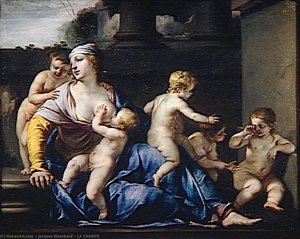
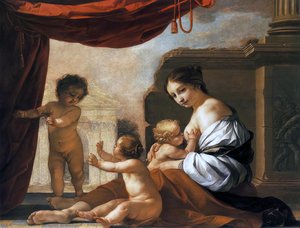
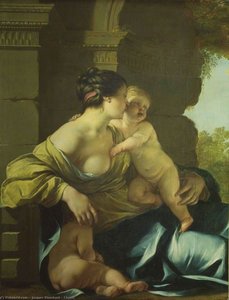
Returning to France in 1629, Blanchard swiftly established himself as a leading figure in French painting during the 1630s. His work distinguished itself through its sensual subject matter and unique stylistic blend. One of his earliest dated works upon his return, “The Virgin with the Christ Child Giving the Keys to St Peter” (1629) at Albi Cathedral, showcased a fascinating interplay of influences – Bolognese precision in facial details harmonizing with his newly acquired Venetian sensibility. Between 1631 and 1632, he undertook an ambitious project: the decoration of the Hôtel le Barbier, comprising fourteen mythological and literary compositions. Sadly, these works no longer survive, but contemporary accounts attest to their grandeur and complexity. Blanchard is particularly remembered for his various versions of “Charity,” depicting a tender scene of a young woman with children, demonstrating his delicate color handling and emotional depth. His “Bacchanal at Nancy” exemplifies his exploration of sensual themes, revealing a boldness that set him apart from many of his contemporaries.Legacy: The "Titian of France"
Jacques Blanchard’s contributions to French Baroque painting are undeniably significant. He skillfully navigated the artistic currents of his time, balancing influences from Bolognese classicism and Venetian colorism to forge a distinctive style that was uniquely his own. Charles Perrault famously dubbed him the “Titian of France,” a testament to his mastery of color, light, and composition – an honor reflecting the profound impact of Venetian painting on his artistic vision. André Félibien further lauded Blanchard for reintroducing *le bon goût* (good taste) into French art, acknowledging his role in elevating the aesthetic standards of the era. His sensitivity to subject matter—often leaning towards the sensual and mythological—established him as a key figure in the development of 17th-century French painting, leaving behind a legacy that continues to captivate and inspire. His works remain compelling examples of Baroque artistry, blending technical skill with emotional resonance.Key Influences & Characteristics
- Key Influences: Titian, Tintoretto, Veronese
- Distinctive Style: A harmonious blend of Bolognese precision and Venetian colorism.
- Recurring Themes: Religious narratives, mythological scenes, sensual subjects, depictions of Charity.
- Notable Characteristics: Silvery blond palette, limpid light, delicate color handling, emotional depth, and a subtle sensuality.
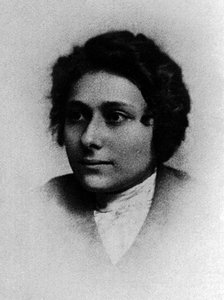
Jacques Blanchard
1600 - 1638 , France
Quick Facts
- Artistic Movement Or Style: Baroque painting
- Artists Who Influenced This Artist:
- Titian
- Tintoretto
- Veronese
- Date Of Birth: 1600
- Date Of Death: 1638
- Full Name: Jacques Blanchard
- Nationality: French
- Notable Artworks:
- St Sebastian
- St Cecilia
- Charity
- Bacchanal at Nancy
- Place Of Birth: Paris, France
Related Articles
Baroque Classicism: Reconciling Drama & Order in 17th-Century Art
Explore the captivating world of Baroque Classicism! Discover its history, key artists like Caravaggio & Rubens, and defining characteristics. Expert insights & high-quality reproductions at ArtsDot.
Neo-Classicism's Greatest Hits: 10 Masterpieces for Your Home |
Journey through Neo-Classicism's finest! Explore 10 iconic masterpieces by David, Ingres & Canova. Discover art history, techniques & timeless beauty – perfect for inspiring your home decor. Find museum-quality reproductions at
Guido Reni: A Study in Baroque Classicism & Artistic Perfection
Explore the life & work of Guido Reni, a master of Baroque classicism. Discover his iconic religious & mythological paintings, and understand his enduring influence on art history. Expert analysis for collectors.
Echoes of Olympus: Mythological Narratives in Western Art Through the Ages
Explore the captivating history of mythological narratives in Western art! From ancient Greece to modern masterpieces, discover iconic artworks & symbolism. Expert analysis and high-quality reproductions at ArtsDot.
Botticelli's Masterpieces: Explore 25 Iconic Renaissance Paintings | ArtsDot
Journey through Botticelli's world with 25 iconic Renaissance paintings. Explore 'Birth of Venus,' 'Primavera,' and more—stories, techniques & timeless beauty. Find museum-quality art reproductions for your home at ArtsDot.com.