 Preview
 Send
Send Share
Share
 Details

 Download
 Similars
 X-Ray
X-Ray Diaporama
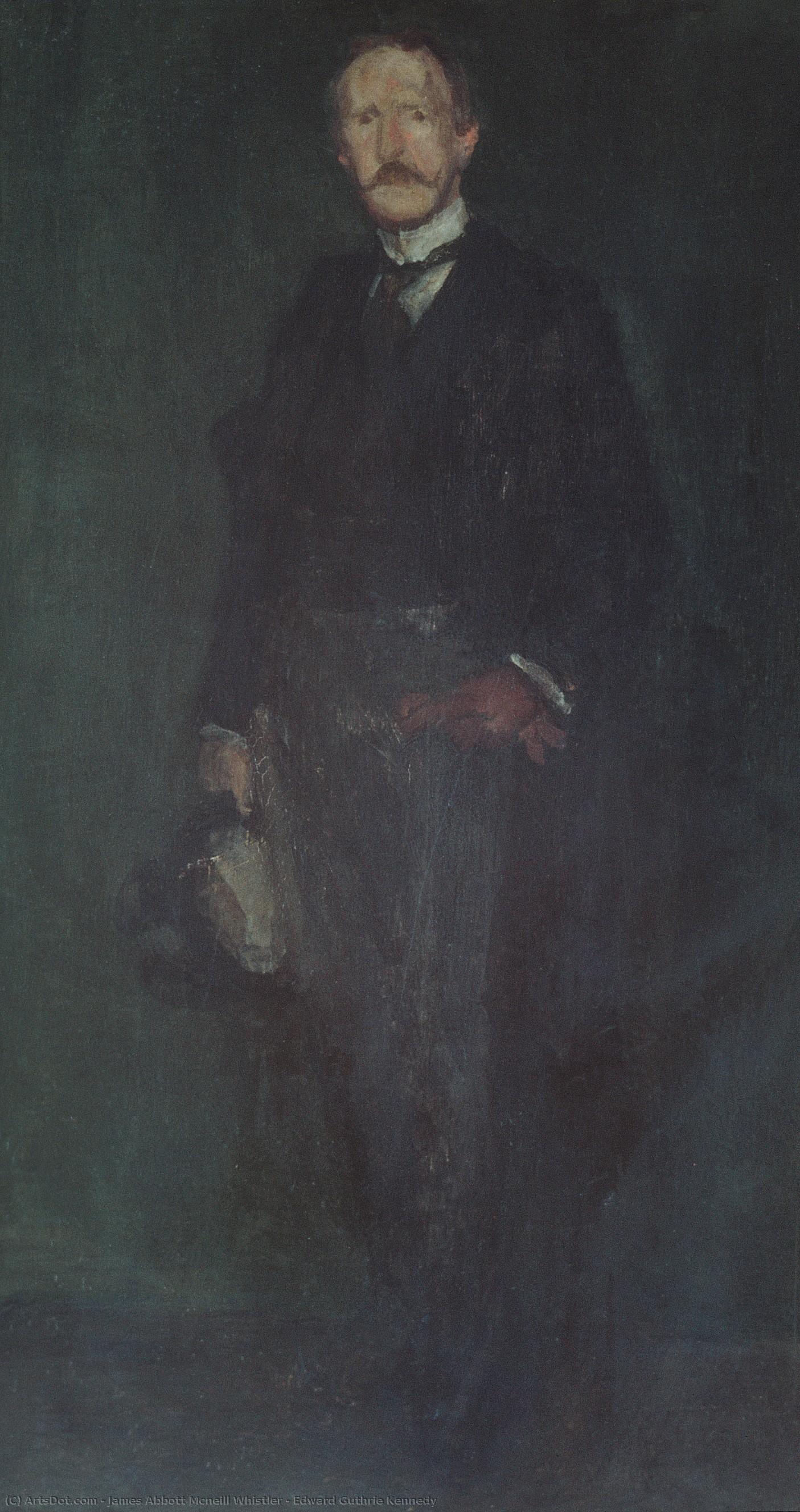
Edward Guthrie Kennedy
 Oil
Oil- WallArt
- Impressionism
 1893
1893- 19th Century
 29.0 x 18.0 cm
 Metropolitan Museum of Art
 Read More
Giclée / Art Print
Museum-quality giclée or canvas print with fast production and flexible finish options. ( Buy Hand Made Painting Buy Image)




P118B $10

P118H $10

P118W $10

P438Z $10

P508JH $12

P508YH $12

P805H $10

P805Z $10

P919BZ $10

P919G $10

P919XJ $10

P959ZH $10

P968JZ $12

W106C $8

W218G $10

W218JH $8

W218Y $10

W307PJ $10

W316G $10

W316PJ $8

W316Y $10

W398PJ $8

W4111J $10

W500HY $15

W500JH $15

W692G $12

W849H $8

W940BG $15

W953PJ $8




Pick from our preset sizes that match the artwork's original proportions.

You may enter your own dimensions to fit a specific frame or space. If your selected size does not match the original image's proportions, we will either crop the artwork or extend the image with a mirrored or solid-fill edge. A digital mockup will be sent for your approval before production begins.
Please note that the on-screen preview does not reflect the actual cropping or extension. Only the mockup will accurately show the final composition.
While custom sizes are available, we recommend selecting a dimension from the predefined list to preserve the original proportions.
Worldwide Delivery () in 2 weeks instead of standard 4/5 weeks. (16 August)

Free Worldwide Express Shipping

High-Quality Linen Canvas

Full Shipping Insurance

Customs Tax Refund Guarantee

True Color Matching Guarantee

60-Day Return Policy (Defects Only)

100% Money-Back Guarantee

Bulk Discount Offer
 Glass option is only available in size under 110 CM

Edward Guthrie Kennedy
Giclée / Art Print
Reproduction Size
-


Total Price
$ 63
Collectible Description
A Study in Somber Reflection
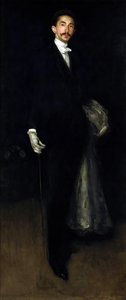
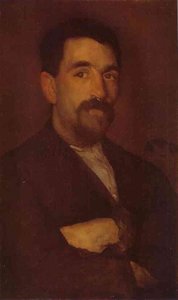
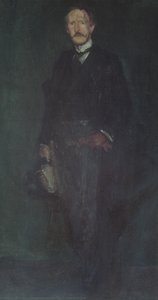
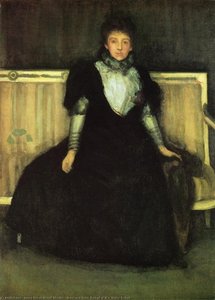
In the quiet intimacy of James Abbott McNeill Whistler’s 1893 masterpiece, Edward Guthrie Kennedy, we are invited into a world where silence speaks more eloquently than words. The portrait presents an elderly man, rendered with a profound and quiet dignity that commands the viewer's immediate attention. Through a strikingly vertical composition, Whistler strips away the distractions of the external world, eschewing elaborate settings to focus entirely on the human spirit. As darkness begins to envelop much of the background, Kennedy is effectively isolated, his presence intensified by the surrounding void. This deliberate use of shadow does more than just frame the subject; it creates a sanctuary for contemplation, drawing the observer into a shared moment of deep, perhaps even weary, introspection.The Alchemy of Shadow and Stroke
Whistler’s technical mastery is on full display through his delicate balance between realism and impressionism. The painting is not merely a likeness but a tactile experience, achieved through the thick, expressive application of oil paint. Visible brushstrokes dance across the canvas, creating a painterly texture that breathes life into the subject's weathered features. The color palette is masterfully restrained, dominated by a somber symphony of dark browns, blacks, and grays. Yet, within this monochromatic depth, Whistler strategically places hints of lighter tones upon Kennedy’s face and clothing. These subtle gradations of light act as beacons, preventing the figure from dissolving into the shadows and instead highlighting the nuanced textures of age and the soft, diffused glow that defines the atmosphere of the piece.The Soul of Aestheticism
Beyond its technical brilliance, this work stands as a testament to Whistler’s revolutionary philosophy of "art for art's sake." During an era when much of the art world was preoccupied with moralizing narratives and didactic storytelling, Whistler sought beauty in pure form, color harmony, and tonal relationship. In Edward Guthrie Kennedy, there is no overt message or social commentary; instead, there is only the evocative power of the paint itself. For the discerning collector or interior designer, this painting offers more than mere decoration; it provides an emotional anchor. Its melancholic mood and sophisticated aesthetic make it a profound addition to any space, offering a window into a period of history where the pursuit of pure, unadulterated beauty was the highest calling of the artist.Related Artworks
Artist Biography
A Life Shaped by Aestheticism: The World of James Abbott McNeill Whistler
James Abbott McNeill Whistler, born in Lowell, Massachusetts in 1834, was a figure perpetually at odds with convention—a painter who championed “art for art’s sake” during an era obsessed with moralizing narratives. His early life, marked by frequent relocations due to his father's railroad engineering career, instilled within him a sense of adaptability and exposure to diverse environments. A brief, unhappy stint at West Point proved ill-suited to his artistic temperament, followed by work with the U.S. Coast and Geodetic Survey that, while delaying, did not extinguish his burgeoning passion for art. These formative years were characterized by an innate talent for drawing and a resolute desire to forge a path as a professional artist, a pursuit that would ultimately lead him across the Atlantic and into the heart of the European avant-garde. The seeds of Whistler’s artistic rebellion were sown early, nurtured by a spirit that resisted conformity and embraced aesthetic exploration above all else.Parisian Beginnings and the Cultivation of Style
The pivotal moment in Whistler's artistic journey arrived with his move to Paris in 1855. Here, under the tutelage of Sébastien Bouré, he honed his skills in oil painting, watercolor, and printmaking, absorbing the influences of French Realism and the Barbizon School painters. However, Whistler quickly transcended mere imitation, developing a distinctive style characterized by tonal harmonies and atmospheric effects. He wasn’t interested in replicating reality; rather, he sought to capture its *essence*, its fleeting moods and subtle nuances. This period marked a crucial shift from representational accuracy towards an exploration of pure aesthetic form. His early works already hinted at the delicate balance between observation and abstraction that would define his mature style. It was in Paris that Whistler began to articulate his belief that art should be judged solely on its aesthetic qualities, free from didactic or moralizing constraints—a philosophy that would become the cornerstone of his artistic practice and a defining characteristic of the Aesthetic movement.Nocturnes, Portraits, and the Pursuit of Harmony
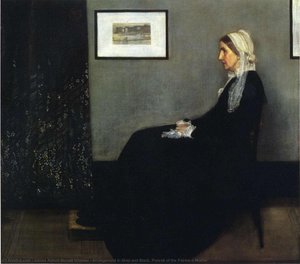
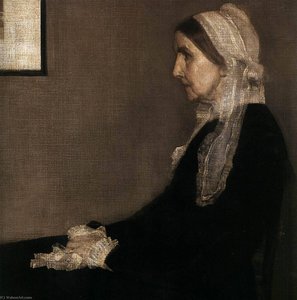
Whistler’s artistic vision crystallized in several key themes and stylistic choices. He championed the concept of “art for art’s sake,” rejecting narratives laden with moral or social commentary. His work became an exercise in capturing subtle nuances of light, color, and atmosphere—a pursuit that led to his iconic *Nocturnes*. These atmospheric paintings of twilight scenes, often depicting the Thames River at night, were not intended as literal depictions but rather as evocative impressions, studies in tonal harmony and mood. He frequently employed limited palettes and delicate brushwork, creating a sense of ethereal beauty and quiet contemplation. Portraits also occupied a central place in his practice, though he approached them with a unique sensibility. Whistler wasn’t concerned with capturing perfect likenesses; instead, he focused on formal arrangements and tonal relationships, treating his sitters as compositional elements within a carefully constructed aesthetic framework. Works like *Arrangement in Grey and Black No. 1*—better known as *Whistler's Mother*—demonstrate this approach perfectly, transforming a familial portrait into an iconic image of Victorian motherhood through its masterful use of form and tone.Controversy, Influence, and Lasting Legacy
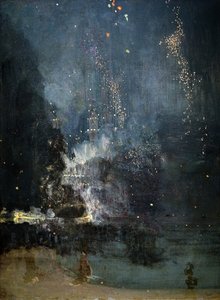
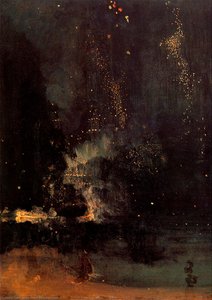
Whistler’s career was not without controversy. The infamous libel suit brought against him by the critic John Ruskin in 1878, sparked by *Nocturne in Black and Gold – The Falling Rocket*, became a landmark moment in art history. Whistler successfully defended his artistic autonomy, arguing that his paintings were not intended to be realistic representations but rather aesthetic arrangements of color and form. This case elevated his profile and ignited important debates about the nature of art criticism and artistic freedom. Beyond this legal battle, Whistler’s influence extended far and wide. He was deeply inspired by Japanese prints (ukiyo-e), which informed his compositional principles and emphasis on decorative patterns, as well as the tonal mastery of Spanish painters like Velázquez. His advocacy for “art for art’s sake” profoundly impacted the Aesthetic movement in England and America, paving the way for modernism and challenging conventional notions about artistic purpose. He left an indelible mark on American art, inspiring generations of artists to embrace formalist approaches and explore the expressive potential of color and composition.- Notable Works: *The Forge* (1861), *Portrait of Charles Lang Freer* (1873), *Brown and Gold: The Gold Girl—Connie Gilchrist* (1876-77), *Arrangement in Grey and Black No. 1 (Whistler’s Mother)* (1871), *Nocturne in Black and Gold – The Falling Rocket* (1875).
- Influences: Japanese prints, Velázquez.
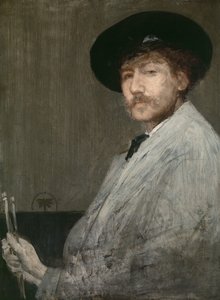
James Abbott McNeill Whistler
1834 - 1903 , United States of America
Quick Facts
- Artistic Movement Or Style: Tonalism, Aestheticism
- Artists Or Movements Influenced By This Artist:
- Aesthetic movement
- Modernism
- Artists Who Influenced This Artist:
- Velázquez
- Japanese prints
- Date Of Birth: July 14, 1834
- Date Of Death: 1903
- Full Name: James Abbott McNeill Whistler
- Nationality: American
- Notable Artworks:
- Whistler’s Mother
- Nocturne in Black & Gold
- The Forge
- Peacock Room
- Place Of Birth (City And Country): Lowell, USA
Related Articles
Whistler's Masterpieces: Explore 25 Iconic Paintings & Aesthetic Art for Your Home
Journey through 25 iconic James Abbott McNeill Whistler paintings! Explore his masterpieces of Aestheticism, from 'Nocturne in Black and Gold' to captivating portraits. Find museum-quality art reproductions & elevate your home decor with ArtsDot.com. Discover the full collection online.
Edward Hopper's Masterpieces: 25 Iconic Paintings & Their Enduring Legacy | ArtsDot
Explore 25 iconic Edward Hopper paintings & their stories. Discover American realism, urban loneliness, and timeless beauty through his masterpieces. Find museum-quality art reproductions & curated decor ideas at ArtsDot.com.

The Enduring Legacy of Oil on Canvas: Technique, History & Aesthetic Impact
Explore the rich history & techniques of oil painting – from Renaissance masters to Impressionism. Discover pigments, layering methods, and why this timeless medium endures. Expert insights for artists & art enthusiasts.

Oil on Canvas: A Historical & Technical Exploration of a Timeless Artistic Medium
Explore the rich history & enduring techniques of oil painting on canvas. Discover the science behind its longevity, conservation practices, and contemporary relevance. Expert insights for art enthusiasts.

The Enduring Power of Painting: A Historical & Contemporary Exploration of Form and Emotion
Explore the rich history & enduring techniques of oil painting with ArtsDot. Discover masterpieces, learn about art collecting, and find authentic handmade reproductions crafted by skilled artists.