 Preview
 Send
Send Share
Share
 Details

 Download
 Similars
 X-Ray
X-Ray Diaporama
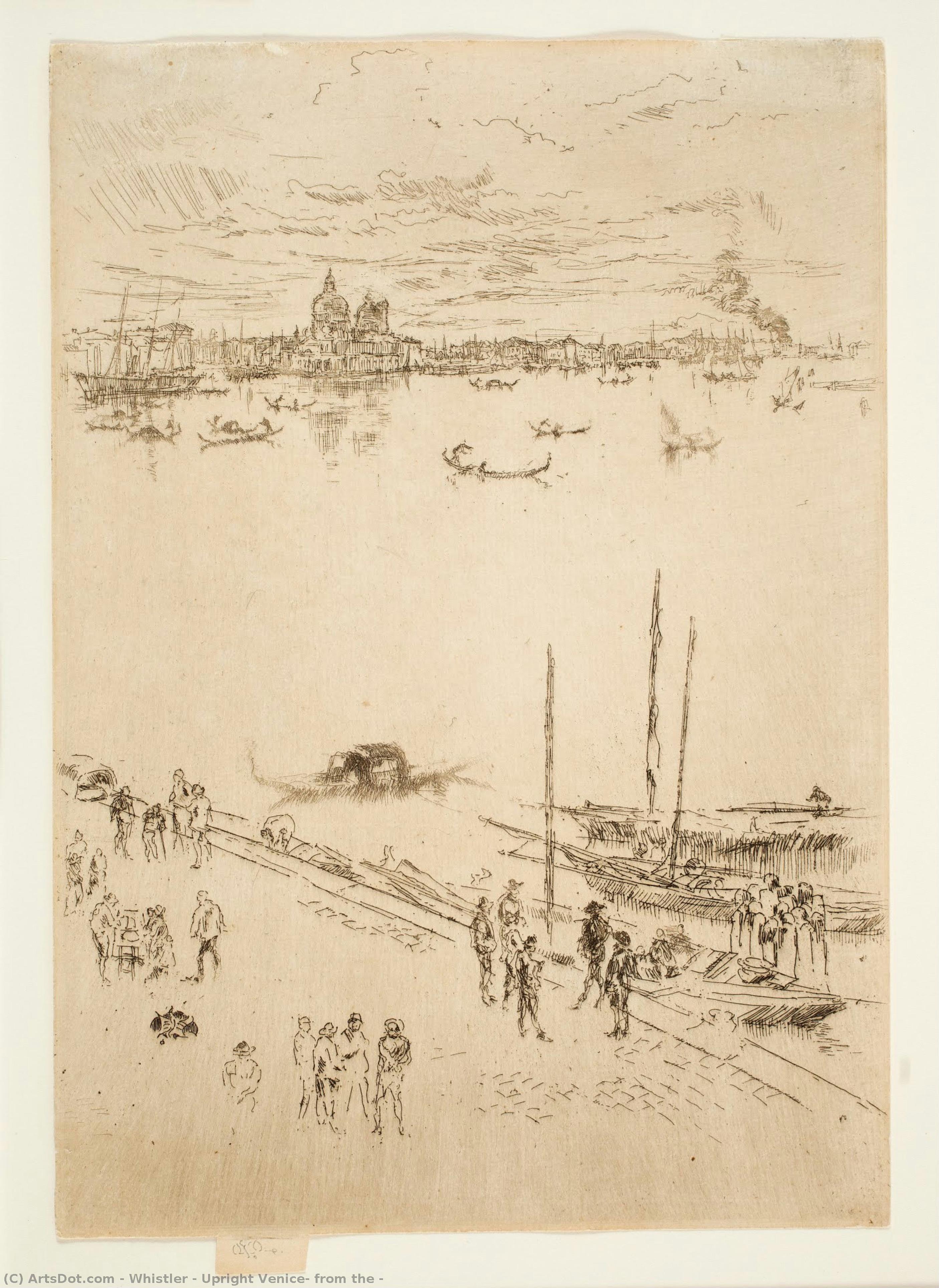
Upright Venice, from the
 Etching
- Aestheticism / Tonalism
 1880
1880- Late Medieval
 17.0 x 25.0 cm
 Zimmerli Art Museum at Rutgers University
 Read More
Giclée / Art Print
Museum-quality giclée or canvas print with fast production and flexible finish options. ( Buy Hand Made Painting Buy Image)




P118B $10

P118H $10

P118W $10

P438Z $10

P508JH $12

P508YH $12

P805H $10

P805Z $10

P919BZ $10

P919G $10

P919XJ $10

P959ZH $10

P968JZ $12

W106C $8

W218G $10

W218JH $8

W218Y $10

W307PJ $10

W316G $10

W316PJ $8

W316Y $10

W398PJ $8

W4111J $10

W500HY $15

W500JH $15

W692G $12

W849H $8

W940BG $15

W953PJ $8




Pick from our preset sizes that match the artwork's original proportions.

You may enter your own dimensions to fit a specific frame or space. If your selected size does not match the original image's proportions, we will either crop the artwork or extend the image with a mirrored or solid-fill edge. A digital mockup will be sent for your approval before production begins.
Please note that the on-screen preview does not reflect the actual cropping or extension. Only the mockup will accurately show the final composition.
While custom sizes are available, we recommend selecting a dimension from the predefined list to preserve the original proportions.
Worldwide Delivery () in 2 weeks instead of standard 4/5 weeks. (16 August)

Free Worldwide Express Shipping

High-Quality Linen Canvas

Full Shipping Insurance

Customs Tax Refund Guarantee

True Color Matching Guarantee

60-Day Return Policy (Defects Only)

100% Money-Back Guarantee

Bulk Discount Offer
 Glass option is only available in size under 110 CM

Upright Venice, from the
Giclée / Art Print
Reproduction Size
-


Total Price
$ 63
Collectible Description
A Study in Tone and Atmosphere: Whistler’s “Upright Venice”
James Abbott McNeill Whistler's "Upright Venice," created around 1879-1880, isn’t merely a depiction of a Venetian canal; it’s an embodiment of the Aesthetic movement’s core philosophy – ‘art for art’s sake.’ This etching, rendered in a remarkably restrained palette of browns and beiges, invites us to linger not on precise detail, but on the subtle interplay of light, shadow, and texture. It's a piece that whispers rather than shouts, demanding contemplation and offering a deeply personal experience to each viewer.
Whistler’s approach deliberately eschews the conventions of academic realism prevalent at the time. Instead, he embraces a tonalist style, prioritizing the evocative power of color and line over meticulous representation. The composition is cleverly divided: a hazy upper section suggests distant architectural grandeur receding into atmospheric distance, while the lower portion focuses on the bustling activity of boats and figures navigating the canal. This division creates a sense of depth and perspective, yet avoids sharp outlines or dramatic contrasts – a hallmark of Whistler’s deliberate flattening of space.
The Language of Line and Hatching
The etching itself is a testament to Whistler's mastery of technique. He employs an extensive vocabulary of lines—hatching, cross-hatching, and delicate contours—to build up form and texture without resorting to heavy shading. Notice how the repetitive strokes create a shimmering effect on the water’s surface and subtly define the shapes of buildings and boats. The limited tonal range – primarily browns and beiges – amplifies this effect, creating an almost monochromatic dreamscape. The absence of strong shadows further emphasizes the work's focus on atmospheric qualities, contributing to its overall sense of quiet contemplation.
Whistler’s decision to utilize etching was crucial to achieving his desired aesthetic. The medium allowed for a nuanced control over tone and line, perfectly suited to his exploration of tonal harmony and the ephemeral nature of light and atmosphere. The paper itself plays a vital role; its texture subtly enhances the etched lines, adding another layer of tactile interest.
A Window into Aestheticism
“Upright Venice” is inextricably linked to Whistler’s broader artistic philosophy – Aestheticism. Rejecting the Victorian obsession with moralizing narratives and historical subject matter, Whistler sought to create art that was beautiful in its own right, independent of any didactic purpose. He believed that art should be experienced purely for its sensory qualities—its color, line, texture, and form. This piece exemplifies this belief perfectly; it’s a study in beauty divorced from narrative, inviting the viewer to lose themselves in the atmosphere and sensation of Venice.
The work reflects Whistler's fascination with music, mirroring his conviction that painting should evoke similar emotional responses as listening to a symphony. Like a carefully composed musical piece, “Upright Venice” relies on subtle shifts in tone and rhythm to create a harmonious and evocative experience. It’s a testament to the power of suggestion—a reminder that sometimes, less is truly more.
Collecting a Whistler Reproduction
ArtsDot offers meticulously crafted hand-painted reproductions of “Upright Venice,” allowing you to bring this iconic work into your home or office. Our skilled artists faithfully recreate Whistler’s tonal harmonies and delicate lines, ensuring that the essence of the original etching is preserved with stunning accuracy. Whether you're an art enthusiast, a collector, or simply seeking a beautiful addition to your décor, a ArtsDot reproduction offers a timeless piece of art history – accessible and affordable.
Related Artworks
Artist Biography
A Life Shaped by Aestheticism: The World of James Abbott McNeill Whistler
James Abbott McNeill Whistler, born in Lowell, Massachusetts in 1834, was a figure perpetually at odds with convention—a painter who championed “art for art’s sake” during an era obsessed with moralizing narratives. His early life, marked by frequent relocations due to his father's railroad engineering career, instilled within him a sense of adaptability and exposure to diverse environments. A brief, unhappy stint at West Point proved ill-suited to his artistic temperament, followed by work with the U.S. Coast and Geodetic Survey that, while delaying, did not extinguish his burgeoning passion for art. These formative years were characterized by an innate talent for drawing and a resolute desire to forge a path as a professional artist, a pursuit that would ultimately lead him across the Atlantic and into the heart of the European avant-garde. The seeds of Whistler’s artistic rebellion were sown early, nurtured by a spirit that resisted conformity and embraced aesthetic exploration above all else.Parisian Beginnings and the Cultivation of Style
The pivotal moment in Whistler's artistic journey arrived with his move to Paris in 1855. Here, under the tutelage of Sébastien Bouré, he honed his skills in oil painting, watercolor, and printmaking, absorbing the influences of French Realism and the Barbizon School painters. However, Whistler quickly transcended mere imitation, developing a distinctive style characterized by tonal harmonies and atmospheric effects. He wasn’t interested in replicating reality; rather, he sought to capture its *essence*, its fleeting moods and subtle nuances. This period marked a crucial shift from representational accuracy towards an exploration of pure aesthetic form. His early works already hinted at the delicate balance between observation and abstraction that would define his mature style. It was in Paris that Whistler began to articulate his belief that art should be judged solely on its aesthetic qualities, free from didactic or moralizing constraints—a philosophy that would become the cornerstone of his artistic practice and a defining characteristic of the Aesthetic movement.Nocturnes, Portraits, and the Pursuit of Harmony
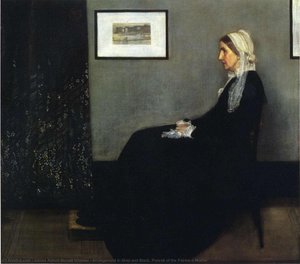
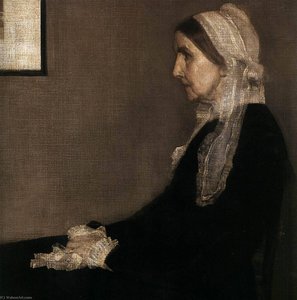
Whistler’s artistic vision crystallized in several key themes and stylistic choices. He championed the concept of “art for art’s sake,” rejecting narratives laden with moral or social commentary. His work became an exercise in capturing subtle nuances of light, color, and atmosphere—a pursuit that led to his iconic *Nocturnes*. These atmospheric paintings of twilight scenes, often depicting the Thames River at night, were not intended as literal depictions but rather as evocative impressions, studies in tonal harmony and mood. He frequently employed limited palettes and delicate brushwork, creating a sense of ethereal beauty and quiet contemplation. Portraits also occupied a central place in his practice, though he approached them with a unique sensibility. Whistler wasn’t concerned with capturing perfect likenesses; instead, he focused on formal arrangements and tonal relationships, treating his sitters as compositional elements within a carefully constructed aesthetic framework. Works like *Arrangement in Grey and Black No. 1*—better known as *Whistler's Mother*—demonstrate this approach perfectly, transforming a familial portrait into an iconic image of Victorian motherhood through its masterful use of form and tone.Controversy, Influence, and Lasting Legacy
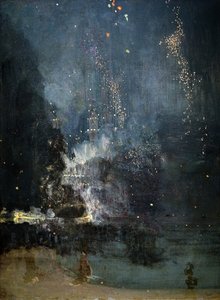
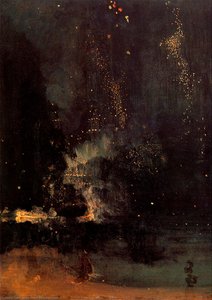
Whistler’s career was not without controversy. The infamous libel suit brought against him by the critic John Ruskin in 1878, sparked by *Nocturne in Black and Gold – The Falling Rocket*, became a landmark moment in art history. Whistler successfully defended his artistic autonomy, arguing that his paintings were not intended to be realistic representations but rather aesthetic arrangements of color and form. This case elevated his profile and ignited important debates about the nature of art criticism and artistic freedom. Beyond this legal battle, Whistler’s influence extended far and wide. He was deeply inspired by Japanese prints (ukiyo-e), which informed his compositional principles and emphasis on decorative patterns, as well as the tonal mastery of Spanish painters like Velázquez. His advocacy for “art for art’s sake” profoundly impacted the Aesthetic movement in England and America, paving the way for modernism and challenging conventional notions about artistic purpose. He left an indelible mark on American art, inspiring generations of artists to embrace formalist approaches and explore the expressive potential of color and composition.- Notable Works: *The Forge* (1861), *Portrait of Charles Lang Freer* (1873), *Brown and Gold: The Gold Girl—Connie Gilchrist* (1876-77), *Arrangement in Grey and Black No. 1 (Whistler’s Mother)* (1871), *Nocturne in Black and Gold – The Falling Rocket* (1875).
- Influences: Japanese prints, Velázquez.
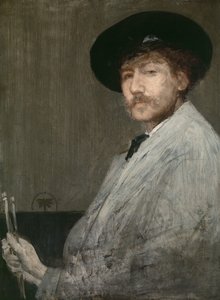
James Abbott McNeill Whistler
1834 - 1903 , United States of America
Quick Facts
- Artistic Movement Or Style: Tonalism, Aestheticism
- Artists Or Movements Influenced By This Artist:
- Aesthetic movement
- Modernism
- Artists Who Influenced This Artist:
- Velázquez
- Japanese prints
- Date Of Birth: July 14, 1834
- Date Of Death: 1903
- Full Name: James Abbott McNeill Whistler
- Nationality: American
- Notable Artworks:
- Whistler’s Mother
- Nocturne in Black & Gold
- The Forge
- Peacock Room
- Place Of Birth (City And Country): Lowell, USA
Related Articles
Whistler's Masterpieces: Explore 25 Iconic Paintings & Aesthetic Art for Your Home
Journey through 25 iconic James Abbott McNeill Whistler paintings! Explore his masterpieces of Aestheticism, from 'Nocturne in Black and Gold' to captivating portraits. Find museum-quality art reproductions & elevate your home decor with ArtsDot.com. Discover the full collection online.
Etching: A Historical Survey of Technique, Aesthetic Qualities & Enduring Artistic Significance
Explore the rich history of etching, from its origins to Rembrandt's masterful innovations. Discover the technique, aesthetic qualities & enduring legacy of this captivating art form. Expert insights for collectors and enthusiasts.
Etching Masters: 10 Legendary Prints That Revolutionized Art | ArtsDot
Journey through 10 legendary etching masterpieces by Rembrandt, Dürer & Goya. Explore the history of printmaking and discover timeless art for your home. Find museum-quality reproductions at ArtsDot.com.
The Intricate World of Etching: A Historical Survey of Technique, Aesthetic Evolution, and Enduring Artistic Impact
Explore the rich history of etching, from its origins to modern practice. Discover techniques, key artists like Rembrandt, and insights for collectors. A comprehensive guide by ArtsDot.
Atmospheric Visions: Exploring Tonalism in American Painting
Explore the captivating world of American Tonalism! Discover its history, key artists like Whistler & Inness, techniques, and lasting influence on art. Expert insights for collectors & enthusiasts.