 Preview
 Send
Send Share
Share
 Details

 Download
 Similars
 X-Ray
X-Ray Diaporama
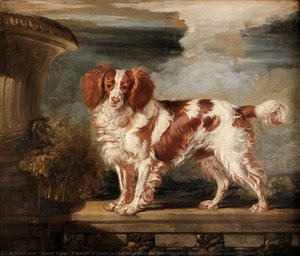
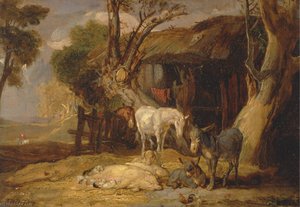
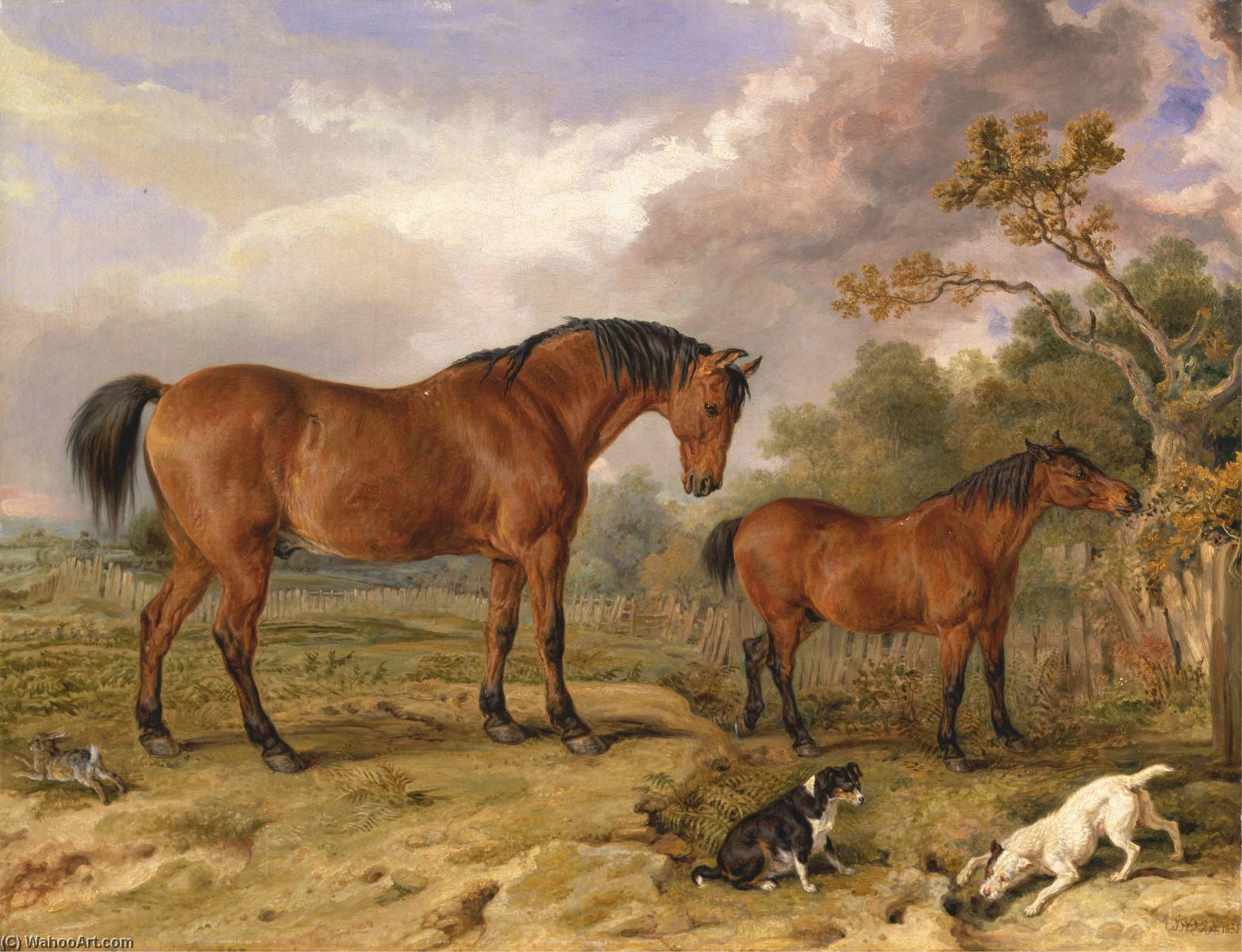
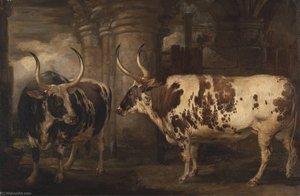
Portrait of Reformer, Blucher, Tory and Crib, the Property of Rowland Alston, Esq., M.P
 Oil On Canvas
- WallArt
- Romanticism
 1835
1835- 19th Century
 71.0 x 91.0 cm
 Yale Center for British Art
 Read More
Giclée / Art Print
Museum-quality giclée or canvas print with fast production and flexible finish options. ( Buy Hand Made Painting Buy Image)




P118B $10

P118H $10

P118W $10

P438Z $10

P508JH $12

P508YH $12

P805H $10

P805Z $10

P919BZ $10

P919G $10

P919XJ $10

P959ZH $10

P968JZ $12

W106C $8

W218G $10

W218JH $8

W218Y $10

W307PJ $10

W316G $10

W316PJ $8

W316Y $10

W398PJ $8

W4111J $10

W500HY $15

W500JH $15

W692G $12

W849H $8

W940BG $15

W953PJ $8




Pick from our preset sizes that match the artwork's original proportions.

You may enter your own dimensions to fit a specific frame or space. If your selected size does not match the original image's proportions, we will either crop the artwork or extend the image with a mirrored or solid-fill edge. A digital mockup will be sent for your approval before production begins.
Please note that the on-screen preview does not reflect the actual cropping or extension. Only the mockup will accurately show the final composition.
While custom sizes are available, we recommend selecting a dimension from the predefined list to preserve the original proportions.
Worldwide Delivery () in 2 weeks instead of standard 4/5 weeks. (3 September)

Free Worldwide Express Shipping

High-Quality Linen Canvas

Full Shipping Insurance

Customs Tax Refund Guarantee

True Color Matching Guarantee

60-Day Return Policy (Defects Only)

100% Money-Back Guarantee

Bulk Discount Offer
 Glass option is only available in size under 110 CM

Portrait of Reformer, Blucher, Tory and Crib, the Property of Rowland Alston, Esq., M.P
Giclée / Art Print
Reproduction Size
-


Total Price
$ 63
James Ward: A Life in British Art
James Ward (1769–1859) stands as a pivotal figure in the annals of British art, often underestimated yet undeniably influential during the Romantic era. While overshadowed by luminaries like Turner and Constable, his singular vision—characterized by an unparalleled devotion to animal painting and expansive landscapes imbued with sublime grandeur—established him as a cornerstone of artistic innovation and aesthetic sensibility. His oeuvre transcends mere representation; it embodies a profound engagement with nature’s power and beauty, reflecting the intellectual currents shaping Victorian Britain.Early Life and Training: Seeds of Artistic Passion
Born October 23, 1769, in London, Ward's formative years were nurtured within a familial environment that fostered creativity. Though formal artistic training was somewhat limited compared to his brother William’s meticulous engraving pursuits—William focused on precision and detail, whereas James sought immediacy and emotional resonance—Ward’s innate talent blossomed through diligent observation and tireless practice. This autodidactic approach proved crucial in shaping his distinctive style, prioritizing direct experience of the natural world as a catalyst for artistic expression. Influenced by artists like George Morland and Rubens, Ward initially honed his skills capturing genre scenes and portraying everyday life, establishing a foundational understanding of composition and tonal harmony.The Romantic Breakthrough: Glorifying Nature’s Majesty
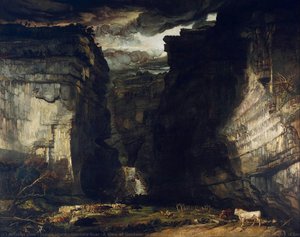
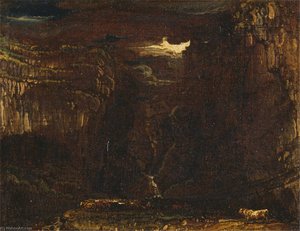
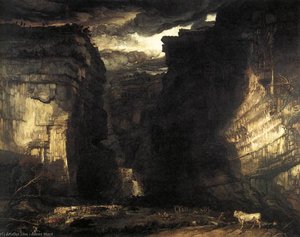
Around 1803, Ward embarked on a transformative journey toward artistic grandeur, decisively shifting his focus to monumental landscapes—a stylistic decision that cemented his reputation as one of the era's foremost Romantic painters. This pivotal moment coincided with an increasing fascination for Rubens’ dramatic use of color and light, propelling Ward towards ambitious canvases depicting vast vistas teeming with wildlife. His magnum opus, Gordale Scar (1814), exemplifies this newfound aesthetic fervor—a breathtaking panorama of Yorkshire’s Gordale Scar that captures the sublime terror and awe inherent in confronting untamed wilderness. The painting's scale alone speaks volumes about Ward’s ambition to convey not merely visual beauty but also a deeper philosophical contemplation of humanity’s place within the cosmos.Animal Painting: A Celebration of Form and Feeling
Ward’s unwavering commitment to animal painting distinguishes him from many of his contemporaries, who often prioritized idealized depictions of pastoral scenes. Instead, he meticulously rendered animals—horses, dogs, birds—with astonishing accuracy and sensitivity, capturing their musculature, posture, and behavior with remarkable realism. This dedication extended beyond mere technical proficiency; Ward imbued his subjects with palpable emotion, conveying not just physical likeness but also psychological depth. Paintings like “The Reverend Thomas Levett and His Favourite Dogs” exemplify this artistic ethos—a portrait that transcends simple representation to communicate the profound bond between man and animal, reflecting Ward’s belief in the transformative power of nature to inspire contemplation and elevate the human spirit.Legacy: An Enduring Influence on British Romanticism
James Ward's influence reverberates throughout British Romantic art, shaping stylistic conventions and fostering a preoccupation with sublime landscapes—a genre championed by Turner and Constable. His pioneering exploration of color theory and his masterful handling of tonal harmony established precedents for subsequent generations of painters. More importantly, Ward’s artistic vision—rooted in an unwavering reverence for the natural world and driven by a desire to evoke profound emotional responses—continues to inspire artists today. He remains a testament to the enduring power of observation, empathy, and artistic conviction—a figure whose legacy secures his place as one of Britain's most significant Romantic painters.Related Artworks
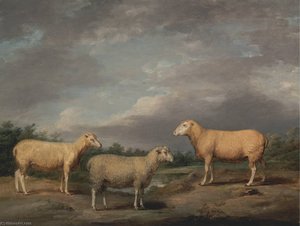
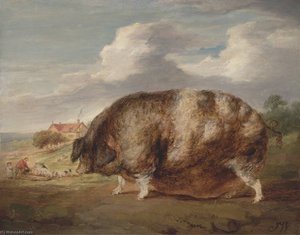
Artist Biography
James Ward: A Life in British Art
James Ward (1769-1859) was a prominent British painter renowned for his captivating animal paintings, romantic landscapes, and insightful portraits. Though often overshadowed by contemporaries, his unique style and skill significantly impacted the development of British art during the 19th century.
Early Life and Training
Born on October 23, 1769, in London, United Kingdom, James Ward was the younger brother of engraver William Ward. His early artistic inclinations were nurtured within a creative family environment. While he received some formal training, his development was largely self-directed and heavily influenced by observation and practice.
Artistic Development & Influences
Ward’s career is conventionally divided into two distinct periods regarding influence. Initially, until around 1803, his work bore a strong resemblance to that of his brother-in-law, George Morland, characterized by genre scenes and a focus on everyday life. Following this period, he became deeply inspired by the Baroque master Peter Paul Rubens, adopting a more dynamic composition, rich color palette, and dramatic use of light and shadow.
Notable Works & Artistic Style
Ward’s singular style set him apart from many contemporaries. He excelled in various genres, including history painting, portraiture, landscape, and animal art. Some of his most celebrated works include:
- Gordale Scar (1814/15): Considered his masterpiece, this dramatic depiction of a Yorkshire gorge exemplifies the sublime qualities of English Romanticism.
- The Deer Stealer (1823): Commissioned by Theophilus Levett, this painting showcases Ward’s skill in narrative and animal representation.
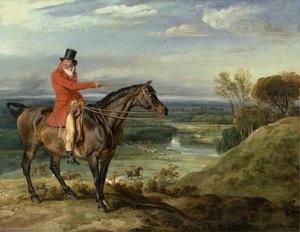
- John Levett Hunting at Wychnor, Staffordshire (1817): A portrait of one of his patrons, demonstrating his ability to capture both likeness and atmosphere.
His paintings are characterized by a meticulous attention to detail, particularly in the rendering of animals, combined with a romantic sensibility that emphasizes the beauty and power of nature.
Commissions & Exhibitions
Ward enjoyed patronage from prominent figures like Theophilus Levett, leading to numerous commissions. He regularly exhibited his work at the Royal Academy, gaining recognition for his skill and originality. His admission as a member in 1811 solidified his standing within the British art establishment.
Later Life & Legacy
Ward continued to paint prolifically until a stroke in 1855 curtailed his career. He passed away on November 17, 1859, in relative poverty despite his earlier success.
Despite facing financial hardship later in life, James Ward’s influence on British art remains undeniable. His unique blend of realism and romanticism paved the way for future generations of animal painters and landscape artists. His works are now held in prestigious collections such as Tate Britain and the Yale Center for British Art.
Historical Significance
James Ward occupies a significant position within the transition from the Neoclassical to the Romantic era in British art. He bridged the gap between traditional genre painting and the burgeoning interest in landscape and naturalism, leaving behind a legacy of captivating works that continue to inspire and delight.
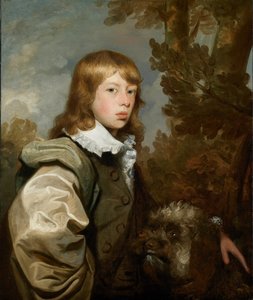
James Ward
1769 - 1859 , United Kingdom
Quick Facts
- Birth Date: October 23, 1769
- Birth Place: London, United Kingdom
- Death Date: November 17, 1859
- Influenced By:
- George Morland
- Rubens
- Movement: Romanticism
- Name: James Ward
- Nationality: British
- Notable Works:
- Gordale Scar
- The Deer Stealer
- John Levett Hunting at Wychnor
Related Articles
James Ward: A Study in British Romantic Landscape and Animal Painting
Explore the captivating world of James Ward (1769-1859), a master of British Romantic landscape & animal painting. Discover his iconic 'Gordale Scar' and exquisite portraits – a timeless art investment. Learn about his influences, style, and enduring legacy.

Sir Alfred Munnings' Masterpieces: 25 Paintings That Define Equine Art | ArtsDot
Explore 25 iconic Sir Alfred Munnings paintings! Discover the beauty of British Impressionism, equine art & rural England. Find museum-quality reproductions and elevate your home decor with ArtsDot. Explore the full collection online.
Animalia: Exploring the Enduring Presence of Animals in Art & Interior Design
Explore the rich history of animal symbolism in art, from ancient mythology to modern masterpieces. Discover how animals have inspired artists for centuries and learn how to incorporate these powerful motifs into your home décor.
Whistler's Masterpieces: Explore 25 Iconic Paintings & Aesthetic Art for Your Home
Journey through 25 iconic James Abbott McNeill Whistler paintings! Explore his masterpieces of Aestheticism, from 'Nocturne in Black and Gold' to captivating portraits. Find museum-quality art reproductions & elevate your home decor with ArtsDot.com. Discover the full collection online.
The Noble Steed on Canvas: A Historical & Artistic Exploration of Horse Painting Across Cultures
Explore the rich history of horse painting! Discover masterpieces from Stubbs to Munnings & learn about symbolism, techniques & artists. Find museum-quality reproductions at ArtsDot.