 Preview
 Send
Send Share
Share
 Details

 Download
 Similars
 X-Ray
X-Ray Diaporama
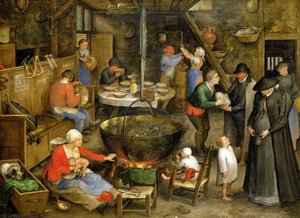
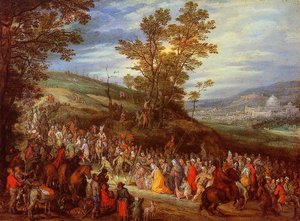
The Visit to the Farm


 Read More
Hand Made Oil Reproduction
Hand-painted oil on canvas in your size and frame, made to order by our artists. ( Buy Print Buy Image)




P118B $10

P118H $10

P118W $10

P438Z $10

P508JH $12

P508YH $12

P805H $10

P805Z $10

P919BZ $10

P919G $10

P919XJ $10

P959ZH $10

P968JZ $12

W106C $8

W218G $10

W218JH $8

W218Y $10

W307PJ $10

W316G $10

W316PJ $8

W316Y $10

W398PJ $8

W4111J $10

W500HY $15

W500JH $15

W692G $12

W849H $8

W940BG $15

W953PJ $8




Pick from our preset sizes that match the artwork's original proportions.

You may enter your own dimensions to fit a specific frame or space. If your selected size does not match the original image's proportions, we will either crop the artwork or extend the painting with additional hand-painted elements. A digital mockup will be sent for your approval before production begins.
Please note that the on-screen preview does not reflect the actual cropping or extension. Only the mockup will accurately show the final composition.
While custom sizes are available, we recommend selecting a dimension from the predefined list to preserve the original proportions.
After order, ArtsDot.com team will email client for instructions and provide a mockup preview
Worldwide Delivery () in 3/4 weeks instead of standard 5 weeks. (16 August). No compromise on quality.

Free Worldwide Express Shipping

High-Quality Linen Canvas

Full Shipping Insurance

Customs Tax Refund Guarantee

True Color Matching Guarantee

60-Day Return Policy (Defects Only)

100% Money-Back Guarantee

Bulk Discount Offer
 Glass option is only available in size under 110 CM

The Visit to the Farm
Reproduction Medium
Reproduction Size
-


Total Price
$ 263
Artwork Description
A Snapshot of Rural Life: The Narrative Power of Brueghel’s “The Visit to the Tenant Farmer”
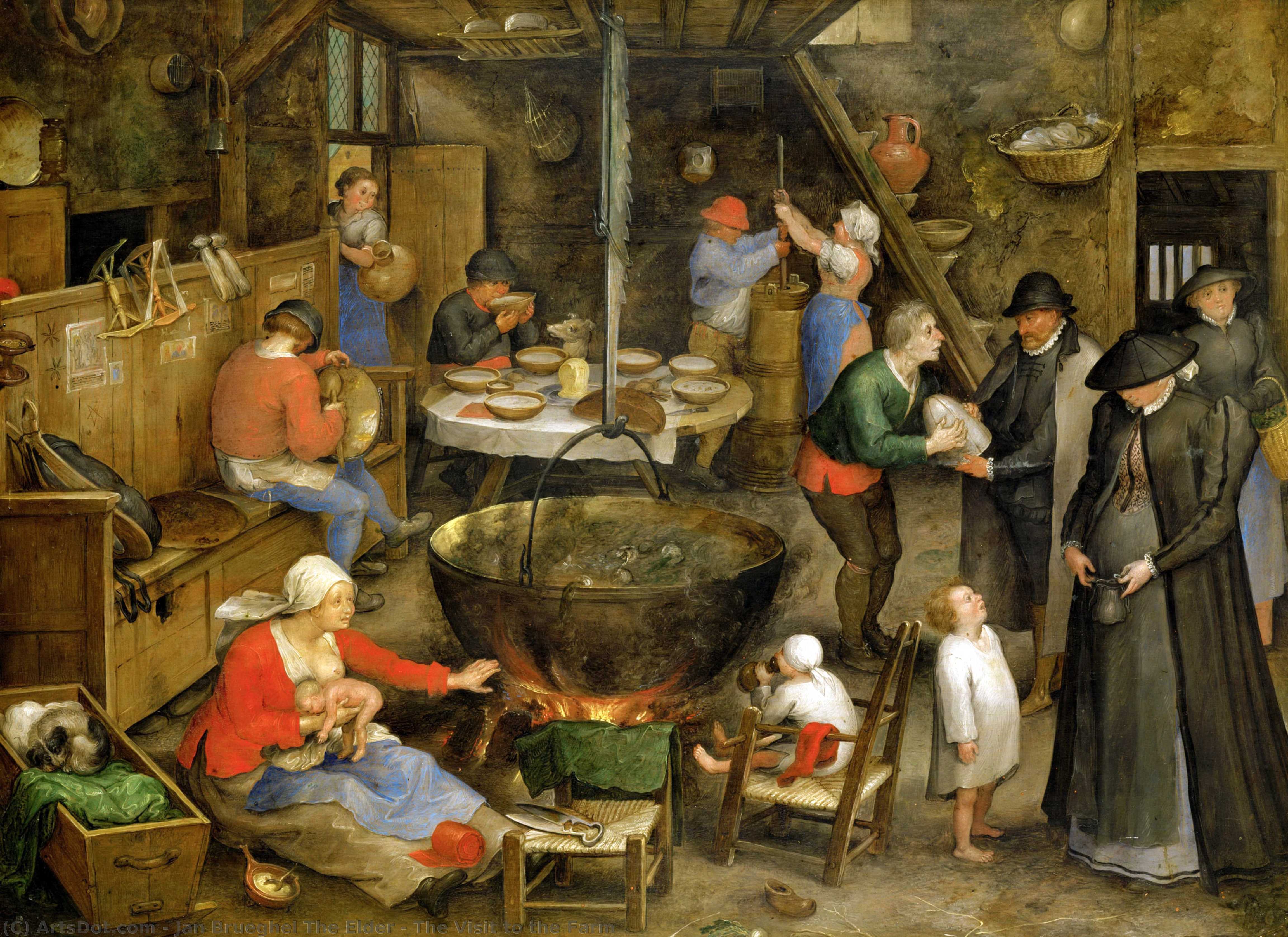
Jan Brueghel the Elder's "The Visit to the Tenant Farmer," painted around 1568, isn’t merely a depiction of a farm scene; it’s a vibrant tableau brimming with social commentary and a profound understanding of human nature. This oil painting, now housed in numerous collections worldwide, offers a glimpse into the everyday lives of Flemish peasants during the late 16th century – a period marked by both burgeoning prosperity and persistent hardship. Brueghel masterfully captures not just the outward appearance of rural life but also its inherent complexities, weaving together elements of celebration, labor, and quiet observation.
The composition is immediately arresting. A large group of figures occupies the central space, clustered around a long wooden table laden with food – bowls overflowing with stew, jugs of ale, and platters piled high with bread and meat. Children playfully chase each other amidst the bustle, while adults engage in conversation and partake in the feast. Brueghel’s skill lies not just in rendering these individual figures but in creating a dynamic sense of movement and interaction. The diagonals formed by the table, the people, and even the scattered tools contribute to this feeling of energetic life.
A Masterclass in Flemish Baroque Technique
Brueghel’s style firmly anchors this painting within the flourishing Flemish Baroque tradition. He employs a meticulous realism, evident in the detailed depiction of clothing, furniture, and even the individual faces of the peasants. However, he transcends mere imitation by imbuing his subjects with a remarkable sense of humanity. Notice how Brueghel uses light and shadow to sculpt forms, creating depth and volume within the scene. The warm glow emanating from the hearth contrasts sharply with the darker recesses of the room, drawing the viewer’s eye across the composition.
The artist's technique is particularly noteworthy for its use of color. He employs a rich palette of earthy tones – browns, greens, and ochres – to evoke the atmosphere of the countryside. Subtle variations in hue and saturation create visual interest and contribute to the overall sense of realism. Brueghel’s mastery of glazing—applying thin layers of translucent paint—allows him to achieve remarkable luminosity and depth, particularly in the rendering of fabrics and reflections on surfaces.
Symbolism and Social Commentary
Beyond its immediate visual appeal, “The Visit to the Tenant Farmer” is laden with symbolic meaning. The scene represents a typical day for Flemish peasants, who constituted the vast majority of the population at the time. Brueghel subtly critiques the social hierarchy inherent in rural society by depicting a shared meal amongst different social classes – farmers, laborers, and perhaps even a landowner observing from afar. The children’s playful antics suggest a hope for the future, while the adults' interactions hint at the challenges of daily life.
The inclusion of various tools—axes, scythes, and farming implements—underscores the importance of labor in this society. Brueghel doesn’t romanticize peasant life; he presents it with a frankness that reflects his own observations of rural Flemish communities. The painting serves as a poignant reminder of the lives lived by those who toiled tirelessly to sustain the region.
Emotional Resonance and Lasting Legacy
“The Visit to the Tenant Farmer” resonates deeply because it captures a universal human experience: the joy of communal gathering, the simple pleasures of food and fellowship, and the enduring spirit of community. Brueghel’s ability to convey these emotions through his masterful technique and astute observation is what elevates this painting beyond a mere depiction of rural life. It's a window into a bygone era, offering insights into the values, customs, and challenges faced by the people who shaped the landscape of Flanders.
Reproductions of this iconic work offer an exceptional opportunity to bring Brueghel’s vision into your home or office, allowing you to appreciate the artistry and social commentary embedded within its rich details. Consider framing it in a style that complements its historical context – perhaps a rustic wooden frame to evoke the farmhouse setting itself.
Related Artworks
Artist Biography
A Legacy Rooted in Flemish Soil
Jan Brueghel the Elder, a name synonymous with vibrant landscapes and exquisitely detailed still lifes, emerged from a lineage steeped in artistic tradition. Born in Brussels in 1568, he was the younger son of Pieter Bruegel the Elder, that titan of Netherlandish Renaissance painting whose depictions of peasant life and sweeping vistas had already secured his place in art history. The shadow of such a father could have been stifling, yet Jan forged his own distinct path, becoming not merely an inheritor but an innovator within the burgeoning Flemish Baroque movement. His early years were marked by loss; Pieter Bruegel the Elder died when Jan was barely a year old, and his mother passed away a decade later. Raised initially by his grandmother, Mayken Verhulst—herself a respected artist—Jan received foundational training in drawing and watercolor, a nurturing start that would blossom into a lifelong dedication to meticulous observation and technical mastery. The influence of this early upbringing, combined with the artistic fervor of Antwerp where he continued his studies, laid the groundwork for a career defined by both inherited skill and personal vision.
The Blossoming of a Baroque Vision
Brueghel’s artistic development was profoundly shaped by his travels to Italy in the 1590s. Naples and Rome offered him exposure to a different aesthetic sensibility, one characterized by grandeur, drama, and a heightened sense of color. While he absorbed these influences, he didn't simply replicate them; instead, he synthesized them with the Northern European tradition of detailed realism inherited from his father. This fusion resulted in a unique style—one that celebrated both the splendor of the Italian Baroque and the meticulous precision of Flemish painting. He became known as “Velvet Brueghel” for his ability to render textures with astonishing fidelity, particularly in his flower paintings. These weren’t merely botanical studies; they were celebrations of life's ephemeral beauty, imbued with symbolic meaning. Beyond flowers, Brueghel excelled at landscapes, often depicting idyllic scenes teeming with figures engaged in everyday activities or mythological narratives. His compositions are characterized by a panoramic scope and an almost obsessive attention to detail—every leaf, every insect, every ripple in the water is rendered with painstaking accuracy.
Collaboration and Innovation
Jan Brueghel’s career wasn't solely defined by individual achievement; he was also a masterful collaborator. His most significant partnership was with Peter Paul Rubens, arguably the most influential artist of the Flemish Baroque. The two artists shared a close friendship and frequently worked together on large-scale projects, each contributing their unique strengths. Typically, Rubens would paint the figures while Brueghel focused on the landscapes and still life elements. This collaboration resulted in some of the most breathtaking works of the era, such as *Adam and Eve in Paradise*, where Rubens’ dynamic figures are seamlessly integrated into Brueghel's lush and detailed garden setting. Beyond his partnership with Rubens, Brueghel was a prolific innovator, pioneering new genres like flower garland paintings—elaborate arrangements of blossoms that often framed religious or mythological scenes—and paradise landscapes, which combined elements of both landscape and still life to create fantastical visions of earthly delight. He also developed gallery paintings, showcasing collections of artworks within imagined museum settings, reflecting the growing interest in art collecting during the 17th century.
A Lasting Influence
Jan Brueghel the Elder died in Antwerp in 1625, leaving behind a legacy that extended far beyond his own lifetime. His meticulous technique, vibrant color palettes, and innovative compositions profoundly influenced subsequent generations of Flemish painters. He established new standards for detail and realism, inspiring artists to push the boundaries of their craft. His son, Jan Brueghel the Younger, continued in his father’s footsteps, often creating works that were difficult to distinguish from those of the elder master. However, it was Jan Brueghel the Elder who truly established the family's reputation and cemented his place as a pivotal figure in the history of art. His work reflects not only the artistic currents of his time but also the broader intellectual and cultural shifts of the 17th century, including the rise of scientific observation, the flourishing of religious fervor during the Counter-Reformation, and the growing appreciation for the beauty and complexity of the natural world. Brueghel’s paintings continue to captivate audiences today with their exquisite detail, vibrant colors, and enduring sense of wonder.
- Known as “Velvet Brueghel” due to his masterful rendering of textures.
- Pioneered flower garland paintings and paradise landscapes.
- Close collaborator with Peter Paul Rubens.
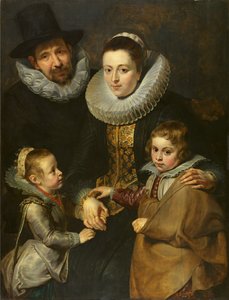
Jan Brueghel the Elder
1568 - 1625 , Belgium
Quick Facts
- Artistic Movement Or Style: Flemish Baroque
- Artists Or Movements Influenced By This Artist: ['Flemish painters']
- Artists Who Influenced This Artist:
- Pieter Bruegel the Elder
- Peter Paul Rubens
- Date Of Birth: 1568
- Date Of Death: 1625
- Full Name: Jan Brueghel the Elder
- Nationality: Flemish
- Notable Artworks:
- The Triumph of Neptune
- Still Life with Flowers
- Landscape with a Waterfall
- Place Of Birth: Brussels, Belgium
Related Articles

Oil on Canvas: A Historical & Technical Exploration of a Timeless Artistic Medium
Explore the rich history & enduring techniques of oil painting on canvas. Discover the science behind its longevity, conservation practices, and contemporary relevance. Expert insights for art enthusiasts.
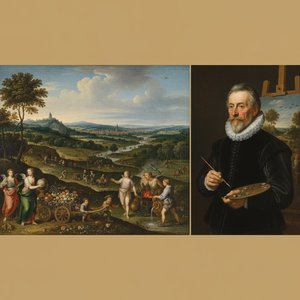
Jan Brueghel the Elder: A Master of Flemish Landscape & Allegory – Exploring Innovation & Influence
Explore the captivating world of Jan Brueghel the Elder, a Flemish Baroque master renowned for his stunning landscapes & allegorical paintings. Discover his collaborations with Rubens and lasting artistic legacy.

The Enduring Legacy of Oil on Canvas: Technique, History & Aesthetic Impact
Explore the rich history & techniques of oil painting – from Renaissance masters to Impressionism. Discover pigments, layering methods, and why this timeless medium endures. Expert insights for artists & art enthusiasts.

The Enduring Power of Painting: A Historical & Contemporary Exploration of Form and Emotion
Explore the rich history & enduring techniques of oil painting with ArtsDot. Discover masterpieces, learn about art collecting, and find authentic handmade reproductions crafted by skilled artists.
Capturing Kinship: Commission Affordable Oil Portraits as Enduring Family Legacies
Transform cherished photos into timeless oil portraits with ArtsDot. Commission a hand-painted family masterpiece that preserves your legacy for generations. Affordable, expert artistry & 100% satisfaction guaranteed.