 Preview
 Send
Send Share
Share
 Details

 Download
 Similars
 X-Ray
X-Ray Diaporama
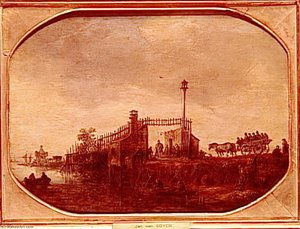
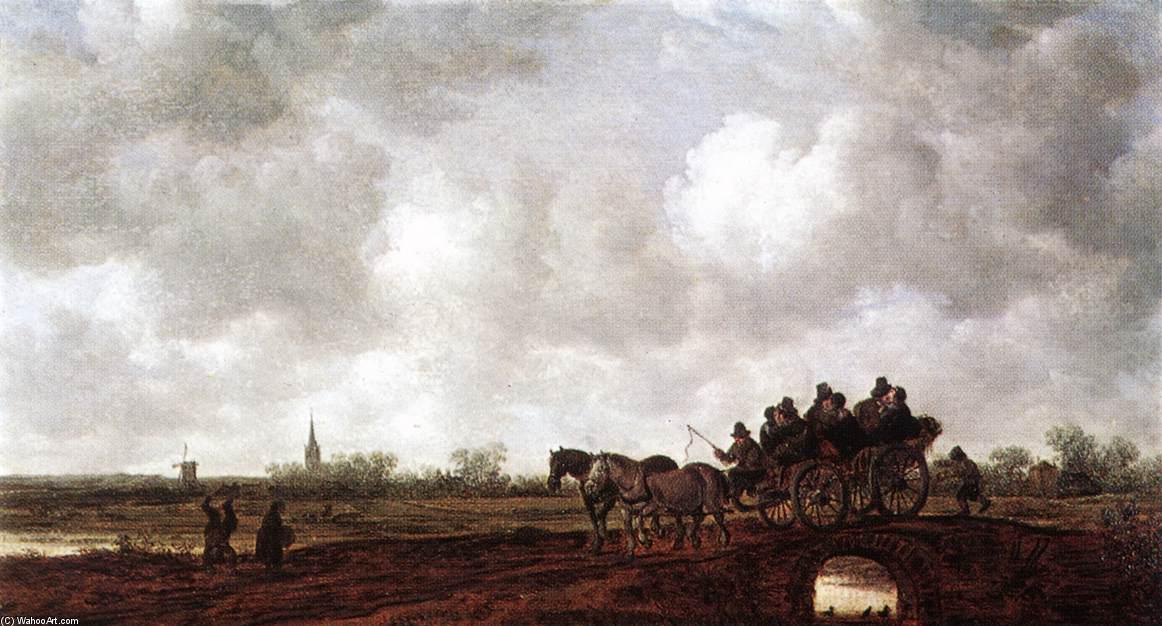
Horse Cart on a Bridge
 Acrylic On Canvas
- WallArt
- Dutch Golden Age Landscape
 1648
1648 37.0 x 66.0 cm
 Alte Pinakothek
 Read More
Giclée / Art Print
Museum-quality giclée or canvas print with fast production and flexible finish options. ( Buy Hand Made Painting Buy Image)




P118B $10

P118H $10

P118W $10

P438Z $10

P508JH $12

P508YH $12

P805H $10

P805Z $10

P919BZ $10

P919G $10

P919XJ $10

P959ZH $10

P968JZ $12

W106C $8

W218G $10

W218JH $8

W218Y $10

W307PJ $10

W316G $10

W316PJ $8

W316Y $10

W398PJ $8

W4111J $10

W500HY $15

W500JH $15

W692G $12

W849H $8

W940BG $15

W953PJ $8




Pick from our preset sizes that match the artwork's original proportions.

You may enter your own dimensions to fit a specific frame or space. If your selected size does not match the original image's proportions, we will either crop the artwork or extend the image with a mirrored or solid-fill edge. A digital mockup will be sent for your approval before production begins.
Please note that the on-screen preview does not reflect the actual cropping or extension. Only the mockup will accurately show the final composition.
While custom sizes are available, we recommend selecting a dimension from the predefined list to preserve the original proportions.
Worldwide Delivery () in 2 weeks instead of standard 4/5 weeks. (25 August)

Free Worldwide Express Shipping

High-Quality Linen Canvas

Full Shipping Insurance

Customs Tax Refund Guarantee

True Color Matching Guarantee

60-Day Return Policy (Defects Only)

100% Money-Back Guarantee

Bulk Discount Offer
 Glass option is only available in size under 110 CM

Horse Cart on a Bridge
Giclée / Art Print
Reproduction Size
-


Total Price
$ 63
Collectible Description
A Moment Frozen in Time: The Serenity of Van Goyen's Landscape
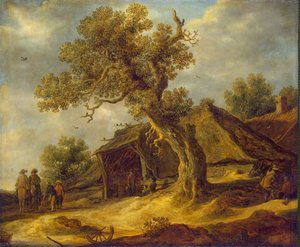
Jan Josephszoon van Goyen, a pivotal figure in the Dutch Golden Age, possessed an extraordinary ability to distill the essence of the Netherlands into his paintings. “Horse Cart on a Bridge,” created around 1648, isn’t merely a depiction of a rural scene; it's a carefully constructed meditation on light, atmosphere, and the quiet rhythms of everyday life. Van Goyen, unlike many of his contemporaries who favored vibrant color and dramatic detail, championed a restrained palette – primarily grays, browns, and subtle greens – and a technique focused on capturing the *feeling* of a landscape rather than its literal representation.
The painting immediately draws the eye to the bridge itself, a sturdy, weathered structure that anchors the composition. Below, a horse-drawn cart, laden with goods, navigates the shallow waterway. The figures within are rendered with remarkable economy; their forms suggested rather than explicitly defined, allowing the viewer’s imagination to fill in the details of their journey. Notice how Van Goyen masterfully uses tonal variations – the deep shadows beneath the bridge, the diffused light reflecting off the water – to create a sense of depth and atmosphere that is both captivating and profoundly calming.
The Language of Light: Van Goyen’s Pioneering Technique
Van Goyen's approach to landscape painting was revolutionary for his time. He deliberately avoided the highly polished, detailed style favored by some of his contemporaries, opting instead for a looser, more atmospheric technique. This involved applying paint in thin, translucent layers – often built up over days or even weeks – creating a shimmering effect that mimics the way light interacts with water and foliage. The artist’s use of *sfumato*, a subtle blurring of edges, further enhances this ethereal quality, dissolving forms into the surrounding landscape.
Crucially, Van Goyen employed a technique known as “dry brush” painting. He used a stiff brush to apply paint in short, broken strokes, creating a textured surface that resembles the rough bark of trees or the uneven stones of the bridge. This method not only added visual interest but also contributed to the overall sense of immediacy and spontaneity – as if the scene were being captured in real-time.
Historical Context: A Dutch Vision
To understand “Horse Cart on a Bridge,” it’s essential to consider the historical context in which Van Goyen worked. The 17th century was a period of immense prosperity and cultural flourishing for the Netherlands, often referred to as the Golden Age. Dutch society valued practicality, industry, and a deep connection to the land. Van Goyen's paintings reflect this ethos, celebrating the beauty of the Dutch countryside and the industriousness of its people.
The painting’s subject matter – a humble horse cart traversing a rural bridge – was deliberately chosen to represent the everyday realities of life in the Netherlands. Van Goyen wasn’t interested in grand historical narratives or heroic figures; instead, he focused on capturing the quiet dignity and resilience of ordinary people.
Emotional Resonance: A Sense of Peace and Reflection
“Horse Cart on a Bridge” is more than just a landscape painting; it's an invitation to pause and reflect. The scene exudes a profound sense of peace and tranquility, inviting the viewer to step outside the hustle and bustle of modern life and reconnect with the natural world. The muted colors, soft light, and subtle details create a mood of quiet contemplation – a reminder that beauty can be found in the simplest of things.
Reproductions of this masterpiece offer a remarkable opportunity to bring this evocative scene into your home or office. The delicate brushwork and atmospheric depth are beautifully preserved, allowing you to experience the artistry of Van Goyen firsthand. It’s a timeless work that continues to resonate with viewers today, offering a glimpse into the heart of Dutch culture and the enduring power of landscape painting.
Related Artworks
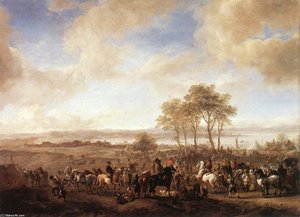
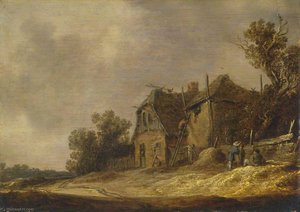
Artist Biography
Jan Josephszoon van Goyen: A Life in Landscape
Early Life and Training
- Born on January 13, 1596, in Leiden, Netherlands, Jan Josephszoon van Goyen emerged as a pivotal figure in Dutch Golden Age painting.
- He initially apprenticed in Leiden before furthering his studies under Esaias van de Velde in Haarlem. This foundational training proved crucial to his artistic development.
Artistic Style and Development
- Van Goyen’s style is immediately recognizable for its simplicity, subtle tonal variations, and use of a limited palette – primarily grays, browns, and greens.
- He moved away from the more colorful and detailed landscapes popular at the time, pioneering a more realistic and atmospheric approach.
- His early works show influence from Van de Velde, but he quickly developed his own distinctive style focusing on capturing the essence of Dutch landscapes.
Prolific Output and Notable Works
- Van Goyen was an incredibly prolific artist, producing an estimated 1,200 paintings and over 1,000 drawings throughout his career.
- Notable works include: River Landscape with Windmill, a quintessential example of his tonal landscapes; and Fishermen by the Lakeshore, showcasing his ability to depict serene waterscapes.
- He frequently painted scenes of rivers, lakes, dunes, and expansive skies, capturing the unique character of the Dutch countryside.
Influences and Legacy
- While influenced by Van de Velde, Van Goyen’s work itself became highly influential.
- He directly impacted artists such as Jan Steen, who was one of his pupils.
- His emphasis on realism and atmospheric effects paved the way for later landscape painters.
Financial Struggles and Later Life
- Despite his artistic success, Van Goyen faced significant financial difficulties throughout his life.
- He engaged in various business ventures, including tulip speculation (during “Tulip Mania”) and real estate investments, but often found himself deeply in debt.
- At the time of his death on April 27, 1656, in The Hague, he was reportedly 18,000 guilders in debt.
Historical Significance
- Van Goyen’s work is considered a cornerstone of Dutch Golden Age painting and a significant contribution to the development of landscape art.
- He captured the spirit of 17th-century Holland, reflecting its growing prosperity and connection to the land.
- His innovative techniques and realistic depictions continue to inspire artists and captivate audiences today.
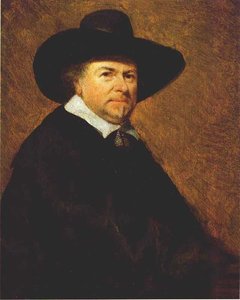
jan josephszoon van goyen
1596 - 1656 , Netherlands
Quick Facts
- Birth Date: January 13, 1596
- Birth Place: Leiden, Netherlands
- Death Date: April 27, 1656
- Influenced: Jan Steen
- Influenced By: Esaias van de Velde
- Movement: Dutch Golden Age painting
- Name: Jan Josephszoon van Goyen
- Nationality: Dutch
- Notable Works:
- River Landscape with Windmill
- Fishermen by the Lakeshore
Related Articles
Jan van Goyen: Master of Dutch Landscape & Atmospheric Perspective
Discover Jan van Goyen, the master of Dutch landscape painting. Explore his subtle technique, atmospheric realism & lasting influence on art history. Learn about this 17th-century pioneer at ArtsDot.
Cornelis van Poelenburch: Bridging Mannerism & the Dutch Baroque Landscape
Discover Cornelis van Poelenburch, a pivotal Dutch Baroque landscape painter bridging Mannerism & Italianate styles. Explore his life, key works, and lasting influence on 17th-century art with ArtsDot.

Rembrandt's Masterpieces: Explore 25 Iconic Paintings & Prints | ArtsDot
Journey through Rembrandt van Rijn's 25 most iconic paintings & etchings. Explore Dutch Golden Age masterpieces, dramatic chiaroscuro, and timeless portraits. Find museum-quality art reproductions to elevate your home decor on ArtsDot.com.
Jacob van Ruisdael: Master of Dutch Landscape & the Evocation of National Identity
Explore the life & work of Jacob van Ruisdael, the preeminent Dutch landscape painter. Discover his technical brilliance, symbolic depth, and lasting influence on art history. Learn about collecting Ruisdael's masterpieces.
Aelbert Cuyp: Illuminating the Dutch Golden Age with Light & Landscape
Explore the luminous landscapes of Aelbert Cuyp, a master of the Dutch Golden Age. Discover his unique light, serene riverside scenes & lasting influence on art history. Learn more at ArtsDot.