 Preview
 Send
Send Share
Share
 Details

 Download
 Similars
 X-Ray
X-Ray Diaporama
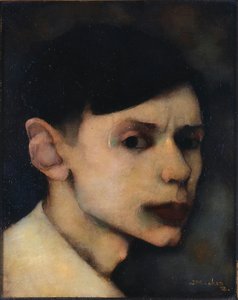
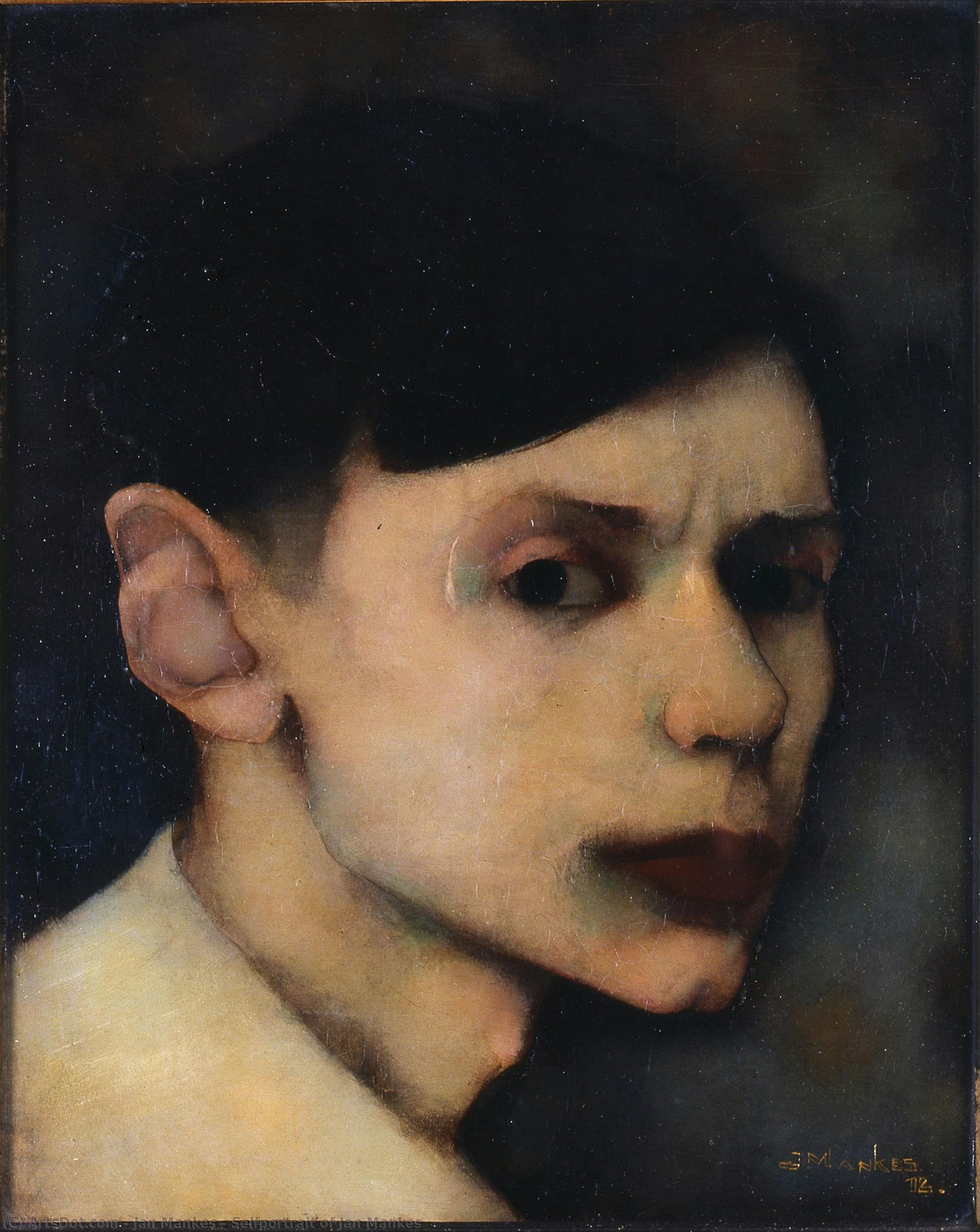
Selfportrait of Jan Mankes
 Painting
- Contemporary Realism
 1912
1912- Modern
 30.0 x 24.0 cm
 Read More
Hand Made Oil Reproduction
Hand-painted oil on canvas in your size and frame, made to order by our artists. ( Buy Print Buy Image)




































Pick from our preset sizes that match the artwork's original proportions.

You may enter your own dimensions to fit a specific frame or space. If your selected size does not match the original image's proportions, we will either crop the artwork or extend the painting with additional hand-painted elements. A digital mockup will be sent for your approval before production begins.
Please note that the on-screen preview does not reflect the actual cropping or extension. Only the mockup will accurately show the final composition.
While custom sizes are available, we recommend selecting a dimension from the predefined list to preserve the original proportions.
After order, ArtsDot.com team will email client for instructions and provide a mockup preview
Worldwide Delivery () in 3/4 weeks instead of standard 5 weeks. (16 August). No compromise on quality.

Free Worldwide Express Shipping

High-Quality Linen Canvas

Full Shipping Insurance

Customs Tax Refund Guarantee

True Color Matching Guarantee

60-Day Return Policy (Defects Only)

100% Money-Back Guarantee

Bulk Discount Offer
 Glass option is only available in size under 110 CM

Selfportrait of Jan Mankes
Reproduction Medium
Reproduction Size
-


Total Price
$ 263
Artwork Description
A Soul Captured in Stillness
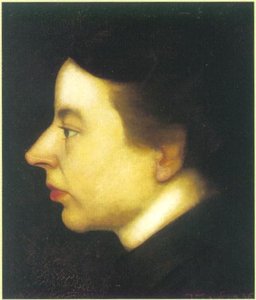
In the intimate realm of Dutch portraiture, few works possess the haunting, quiet intensity found in Jan Mankes’s Selfportrait of 1912. Created when the artist was a mere twenty-two or twenty-three years old, this piece serves as a profound window into the psyche of a young man standing on the precipively edge of maturity. Mankes, a painter who found his greatest inspiration in the secluded landscapes of Friesland, uses this self-examination to present himself not with the bravado of a rising star, but with a somber, almost ascetic gravity. The portrait is characterized by an extraordinary stillness, a hallmark of his style that invites the viewer into a meditative state, forcing us to confront the raw, unvarnished truth of the subject's gaze.
The technical mastery on display in this small-scale work—measuring just 30 x 24 cm—is nothing short of breathtaking. Mankes employs a palette that leans into the shadows, utilizing deep, muted tones to sculpt the features of his own face. There is a striking, almost spectral contrast between the pale, greenish undertones of his complexion and the sharp, decisive lines that define his jaw, cheekbones, and nose. This meticulous attention to anatomical precision creates a sense of three-dimensionality that makes the subject feel palpably present. The brushwork, while controlled and precise, possesses an emotional weight, where every shadow serves to deepen the psychological complexity of the sitter.
Beyond the mere physical likeness, the painting functions as a profound study of temperament. While some interpretations might note a sense of tension or even a fleeting moment of distress in his expression, the overarching emotion is one of profound introspection. The way the light catches the contours of his face against a blurred, indistinct background creates an atmospheric isolation, suggesting a man deeply connected to his inner world and the quiet rhythms of his surroundings in De Knipe. For the collector or the lover of fine art, this piece offers more than just aesthetic beauty; it offers a connection to the fleeting moment of youth captured by a master who understood that the most powerful stories are often told in whispers.
For interior designers and connoisseurs of classical European art, integrating a high-quality reproduction of this masterpiece into a curated space provides an anchor of intellectual and emotional depth. Its somber tones and dramatic chiaroscuro make it an ideal centerpiece for a study, a library, or a gallery wall that seeks to evoke a sense of history and contemplative calm. To possess this image is to hold a fragment of Jan Mankes’s enduring legacy—a testament to the beauty found in the quiet, the serious, and the profoundly human.
Related Artworks
Artist Biography
Jan Mankes: A Quiet Observer of Friesland’s Soul
Jan Mankes (1889 – 1920) remains an enigmatic figure in Dutch art history, a painter whose prolific output belied a life lived largely in seclusion. Born in Meppel, Netherlands, he possessed a singular vision—a dedication to capturing the subtle beauty of the natural world and the quiet dignity of human experience, primarily through landscapes and intimate portraits. Though his artistic career tragically ended prematurely at just 30 due to tuberculosis, Mankes’s legacy persists in museums across Friesland and Arnhem, where his paintings continue to inspire contemplation.- Early Life & Artistic Training: Mankes received a solid grounding in art through formal studies at the Hague Academy of Fine Arts, though he eschewed grand academic ambitions. Instead, he cultivated a profound connection with the Friesland region—specifically De Knipe, where he established his home and studio—a deliberate choice reflecting his Mennonite faith and desire for independence from societal pressures.
- A Symbolist’s Touch: Critics often categorize Mankes as a “symbolic realist,” acknowledging that while his technique employed meticulous detail – particularly the use of translucent glazes to achieve remarkable luminosity, especially in white—his work transcends mere representation. He sought to convey deeper emotional and spiritual resonances, mirroring the influence of Impressionism and Symbolism without fully embracing their stylistic conventions.
The Patronage of A.A.M. Pauwels & The Correspondence Archive
Mankes’s artistic endeavors benefited significantly from the unwavering support of Antonius Albertus Marius Pauwels, a tobacco merchant and avid art collector residing in The Hague. Pauwels recognized Mankes's talent early on and provided him with both financial assistance and invaluable material inspiration—newspaper clippings documenting cultural developments—a relationship documented in over 700 pages of correspondence published by the Netherlands Institute for Art History. These letters offer unprecedented insight into Mankes’s artistic process, his intellectual curiosity, and his personal reflections on life and art.- Technique & Aesthetic Considerations: Mankes's distinctive approach to painting involved a masterful manipulation of light and color. He achieved remarkable transparency in his oil paintings, particularly when utilizing white pigment—a technique that imparted a pearly luster due to the soft brushstrokes characteristic of his style. Notably, he observed that this effect sometimes resulted in an unsettling pallor in self-portraits, hinting at a sensitivity to visual perception.
- Subject Matter & Recurring Themes: Mankes’s oeuvre centered around landscapes—primarily Friesland—and portraits, often depicting individuals engaged in quiet activities. Birds and animals held particular fascination for him; his meticulous studies captured their anatomy with astonishing accuracy, reflecting a deep appreciation for the natural world.
Notable Works & Exhibitions
Mankes produced approximately 200 paintings, 100 drawings, and 50 prints before his untimely death. His works are prominently displayed in Museum Arnhem, Museum Belvédère Heerenveen, and Museum More Gorssel—institutions that champion the preservation and dissemination of Dutch art heritage. Among his most celebrated pieces include “Vrouw voor haar huis” (Woman Before Her House), a poignant depiction of domestic life rendered with remarkable sensitivity, and “Annie Mankes-Zernike,” a portrait honoring his wife, Anne Zernike, a pioneering female minister with a doctorate—a testament to his artistic vision and personal convictions.- Museum Arnhem: The museum houses a substantial collection of Mankes’s landscapes, showcasing his ability to convey the serene beauty of Friesland's countryside.
- Museum Belvédère Heerenveen & Museum More Gorssel: These museums showcase Mankes’s artistic achievements alongside regional art collections.
Legacy & Historical Significance
Jan Mankes’s contribution to Dutch Symbolist painting remains understated yet profound. His unwavering dedication to observation, combined with his masterful technique and evocative imagery—particularly his luminous landscapes and psychologically astute portraits—solidifies his place as a singular voice within the artistic landscape of early 20th-century Netherlands. He continues to inspire admiration for his quiet contemplation of beauty and truth, reminding viewers that art can transcend mere representation to capture the essence of human experience.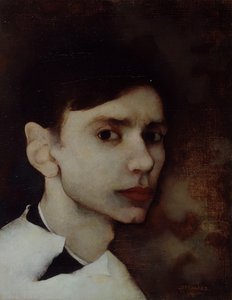
Jan Mankes
1889 - 1920 , Netherlands
Quick Facts
- Artistic Movement Or Style: Symbolic realism
- Artists Or Movements Influenced By This Artist: ['']
- Artists Who Influenced This Artist: ['']
- Date Of Birth: Meppel, Netherlands (1889)
- Date Of Death: 1920
- Full Name: Jan Mankes
- Nationality: Dutch
- Notable Artworks:
- Selfportrait of Jan Mankes
- Vrouw voor haar huis
- Place Of Birth: Netherlands
Related Articles
Reflecting the Self: A History of Portraiture & Psychological Insight
Explore the fascinating history of self-portraiture from Renaissance masters like Dürer & Rembrandt to modern interpretations. Discover the psychological insights and artistic techniques behind these iconic works. Expert analysis for art enthusiasts.
The Echo of Self: Reflectivity as a Core Theme in Art History & Contemporary Practice
Explore the rich history of self-representation in art, from Renaissance masters to modern innovators. Discover how artists use portraiture to reveal identity, emotion & the depths of the human psyche. Expert insights for collectors.
Joseph Henry Sharp: Capturing the Spirit of the Plains – Life, Art & Legacy
Explore the life & art of Joseph Henry Sharp, a founding member of the Taos Society of Artists renowned for his realistic depictions of Native American culture and Western landscapes. Discover his legacy with ArtsDot.

The Inner Landscape: Exploring Themes of Introspection in Visual Art Across Movements & Eras
Explore the captivating world of introspective art! Discover how artists across eras – from Rembrandt to Kahlo – used self-portraiture to reveal their inner worlds and emotional depths. A journey through art history & psychology.
Remixing Reality: The Artistic and Psychological Impact of Self-Insertion into Iconic Masterpieces
Explore the fascinating history & psychology of self-insertion into iconic art! Discover how digital tools are reshaping identity & artistic expression. Expert analysis & insights.