![The Battle Of Grunwald [tannenberg] — Jan Matejko](/media/artworks/images-full/8f/8a/8f8a06d6ec24e6bcc3ec1d7df4905ab0.jpg)
 Preview
 Send
Send Share
Share
 Details

 Download
 Similars
 X-Ray
X-Ray Diaporama
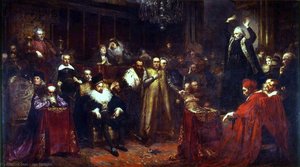
The Battle of Grunwald [Tannenberg]
 Oil On Canvas
- WallArt
- Romantic Historical Painting
 19th Century
 987.0 x 426.0 cm
 Warsaw National Museum
 Read More
Giclée / Art Print
Museum-quality giclée or canvas print with fast production and flexible finish options. ( Buy Hand Made Painting Buy Image)




P118B $10

P118H $10

P118W $10

P438Z $10

P508JH $12

P508YH $12

P805H $10

P805Z $10

P919BZ $10

P919G $10

P919XJ $10

P959ZH $10

P968JZ $12

W106C $8

W218G $10

W218JH $8

W218Y $10

W307PJ $10

W316G $10

W316PJ $8

W316Y $10

W398PJ $8

W4111J $10

W500HY $15

W500JH $15

W692G $12

W849H $8

W940BG $15

W953PJ $8




Pick from our preset sizes that match the artwork's original proportions.

You may enter your own dimensions to fit a specific frame or space. If your selected size does not match the original image's proportions, we will either crop the artwork or extend the image with a mirrored or solid-fill edge. A digital mockup will be sent for your approval before production begins.
Please note that the on-screen preview does not reflect the actual cropping or extension. Only the mockup will accurately show the final composition.
While custom sizes are available, we recommend selecting a dimension from the predefined list to preserve the original proportions.
Worldwide Delivery () in 2 weeks instead of standard 4/5 weeks. (25 August)

Free Worldwide Express Shipping

High-Quality Linen Canvas

Full Shipping Insurance

Customs Tax Refund Guarantee

True Color Matching Guarantee

60-Day Return Policy (Defects Only)

100% Money-Back Guarantee

Bulk Discount Offer
 Glass option is only available in size under 110 CM

The Battle of Grunwald [Tannenberg]
Giclée / Art Print
Reproduction Size
-


Total Price
$ 63
Collectible Description
A Monumental Vision of Polish Triumph
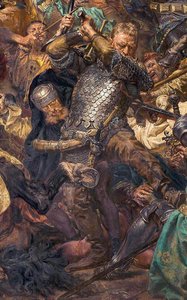
In the grand tapestry of European history painting, few canvases command the room with as much visceral authority as Jan Matejko’s The Battle of Grunwald. This monumental masterpiece, stretching an incredible 987 by 426 centimeters, is far more than a mere depiction of medieval warfare; it is a profound psychological landscape of national resilience. Painted in the late 19th century, the work captures the climactic moment of the 1410 conflict between the allied forces of the Kingdom of Poland and the Grand Duchary of Lithuania against the formidable Teutonic Order. To stand before this work—or to possess a high-quality reproduction of it—is to be swept into a whirlwind of motion, where the air seems thick with the dust of cavalry charges and the metallic tang of clashing steel.
Matejko, a titan of Academic Romanticism, utilized his immense skill to weave a complex narrative through every inch of the canvas. The composition is a masterclass in controlled chaos. Rather than presenting a singular, static focal point, the artist guides the eye through a labyrinth of heroic figures, fallen warriors, and heraldic banners. One cannot help but be drawn to the central drama: the death of the Grand Master, Ulrich von Jungingen, and the triumphant presence of Grand Duke Vytautas. The technique employed is nothing short of extraordinary; using oil on canvas, Matejko achieved a luminous depth that brings the textures of heavy plate armor, flowing crimson capes, and weathered shields to life with startling realism.
Symbolism and the Soul of a Nation
Beyond its surface-level spectacle, The Battle of Grunwald serves as a deeply symbolic vessel for Polish identity. Created during a period when Poland was struggling to maintain its cultural sovereignty amidst foreign partitions, the painting acted as a spiritual bulwark. Every element is imbued with meaning: the swords sent by the Teutonic Knights as a mocking gesture become symbols of provocation and destiny, while the intense, dramatic lighting evokes a sense of divine justice unfolding on the battlefield. The artist meticulously researched historical manuscripts to ensure that every crest and costume resonated with authenticity, turning the canvas into a living historical document.
For the discerning collector or interior designer, this piece offers an unparalleled opportunity to introduce a sense of gravity and heritage into a space. The painting’s sheer scale and emotional intensity make it a definitive statement piece, capable of anchoring a grand hall, a library, or a sophisticated study. It does not merely decorate a wall; it commands the atmosphere, inviting contemplation on themes of bravery, sacrifice, and the enduring strength of the human spirit. A reproduction of such a work brings the epic scale of history into the modern home, offering a timeless connection to one of the most significant triumphs in Eastern European history.
Related Artworks
Artist Biography
early life and education
jan alojzy matejko, a renowned polish painter, was born on june 24, 1838, in kraków, poland. his father, franciszek ksawery matejko, was a czech-born tutor and music teacher. jan's early life was marked by the kraków revolution of 1846 and the 1848 siege of kraków by the austrians, events that would later influence his artistic themes. matejko attended st. ann's high school but dropped out in 1851 due to poor grades. however, he showed exceptional talent for art from an early age. he studied at the school of fine arts in kraków from 1852 to 1858, specializing in historical painting under the tutelage of wojciech korneli stattler and władysław łuszczkiewicz.artistic career
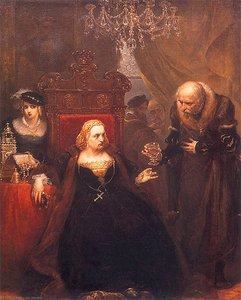
matejko's first major work, tsars shuyski before zygmunt iii, was completed in 1853. he began exhibiting his historical paintings at the kraków society of friends of fine arts in 1855. notable works include:- rejtan (1866): a large oil on canvas painting depicting a pivotal moment in polish history.
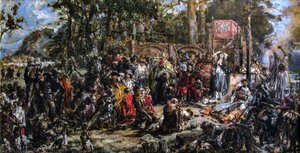
- union of lublin (1869): a significant piece showcasing matejko's skill in capturing historical events.
- battle of grunwald (1878): a masterpiece that highlights his ability to convey the intensity of battle scenes.
museological contributions and legacy
matejko spent most of his life in kraków, eventually becoming a director at the jan matejko academy of fine arts, formerly known as the kraków academy of fine arts. his students included prominent painters such as maurycy gottlieb, jacek malczewski, józef mehoffer, and stanisław wyspiański. notable works available on ArtsDot:- jan matejko: varna (romanticism)
- jan matejko: still life (romanticism)
- jan matejko: the union of lublin (298 x 512 cm, romanticism, oil on canvas)
references:
discovering the masterpieces of muzeum narodowe krakow, poland (wikipedia.org)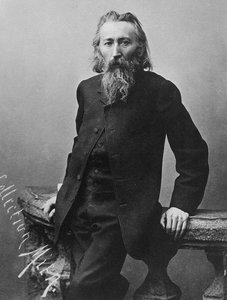
Jan Matejko
1838 - 1893 , Poland
Quick Facts
- Artistic Movement Or Style: Romanticism
- Artists Or Movements Influenced By This Artist: ['Maurycy Gottlieb']
- Artists Who Influenced This Artist:
- Wojciech Korneli Stattler
- Władysław Łuszczkiewicz
- Date Of Birth: June 24, 1838
- Date Of Death: November 1, 1893
- Full Name: Jan Alojzy Matejko
- Nationality: Polish
- Notable Artworks:
- Battle of Grunwald
- Union of Lublin
- Place Of Birth: Kraków, Poland
Related Articles
Jan Matejko: Historical Narrative & National Identity in 19th-Century Polish Painting
Explore the powerful historical paintings of Jan Matejko, Poland's national artist. Discover his iconic works & learn how he shaped Polish identity in the 19th century. High-quality reproductions available.

Romantic Realism's Finest: 10 Masterpieces for Your Home | ArtsDot
Explore 10 defining masterpieces of Romantic Realism! Discover Courbet, Millet & Daumier's powerful paintings—capturing emotion and social realities. Find museum-quality reproductions for your home at ArtsDot.com.
High Medieval Art: 10 Masterpieces That Shaped an Era | ArtsDot
Journey through High Medieval Art! Explore 10 iconic masterpieces – from Giotto's frescoes to stunning Gothic cathedrals. Discover the stories behind these timeless paintings, sculptures & illuminated manuscripts. Find museum-quality art reproductions at ArtsDot.com.

Late Medieval Masterpieces: 10 Artworks That Defined an Era | ArtsDot
Journey through 10 defining Late Medieval masterpieces – from Giotto's frescoes to Jan van Eyck’s realism. Explore the stories, techniques & vibrant colors of Gothic art. Find museum-quality reproductions and elevate your home decor with ArtsDot.com! Discover all masterpieces on ArtsDot.com
Stanisław Wyspiański: Symbolism, National Identity & the Polish Secession
Explore the life & work of Stanisław Wyspiański, a pivotal figure in Polish Symbolism and the Young Poland movement. Discover his iconic paintings, dramas, and stained glass designs reflecting national identity & artistic innovation.
![The Battle of Grunwald [Tannenberg]](/media/artworks/images-thumb/76/63/7663bffc0e03f3032abe818c6c091ed6.jpg)