 Preview
 Send
Send Share
Share
 Details

 Download
 Similars
 X-Ray
X-Ray Diaporama
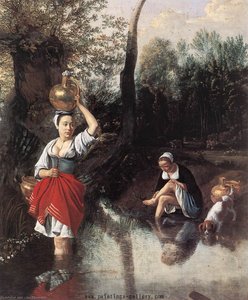
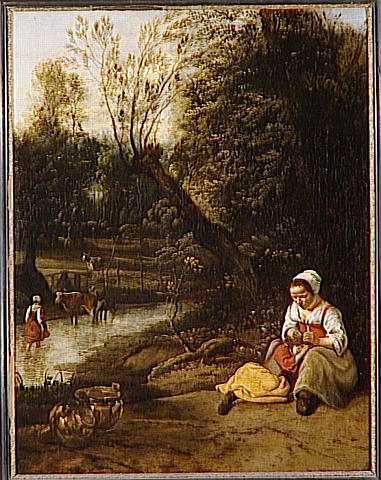
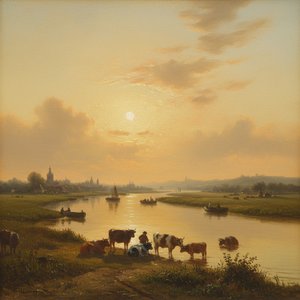
LA TOILETTE AU BORD DE L'EAU


 Read More
Hand Made Oil Reproduction
Hand-painted oil on canvas in your size and frame, made to order by our artists. ( Buy Print Buy Image)




P118B $10

P118H $10

P118W $10

P438Z $10

P508JH $12

P508YH $12

P805H $10

P805Z $10

P919BZ $10

P919G $10

P919XJ $10

P959ZH $10

P968JZ $12

W106C $8

W218G $10

W218JH $8

W218Y $10

W307PJ $10

W316G $10

W316PJ $8

W316Y $10

W398PJ $8

W4111J $10

W500HY $15

W500JH $15

W692G $12

W849H $8

W940BG $15

W953PJ $8




Pick from our preset sizes that match the artwork's original proportions.

You may enter your own dimensions to fit a specific frame or space. If your selected size does not match the original image's proportions, we will either crop the artwork or extend the painting with additional hand-painted elements. A digital mockup will be sent for your approval before production begins.
Please note that the on-screen preview does not reflect the actual cropping or extension. Only the mockup will accurately show the final composition.
While custom sizes are available, we recommend selecting a dimension from the predefined list to preserve the original proportions.
After order, ArtsDot.com team will email client for instructions and provide a mockup preview
Worldwide Delivery () in 3/4 weeks instead of standard 5 weeks. (22 August). No compromise on quality.

Free Worldwide Express Shipping

High-Quality Linen Canvas

Full Shipping Insurance

Customs Tax Refund Guarantee

True Color Matching Guarantee

60-Day Return Policy (Defects Only)

100% Money-Back Guarantee

Bulk Discount Offer
 Glass option is only available in size under 110 CM

LA TOILETTE AU BORD DE L'EAU
Reproduction Medium
Reproduction Size
-


Total Price
$ 263
Artwork Description
A Pastoral Moment Captured: Jan Siberechts’ “La Toilette au Bord de l'Eau”
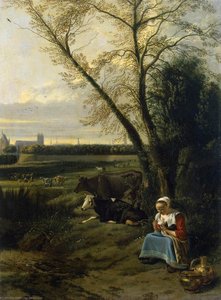
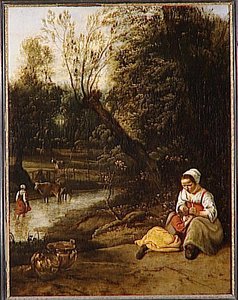
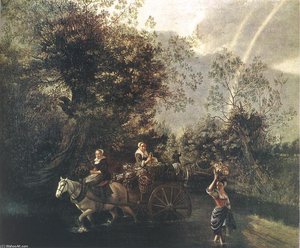
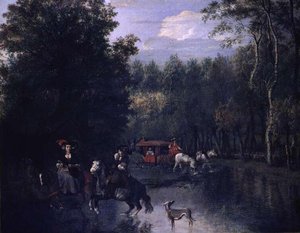
Jan Siberechts’ "La Toilette au Bord de l'Eau" (The Bathing by the Water) is more than just a picturesque landscape; it’s a carefully constructed tableau of tranquility and domesticity, imbued with the subtle complexities of 17th-century Dutch artistic sensibilities. Painted in 1680, this oil on canvas work transports us to a serene riverside scene, dominated by the gentle presence of a woman and child near a meandering stream. Siberechts, born in Antwerp in 1627, navigated a unique path in art history – initially trained within his family’s sculpting workshop, he ultimately became a celebrated landscape painter, bridging the gap between Flemish tradition and the burgeoning naturalism taking root in England.
The painting immediately establishes a mood of quiet contemplation. The color palette is deliberately restrained, relying on earthy browns, muted greens, and soft blues to evoke the atmosphere of a cloudy day or early morning light. These tones are skillfully layered, creating a sense of depth and volume that draws the viewer into the scene. Siberechts’ masterful use of linear perspective guides our eye along the winding stream, leading us towards distant hills and establishing a believable spatial relationship between foreground and background. The subtle variations in brushstroke – from the smooth blending of water to the textured application on tree bark – contribute significantly to the painting's tactile quality.
Decoding Symbolism and Narrative
Beyond its aesthetic beauty, “La Toilette au Bord de l’Eau” is rich with symbolic meaning. The central figures—a woman and child—represent the core values of family, nurture, and domesticity, deeply rooted in the artistic conventions of the time. While the title suggests a bathing scene, it's more accurately a moment of respite and connection. Cows grazing peacefully nearby further reinforce this pastoral ideal, symbolizing abundance and rural prosperity. The composition itself is carefully balanced, with the figures positioned on the right side of the canvas to create a sense of visual harmony and draw attention to their relationship.
Interestingly, Siberechts’ work reflects a broader shift in artistic focus during the 17th century – a move away from purely religious subjects towards secular themes. This trend was particularly pronounced in the Netherlands, where artists increasingly sought to capture the beauty of the natural world and depict scenes of everyday life. The painting's resemblance to Dutch Golden Age landscape paintings is evident in its meticulous detail, realistic representation, and emphasis on atmospheric conditions – Siberechts expertly captures the diffused light and subtle variations in color that characterize a cloudy day.
Technique and Artistic Process
Examining the technique reveals Siberechts’ dedication to his craft. The painting is executed in oil paint on canvas, utilizing a layering approach that builds up depth and luminosity through successive applications of pigment. The artist demonstrates a keen understanding of light and shadow, creating soft gradations that define forms and contribute to the overall sense of atmosphere. Note the careful rendering of textures – from the rough bark of the trees to the smooth surface of the water – achieved through subtle variations in brushstroke and color mixing.
The influence of Flemish painting is undeniable, particularly in Siberechts’ attention to detail and his ability to capture atmospheric effects. However, there's also a distinct sense of innovation in his work, reflecting the growing interest in naturalism and landscape painting that was emerging in England during this period. “La Toilette au Bord de l'Eau” stands as a testament to Siberechts’ artistic versatility and his ability to synthesize diverse influences into a cohesive and compelling vision.
A Timeless Appeal for Collectors and Designers
“La Toilette au Bord de l'Eau” continues to resonate with viewers today, offering a glimpse into a bygone era of tranquility and domesticity. Its timeless appeal lies in its ability to evoke feelings of peace, harmony, and connection with nature. Reproductions of this captivating artwork are highly sought after by collectors and interior designers alike, who appreciate its understated elegance and the subtle nuances of Siberechts’ artistic vision. The painting's harmonious composition and evocative color palette make it a perfect addition to any space, bringing a touch of pastoral serenity to the home or office.
Related Artworks
Artist Biography
A Flemish Vision in England: The Life and Art of Jan Siberechts
Jan Siberechts, born in Antwerp in 1627, occupies a fascinating position in the history of European art—a bridge between the vibrant traditions of Flemish painting and the burgeoning landscape tradition of England. His story is one of artistic development, fortunate patronage, and ultimately, pioneering influence. The son of a sculptor also named Jan Siberechts, he received his initial training within the family workshop, absorbing the skills and aesthetic sensibilities that would form the foundation of his career. By 1648, he had achieved master status in the prestigious Guild of Saint Luke in Antwerp, signaling his recognition as a skilled craftsman. While concrete evidence remains elusive, art historians speculate about a possible sojourn to Italy during the late 1640s or early 1650s. Though unconfirmed, this potential exposure to Italianate landscape painting—with its emphasis on classical compositions and atmospheric perspective—undoubtedly left an imprint on his evolving style, visible in the early works that showcase a delicate balance between Flemish realism and Italianate ideals. His marriage to Maria-Anna Croes in 1652 marked a period of stability as he honed his craft, initially drawing inspiration from Dutch masters like Nicolaes Berchem and Karel Dujardin, whose pastoral scenes and nuanced light effects resonated with his artistic inclinations.From Flemish Countryside to English Estates
The 1660s proved pivotal in Siberechts’ artistic journey. He began to forge a distinctly personal style, turning his attention increasingly towards the landscapes of his native Flanders and the rhythms of rural life. This wasn't merely topographical representation; it was an immersive portrayal of the Flemish countryside populated by robust figures—often women engaged in everyday tasks—dressed in brilliantly colored clothing that punctuated the verdant scenes. He skillfully manipulated water reflections, creating visual echoes and adding depth to his compositions. These paintings often echoed the intimate farmyard scenes popularized by David Teniers the Younger, but Siberechts infused them with a broader scope and a more atmospheric quality. This burgeoning talent did not go unnoticed. In 1670, George Villiers, the Second Duke of Buckingham, encountered Siberechts’ work during a visit to Antwerp and was profoundly impressed. Recognizing a rare artistic gift, the Duke extended an invitation for Siberechts to travel to England—an offer that would irrevocably alter the course of his career. Around 1672, Siberechts accepted, embarking on a new chapter in a foreign land.A Pioneer of the English Landscape
Siberrechts’ initial years in England were dedicated to an ambitious project: decorating Cliveden House for the Duke of Buckingham. This commission provided him with both financial security and an opportunity to showcase his artistic versatility. However, it was his subsequent travels throughout England that truly cemented his legacy. He became a sought-after artist among the aristocracy, undertaking numerous commissions to document their estates—a practice that would effectively establish him as a pioneer of the English country house portrait. These weren’t simply depictions of grand architecture; they were carefully constructed compositions that integrated the stately home into its surrounding landscape, often employing a bird's-eye perspective and a misty atmospheric haze. He captured not just the physical presence of these estates but also their sense of place and the lifestyle they represented. His daughters even contributed to his success, with one working as a lace-maker for the Queen—a testament to the family’s integration into English society. In 1696, he received a particularly significant commission: to paint the Belsize Estate of John Coggs, a work that now resides in the Tate Gallery and stands as a prime example of his topographical skill and artistic vision. Siberechts continued working until his death in London in 1703.Legacy and Artistic Significance
Jan Siberechts is rightfully regarded as a pivotal figure in the development of English landscape painting, often hailed as the “father of British landscape.” His topographical views weren’t merely records of estates; they were artistic interpretations that influenced generations of artists who followed. He paved the way for other Flemish painters—Peter Tillemans, Pieter Andreas Rijsbrack, and Hendrik Frans de Cort among them—who would continue to document the English countryside with similar skill and sensitivity. Approximately one hundred works attributed to Siberechts have survived, offering a glimpse into his prolific output and artistic evolution. His style, initially shaped by Dutch and Italianate traditions, ultimately blossomed into something uniquely his own—characterized by vibrant colors, meticulously rendered figures, and atmospheric landscapes that captured the essence of both Flemish rural life and the grandeur of English estates. He even counted John Wootton among his pupils, further extending his influence on the artistic landscape of England. Siberechts’ contribution lies not only in his technical mastery but also in his ability to capture a sense of place and belonging—a quality that continues to resonate with viewers today. His paintings are more than just landscapes; they are windows into a bygone era, offering a glimpse into the lives and aspirations of those who inhabited them.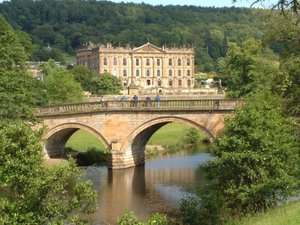
Jan Siberechts
1627 - 1703 , Belgium
Quick Facts
- Artistic Movement Or Style: Baroque, Landscape
- Artists Or Movements Influenced By This Artist:
- Peter Tillemans
- British landscape
- Artists Who Influenced This Artist:
- Nicolaes Berchem
- Karel Dujardin
- Date Of Birth: 1627
- Date Of Death: 1703
- Full Name: Jan Siberechts
- Nationality: Flemish
- Notable Artworks:
- The Ford
- PAYSAGE AVEC FIGURES
- Belsize Estate
- Place Of Birth: Antwerp, Belgium
Related Articles
Idyllic Visions: Exploring the Pastoral Scene in Art History – From Arcadia to Modern Interpretations
Explore the captivating history of pastoral art from classical Arcadia to modern masterpieces. Discover key artists like Millet & Cole at ArtsDot. Find serene landscape paintings for your home.
Nicolaes Berchem: Dutch Golden Age Pastoralism & the Evolution of Landscape Painting
Explore the captivating world of Nicolaes Berchem, a leading Dutch Golden Age painter. Discover his idyllic landscapes, masterful technique & lasting influence on art history. Learn more at ArtsDot.
Jan van Goyen: Master of Dutch Landscape & Atmospheric Perspective
Discover Jan van Goyen, the master of Dutch landscape painting. Explore his subtle technique, atmospheric realism & lasting influence on art history. Learn about this 17th-century pioneer at ArtsDot.
Idyllic Visions: Exploring the Pastoral Tradition in Western Art – Themes, Techniques & Enduring Appeal
Explore the rich history of pastoral art from classical Arcadia to contemporary interpretations. Discover key artists, themes & collecting tips at ArtsDot.
Aelbert Cuyp: Illuminating the Dutch Golden Age with Light & Landscape
Explore the luminous landscapes of Aelbert Cuyp, a master of the Dutch Golden Age. Discover his unique light, serene riverside scenes & lasting influence on art history. Learn more at ArtsDot.