 Preview
 Send
Send Share
Share
 Details

 Download
 Similars
 X-Ray
X-Ray Diaporama
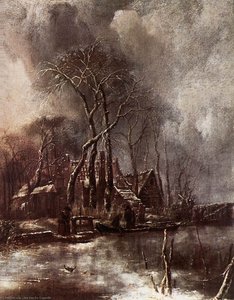
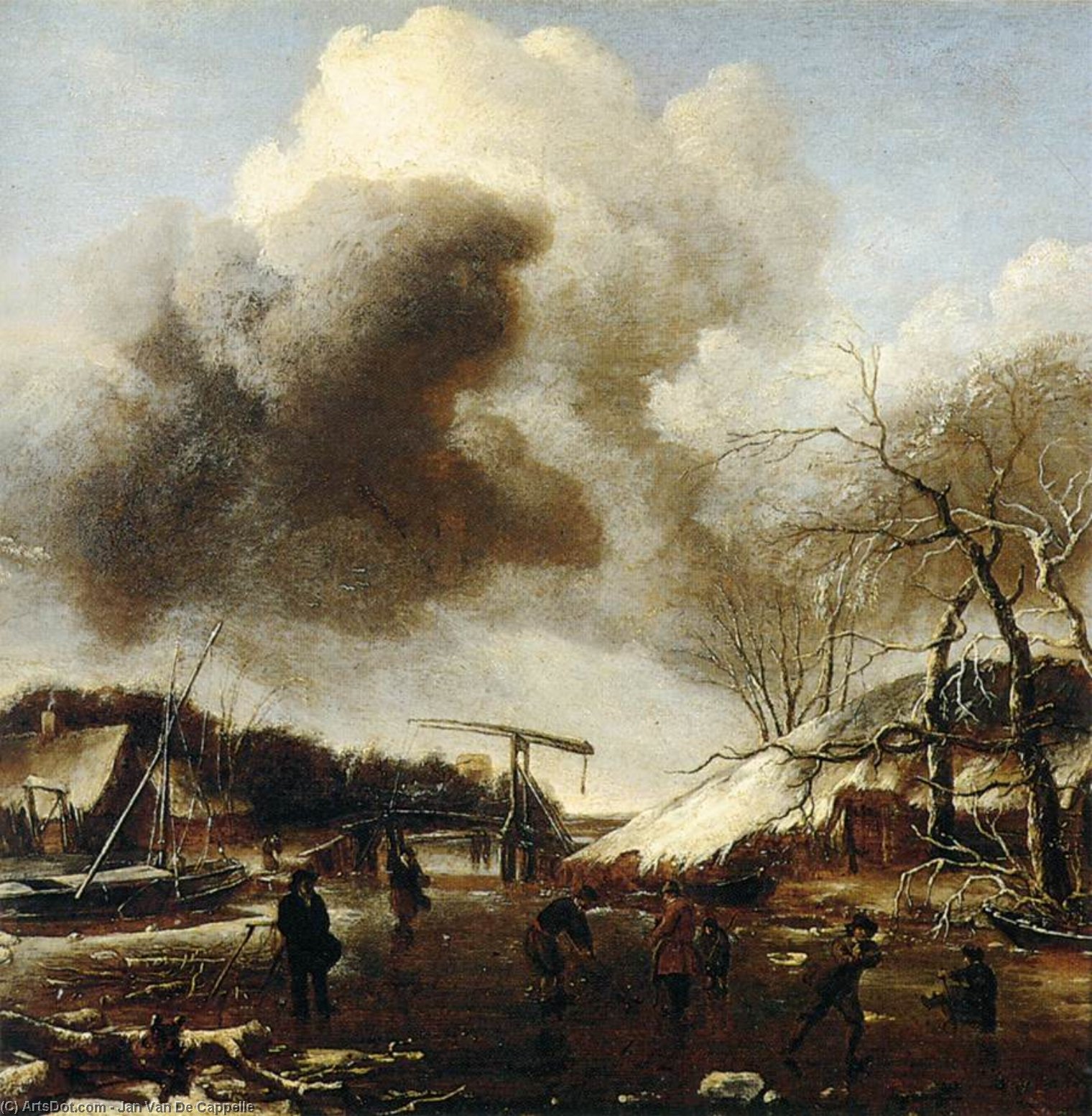
Winter Landscape
 Oil On Canvas
- WallArt
- Dutch Golden Age Painting
 1660
1660- Early Modern
 41.0 x 42.0 cm
 Museo Thyssen-Bornemisza
 Read More
Hand Made Oil Reproduction
Hand-painted oil on canvas in your size and frame, made to order by our artists. ( Buy Print Buy Image)




P118B $10

P118H $10

P118W $10

P438Z $10

P508JH $12

P508YH $12

P805H $10

P805Z $10

P919BZ $10

P919G $10

P919XJ $10

P959ZH $10

P968JZ $12

W106C $8

W218G $10

W218JH $8

W218Y $10

W307PJ $10

W316G $10

W316PJ $8

W316Y $10

W398PJ $8

W4111J $10

W500HY $15

W500JH $15

W692G $12

W849H $8

W940BG $15

W953PJ $8




Pick from our preset sizes that match the artwork's original proportions.

You may enter your own dimensions to fit a specific frame or space. If your selected size does not match the original image's proportions, we will either crop the artwork or extend the painting with additional hand-painted elements. A digital mockup will be sent for your approval before production begins.
Please note that the on-screen preview does not reflect the actual cropping or extension. Only the mockup will accurately show the final composition.
While custom sizes are available, we recommend selecting a dimension from the predefined list to preserve the original proportions.
After order, ArtsDot.com team will email client for instructions and provide a mockup preview
Worldwide Delivery () in 3/4 weeks instead of standard 5 weeks. (17 August). No compromise on quality.

Free Worldwide Express Shipping

High-Quality Linen Canvas

Full Shipping Insurance

Customs Tax Refund Guarantee

True Color Matching Guarantee

60-Day Return Policy (Defects Only)

100% Money-Back Guarantee

Bulk Discount Offer
 Glass option is only available in size under 110 CM

Winter Landscape
Reproduction Medium
Reproduction Size
-


Total Price
$ 263
Artwork Description
The Drama of the Northern Waters
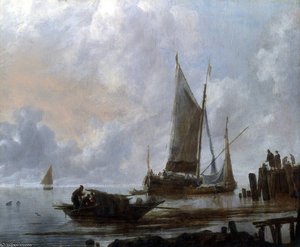
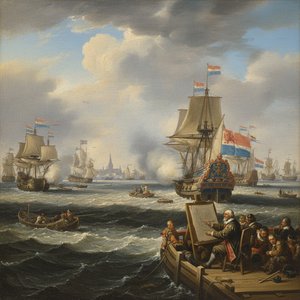
Gazing upon this depiction of a winter landscape, one is immediately drawn into a scene fraught with dramatic tension. The air itself seems heavy, weighted by dark, brooding clouds that promise an imminent storm. Before us unfolds a tableau vivant set upon the cold expanse of water, where several small boats bob like fragile memories against the vastness. At the heart of this gathering are figures—at least nine souls—who stand clustered near the edge, their presence suggesting both vulnerability and enduring human resilience. The inclusion of a horse amidst the group anchors the composition, lending an element of pastoral drama to what is otherwise a study in elemental forces.
Mastery of Atmosphere and Light
Jan van de Cappelle, the celebrated master of Dutch marine painting, captures more than just a scene; he traps a moment suspended between tempest and calm. His technique here is breathtakingly nuanced. Observe how the artist renders the water—it is not merely blue or grey, but a complex tapestry of reflected light and churning shadow. The handling of the sky, with its ominous gathering clouds juxtaposed against the distant promise of brighter moments, showcases his unparalleled ability to manipulate atmosphere. This painting speaks volumes about chiaroscuro applied to weather; the drama is painted in the interplay between deep, saturated tones and those fleeting patches where light manages to pierce the gloom.
A Glimpse into the Dutch Golden Age Spirit
Dating from 1660, this work situates itself perfectly within the zenith of the Dutch Golden Age. During this period, maritime life and the relationship between man and nature were central preoccupations for artists. Van de Cappelle, known for imbuing his seascapes with a profound sense of tranquility despite the visible turmoil, masterfully reflects this cultural fascination. The people gathered here, seemingly preparing for an adventure or perhaps simply enduring the elements together, embody the spirit of the era: a blend of industriousness, community reliance, and a deep respect—even apprehension—of nature's raw power.
Symbolism of Endurance and Community
Beyond the technical brilliance lies a rich symbolic resonance. The stormy weather often symbolizes life’s inevitable hardships or emotional turmoil. Yet, the grouping of figures, their shared focus on the water and the boats, speaks powerfully to human connection. It suggests that even when faced with overwhelming natural forces—the dark clouds, the rough water—community, preparation, and mutual support are what allow humanity to navigate through life’s deepest winters. For the collector or designer, this piece offers more than decoration; it offers a contemplation on steadfastness.
Bringing the Drama Home
To reproduce such an evocative work is to invite a piece of Dutch Romanticism into your own space. The rich palette and palpable sense of movement make it a stunning focal point for any room, particularly those with natural light that can echo the drama captured on canvas. Owning a reproduction allows one to connect intimately with Van de Cappelle’s legacy—a legacy defined by capturing the sublime beauty found at the intersection of human endeavor and untamed nature.
Related Artworks
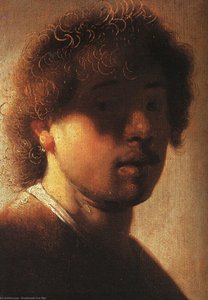
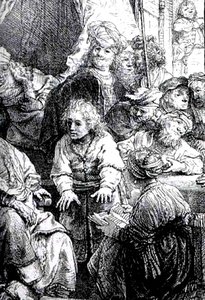
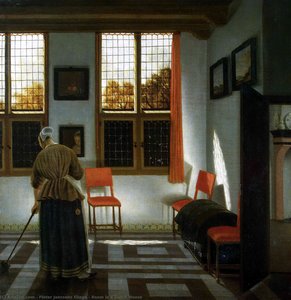
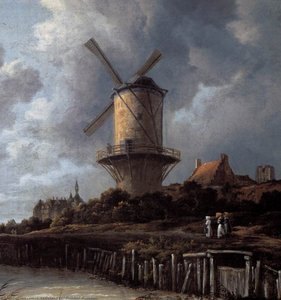
Artist Biography
The Mirror of Tranquility: The Life and Legacy of Jan van de Cappelle
Jan van de Cappelle stands as a singular, luminous figure within the pantheon of the Dutch Golden Age, an artist whose presence in the art historical canon is defined by a profound, meditative stillness. Unlike many of his contemporaries who produced vast quantities of work, Cappelle’s oeuvre remains remarkably small, yet each piece commands an extraordinary distinction. He was not merely a painter of the sea; he was a man of significant worldly stature, an industrial titan inextricably linked to the economic heartbeat of Amsterdam. As a successful figure in the textile industry and a collector of great taste, his life was a unique duality of commercial prowess and artistic sensitivity. This intersection of wealth and vision allowed him to cultivate a style that does not merely depict the maritime world but captures its very soul—a stillness that reflects both the surface of the water and the infinite heavens above.
Born in Amsterdam in 1624, Jan van de Cappelle followed an unconventional path toward artistic mastery. While many masters of his era were forged in the rigorous fires of formal guild training, Cappelle was largely self-taught, a fact that perhaps contributed to the singular, unburdened quality of his vision. His upbringing was steeped in the technical complexities of industry; his father, Franchoy van de Cappelle, operated a substantial dyeworks specializing in the production of crimson dye. This environment, demanding precision and an intimate understanding of color and chemistry, likely provided Jan with an invaluable foundation for his later explorations of light and atmosphere. While he may have been influenced by the stylistic sensibilities of Simon de Vlieger, whose compositions share a certain structural kinship with his own, Cappelle’s work eventually transcended mere influence to achieve a state of pure, atmospheric grace.
Mastery of Light and Atmospheric Perspective
The true genius of Jan van de Cappelle lies in his ability to manipulate the elements of air and water to create a sense of profound emotional depth. He is often celebrated as Holland’s outstanding marine painter of the 17th century, a title earned through his unparalleled mastery of atmospheric perspective. His technique is most famously realized in the way he mirrors sky formations onto calm, glass-like water surfaces. In works such as Ships at Anchor on a Quiet Sea, the viewer is not merely looking at a maritime scene but is invited into a moment of suspended animation. The subtle gradations of light and the meticulous rendering of clouds create a sense of immense space, where the boundary between the sea and the sky becomes beautifully blurred.
His artistic language draws inspiration from the realism of Willem van de Velde the Elder, yet it possesses a softness that is uniquely his own. Where others might focus on the chaotic energy of naval combat or the ruggedness of the storm, Cappelle sought the quietude found in the aftermath or the anticipation of movement. His compositions often feature:
- The interplay of light and shadow: Capturing the fleeting moments when sunlight pierces through cloud cover to illuminate a single vessel.
- Reflective surfaces: Using the water as a mirror to duplicate the majesty of the Dutch sky, creating a sense of symmetry and peace.
- Atmospheric nuance: A delicate handling of mist, haze, and clarity that gives his landscapes a palpable sense of temperature and humidity.
Historical Significance and Enduring Impact
The historical significance of Jan van de Cappelle extends beyond the aesthetic beauty of his canvases. He represents the pinnacle of the Dutch Golden Age's ability to find the extraordinary within the ordinary. Through his depictions of sailing boats, river scenes, and winter landscapes, he documented the maritime identity of a nation that was then the center of global commerce. Even in his more dynamic works, such as The State Barge Saluted by the Home Fleet, there remains an underlying sense of order and dignity that reflects the structured prosperity of his era.
Though his life ended in 1679, leaving behind a limited collection of masterpieces, his impact on the genre of marine art is immeasurable. He taught subsequent generations how to paint not just what is seen, but what is felt—the weight of the air, the stillness of the tide, and the quiet majesty of the horizon. Today, his works remain essential touchstones for anyone seeking to understand the delicate balance between man, nature, and the light that binds them together. His legacy is one of serenity, a lasting testament to an artist who found the infinite within the tranquil.
Jan van de Cappelle
1624 - 1679 , Netherlands
Quick Facts
- Artistic Movement Or Style: Golden Age
- Artists Or Movements Influenced By This Artist: ['Rembrandt']
- Artists Who Influenced This Artist:
- Simon de Vlieger
- Willem van de Velde the Elder
- Date Of Birth: Amsterdam, Netherlands (1624)
- Date Of Death: 1679
- Full Name: Jan van de Cappelle
- Nationality: Dutch
- Notable Artworks:
- Ships at Anchor on a Quiet Sea
- Vessels Moored off a Jetty
- A River Scene with Dutch Vessels Becalmed
- Place Of Birth: Amsterdam
Related Articles
Van Gogh's Masterpieces: Explore 25 Iconic Paintings & Art for Your Home
Journey through Vincent van Gogh's 25 most iconic paintings! Explore 'Starry Night', 'Sunflowers,' and more—discover the stories, techniques & emotions behind these Post-Impressionist masterpieces. Find museum-quality art reproductions for your home at ArtsDot.com.
Willem van de Velde the Elder: Master of Maritime Painting & Chronicler of the Dutch Golden Age
Discover the captivating maritime paintings of Willem van de Velde the Elder, a master chronicler of the Dutch Golden Age. Explore his unparalleled realism and lasting influence on naval art history.

Dutch Masters: 10 Golden Age Paintings That Still Inspire |
Journey into the Dutch Golden Age! Explore 10 iconic paintings by Rembrandt, Vermeer & Hals. Discover the stories behind these Baroque masterpieces and find museum-quality art reproductions to elevate your home decor on .

Demandes Commerciales
APS ofrece reproducciones de bellas artes y encargos personalizados desde 2004. Confían en nosotros corporaciones, hoteles y coleccionistas selectos para obras de arte de calidad museística, servicio discreto y soluciones artísticas completas. ¡Póngase en contacto con nosotros para obtener un presupuesto personalizado!

Rembrandt's Masterpieces: Explore 25 Iconic Paintings & Prints | ArtsDot
Journey through Rembrandt van Rijn's 25 most iconic paintings & etchings. Explore Dutch Golden Age masterpieces, dramatic chiaroscuro, and timeless portraits. Find museum-quality art reproductions to elevate your home decor on ArtsDot.com.