 Preview
 Send
Send Share
Share
 Details

 Download
 Similars
 X-Ray
X-Ray Diaporama
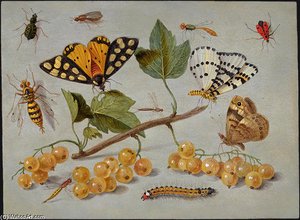
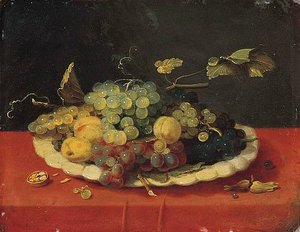
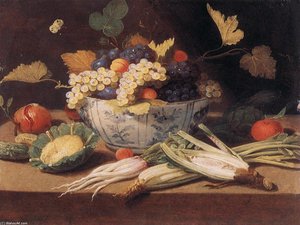
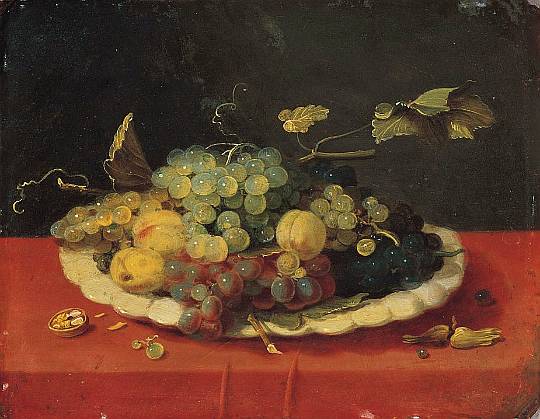
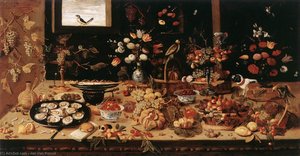
Still-Life with Fruit
 Oil On Copper
- Flemish Baroque
 13.0 x 16.0 cm
 Norton Simon Museum of Art
 Read More
Hand Made Oil Reproduction
Hand-painted oil on canvas in your size and frame, made to order by our artists. ( Buy Print Buy Image)




P118B $10

P118H $10

P118W $10

P438Z $10

P508JH $12

P508YH $12

P805H $10

P805Z $10

P919BZ $10

P919G $10

P919XJ $10

P959ZH $10

P968JZ $12

W106C $8

W218G $10

W218JH $8

W218Y $10

W307PJ $10

W316G $10

W316PJ $8

W316Y $10

W398PJ $8

W4111J $10

W500HY $15

W500JH $15

W692G $12

W849H $8

W940BG $15

W953PJ $8




Pick from our preset sizes that match the artwork's original proportions.

You may enter your own dimensions to fit a specific frame or space. If your selected size does not match the original image's proportions, we will either crop the artwork or extend the painting with additional hand-painted elements. A digital mockup will be sent for your approval before production begins.
Please note that the on-screen preview does not reflect the actual cropping or extension. Only the mockup will accurately show the final composition.
While custom sizes are available, we recommend selecting a dimension from the predefined list to preserve the original proportions.
After order, ArtsDot.com team will email client for instructions and provide a mockup preview
Worldwide Delivery () in 3/4 weeks instead of standard 5 weeks. (16 August). No compromise on quality.

Free Worldwide Express Shipping

High-Quality Linen Canvas

Full Shipping Insurance

Customs Tax Refund Guarantee

True Color Matching Guarantee

60-Day Return Policy (Defects Only)

100% Money-Back Guarantee

Bulk Discount Offer
 Glass option is only available in size under 110 CM

Still-Life with Fruit
Reproduction Medium
Reproduction Size
-


Total Price
$ 263
Artwork Description
A Delicate Symphony of Light and Color: Jan van Kessel’s Still Life with Fruit
Jan van Kessel (1641 – 1680) stands as a beacon of subtlety and meticulous observation within the illustrious Dutch Golden Age, an artist who transcended mere representation to achieve a profound communion with his subject matter. His masterpiece, “Still Life with Fruit,” painted circa 1653, exemplifies this ethos—a captivating tableau that speaks volumes about both artistic prowess and the burgeoning spirit of scientific inquiry prevalent during his era. Currently residing in the Norton Simon Museum of Art in Pasadena, California, this copper oil painting offers a glimpse into a world where beauty intertwines seamlessly with intellectual curiosity.The Anatomy of Detail: Technique and Craftsmanship
Van Kessel’s approach to painting was characterized by an unparalleled dedication to realism—a pursuit that demanded painstaking attention to detail. Unlike many contemporaries who favored idealized depictions, he embraced the complexities inherent in capturing the natural world accurately. He achieved this remarkable feat through a masterful manipulation of chiaroscuro – the dramatic interplay between light and shadow – skillfully sculpting form and conveying texture with breathtaking precision. The artist’s meticulous layering of glazes created an illusion of depth and luminosity, mirroring the scientific fascination of his time with optics and atmospheric perspective. Each brushstroke contributes to a palpable sense of materiality, inviting viewers to appreciate the tangible beauty of the pigments themselves.A Window into Scientific Thought: Contextualizing the Artwork
The painting’s genesis coincided with a period marked by significant advancements in scientific understanding. Anatomical studies were gaining prominence, fueled by figures like Andreas Vesalius, and artists increasingly sought to emulate the observational rigor of natural philosophers. Van Kessel wasn't merely depicting fruit; he was engaging in a dialogue with these intellectual currents. The careful arrangement of objects—a white plate adorned with glistening grapes, plump peaches, and a radiant pear—served as a visual microcosm of scientific principles. Like Vesalius dissecting human anatomy to unlock the secrets of the body, Van Kessel dissected the fruit to reveal its inherent structure and beauty.Symbolism Beyond Aesthetics: Layers of Meaning
Beyond its technical brilliance and intellectual context lies a rich tapestry of symbolism. The fruits themselves—grapes representing abundance and fertility, peaches symbolizing immortality and prosperity—were emblems commonly employed in Baroque art to convey moral and spiritual truths. Their placement on the plate suggests an orderliness mirroring the cosmos itself, reflecting the humanist conviction that humanity possessed dominion over nature yet remained inextricably linked to its rhythms. Furthermore, the dark background serves as a counterpoint to the vibrant colors of the fruit, emphasizing their luminosity and highlighting their fragility—a poignant reminder of the ephemeral beauty of existence.An Emotional Resonance: Capturing Transient Perfection
Ultimately, “Still Life with Fruit” transcends mere visual representation; it evokes an emotional response rooted in contemplation. The painting’s stillness invites viewers to pause and appreciate the exquisite detail of its composition. It captures a fleeting moment—the ripeness of summer fruit—with unwavering fidelity, conveying not just what is seen but also what is felt. Like many Baroque masterpieces, it seeks to inspire awe and wonder, prompting reflection on themes of mortality and beauty. A high-quality reproduction allows admirers to experience this enduring legacy of artistic innovation and scientific curiosity.Related Artworks
Artist Biography
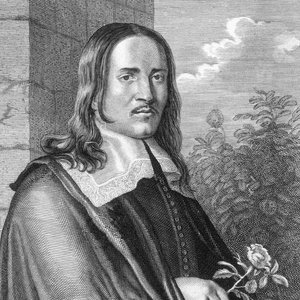
Jan van Kessel: A Master of Subtle Detail in the Age of Scientific Observation
Born in Antwerp in 1626, Jan van Kessel the Elder – often simply known as Jan van Kessel – emerged from a family steeped in artistic tradition. His lineage traced back to the renowned Brueghel dynasty, specifically through his grandfather, Hieronymus van Kessel the Elder, and his father, Hieronymus van Kessel the Younger. This connection to such influential figures undoubtedly shaped his early artistic development, yet Jan van Kessel forged a distinct path, becoming a remarkably versatile painter who excelled across a diverse range of genres – from meticulously rendered insect studies and opulent floral still lifes to dynamic marine scenes, evocative river landscapes, and even allegorical compositions.
His formative years were spent under the tutelage of some of Antwerp’s most esteemed artists. At just nine years old, he entered the studio of Simon de Vos, a leading history painter, gaining invaluable experience in composition and technique. He continued his training with his father and uncle, Jan Brueghel the Younger, absorbing their distinctive styles while simultaneously developing his own unique approach. This dual influence is evident throughout his oeuvre – a harmonious blend of meticulous detail reminiscent of Brueghel’s naturalism and a burgeoning scientific curiosity that would characterize much of his later work.
In 1644, Jan van Kessel formally joined the Antwerp Guild of Saint Luke, registering as a “blomschilder” – a flower painter. This designation highlights a significant aspect of his artistic practice: an intense fascination with the natural world. Unlike many of his contemporaries who focused on grand historical or mythological scenes, Van Kessel dedicated considerable attention to capturing the delicate beauty and intricate details of flora and fauna. His works are not merely decorative; they represent a form of scientific observation, meticulously documenting the textures, colors, and patterns of insects, flowers, and animals with astonishing accuracy.
His early marriage to Maria van Apshoven in 1646 marked the beginning of a prolific artistic career. The couple raised thirteen children, two of whom – Jan and Ferdinand – followed in their father’s footsteps and became accomplished painters themselves. This familial legacy further solidified Van Kessel's position within Antwerp’s vibrant art scene. He was not only a successful artist but also a respected member of the community, serving as captain of a local schutterij (civil guard), demonstrating his civic engagement alongside his artistic pursuits.
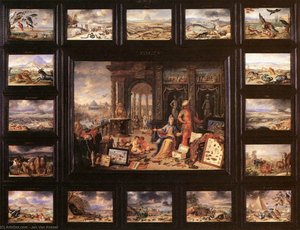
Throughout the 1650s and 60s, Van Kessel’s reputation grew, attracting wealthy patrons and securing commissions for lavish still lifes, often incorporating exotic fruits, vegetables, and meticulously rendered insects. His works were prized for their realism, vibrant colors, and masterful use of chiaroscuro – dramatic contrasts between light and shadow that heightened the sense of depth and volume. Notable examples include “The Continent of Asia” (1666), a complex allegorical panel depicting various continents and seascapes, and “Still-Life with Vegetables” (circa 1650s), showcasing his extraordinary ability to capture the textures and nuances of organic matter. His home in central Antwerp, known as ‘the white and red rose,’ reflected his financial success during this period.
However, fortune turned against him later in life. Following his wife’s death in 1678, Van Kessel faced increasing financial difficulties, ultimately resorting to mortgaging his property. Despite his artistic talent and the high prices commanded by his works, he struggled to maintain a stable income during his final years. He passed away in Antwerp in 1679, leaving behind a legacy of exquisite detail and scientific observation that continues to captivate art lovers today.
The Brueghel Connection and Artistic Influences
Van Kessel’s artistic lineage is inextricably linked to the Brueghel family, particularly his grandfather, Jan Brueghel the Elder. The elder Brueghel's influence is readily apparent in Van Kessel’s compositions – a shared interest in depicting scenes of everyday life and the natural world, albeit with a distinct emphasis on detail and scientific accuracy. Furthermore, he drew inspiration from earlier Flemish painters such as Daniel Seghers, known for his detailed botanical illustrations, and Joris Hoefnagel, whose meticulous depictions of insects and scientific instruments foreshadowed Van Kessel’s own approach.
Unlike the broader social commentary often found in Jan Brueghel the Elder's works, Van Kessel focused primarily on capturing the beauty and intricacies of individual subjects. His paintings are not narratives but rather carefully constructed studies – a testament to his dedication to observation and representation. The influence of Frans Snyders, a master of animal still lifes, is also discernible in Van Kessel’s depictions of animals, particularly their dynamic poses and realistic textures.
Technique and Style: A Delicate Balance
Van Kessel's distinctive style is characterized by an extraordinary level of detail and realism. He employed a meticulous technique, utilizing thin layers of paint to build up complex surfaces and create the illusion of texture and volume. His use of color was equally remarkable – he skillfully blended hues to achieve subtle gradations and create a sense of depth and atmosphere. The influence of Mannerism is evident in his elongated figures, dramatic lighting, and carefully orchestrated compositions.
His works often feature a sophisticated understanding of perspective and anatomy, reflecting his training with Simon de Vos. However, Van Kessel’s artistic vision extended beyond mere technical proficiency; he possessed an innate ability to capture the essence of his subjects – their beauty, fragility, and inherent vitality. The interplay between observation and artistry is what truly sets his work apart.
Legacy and Significance
Jan van Kessel the Elder’s contribution to Flemish art lies in his pioneering exploration of scientific observation within a painterly context. His meticulous depictions of insects, flowers, and animals represent a unique synthesis of artistic skill and intellectual curiosity. His works are not simply beautiful paintings; they are windows into a world of intricate detail and natural wonder.
Today, Van Kessel’s paintings are highly valued by collectors and art historians alike. His legacy continues to inspire artists who seek to capture the beauty and complexity of the natural world with precision and artistry. His works can be found in prestigious museums around the world, including the National Gallery of Art in Washington D.C., where “Insects and a Sprig of Rosemary” is a prized acquisition.
jan van kessel
1641 - 1680 , Belgium
Quick Facts
- Artistic Movement Or Style: Baroque, Mannerism
- Artists Or Movements Influenced By This Artist:
- Jan Brueghel the Younger
- Bruegel Dynasty
- Artists Who Influenced This Artist:
- Jan Brueghel the Elder
- Daniel Seghers
- Joris Hoefnagel
- Frans Snyders
- Date Of Birth: April 5, 1626, Antwerp
- Date Of Death: April 17, 1679, Antwerp
- Full Name: Jan van Kessel the Elder”
- Nationality: Flemish
- Notable Artworks:
- Holy Family
- The Continent of Asia
- Still-Life with Vegetables
- Place Of Birth: Antwerp, Belgium
Related Articles
Van Gogh's Masterpieces: Explore 25 Iconic Paintings & Art for Your Home
Journey through Vincent van Gogh's 25 most iconic paintings! Explore 'Starry Night', 'Sunflowers,' and more—discover the stories, techniques & emotions behind these Post-Impressionist masterpieces. Find museum-quality art reproductions for your home at ArtsDot.com.
Jan van Kessel the Elder: A Baroque Master of Floral Still Life & Miniature Portraiture
Discover the exquisite detail of Jan van Kessel the Elder's Baroque floral still lifes & captivating miniatures. Explore his artistic legacy, scientific precision, and lasting influence on 17th-century Flemish painting.

Dutch Baroque Masters: 10 Paintings That Shaped an Era | ArtsDot
Journey through the Golden Age with our guide to the Top 10 Dutch Baroque masterpieces! Explore iconic paintings by Rembrandt, Vermeer & Frans Hals. Find museum-quality art reproductions and elevate your home decor at ArtsDot.com.
Abraham Hendricksz van Beyeren: Pioneering Dutch Still Life & the Banquet Tradition
Explore the captivating world of Dutch Golden Age still life with Abraham van Beyeren. Discover his innovative techniques, symbolic banquet scenes & lasting influence on art history. Learn about collecting these masterpieces.

Rembrandt's Masterpieces: Explore 25 Iconic Paintings & Prints | ArtsDot
Journey through Rembrandt van Rijn's 25 most iconic paintings & etchings. Explore Dutch Golden Age masterpieces, dramatic chiaroscuro, and timeless portraits. Find museum-quality art reproductions to elevate your home decor on ArtsDot.com.