

 Preview
 Send
Send Share
Share
 Details

 Download
 Similars
 X-Ray
X-Ray Diaporama
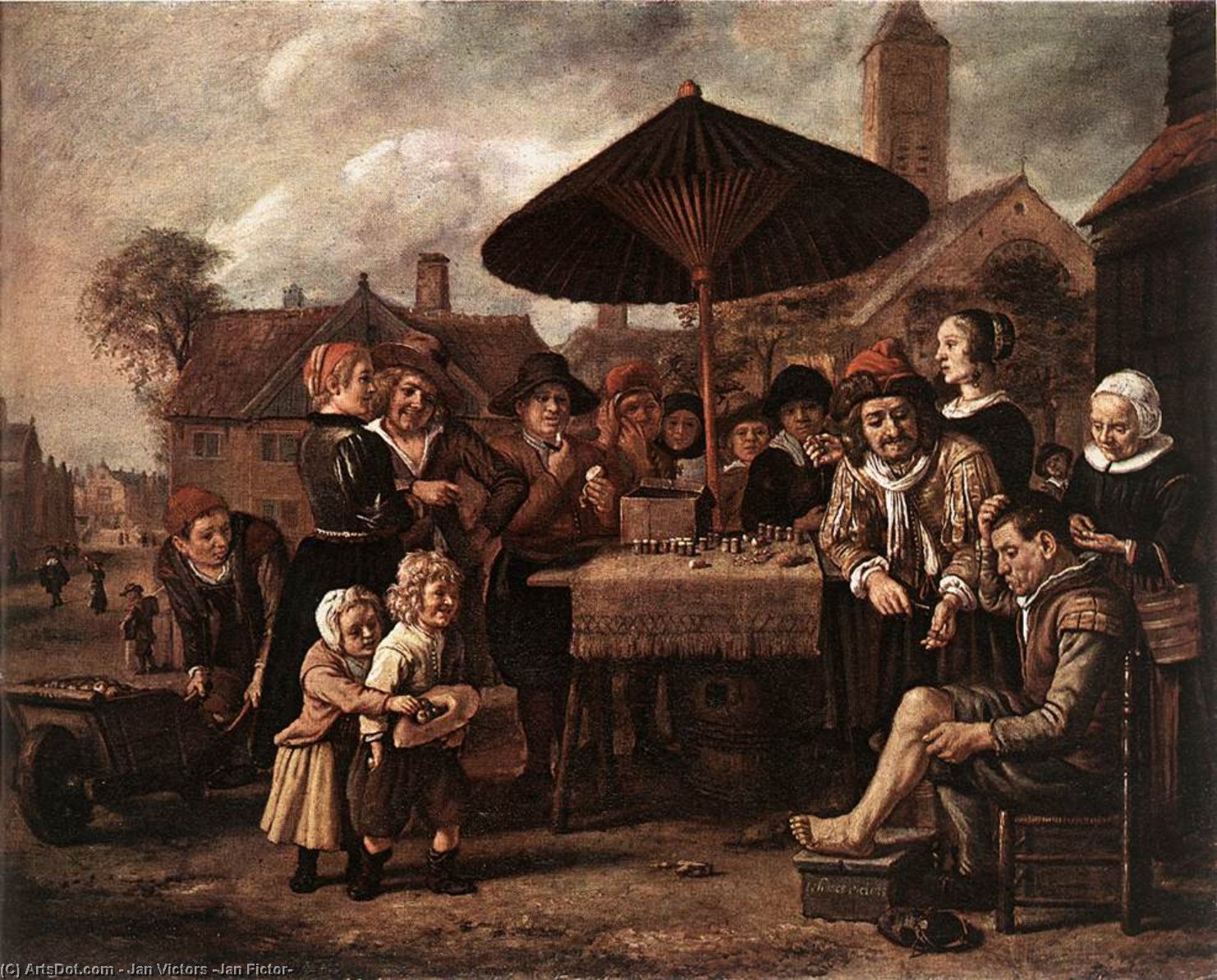
Market Scene with a Quack at his Stall
 Oil On Canvas
- WallArt
- Baroque
 1650
1650- Early Modern
 79.0 x 99.0 cm
 Szépmûvészeti Múzeum
 Read More
Purchase a high-resolution, enhanced digital image, far superior to the online preview.
Each file is meticulously prepared by our in-house specialists using advanced tools and expert manual retouching. We ensure every image has exceptional clarity, precise color accuracy, and fine detail.
The final file is delivered via email within 72 hours, optimized for immediate use in professional, editorial, and print environments. This is the same quality trusted by top-tier design studios, publishers, and galleries.
Digital Image
Download a high-resolution file for personal display, printing, and creative projects. ( Buy Print Buy Hand Made Painting)
Included in Every Digital Image Order
Expert Digital Delivery, Guaranteed
When you choose ArtsDot.com, you're not just getting an image - you're receiving a professionally enhanced digital artwork, crafted with precision and backed by a satisfaction guarantee. Here's everything that comes with your order, automatically:

Fast Email Delivery
Your high-resolution digital image file will be emailed to you within 72 hours of ordering - ready for immediate use.

AI-Enhanced Digital File
Your artwork is professionally optimized using advanced AI tools and manual editing, ensuring maximum detail, clarity, and color accuracy.

Free Lifetime Re-Delivery
Accidentally deleted or lost your file? No worries - we'll resend it to you anytime, free of charge.

No Import Fees - Ever
Enjoy your artwork instantly with zero customs, duties, or delivery fees - digital downloads are always tax-free.

Color Accuracy Guarantee
We ensure your digital image reflects the original colors as closely as possible using professional tools and color management.

60-Day Satisfaction Guarantee
If you're not satisfied with your digital image, we'll revise it or refund 100% within 60 days - no questions asked.

100% Money-Back Guarantee
Not satisfied? Get a full refund within 60 days of receiving your digital file - no questions asked.

Bulk Order Discounts
Buy 3 images, save 10% - Buy 5, save 15% - Buy 10+, save 20%. Great for creative projects, galleries, and agencies.
A Glimpse into Golden Age Merriment
Step back with us into the vibrant heart of a bustling 17th-century Dutch marketplace, captured in this evocative scene titled Market Scene with a Quack at his Stall. This painting is far more than a mere depiction of commerce; it is a richly textured tableau vivant, brimming with the unscripted drama and intimate camaraderie characteristic of the Dutch Golden Age. The air seems thick with conversation, the clatter of unseen goods, and the focused intensity of a card game unfolding at a central table. Observe the interplay between those gathered—men and women whose postures suggest deep engagement, their attention momentarily diverted from the everyday hustle by the shared ritual of play.
Mastery in Genre and Atmosphere
The artist, Jan Victors (Jan Fictor), masterfully employs genre painting to draw us into this slice of life. While his biography hints at a profound connection to biblical storytelling, here he channels that same skill to capture the ephemeral beauty of human interaction. The composition is wonderfully balanced; note the placement of the two umbrellas—one guarding the upper left corner and another anchoring the right side—which not only provide structural depth but also suggest the changeable nature of the day itself. These elements, alongside the simple wooden chair on the right, ground the scene in tangible reality. Victors’s technique allows light to fall with a naturalistic glow across the figures, highlighting gestures and expressions that speak volumes without uttering a single word.
The Allure of Social Gathering
At its core, this work speaks to the universal human need for connection. The card game serves as a perfect catalyst, drawing disparate individuals into a temporary, shared bubble of entertainment. It is in these moments—the slight lean forward, the conspiratorial glance, the momentary pause before a bet—that Victors finds his greatest subject matter. The presence of the quack at his stall adds a touch of rustic humor and everyday realism, reminding us that life’s grand dramas often play out amidst the mundane transactions of daily existence.
Bringing Dutch Life Home
For the collector or designer seeking to infuse a space with the warmth and historical depth of Dutch art, this reproduction offers an unparalleled opportunity. Owning a piece echoing Victors's skill means acquiring not just paint on canvas, but a palpable sense of history—a moment suspended in time from 1650. It invites contemplation, suggesting that even amidst the busiest modern life, there remains room for leisure, community, and the simple pleasure found at a well-played hand of cards.
Related Artworks




Artist Biography
Jan Victors (1619 – 1679): A Master of Dramatic Biblical Storytelling
Born in Amsterdam during the height of the Dutch Golden Age, Jan Victors, also known as Jan Fictor, was a painter whose career unfolded within a complex interplay of artistic influences and religious convictions. His life, though relatively obscure compared to contemporaries like Rembrandt or Vermeer, reveals a significant contribution to the rich tapestry of 17th-century Dutch art – specifically in his masterful depictions of biblical narratives and poignant genre scenes. While biographical details remain somewhat fragmented, piecing together information from tax records, artistic analysis, and historical context paints a portrait of an artist deeply committed to his faith, yet undeniably skilled in capturing human emotion and dramatic tension.
Early accounts suggest that Victors’s artistic journey began under the tutelage of Rembrandt van Rijn. Though the precise nature of their relationship remains debated – some scholars believe he was merely a student, while others posit a more substantial mentorship – the influence of Rembrandt is undeniable in Victors's early work, particularly evident in his study of character and composition. The “Young girl at a window” (circa 1640), now housed in the Louvre, stands as a testament to this formative period, showcasing a remarkable ability to convey youthful expectation and vulnerability – qualities that would become hallmarks of Victors’s oeuvre.
A Calvinist Painter: Restraint and Narrative
What distinguishes Jan Victors from many of his contemporaries is his deliberate avoidance of certain subjects deemed unsuitable for a devout Calvinist. He steadfastly resisted painting scenes depicting Christ, angels, or nudity – a conscious decision rooted in his religious beliefs. This constraint, however, did not stifle his creativity; rather, it channeled him towards exploring the vast and emotionally resonant world of biblical history and human drama. Victors’s paintings are replete with powerful narratives drawn from the Old Testament, often focusing on moments of moral struggle, familial conflict, and profound faith – themes that resonated deeply within the Calvinist community.
His approach to storytelling is characterized by a dramatic use of light and shadow, a technique known as chiaroscuro. Influenced heavily by Caravaggio, Victors masterfully employed contrasting tones to heighten emotional impact and create a sense of theatricality. This stylistic choice is particularly evident in “Abraham’s Parting from the Family of Lot” (1655), where the stark contrast between light and darkness underscores the gravity of Abraham's decision and the poignant farewells exchanged.
Key Works and Artistic Development
Among Victors’s most celebrated works are "Hannah Giving Her Son Samuel to the Priest" (1645) and “Esau and the Mess of Pottage” (1653). The latter, depicting a seemingly trivial moment – Esau's impulsive reaction to his brother Jacob’s trickery – is imbued with profound psychological insight. Victors doesn’t simply illustrate the event; he captures the raw emotions of regret, jealousy, and reconciliation. “Abraham’s Parting” similarly demonstrates his ability to convey complex human relationships within a biblical context, while “Hannah Giving Her Son Samuel” showcases his skill in portraying religious devotion and familial love.
Victors's style evolved over time, reflecting both the influence of Rembrandt and his own developing artistic vision. His earlier works are characterized by a more formal, almost academic approach, reminiscent of Pieter Lastman. However, as he matured, his paintings became increasingly dynamic and emotionally charged, demonstrating a greater sense of immediacy and dramatic intensity.
Later Life and Legacy
In the later years of his life, Jan Victors abandoned painting for a more practical role as a ‘ziekentrooster’ – a professional nurse and cleric serving the Dutch East India Company. He traveled to Indonesia (then the Dutch East Indies) in 1676, where he tragically died shortly after arrival. Despite this relatively brief period of activity, Victors left behind a significant body of work that continues to captivate viewers with its dramatic intensity, skillful use of chiaroscuro, and profound exploration of human emotion within the framework of biblical narratives.
His paintings are now housed in prominent museums worldwide, including the Getty Museum, the Tel Aviv Museum of Art, and the Städel Museum. Jan Victors’s legacy as a skilled and emotionally resonant painter remains firmly established – a testament to his artistic talent and unwavering commitment to portraying the complexities of faith and human experience.
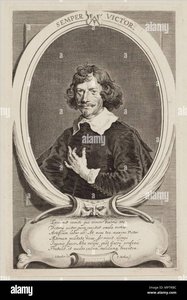
jan victors (jan fictor)
1619 - 1679 , Netherlands
Quick Facts
- Artistic Movement Or Style: Baroque painting, Chiaroscuro
- Artists Or Movements Influenced By This Artist: ['Caravaggism']
- Artists Who Influenced This Artist: ['Rembrandt']
- Date Of Birth: June 13, 1619
- Date Of Death: December 1679
- Full Name: Jan Victors (Jan Fictor)
- Nationality: Dutch
- Notable Artworks:
- Abraham's Parting
- Hannah Giving Samuel
- Place Of Birth: Amsterdam, Netherlands

