 Preview
 Send
Send Share
Share
 Details

 Download
 Similars
 X-Ray
X-Ray Diaporama
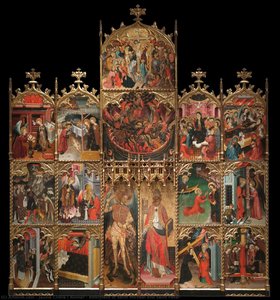
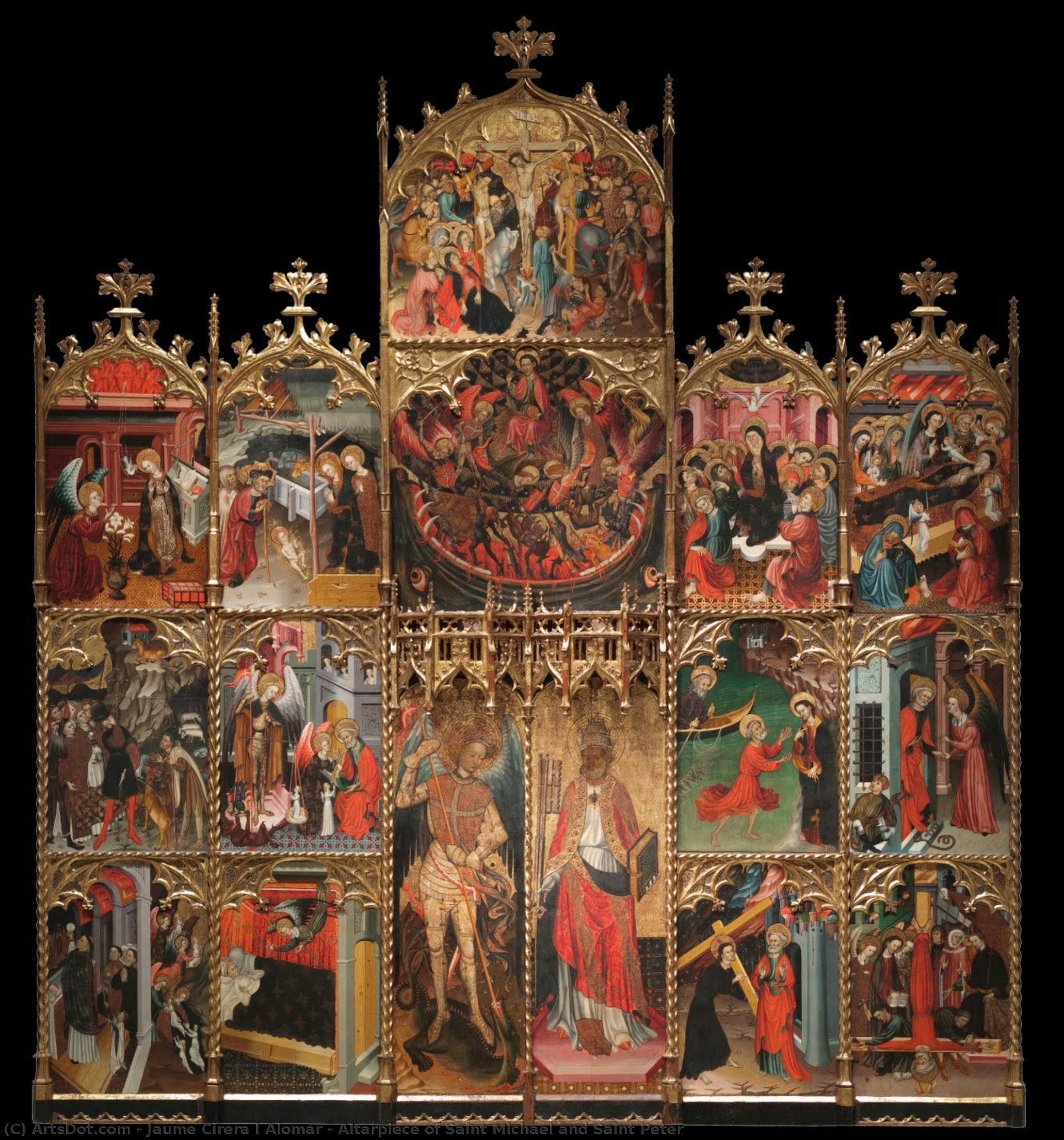
Altarpiece of Saint Michael and Saint Peter
 Oil On Canvas
- WallArt
- Gothic Style
 1433
1433- High Medieval
 875.0 x 370.0 cm
 Museu Nacional d'Art de Catalunya
 Read More
Giclée / Art Print
Museum-quality giclée or canvas print with fast production and flexible finish options. ( Buy Hand Made Painting Buy Image)




P118B $10

P118H $10

P118W $10

P438Z $10

P508JH $12

P508YH $12

P805H $10

P805Z $10

P919BZ $10

P919G $10

P919XJ $10

P959ZH $10

P968JZ $12

W106C $8

W218G $10

W218JH $8

W218Y $10

W307PJ $10

W316G $10

W316PJ $8

W316Y $10

W398PJ $8

W4111J $10

W500HY $15

W500JH $15

W692G $12

W849H $8

W940BG $15

W953PJ $8




Pick from our preset sizes that match the artwork's original proportions.

You may enter your own dimensions to fit a specific frame or space. If your selected size does not match the original image's proportions, we will either crop the artwork or extend the image with a mirrored or solid-fill edge. A digital mockup will be sent for your approval before production begins.
Please note that the on-screen preview does not reflect the actual cropping or extension. Only the mockup will accurately show the final composition.
While custom sizes are available, we recommend selecting a dimension from the predefined list to preserve the original proportions.
Worldwide Delivery () in 2 weeks instead of standard 4/5 weeks. (24 August)

Free Worldwide Express Shipping

High-Quality Linen Canvas

Full Shipping Insurance

Customs Tax Refund Guarantee

True Color Matching Guarantee

60-Day Return Policy (Defects Only)

100% Money-Back Guarantee

Bulk Discount Offer
 Glass option is only available in size under 110 CM

Altarpiece of Saint Michael and Saint Peter
Giclée / Art Print
Reproduction Size
-


Total Price
$ 63
Collectible Description
The Altarpiece of Saint Michael and Saint Peter: A Window into Catalan Gothic Devotion
Jaume Cirera i Alomar’s 1433 “Altarpiece of Saint Michael and Saint Peter” is more than just a religious painting; it's a meticulously crafted testament to the flourishing artistic spirit of Catalonia during the early 15th century. Measuring an impressive 875 x 370 cm, this monumental work offers a profound glimpse into the devotional practices and aesthetic sensibilities of the period. Created in Terrassa, Spain, Cirera’s skill as a disciple and collaborator of Jaume Cabrera firmly establishes him within the rich tradition of Catalan Gothic art, particularly its embrace of vibrant color and intricate detail.
- Subject Matter & Narrative
- Technique & Materials
- Symbolism & Iconography
- Historical Context & Significance
Technique & Materials: A Masterclass in Gothic Craftsmanship
Cirera’s mastery is immediately evident in the painting's execution. The altarpiece employs the hallmarks of Catalan Gothic style, most notably the extensive use of gold leaf – a crucial element signifying divine light and spiritual transcendence. The pigments themselves would have been derived from natural sources: lapis lazuli for blues, vermilion for reds, and ochres and umbers for earthy tones. The artist’s meticulous layering of translucent glazes—a technique known as *glazing*—creates a remarkable sense of depth and luminosity, particularly noticeable in the drapery and the faces of the figures. The application of tempera on wood panel demonstrates a sophisticated understanding of material properties, allowing for both detail and durability.
Symbolism & Iconography: Layers of Meaning
The composition is densely populated with symbolic imagery, reflecting the complex theological beliefs of the time. At the center stands the imposing figures of Saint Michael and Saint Peter, guardians of humanity, their gestures conveying authority and protection. Surrounding them are scenes depicting the lives of these saints – miracles, martyrdoms, and moments of divine intervention. The inclusion of numerous onlookers—representing the faithful community—emphasizes the participatory nature of religious devotion. Animals, such as birds and horses, were frequently employed to symbolize Christ’s humility and power, respectively. The overall arrangement adheres to established iconographic conventions, guiding the viewer's eye through a carefully constructed narrative of salvation.
Historical Context & Significance: A Reflection of Catalan Society
Completed in 1433, the “Altarpiece of Saint Michael and Saint Peter” reflects the growing influence of the Catholic Church within Catalan society. The painting served as a focal point for religious worship within a local church or chapel, intended to inspire piety and reinforce faith among its congregation. Cirera’s work aligns with the broader artistic trends of the Gothic period, which saw a renewed interest in realism and naturalism alongside traditional religious themes. Its current location at the Museu Nacional d'Art de Catalunya ensures that this remarkable piece continues to be appreciated for its artistic merit and historical significance, offering a tangible connection to the spiritual and cultural landscape of medieval Catalonia.
Related Artworks


Artist Biography
The Golden Legacy of Jaume Cirera i Alomar
In the heart of Catalonia, during the transformative first half of the 15th century, a painter emerged from the industrious town of Terrassa to leave an indelible mark on the Gothic tradition. Jaume Cirera i Alomar was not merely a craftsman of his era, but a vital participant in the flourishing religious and artistic landscape of medieval Spain. His life and work represent a period where light, gold, and devotion converged to create some of the most spiritually resonant imagery in the Catalan canon. Though much of his early personal history remains shrouded in the mists of time, his presence is felt through the enduring grandeur of the altarpieces that continue to grace the halls of Spain's most prestigious museums.
The artistic soul of Cirera was deeply shaped by the prevailing Gothic aesthetic, a style characterized by its intricate ornamentation and a profound sense of divine splendor. It is widely understood that he flourished as a disciple and collaborator of the master Jaume Cabrera, one of the most significant figures of the period. This lineage provided Cirera with a sophisticated technical foundation, particularly in the mastery of gold leaf and the delicate application of pigment to create textures that seemed to glow with an inner, celestial light. His association with other notable contemporaries, such as Bernat Despuig, suggests a painter who was deeply embedded in a vibrant network of Mediterranean artistry, contributing to a shared visual language of reverence and elegance.
Mastery of the Gothic Altarpiece
The true essence of Cirera’s talent is most vividly captured in his monumental religious compositions. His work often served as a window into the divine, designed to instruct the faithful and inspire awe through meticulous detail and symbolic richness. The Altarpiece of Saint Michael and Saint Peter stands as a crowning achievement of his career; currently housed within the Museu Nacional d'Art de Catalunya, this piece showcases his ability to weave complex theological narratives into a cohesive visual tapestry. In such works, one can observe the careful balance between the heavy, structural elements of Gothic architecture and the ethereal, flowing drapery of the holy figures.
Beyond individual figures, Cirera’s contribution to the development of Catalan art lies in his ability to command the decorative elements that defined the age. His technique involved:
- Luminous Gilding: The masterful use of gold leaf to create a sense of divine presence and unearthly light.
- Narrative Precision: A focus on clarity in religious storytelling, ensuring that even the most complex hagiographies were accessible to the viewer.
- Stylistic Integration: The seamless blending of his training under Jaume Cabrera with his own unique sensitivity to form and color.
Historical Significance and Enduring Influence
While the centuries have passed since Cirera walked the studios of Terrassa, his historical significance remains undiminished. He stands as a pivotal figure in the evolution of the Catalan Gothic style, bridging the gap between early medieval traditions and the more complex, decorative movements that would follow. His work helped establish a standard of excellence for altarpiece production that influenced generations of Spanish painters. By examining his contributions alongside other masters like Gil de Siled or Jaume Pons i Martí, historians can trace the rich, interconnected web of talent that defined the Iberian Peninsula's artistic golden age.
Today, the legacy of Jaume Cirera i Alomar lives on through the preservation of his masterpieces. Each brushstroke and gilded edge serves as a testament to a time when art was the primary vessel for human devotion and cultural identity. For those seeking to understand the roots of Spanish medieval splendor, his works offer an unparalleled glimpse into a world where the earthly and the divine were inextricably linked through the power of paint and gold.
jaume cirera i alomar
Spain
Quick Facts
- Artistic Movement Or Style: World Goes Pop
- Artists Or Movements Influenced By This Artist: ['Influenced by pop art movement']
- Artists Who Influenced This Artist: ['Influenced by artists in The World Goes Pop exhibition']
- Date Of Death: Living
- Notable Artworks: ['Various works featured in The World Goes Pop exhibition']
- Place Of Birth: WahooArt
Related Articles
The Radiant Dusk of Medieval Vision: Exploring Late Gothic Art's Synthesis of Faith, Form & Emotionality (c. 1300-1500)
Explore the exquisite beauty & spiritual depth of Late Gothic art (c. 1300-1500). Discover key artists, symbolism, and its lasting influence on the Renaissance. Expert insights at ArtsDot.
Beyond Borders: The Spiritual & Stylistic Innovations of International Gothic Art
Explore the exquisite beauty & spiritual depth of International Gothic art. Discover key artists like Simone Martini & Pol de Limbourg, its origins, symbolism, and lasting influence on European painting. Expert insights at ArtsDot.
The Shadow of Faith: Exploring Gothic Art's Spiritual Intensity & Architectural Innovation
Explore the spiritual intensity & architectural innovation of Gothic art! Discover the symbolism behind cathedrals, stained glass & master artists like Giotto and Monet. A deep dive into medieval history & artistic expression.

Fra Angelico's Masterpieces: 25 Renaissance Paintings for Your Home | ArtsDot
Explore 25 breathtaking masterpieces by Fra Angelico, a Renaissance master. Discover the stories behind his iconic frescoes, Annunciations & religious art. Find museum-quality reproductions and elevate your home decor with ArtsDot.com.
Illuminating the Fourteenth Century: Art, Innovation & Enduring Legacies (1300-1400)
Explore the transformative art of the 14th century! Discover Gothic masterpieces, International Style innovations, and the precursors to the Renaissance. Expert insights & historical context at ArtsDot.