 Preview
 Send
Send Share
Share
 Details

 Download
 Similars
 X-Ray
X-Ray Diaporama
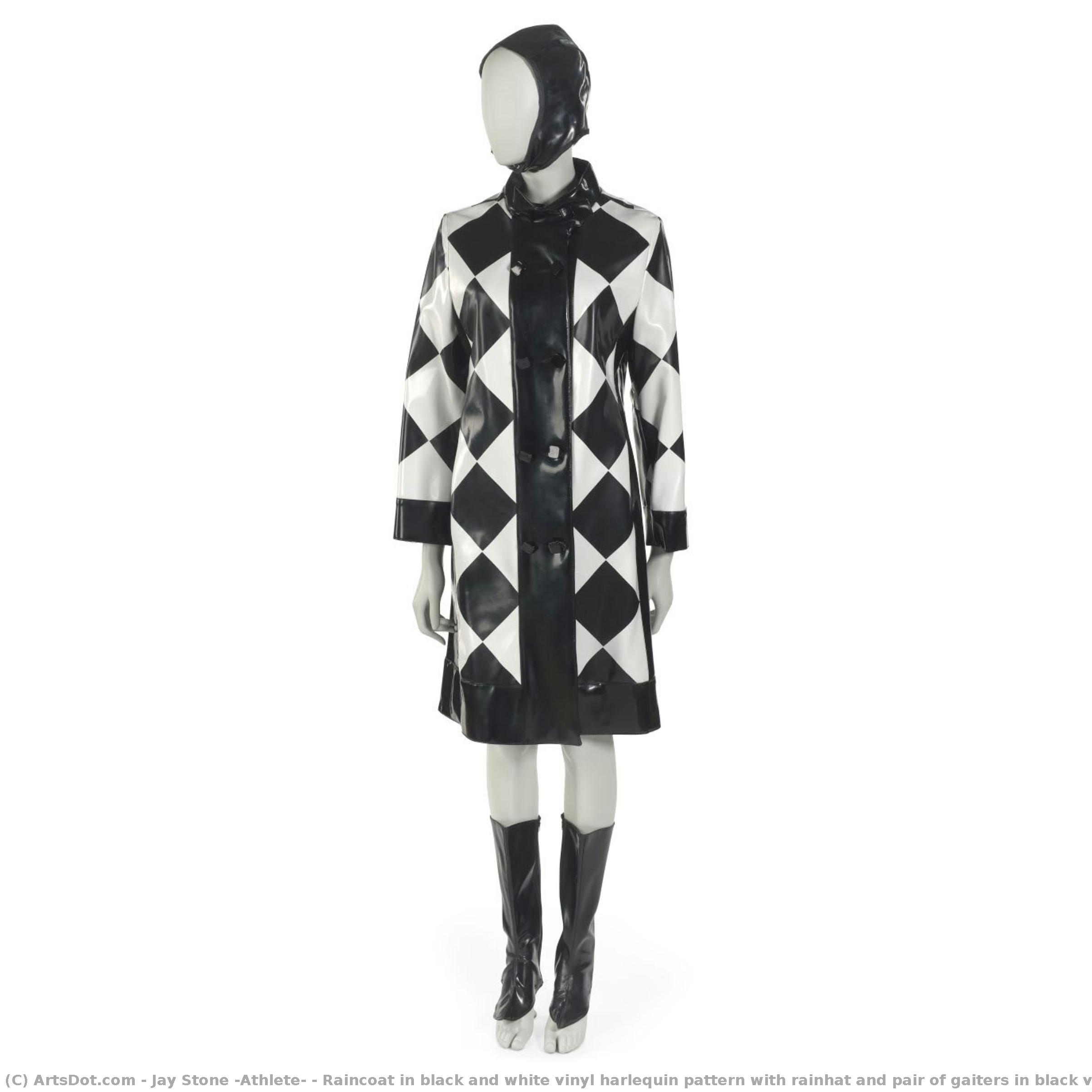
Raincoat in black and white vinyl harlequin pattern with rainhat and pair of gaiters in black vinyl


 Read More
Hand Made Oil Reproduction
Hand-painted oil on canvas in your size and frame, made to order by our artists. ( Buy Print Buy Image)




P118B $10

P118H $10

P118W $10

P438Z $10

P508JH $12

P508YH $12

P805H $10

P805Z $10

P919BZ $10

P919G $10

P919XJ $10

P959ZH $10

P968JZ $12

W106C $8

W218G $10

W218JH $8

W218Y $10

W307PJ $10

W316G $10

W316PJ $8

W316Y $10

W398PJ $8

W4111J $10

W500HY $15

W500JH $15

W692G $12

W849H $8

W940BG $15

W953PJ $8




Pick from our preset sizes that match the artwork's original proportions.

You may enter your own dimensions to fit a specific frame or space. If your selected size does not match the original image's proportions, we will either crop the artwork or extend the painting with additional hand-painted elements. A digital mockup will be sent for your approval before production begins.
Please note that the on-screen preview does not reflect the actual cropping or extension. Only the mockup will accurately show the final composition.
While custom sizes are available, we recommend selecting a dimension from the predefined list to preserve the original proportions.
After order, ArtsDot.com team will email client for instructions and provide a mockup preview
Worldwide Delivery () in 3/4 weeks instead of standard 5 weeks. (22 August). No compromise on quality.

Free Worldwide Express Shipping

High-Quality Linen Canvas

Full Shipping Insurance

Customs Tax Refund Guarantee

True Color Matching Guarantee

60-Day Return Policy (Defects Only)

100% Money-Back Guarantee

Bulk Discount Offer
 Glass option is only available in size under 110 CM

Raincoat in black and white vinyl harlequin pattern with rainhat and pair of gaiters in black vinyl
Reproduction Medium
Reproduction Size
-


Total Price
$ 263
Artwork Description
A Singular Vision: Jay Stone’s Raincoat – A Fusion of Functionality and Artistic Flair
The artwork, titled “Raincoat in black and white vinyl harlequin pattern with rainhat and pair of gaiters in black vinyl,” represents more than just a garment; it embodies the spirit of innovation and meticulous craftsmanship championed by Jay Stone (c. 1851–1932), a pivotal figure in American art history whose pioneering role as the first stenographer for the U.S. War Department foreshadowed his artistic pursuits. This striking piece, conceived by Stone for Naman Rainwear in 1967, transcends mere practicality, presenting itself as a deliberate exploration of geometric abstraction and textural contrast—a testament to Stone’s unwavering dedication to both visual communication and artistic expression.The Genesis of Form: Conceptual Foundations & Artistic Influences
Stone's fascination with pattern and structure stemmed from his military service, where he honed an acute awareness of spatial relationships and the importance of precise observation. He wasn’t merely documenting weather conditions; he was actively engaging in a dialogue with visual principles that would inform his subsequent artistic endeavors. The harlequin motif—a recurring element throughout Western art history—served as inspiration for Stone's design, symbolizing not only playful asymmetry but also a deliberate disruption of conventional aesthetic norms. This conscious rejection of traditional forms speaks to a broader movement toward experimentation and abstraction prevalent in the mid-20th century, mirroring developments in European Surrealism and Constructivism.Technique & Materiality: Mastering Vinyl & Geometric Precision
The raincoat’s construction exemplifies Stone's mastery of material manipulation—specifically vinyl. Chosen for its durability and ability to achieve a flawless surface finish, the vinyl was skillfully embossed with a diamond harlequin pattern, creating a mesmerizing interplay of light and shadow. The meticulous attention to detail extended beyond the pattern itself; the black nylon lining ensured comfort and practicality while reinforcing the overall structural integrity of the garment. Furthermore, the black vinyl gaiters and rainhat—integral components of the ensemble—were crafted with similar precision, emphasizing Stone’s commitment to achieving technical excellence alongside artistic vision. The glossy surface of the vinyl contributes significantly to the artwork's visual impact, reflecting ambient light and enhancing its textural richness.Historical Context: Adapting Artistry to Practical Needs
The creation of this raincoat coincided with a period of significant societal change in America—the burgeoning optimism of the postwar era fueled by technological advancements and a renewed interest in modernist aesthetics. Stone’s decision to collaborate with Naman Rainwear wasn't simply about commercial viability; it represented an attempt to translate artistic principles into tangible objects that served a functional purpose. This blending of art and utility reflects the broader ethos of the time, where artists sought to engage with everyday life while maintaining their commitment to formal experimentation—a legacy that continues to inspire designers and collectors alike.Emotional Resonance: Beyond Decoration – A Statement of Confidence & Innovation
Ultimately, “Raincoat in black and white vinyl harlequin pattern with rainhat and pair of gaiters in black vinyl” transcends its decorative qualities, conveying a profound sense of confidence and intellectual curiosity. The bold geometric design—the stark contrast between black and white—communicates an unwavering belief in the power of abstraction to express complex ideas. More than just protecting against inclement weather, the raincoat embodies Stone’s artistic spirit: a willingness to challenge conventions and embrace innovation as pathways to beauty and meaning. It stands as a reminder that art can flourish even within the constraints of practicality, resulting in pieces that resonate with enduring emotional depth.Related Artworks



Artist Biography
A Legacy of Observation: The Life and Vision of Jay Stone
In the grand tapestry of American history, few figures embody the intersection of meticulous documentation and the spirit of frontier exploration as profoundly as Jay Stone. Born in the rugged landscape of Bangor, Maine, around 1851, Stone’s life was far from a conventional artistic trajectory. Instead, his journey was forged in the crucible of military service and the high-stakes diplomacy of the American West. While history often remembers him through the lens of his administrative brilliance within the United States War Department, there exists a compelling narrative of an individual whose keen eye for detail and commitment to recording the ephemeral moments of his era established him as a pioneer of visual and textual communication.
Stone’s early years were defined by the discipline of the cavalry. Enlisting at the tender age of eighteen, he immersed himself in the vast, untamed territories of the American frontier. This period of military life was not merely an era of service but a profound period of sensory awakening. The sweeping landscapes and the intense, often volatile encounters of the Sioux Wars in the late 1870s provided him with a unique vantage point. It was during these formative years that Stone began to bridge the gap between mere observation and active documentation, utilizing emerging technologies to capture the essence of a changing nation.
The Intersection of Technology and Diplomacy
One of the most captivating chapters in Stone’s life occurred in 1877, when he served as a phonographic reporter and Indian interpreter for General Alfred H. Terry's Commission. Tasked with the monumental responsibility of negotiating with the legendary Sioux Chief Sitting Bull, Stone utilized the then-novel skill of stenography—referred to at the time as phonography—to preserve the nuances of historical dialogue. This role was much more than clerical; it was an act of preservation, ensuring that the voices of a pivotal moment in American history were etched into the permanent record with unprecedented precision.
His ability to navigate both the linguistic complexities of diplomacy and the technical demands of new communication methods led to his historic appointment as the first stenographer ever employed by the United States War Department. This achievement marked him as a trailblazer, an individual who recognized that the future of history-making lay in the marriage of human intellect and technological innovation. His work during this period foreshadowed a broader movement toward the photographic and systematic documentation of the American experience, where the artist’s role expanded to include the reporter and the archivist.
Ascension through the Halls of Power
As his reputation for precision grew, Stone moved from the frontiers of the West to the corridors of political influence in Washington, D.C. His career reached new heights during the Garfield administration in 1881, when he served as the private secretary to Robert Todd Lincoln. This position placed him at the very heart of American political life, offering a front-row seat to the complexities of governance and the personal dramas of the nation's most influential figures. Stone’s presence on the funeral train following the assassination of President Garfield serves as a poignant reminder of his proximity to the most transformative and tragic moments of the nineteenth century.
Throughout his long tenure, which eventually saw him become the Chief of the Correspondence Division, Stone maintained a standard of excellence that earned him the distinction of being the department's longest-serving civilian employee. His life, spanning from the mid-nineteenth century to the dawn of the twentieth, remains a testament to the power of the observant mind. Whether through the shorthand of a reporter or the disciplined eye of a soldier, Jay Stone contributed to a legacy of capturing the truth, ensuring that the fleeting moments of history were rendered permanent for generations to come.

jay stone (athlete)
1851 - 1932 , United States of America
Quick Facts
- Artistic Movement Or Style: Munich art studies
- Artists Or Movements Influenced By This Artist: ['William Morris Hunt']
- Artists Who Influenced This Artist: ['Leon Bonnat']
- Date Of Birth: 1851
- Date Of Death: 1932
- Full Name: Jay Stone
- Nationality: American
- Notable Artworks: ['Raincoat in black and white vinyl harlequin pattern with rainhat and pair of gaiters in black vinyl']
- Place Of Birth: Bangor, United States of America
Related Articles

Gianfranco Ferré: Deconstructing Haute Couture – A Legacy of Architectural Form
Explore the revolutionary world of Gianfranco Ferré, 'the architect of fashion.' Discover his architectural approach to haute couture, iconic Dior designs, and lasting influence on luxury style. A deep dive for collectors & enthusiasts.

Draped Narratives: Fashion as Symbol & Subject in Historical Art
Explore the fascinating history of fashion as a symbol of power & status in art! Discover masterpieces from Gainsborough to Tissot and learn how clothing shaped societal narratives. Find museum-quality reproductions at ArtsDot.

Cristóbal Balenciaga: Deconstructing Haute Couture's Architectural Legacy
Explore the revolutionary world of Cristóbal Balenciaga, the 'couturier's couturier'. Discover his architectural designs, lasting influence on haute couture, and guide to collecting rare pieces. A connoisseur’s resource.

Georges Barbier: A Synthesis of Art Nouveau Elegance & Early 20th-Century Fashion Illustration
Explore the exquisite world of Georges Barbier, a leading Art Nouveau illustrator celebrated for his opulent fashion designs & masterful pochoir technique. Discover his legacy and find collectible art at ArtsDot.

Mariano Fortuny: A Fusion of Art, Fashion & Design – Exploring a Venetian Innovator's Legacy
Explore the captivating world of Mariano Fortuny – artist, designer & innovator. Discover his revolutionary textiles, iconic Delphos gown, and lasting influence on art, fashion & interiors. A collector's guide to a Venetian master.