 Preview
 Send
Send Share
Share
 Details

 Download
 Similars
 X-Ray
X-Ray Diaporama
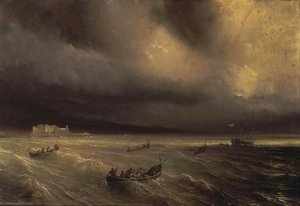
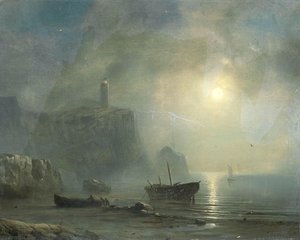
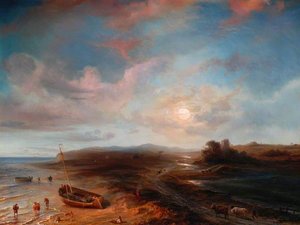
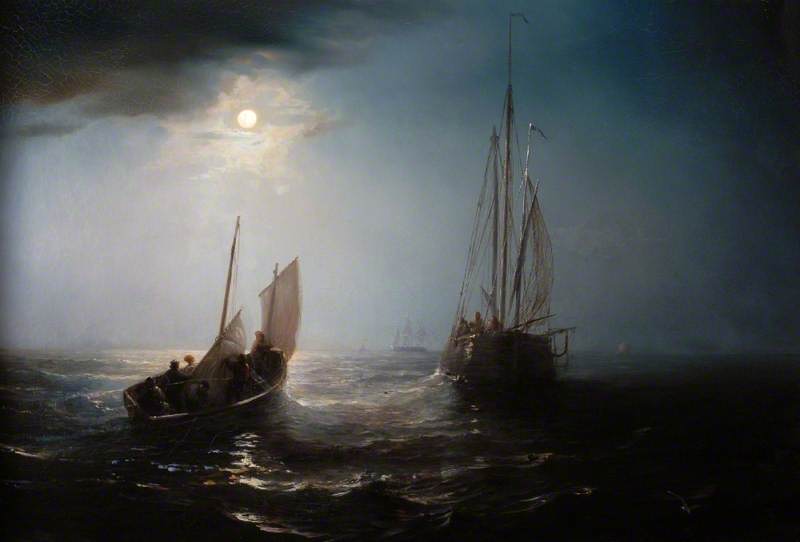
A Marine View, Moonlight
 Romanticism
 1864
1864 75.0 x 108.0 cm
 Read More
Hand Made Oil Reproduction
Hand-painted oil on canvas in your size and frame, made to order by our artists. ( Buy Print Buy Image)




































Pick from our preset sizes that match the artwork's original proportions.

You may enter your own dimensions to fit a specific frame or space. If your selected size does not match the original image's proportions, we will either crop the artwork or extend the painting with additional hand-painted elements. A digital mockup will be sent for your approval before production begins.
Please note that the on-screen preview does not reflect the actual cropping or extension. Only the mockup will accurately show the final composition.
While custom sizes are available, we recommend selecting a dimension from the predefined list to preserve the original proportions.
After order, ArtsDot.com team will email client for instructions and provide a mockup preview
Worldwide Delivery () in 3/4 weeks instead of standard 5 weeks. (21 August). No compromise on quality.

Free Worldwide Express Shipping

High-Quality Linen Canvas

Full Shipping Insurance

Customs Tax Refund Guarantee

True Color Matching Guarantee

60-Day Return Policy (Defects Only)

100% Money-Back Guarantee

Bulk Discount Offer
 Glass option is only available in size under 110 CM

A Marine View, Moonlight
Reproduction Medium
Reproduction Size
-


Total Price
$ 263
Related Artworks

Artist Biography
Early Life and Artistic Beginnings
Jean Antoine Théodore Gudin, born in Paris in 1802, embarked on a life that would inextricably link his name to the romantic depiction of the sea. His early years remain somewhat shrouded in mystery; accounts suggest a modest upbringing with a mother who shouldered the responsibility of raising him and his brother, Jean-Louis. A brief enrollment at naval school hinted at an initial path toward maritime service, but it was a journey to New York that proved pivotal, exposing him to a world far removed from Parisian ateliers and igniting a fascination with the ocean’s boundless energy. This experience, coupled with mingling amongst Bonapartist exiles, instilled in him a unique perspective—a blend of adventure, political awareness, and an appreciation for the power of nature.
Returning to Paris in 1822, Gudin found himself drawn toward art, inspired by his brother’s studies under Horace Vernet. He entered the studio of Anne-Louis Girodet, a master known for his dramatic compositions and meticulous technique. This formal training provided him with a solid foundation in draftsmanship and composition, but it was an event in 1823 that would profoundly shape his artistic sensibility: a harrowing shipwreck on the Seine River. While he survived, the tragic loss of his brother left an indelible mark, fueling a lifelong connection to the sea—not merely as a subject of beauty, but as a force capable of both awe-inspiring grandeur and devastating power.
A Rising Star in the Salon Era
Gudin’s debut at the Paris Salon in 1824 marked the beginning of his ascent within the French art world. He quickly gained recognition for his evocative seascapes, capturing the dynamic interplay of light, water, and sky with a burgeoning Romantic sensibility. His talent did not go unnoticed by King Louis Philippe I, who commissioned him to paint a depiction of the ship that had carried Gudin on his American voyage—a testament to the growing appreciation for his unique style. By 1828, he was further honored with a commission from Charles X to portray Ensign Hippolyte Bisson’s heroic act of self-sacrifice, solidifying his reputation as a painter capable of capturing both historical drama and emotional intensity.
The Algerian Expedition in 1830 proved to be another turning point. Traveling alongside French Navy officer Abel Aubert du Petit-Thouars, Gudin immersed himself in the sights and sounds of naval warfare, meticulously sketching scenes that would later form the basis for a series of powerful paintings. This experience not only honed his technical skills but also deepened his understanding of maritime life and strategy.
Peintre de la Marine and Courtly Patronage
Upon his return from Algeria, Gudin was appointed one of the first two official Peintres de la Marine, a prestigious title bestowed by King Louis Philippe. This appointment signaled a new era in French naval art, recognizing the importance of documenting and celebrating the nation’s maritime prowess. Alongside Louis-Philippe Crépin, Gudin played a crucial role in establishing a tradition of romantic seascapes that would define the genre for decades to come.
The patronage of both Louis Philippe I and Napoleon III provided Gudin with unparalleled opportunities. He embarked on extensive painting trips throughout Europe—Italy, Switzerland, Russia—capturing diverse coastal landscapes and naval scenes. His commissions included a monumental series of ninety paintings depicting victories of the French Navy for the Palace of Versailles, a project that, while ambitious, reportedly took a toll on his health. Despite these challenges, Gudin continued to produce a prolific body of work, earning accolades from across Europe—including the cross Pour le Mérite in Berlin in 1845.
Legacy and Historical Significance
Jean Antoine Théodore Gudin’s influence extended beyond the canvas. He was not only a celebrated painter but also a dedicated advocate for maritime safety, playing a key role in establishing the Société centrale de sauvetage des naufragés in 1864—a testament to his enduring connection to the sea and its inherent dangers. His daughter, Henriette Gudin, followed in his footsteps, becoming a respected marine painter herself.
Gudin’s work embodies the spirit of Romanticism, characterized by dramatic compositions, emotional intensity, and a fascination with the power of nature. He masterfully captured the beauty and terror of the sea, elevating naval scenes from mere documentation to compelling works of art. His paintings served not only as historical records but also as powerful symbols of French national pride and maritime ambition. Today, his legacy continues to inspire artists and captivate audiences worldwide, cementing his place as one of the most important marine painters of the 19th century.
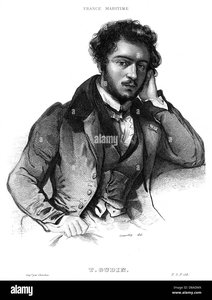
jean antoine théodore de gudin
1802 - 1880 , France
Quick Facts
- Artistic Movement Or Style: Romanticism
- Artists Who Influenced This Artist:
- Anne-Louis Girodet
- Horace Vernet
- Date Of Birth: 1802
- Date Of Death: 1880
- Full Name: Jean Antoine Théodore Gudin
- Nationality: French
- Notable Artworks:
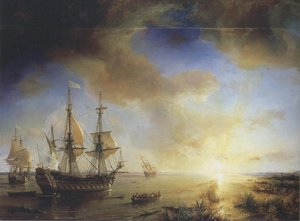
- Expedition of Vice Admiral Baudin
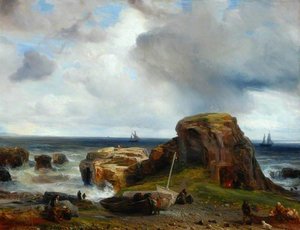
- View of a Rocky Coast by Moonlight
- Place Of Birth: Paris, France
Related Articles
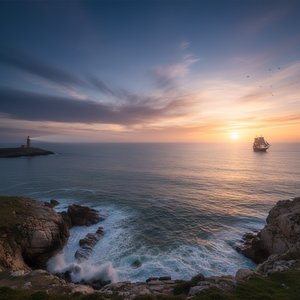
The Allure of the Horizon: A Comprehensive Exploration of Seascape Art Through History & Emotion
Explore the captivating world of seascape art! Discover its history, key artists & movements – from Dutch Masters to Impressionism. Expert insights for collectors and enthusiasts at ArtsDot.
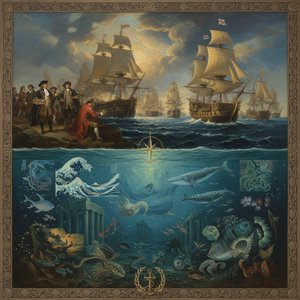
Navigating the Depths of Representation: A Historical Exploration of Marine Painting
Explore the rich history of marine painting with ArtsDot. Discover Dutch Masters, Romantic seascapes & renowned artists like Wyllie and Harris. Expert guidance for collectors & custom reproductions.
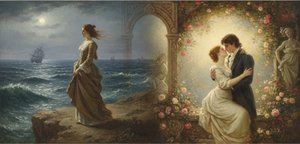
Romantic Realism's Finest: 10 Masterpieces for Your Home | ArtsDot
Explore 10 defining masterpieces of Romantic Realism! Discover Courbet, Millet & Daumier's powerful paintings—capturing emotion and social realities. Find museum-quality reproductions for your home at ArtsDot.com.

Romantic Landscapes: 10 Masterpieces for Your Home | ArtsDot
Journey through 10 Romantic landscape masterpieces by Friedrich, Turner & Cole. Explore emotional art, sublime nature scenes & iconic 19th-century paintings. Find museum-quality reproductions for your home at ArtsDot.com – discover the full collection online!
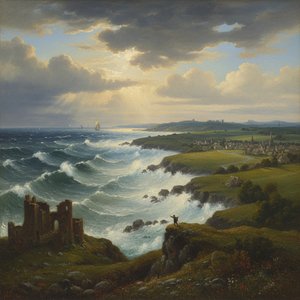
Clarkson Frederick Stanfield: Navigating Romantic Visions of Sea, Land & British Imagination
Explore the dramatic seascapes & landscapes of Clarkson Frederick Stanfield (1793-1867). Discover his life, art, and lasting influence on British Romanticism. Acquire stunning reproductions at ArtsDot.