

 Preview
 Send
Send Share
Share
 Details

 Download
 Similars
 X-Ray
X-Ray Diaporama
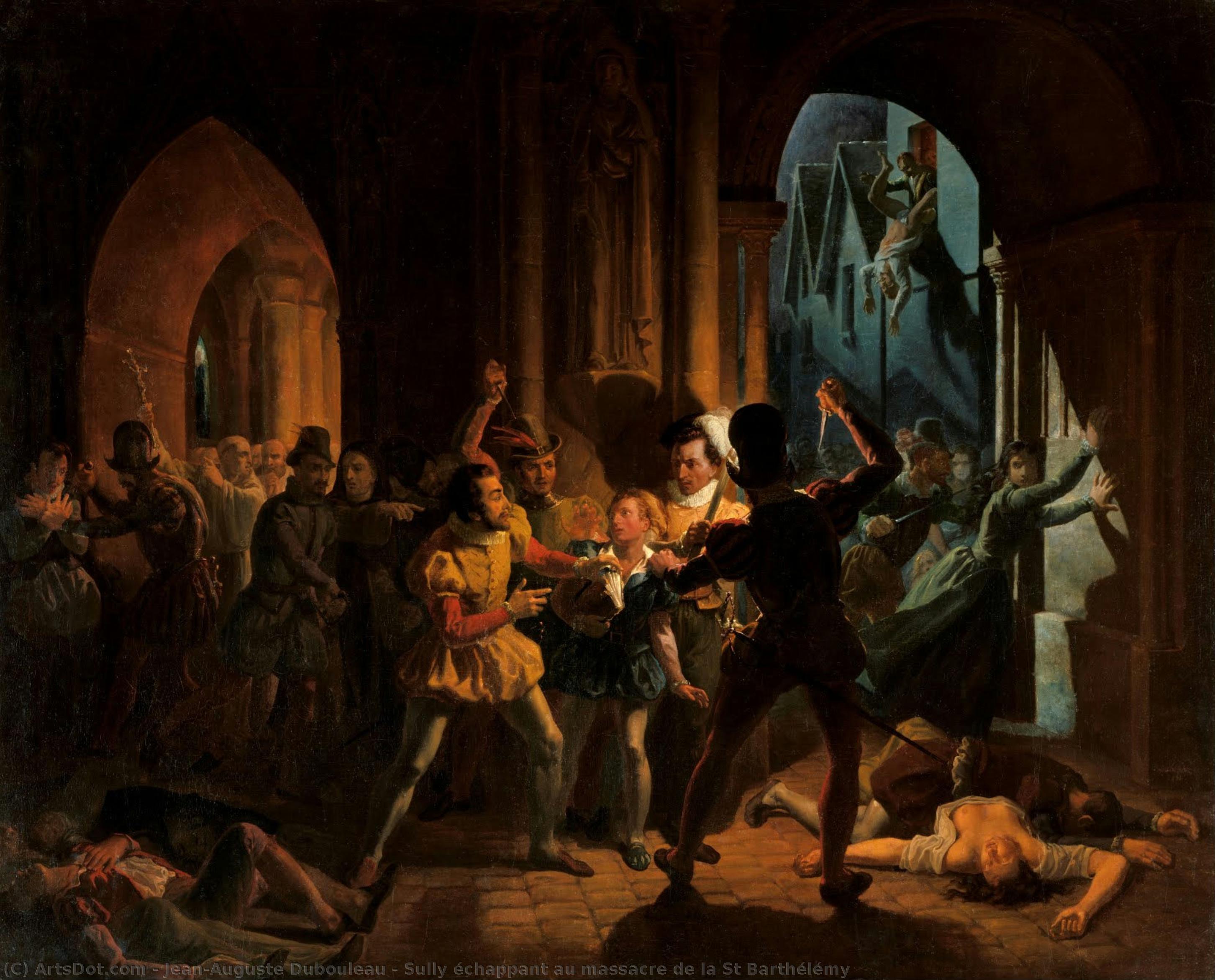
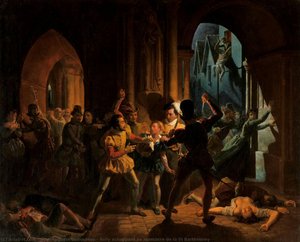
Sully échappant au massacre de la St Barthélémy
 151.0 x 183.0 cm
 château-de-sully-sur-loire Castle of Sully-sur-Loire
 Read More
Hand Made Oil Reproduction
Hand-painted oil on canvas in your size and frame, made to order by our artists. ( Buy Print Buy Image)




































Pick from our preset sizes that match the artwork's original proportions.

You may enter your own dimensions to fit a specific frame or space. If your selected size does not match the original image's proportions, we will either crop the artwork or extend the painting with additional hand-painted elements. A digital mockup will be sent for your approval before production begins.
Please note that the on-screen preview does not reflect the actual cropping or extension. Only the mockup will accurately show the final composition.
While custom sizes are available, we recommend selecting a dimension from the predefined list to preserve the original proportions.
After order, ArtsDot.com team will email client for instructions and provide a mockup preview
Worldwide Delivery () in 3/4 weeks instead of standard 5 weeks. (21 August). No compromise on quality.

Free Worldwide Express Shipping

High-Quality Linen Canvas

Full Shipping Insurance

Customs Tax Refund Guarantee

True Color Matching Guarantee

60-Day Return Policy (Defects Only)

100% Money-Back Guarantee

Bulk Discount Offer
 Glass option is only available in size under 110 CM

Sully échappant au massacre de la St Barthélémy
Reproduction Medium
Reproduction Size
-


Total Price
$ 263
Related Artworks
Artist Biography
The Quiet Observer: The Life and Legacy of Jean-Auguste Dubouleau
In the grand, turbulent tapestry of nineteenth-century French art, certain figures emerge not as loud, revolutionary voices, but as meticulous chroniclers of their era. Jean-Auguste Dubouleau, known to many by his pseudonym Dubouloz, was precisely such an artist. Born in Paris in 1800, he came of age amidst the profound social and political shifts following the Napoleonic Wars. While the art world often gravitates toward the explosive drama of Romanticism, Dubouleau’s work suggests a more contemplative spirit—a quiet, disciplined eye that sought to capture the gravity of history through the precise lens of Romantic realism.
Though much of his early life remains shrouded in the mists of time, the foundations of his talent were laid under the guidance of some of the most esteemed masters of the French academic tradition. He studied under Jean-Antoine Gros and Georges Malbeste, training that instilled in him a rigorous command over form and a deep respect for classical composition. This academic discipline allowed him to navigate the delicate balance between idealized beauty and the stark, often harrowing realities of historical narrative. His ability to marry meticulous detail with emotional depth earned him significant recognition within the prestigious Paris Salon, where he exhibited regularly from 1824 until 1870.
The trajectory of Dubouleau’s career was marked by a series of notable triumphs that solidified his standing in the French art community. His technical prowess was not merely recognized by peers but honored by official institutions; he was awarded a medal from the Académie Royale de Peinture as early as 1820, and later secured third-class and second-class medals at the Salon in 1838 and 1840, respectively. These accolades reflect an artist who had mastered the nuances of his craft, moving seamlessly between the delicate precision of engraving and the sweeping narratives of oil painting.
Mastery of Line and Narrative
Dubouleau’s true distinction lay in his versatility as a painter, illustrator, and engraver. He possessed a rare ability to translate the grandeur of historical events into intimate, palpable moments. As an illustrator for influential publications such as La Presse and Le Monosteur Universel, he brought the news of the day to life, using etching techniques to create rich textures and subtle tonal gradations that captured the very atmosphere of Parisian life. His work often functioned as a bridge between high art and the burgeoning world of mass media, making history accessible through visual storytelling.
Perhaps his most enduring contribution to the visual record is his monumental engraving, 'Sully échappant au massacre de la St Barthélémy'. In this piece, Dubouleau captures the harrowing tension of Henri IV’s escape during the Huguenot persecutions. Through a masterful use of light and shadow, he conveys the palpable fear and the high stakes of the moment, demonstrating an ability to evoke complex human emotions within a historical framework. This capacity for drama, tempered by a realistic observation of detail, remains his most significant artistic hallmark.
Beyond his historical epics, Dubouleau’s repertoire included genre scenes and portraits that showcased his range. Whether depicting the refined elegance of a 'Portrait of a Dandy in the Parisian Countryside' or exploring character studies like his 'Étude de personnages : les Italiens', his work always maintained a sense of dignity and structural integrity. Influenced by the precision of Ingres and the dramatic weight of Goya, Dubouleau’s oeuvre stands as a testament to a period of transition in French art—a time when the meticulous traditions of the past met the burgeoning emotional intensity of the modern age.
jean-auguste dubouleau
1800 - 1870 , France
Quick Facts
- Artistic Movement Or Style: Historical Painting
- Date Of Birth: February 20, 1800
- Date Of Death: August 21, 1870
- Full Name: Jean-Auguste Dubouleau
- Nationality: French
- Notable Artworks: ['Sully échappant au massacre de la St Barthélémy']
- Place Of Birth: Paris, France

