 Preview
 Send
Send Share
Share
 Details

 Download
 Similars
 X-Ray
X-Ray Diaporama
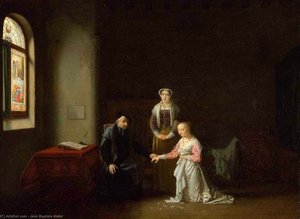
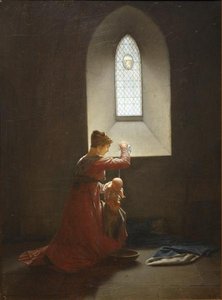
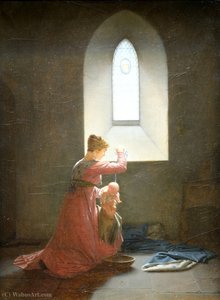
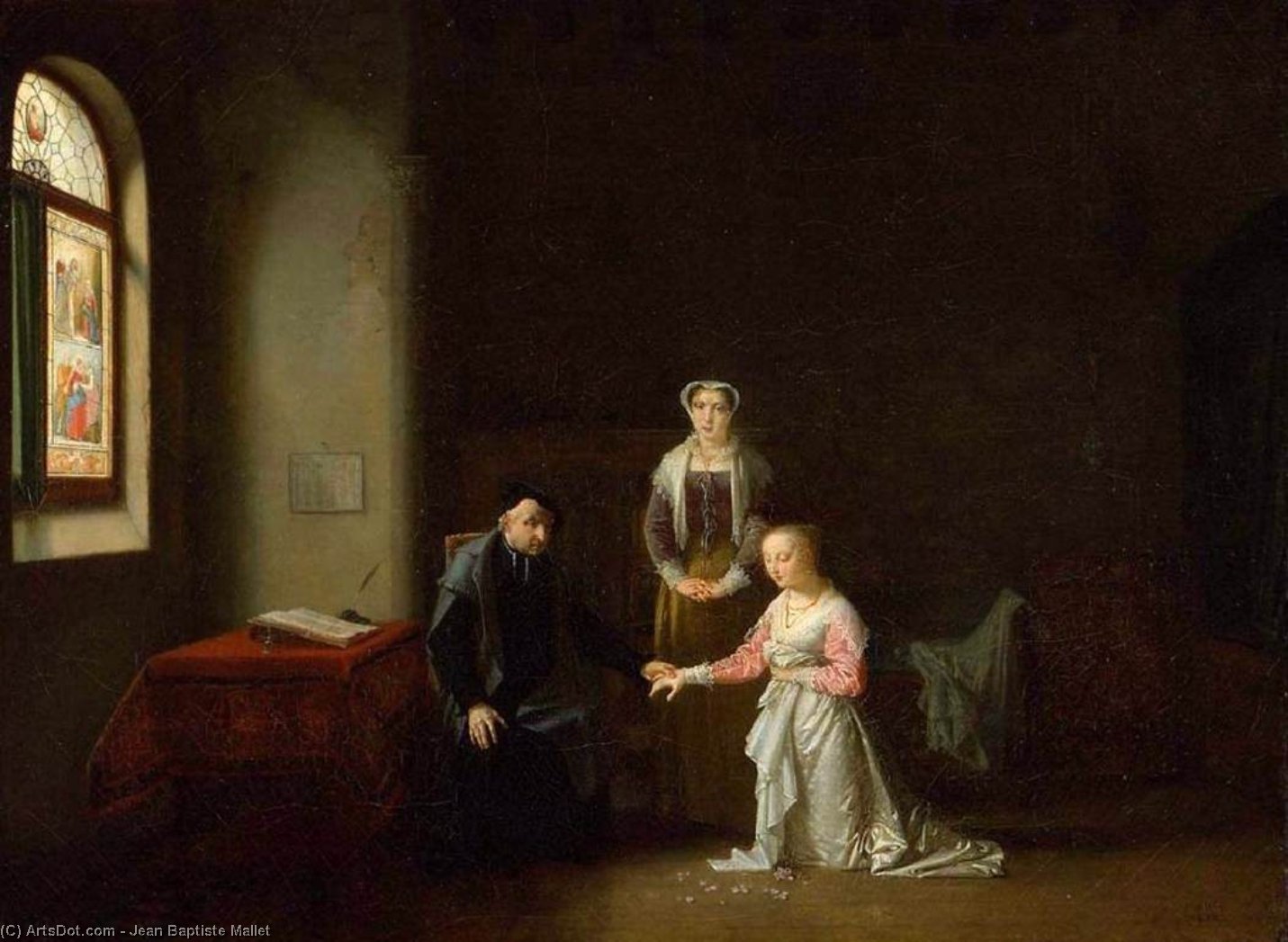
Young Woman Kneeling Before a Priest
 Oil On Canvas
- WallArt
- Rococo
 1826
1826- 19th Century
 24.0 x 33.0 cm
 Museum of Fine Arts
 Read More
Hand Made Oil Reproduction
Hand-painted oil on canvas in your size and frame, made to order by our artists. ( Buy Print Buy Image)




P118B $10

P118H $10

P118W $10

P438Z $10

P508JH $12

P508YH $12

P805H $10

P805Z $10

P919BZ $10

P919G $10

P919XJ $10

P959ZH $10

P968JZ $12

W106C $8

W218G $10

W218JH $8

W218Y $10

W307PJ $10

W316G $10

W316PJ $8

W316Y $10

W398PJ $8

W4111J $10

W500HY $15

W500JH $15

W692G $12

W849H $8

W940BG $15

W953PJ $8




Pick from our preset sizes that match the artwork's original proportions.

You may enter your own dimensions to fit a specific frame or space. If your selected size does not match the original image's proportions, we will either crop the artwork or extend the painting with additional hand-painted elements. A digital mockup will be sent for your approval before production begins.
Please note that the on-screen preview does not reflect the actual cropping or extension. Only the mockup will accurately show the final composition.
While custom sizes are available, we recommend selecting a dimension from the predefined list to preserve the original proportions.
After order, ArtsDot.com team will email client for instructions and provide a mockup preview
Worldwide Delivery () in 3/4 weeks instead of standard 5 weeks. (16 August). No compromise on quality.

Free Worldwide Express Shipping

High-Quality Linen Canvas

Full Shipping Insurance

Customs Tax Refund Guarantee

True Color Matching Guarantee

60-Day Return Policy (Defects Only)

100% Money-Back Guarantee

Bulk Discount Offer
 Glass option is only available in size under 110 CM

Young Woman Kneeling Before a Priest
Reproduction Medium
Reproduction Size
-


Total Price
$ 263
Artwork Description
A Moment Suspended in Devotion
This evocative painting, Young Woman Kneeling Before a Priest, transports the viewer into a scene steeped in profound piety and quiet drama. The composition centers on a young woman, clad in pristine white, captured at the very apex of supplication. Her posture—kneeling with hands clasped tightly—speaks volumes of vulnerability and earnest petition. She bows toward the standing figure of the priest, whose presence anchors the solemnity of the moment. Beyond these central figures, the inclusion of other onlookers subtly expands the narrative scope, suggesting a community witnessing this deeply personal act of faith. The overall atmosphere is one of hushed reverence, making it an immediate focal point for any space desiring an air of contemplative grace.
The Hand of Jean-Baptiste Mallet
Created in 1826 by the masterful hand of Jean-Baptiste Mallet, this work situates itself within a period where art was navigating the transition from the Rococo's airy frivolity toward more structured emotional depth. Mallet, whose career spanned the late eighteenth and early nineteenth centuries, possessed an unparalleled gift for capturing refined human emotion against richly detailed backdrops. While his biography speaks of aristocratic elegance, here he channels that refinement into a devotional narrative. His technique allows the viewer to appreciate both the delicate rendering of the woman's white gown and the subtle textures within the church setting, all executed with a painterly touch that feels both historical and intimately immediate.
Symbolism and Spiritual Resonance
The symbolism woven throughout this piece is rich for contemplation. The pristine white dress often symbolizes purity or innocence, while the act of kneeling itself is a universal gesture acknowledging a higher power or seeking absolution. The presence of the book near the bottom left corner hints at scripture or sacred knowledge, grounding the emotional plea in theological tradition. It is not merely a portrait; it is a visual meditation on grace, forgiveness, and the enduring human need for spiritual connection. For collectors and designers alike, this piece offers more than mere decoration; it offers a focal point for quiet reflection.
Bringing Sacred Serenity Home
Considering its size of 24 x 33 cm, this painting possesses an ideal scale to serve as a powerful accent piece in various interior settings. Imagine it displayed above a console table in a formal drawing-room, or perhaps within a chapel-like niche designed for quiet contemplation. Reproducing such a work allows one to incorporate the historical weight and emotional depth of Old Master painting into contemporary life. It serves not only as an aesthetic enhancement but as a subtle conversation piece, inviting guests to pause, observe, and consider the profound narratives painted across its surface.
Related Artworks

Artist Biography
A Life Immersed in Refinement: Jean-Baptiste Mallet and the Elegance of a Vanishing World
Jean-Baptiste Mallet, born in the sun-drenched Provençal town of Grasse in 1759, emerged as a painter deeply attuned to the subtleties of aristocratic life during a period of immense social upheaval. While not a revolutionary figure in terms of artistic style, his significance lies in his exquisite ability to capture the grace and intimacy of French society on the cusp of modernity. He wasn’t striving for grand historical narratives or bold innovations; instead, Mallet dedicated himself to portraying the delicate beauty of domestic scenes, refined portraits, and mythological subjects imbued with a distinctly Rococo sensibility.
His artistic journey began under the tutelage of Simon Julien in Toulon, but it was his subsequent studies with Pierre-Paul Prud'hon in Paris that truly shaped his aesthetic. Prud’hon, known for his elegant line and emphasis on emotional expression, instilled in Mallet a dedication to precision and refinement. However, Mallet didn’t simply mimic his master; he absorbed influences from a broader spectrum of artists—the genre scenes of Jean-Baptiste Greuze, the playful spirit of his fellow Grasse native Jean-Honoré Fragonard, and the meticulous detail of Louis Léopold Boilly all contributed to the development of his unique style. A fascination with 17th-century Dutch painting is also evident in his work, particularly in the masterful rendering of textures and light.
The Painter of Intimate Moments: Style and Subject Matter
Mallet’s oeuvre primarily consists of gouaches and watercolors, often executed on a relatively small scale. This choice wasn't merely practical; it allowed him to focus intently on detail and create works that exuded an air of intimacy. He excelled in genre scenes depicting life during the Directorate and the First Empire—vignettes of fashionable gatherings, private moments within elegant interiors, and playful depictions of domestic life. These paintings offer a fascinating glimpse into the customs and sensibilities of the French upper class.
While he produced some portraits – including one of Chénier held in the Musée des Beaux-Arts de Carcassonne – Mallet’s true passion lay in scenes that allowed for greater artistic license. He frequently depicted nymphs bathing, graceful classical nudes, and allegorical subjects like ‘Venus and a Sleeping Cupid,’ which showcase his mastery of form and composition. His paintings are characterized by their delicate brushwork, luminous colors, and an overall sense of refined elegance. He wasn’t interested in dramatic narratives or overt displays of emotion; instead, he sought to capture the quiet beauty and subtle pleasures of life.
Recognition and Legacy: A Chronicler of a Bygone Era
Mallet was a consistent exhibitor at the Paris Salon from 1793 until 1827, earning recognition for his skill and artistry. He received second-class medals in 1812 and a first-class medal in 1817, solidifying his reputation as a leading painter of genre scenes. However, his significance extends beyond mere accolades.
His paintings serve as invaluable historical documents, providing detailed insights into the interior decorations, furnishings, and fashions of late 18th and early 19th-century France. The meticulous precision with which he rendered fabrics, furniture, and everyday objects makes his works a treasure trove for historians and art enthusiasts alike. Furthermore, the widespread availability of prints based on his paintings ensured that his style reached a broad audience, influencing generations of artists.
A Lasting Impression: Mallet’s Place in Art History
Though perhaps not as widely celebrated as some of his contemporaries, Jean-Baptiste Mallet occupies a unique and important position within the landscape of French art. He wasn't a revolutionary innovator, but rather a master craftsman who dedicated himself to capturing the beauty and refinement of a vanishing world. His paintings offer a poignant glimpse into the lives of the aristocracy during a period of profound change, providing a valuable window into the customs, sensibilities, and aesthetic values of a bygone era.
His works continue to captivate viewers with their delicate brushwork, luminous colors, and overall sense of elegance. Mallet’s legacy lies not in grand pronouncements or bold innovations, but in his ability to create paintings that evoke a feeling of intimacy, grace, and quiet beauty—a testament to the enduring power of refined artistry.
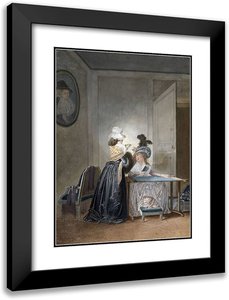
jean baptiste mallet
1759 - 1835 , France
Quick Facts
- Artistic Movement Or Style: Troubadour Style
- Artists Or Movements Influenced By This Artist: ['Dutch Painting']
- Artists Who Influenced This Artist:
- Simon Julien
- Jean-Honoré Fragonard
- Louis Léopold Boilly
- Date Of Birth: 1759, Grasse
- Date Of Death: 1835, Paris
- Full Name: Jean-Baptiste Mallet
- Nationality: French
- Notable Artworks: ['La Salle de bain gothique']
- Place Of Birth: Grasse, France
Related Articles

Rococo's Radiant Legacy: 10 Masterpieces for Your Home |
Indulge in the elegance of Rococo! Explore 10 masterpieces by Fragonard, Boucher & Watteau. Discover the stories behind these iconic paintings and bring timeless art to your home with museum-quality reproductions from .
19th Century Masterpieces: 10 Paintings That Defined an Era | ArtsDot
Journey through 19th century art with ArtsDot! Explore 10 iconic paintings – from Monet & Renoir to Courbet – and discover the stories behind Romanticism, Realism & Impressionism. Find museum-quality reproductions for your home decor. Explore the full collection online!

The Rococo Aesthetic: Opulence, Rebellion & the Pursuit of Pleasure in 18th-Century Art
Explore the opulent world of Rococo art! Discover its origins, key artists like Watteau & Boucher, and lasting influence on design. Expert insights for collectors & enthusiasts.

The Allure of Elegance in Art: A Historical & Aesthetic Exploration of Refinement & Grace
Explore the exquisite world of Rococo art! Discover its history, masters (Watteau, Boucher & more), and defining elegance. Expert insights for collectors seeking museum-quality reproductions & custom portraits.
Charles-André van Loo: A Study in Rococo Portraiture & the French Court's Artistic Dynamics
Explore the elegant world of Charles-André van Loo, a master of Rococo portraiture at the French court. Discover his life, techniques, and enduring influence on 18th-century art. Hand-painted reproductions available.