

 Preview
 Send
Send Share
Share
 Details

 Download
 Similars
 X-Ray
X-Ray Diaporama
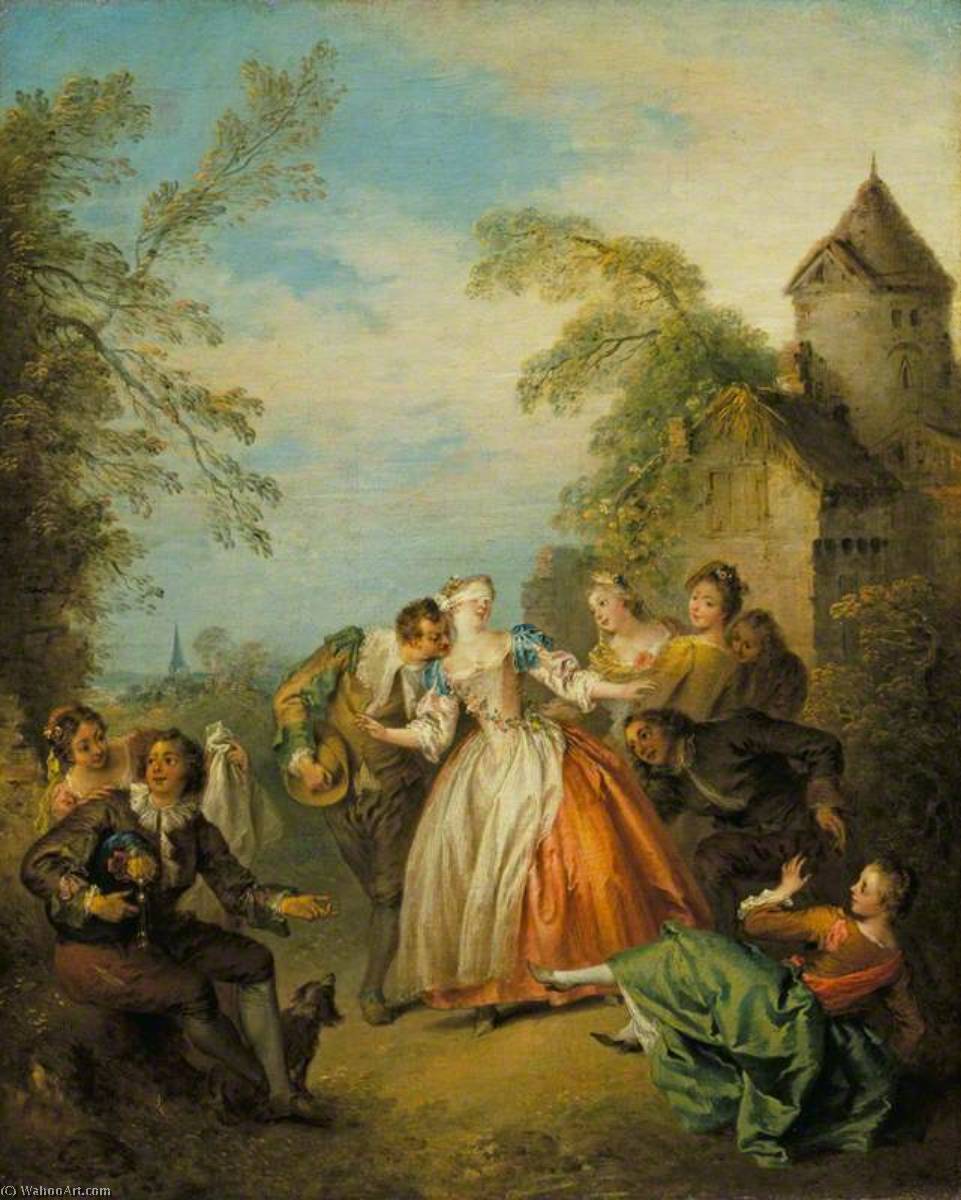
Blind Man's Buff (Le colin maillard)
 Acrylic On Canvas
- WallArt
- Rococo
 1733
1733 57.0 x 46.0 cm
 The Wallace Collection
 Read More
Purchase a high-resolution, enhanced digital image, far superior to the online preview.
Each file is meticulously prepared by our in-house specialists using advanced tools and expert manual retouching. We ensure every image has exceptional clarity, precise color accuracy, and fine detail.
The final file is delivered via email within 72 hours, optimized for immediate use in professional, editorial, and print environments. This is the same quality trusted by top-tier design studios, publishers, and galleries.
Digital Image
Download a high-resolution file for personal display, printing, and creative projects. ( Buy Print Buy Hand Made Painting)
Included in Every Digital Image Order
Expert Digital Delivery, Guaranteed
When you choose ArtsDot.com, you're not just getting an image - you're receiving a professionally enhanced digital artwork, crafted with precision and backed by a satisfaction guarantee. Here's everything that comes with your order, automatically:

Fast Email Delivery
Your high-resolution digital image file will be emailed to you within 72 hours of ordering - ready for immediate use.

AI-Enhanced Digital File
Your artwork is professionally optimized using advanced AI tools and manual editing, ensuring maximum detail, clarity, and color accuracy.

Free Lifetime Re-Delivery
Accidentally deleted or lost your file? No worries - we'll resend it to you anytime, free of charge.

No Import Fees - Ever
Enjoy your artwork instantly with zero customs, duties, or delivery fees - digital downloads are always tax-free.

Color Accuracy Guarantee
We ensure your digital image reflects the original colors as closely as possible using professional tools and color management.

60-Day Satisfaction Guarantee
If you're not satisfied with your digital image, we'll revise it or refund 100% within 60 days - no questions asked.

100% Money-Back Guarantee
Not satisfied? Get a full refund within 60 days of receiving your digital file - no questions asked.

Bulk Order Discounts
Buy 3 images, save 10% - Buy 5, save 15% - Buy 10+, save 20%. Great for creative projects, galleries, and agencies.
Collectible Description
A Glimpse into Parisian Merriment: Jean-Baptiste Pater’s “Blind Man’s Buff”
Jean-Baptiste Pater's "Blind Man's Buff (Le colin maillard)," painted in 1733, isn’t merely a depiction of a children’s game; it’s a vibrant snapshot of 18th-century French social life and the burgeoning Rococo aesthetic. The canvas bursts with an effervescent energy, capturing a group of elegantly dressed individuals engaged in the playful chaos of “colin maillard,” a traditional blind man's buff enjoyed by all ages. Pater masterfully eschews rigid formality, instead presenting a scene brimming with relaxed interaction and subtle flirtation – a hallmark of his teacher, Antoine Watteau, yet imbued with Pater’s own distinctive sensibility. The painting immediately draws the eye to the central group, where men and women playfully chase each other, their gestures suggesting both competitive spirit and genuine amusement. A young boy, likely a participant in the game, adds an element of innocent delight to the scene, while a dog, partially visible on the left, hints at the rural origins of this beloved pastime. Scattered throughout the composition are carefully placed objects – a bowl, another bowl, a bottle, and a cup – that ground the scene with a touch of domesticity, reminding us that this lively gathering takes place within a larger home.The Rococo Palette and Pater’s Delicate Technique
Pater's artistic approach is deeply rooted in the principles of Rococo, evident in his masterful use of color and brushwork. He employs a pastel palette—soft pinks, blues, and greens—that evokes a sense of lightness and airiness, perfectly mirroring the playful mood of the scene. The colors are applied with a delicate touch, creating shimmering effects that seem to dance across the canvas. Pater’s technique is characterized by loose, flowing brushstrokes, particularly noticeable in the rendering of the figures' clothing and hair. This creates an illusion of movement and vitality, as if the subjects are truly caught up in the excitement of the game. Unlike the more structured compositions favored by earlier generations, Pater embraces a sense of spontaneity and informality, reflecting the Rococo’s emphasis on pleasure and sensuality. The subtle gradations of light and shadow further enhance the painting's luminous quality, contributing to its overall atmosphere of charm and delight.A Master Student: Pater and the Legacy of Watteau
Jean-Baptiste Pater’s story is inextricably linked to that of Antoine Watteau, arguably the most influential figure in the Rococo movement. Pater was Watteau’s sole documented student, a relationship marked by both admiration and a degree of professional rivalry. While Pater initially trained under his sculptor father, it was Watteau who ignited his artistic passion, shaping his vision and influencing his style profoundly. Pater absorbed Watteau's techniques—particularly his penchant for *fête galante* scenes depicting aristocratic gatherings in idyllic landscapes—but he gradually developed his own distinct voice, characterized by a greater emphasis on narrative detail and psychological insight. The painting "Blind Man’s Buff" exemplifies this evolution; it retains the elegance of Watteau’s compositions while incorporating Pater's unique ability to capture fleeting moments of human interaction with remarkable sensitivity. The subtle expressions on the faces of the participants—a hint of mischief, a touch of flirtation, and an underlying sense of camaraderie—reveal Pater’s talent for portraying complex emotions through deceptively simple gestures.Symbolism and Social Commentary
Beyond its surface charm, "Blind Man's Buff" offers a subtle commentary on 18th-century French society. The game itself was enjoyed by people of all social classes, providing a rare opportunity for interaction and amusement outside the confines of formal courtly rituals. Pater’s depiction suggests that even within the rigid hierarchies of the aristocracy, there was room for spontaneity and lightheartedness. The presence of the dog, a common feature in pastoral scenes, further reinforces this connection to rural life—a reminder that pleasure could be found in both grand estates and humble countrysides. The carefully arranged objects – the bowls, bottle, and cup – are not merely decorative elements; they subtly suggest the domestic setting where this lively gathering takes place, grounding the scene with a sense of familiarity and warmth. The painting, therefore, serves as a microcosm of 18th-century French culture—a celebration of pleasure, social interaction, and the enduring appeal of simple games.A Timeless Appeal: Reproductions and Artistic Inspiration
“Blind Man’s Buff” continues to resonate with viewers today due to its captivating blend of charm, elegance, and psychological insight. Reproductions of this exquisite painting offer a window into a bygone era, transporting us back to the vibrant social scene of 18th-century France. Its delicate color palette and fluid brushwork make it an ideal subject for interior design, adding a touch of Rococo sophistication to any space. Collectors appreciate Pater’s masterful technique and his unique contribution to the development of French painting. Whether enjoyed as a work of art in its own right or reproduced on canvas, “Blind Man’s Buff” remains a testament to Pater's artistic genius—a timeless celebration of human connection and the pleasures of simple amusement.Related Artworks
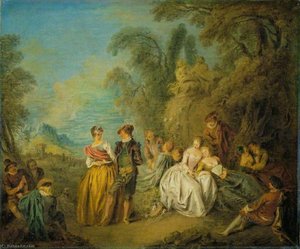
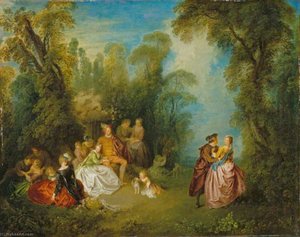
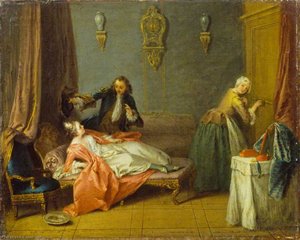
Artist Biography
Jean-Baptiste Pater: The Sole Pupil of Watteau
Jean-Baptiste Pater (December 29, 1695 – July 25, 1736) stands as a singular figure in the annals of French Rococo art—the sole documented student of Antoine Watteau, arguably the movement’s most celebrated artist. Born in Valenciennes, France, Pater's artistic journey began under the tutelage of his sculptor father, Antoine Pater, fostering an early appreciation for form and craftsmanship that would inform his subsequent endeavors. However, it was Watteau who irrevocably shaped Pater’s vision, establishing a relationship marked by both admiration and friction—a dynamic that ultimately yielded one of the most influential painters of his time.- Early Training & Influences: Pater's formative years were spent honing his skills under Antoine Pater, absorbing foundational principles of sculpture before embarking on his artistic studies with Jean-Baptiste Guide. This initial grounding proved invaluable as he later sought mentorship from Watteau in Paris (1713), where the elder artist’s distinctive style—characterized by delicate pastel palettes and ethereal shimmering lines—immediately captivated young Pater.
- The Watteau Connection: Watteau's influence extended beyond mere stylistic imitation; it permeated Pater’s conceptual framework. Despite Watteau’s notoriously difficult temperament, Pater recognized the master’s profound understanding of atmosphere and emotion, qualities he diligently pursued in his own work. The brief collaboration between the two artists solidified Watteau’s legacy as Pater’s guiding force.
- Rococo Style & Technique: Pater's artistic style epitomized the Rococo aesthetic—a celebration of elegance, frivolity, and sensual pleasure. He employed a masterful technique utilizing traditional pastel colors and applying shimmering lines with remarkable precision. This distinctive approach anticipates Francesco Guardi’s later explorations of atmospheric perspective, demonstrating Pater’s keen observational skills and innovative spirit.
Notable Works & Patronage
Pater's artistic output focused primarily on *fête galantes*, idyllic scenes depicting aristocratic gatherings amidst gardens or landscapes—a genre championed by Watteau and perfected by Pater himself. His most celebrated canvases include “Conversation Galante,” a breathtaking depiction of refined social interaction bathed in soft light, capturing the essence of Rococo’s preoccupation with beauty and grace. Another significant achievement is “Landscape with a Cart,” which showcases Pater's ability to convey subtle nuances of texture and color—a piece considered to foreshadow Guardi’s groundbreaking use of atmospheric perspective.- Frederick the Great: Pater gained considerable renown through his portrait commissions for Frederick II, King of Prussia—specifically “Le Sultan au Harem” and “Le Sultan au Jardin.” These portraits exemplify Pater's skill in portraying regal dignity and capturing the psychological complexities of his subjects, cementing his reputation as a royal artist.
- Museum Collections: Pater’s paintings reside in prestigious institutions worldwide, including the Louvre Museum in Paris and the Musée des Beaux-Arts de Valenciennes—testaments to their enduring artistic merit and historical significance.
Legacy & Artistic Significance
Jean-Baptiste Pater's contribution to French Rococo art is undeniable. He stands as a pivotal figure in capturing the spirit of his era, embodying Watteau’s stylistic innovations while forging his own distinctive artistic voice. His meticulous technique and evocative compositions continue to inspire admiration among art historians and enthusiasts alike—a testament to Pater’s enduring legacy as one of France's foremost painters of the eighteenth century. For a deeper understanding of Pater’s life and oeuvre, visit ArtsDot or explore the Musée des Beaux-Arts de Valenciennes website.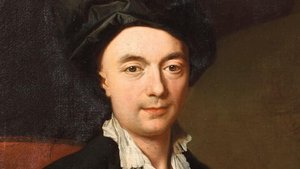
Jean-Baptiste Pater
1695 - 1736 , France
Quick Facts
- Artistic Movement Or Style: Rococo Pastel Palette
- Artists Or Movements Influenced By This Artist: ['Francesco Guardi']
- Artists Who Influenced This Artist: ['Antoine Watteau']
- Date Of Birth: December 29, 1695
- Date Of Death: July 25, 1736
- Full Name: Jean-Baptiste Pater
- Nationality: French
- Notable Artworks:
- Conversation Galante
- Landscape with a Cart
- Les Plaisirs du Bal
- Place Of Birth: Valenciennes, France

