 Send
Send Share
Share
 Details

 Download
 Similars
 Diaporama
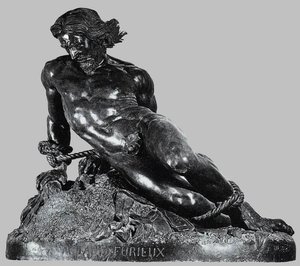
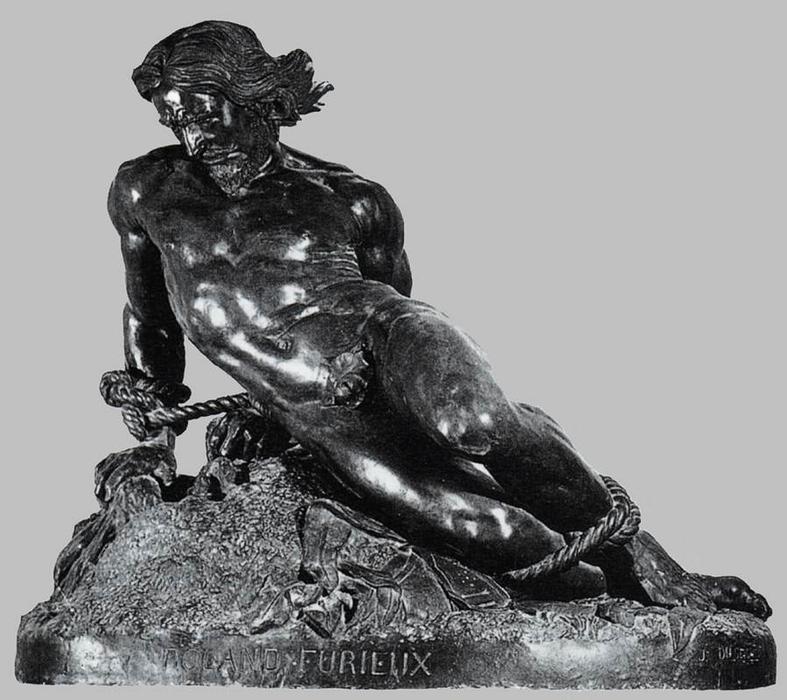
Orlando Furioso
 Sculpture Bronze
- Sculpture
- Romantic Sculpture
 1831
1831- 19th Century
 130.0 x 140.0 cm
 The Louvre
 Read More
Giclée / Art Print
Museum-quality giclée or canvas print with fast production and flexible finish options. ( Buy Hand Made Painting Buy Image)




































Pick from our preset sizes that match the artwork's original proportions.

You may enter your own dimensions to fit a specific frame or space. If your selected size does not match the original image's proportions, we will either crop the artwork or extend the image with a mirrored or solid-fill edge. A digital mockup will be sent for your approval before production begins.
Please note that the on-screen preview does not reflect the actual cropping or extension. Only the mockup will accurately show the final composition.
While custom sizes are available, we recommend selecting a dimension from the predefined list to preserve the original proportions.
Worldwide Delivery () in 2 weeks instead of standard 4/5 weeks. (22 August)

Free Worldwide Express Shipping

High-Quality Linen Canvas

Full Shipping Insurance

Customs Tax Refund Guarantee

True Color Matching Guarantee

60-Day Return Policy (Defects Only)

100% Money-Back Guarantee

Bulk Discount Offer
 Glass option is only available in size under 110 CM

Orlando Furioso
Giclée / Art Print
Reproduction Size
-


Total Price
$ 63
Collectible Description
The Drama of Bronze: An Encounter with Orlando Furioso
To stand before Jean Bernard Duseigneur's "Orlando Furioso" is to confront a moment suspended between struggle and repose. This magnificent bronze sculpture does not merely depict a figure; it captures the very essence of epic turmoil, translating the sweeping narratives of literature into tangible, weighty form. The subject itself evokes the spirit of Orlando from Ariosto’s celebrated poem—a character synonymous with valor, passion, and profound emotional upheaval. Duseigneur masterfully renders this internal drama through the physical poetry of the human body, presenting a reclining male figure whose musculature speaks volumes without uttering a single word.
Mastery in Patina and Form
The technical brilliance of this piece is immediately apparent upon viewing its surface. Cast in bronze, the sculpture wears its history like a rich mantle. The patina—a complex tapestry of deep browns and verdigris greens—is not merely discoloration; it is an integral part of the artwork’s narrative, suggesting passage through time and elemental endurance. Observe how the diffused lighting catches the contours of the form, emphasizing the sinuous lines of the body against the rough, textured base. Duseigneur's handling of texture is remarkable: the implied softness of hair contrasts dramatically with the permanence of the oxidized metal, while the carved geometry of the plinth anchors the entire composition in a sense of grounded weight.
A Glimpse into 19th-Century Romanticism
Created around 1831, "Orlando Furioso" sits squarely within the currents of 19th-century sculpture, blending the idealized anatomy inherited from Neoclassicism with the heightened emotionality characteristic of Romanticism. The slightly low perspective chosen by the original photographer enhances this dramatic impact, forcing the viewer to acknowledge the sheer scale and presence of the work. It is a piece that demands contemplation, inviting us to consider the weight of heroic struggle—the resilience required when facing fate’s grandest challenges.
Symbolism and Emotional Resonance for the Modern Space
For the collector or designer seeking an anchor piece, this sculpture offers more than mere ornamentation. It is a potent symbol of enduring strength and passionate experience. The dynamic diagonal line created by the pose guides the eye across the composition, mirroring the journey of life itself—a path marked by exertion and eventual, powerful rest. Incorporating such a monumental work into an interior space imbues it with immediate gravitas and cultural depth. It suggests a home that values narrative, history, and the enduring power of human spirit.
Related Artworks

Artist Biography
Early Life and Artistic Formation
Jean Bernard Duseigneur, also known as Jehan Duseigneur, emerged in the vibrant artistic landscape of 19th-century Paris, born on June 23rd, 1808. His early life was steeped in the practical world of craftsmanship; his father, Claude Bernard Duseigneur, was a bronzier—a maker and gilder of bronze objects. This familial connection proved formative, exposing young Jean to the technical intricacies of metalwork and sculpture from an exceptionally young age. While not hailing from a lineage of celebrated artists, this grounding in the physical processes of creation would later inform his own sculptural practice.
At the tender age of fourteen, Duseigneur embarked on formal training at the prestigious École des Beaux-Arts in Paris. There, he absorbed classical principles under the tutelage of François-Joseph Bosio, a student of Antonio Canova himself. However, even within this rigorous academic environment, Duseigneur’s artistic sensibilities began to diverge from strict Neoclassical conventions. He found himself increasingly drawn to the evocative power of the Middle Ages and Christian iconography, seeking new sources of inspiration in chivalrous narratives and religious themes.
The Dawn of Romantic Sculpture: Roland Furieux
Duseigneur’s breakthrough moment arrived in 1831 with the exhibition of Roland Furieux, a sculpture based on Ariosto's epic poem *Orlando Furioso*. This work is often heralded as the first truly Romantic sculpture, marking a significant departure from the prevailing Neoclassical style. The piece captured not merely the physical form of the knight Roland, but his inner turmoil—his “fury,” as the title suggests—a dramatic intensity that resonated with the burgeoning Romantic movement’s emphasis on emotion and individualism.
The sculpture's success propelled Duseigneur into the spotlight. It signaled a shift in sculptural focus, moving away from idealized representations of classical heroes towards more dynamic and emotionally charged subjects. He demonstrated an acute understanding of anatomy, honed through dedicated study, but he employed this knowledge not for precise imitation, but to convey the raw power and psychological depth of his figures.
A Devotion to Religious Art and Portraiture
Following the acclaim surrounding Roland Furieux, Duseigneur’s artistic trajectory took a decidedly religious turn. He dedicated himself almost exclusively to creating works for churches and other sacred spaces, embracing commissions that allowed him to explore themes of faith and spirituality. This period reflects not only a personal devotion but also the broader cultural context of France at the time—a society experiencing a renewed interest in religious expression.
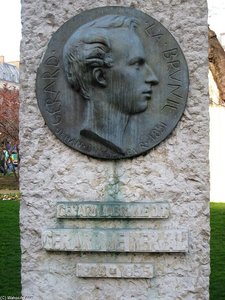
Alongside his religious sculptures, Duseigneur cultivated a reputation as a skilled portraitist. He immortalized prominent figures of the era in bronze and plaster busts, including Jacques de Rougé, Marquis du Plessis-Bellière, whose likeness now resides in the Palace of Versailles. Perhaps most notably, he created a compelling bust of the poet Gérard de Nerval, capturing the complex personality of this influential literary figure.
Legacy and Historical Significance
Jean Bernard Duseigneur’s career spanned three decades, during which he bridged the gap between Romanticism and the emerging Realist movement in French sculpture. His work is characterized by a unique blend of classical precision and emotional intensity—a testament to his rigorous training and independent artistic vision.
- Influence on Subsequent Generations: Duseigneur’s sculptures, housed in prestigious institutions like the Louvre and Versailles, continue to inspire artists and scholars today. His ability to convey emotion through muscular forms and dynamic compositions left a lasting mark on French sculpture.
- Connection to Literary Circles: His portraits of figures such as Théophile Gautier and Victor Hugo demonstrate his close ties to the literary world of Romantic Paris, solidifying his position within the broader cultural landscape of the era.
- A Bridge Between Styles: Duseigneur’s work represents a pivotal moment in sculptural history—a transition from the idealized forms of Neoclassicism to the more realistic and emotionally charged expressions of the 19th century.
Jean Bernard Duseigneur passed away on March 6th, 1866, leaving behind a legacy of expressive portrait busts, allegorical statues, and religious works that continue to captivate audiences with their dramatic spirit and technical mastery. His sculptures stand as powerful reminders of the Romantic era’s enduring fascination with emotion, individualism, and the human condition.
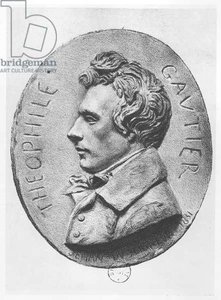
jean bernard duseigneur
1808 - 1866 , France
Quick Facts
- Artistic Movement Or Style: Romantic Sculpture
- Artists Who Influenced This Artist:
- François-Joseph Bosio
- Jean-Pierre Cortot
- Antonio Canova
- Date Of Birth: 1808
- Date Of Death: March 6, 1866
- Full Name: Jean Bernard Duseigneur
- Nationality: French
- Notable Artworks: ['Roland Furieux']
- Place Of Birth: Paris, France
Related Articles

Bronze Age to Modern Masters: 10 Sculptures That Redefined Art | ArtsDot
Journey through art history with 10 legendary bronze sculptures – from Michelangelo's David to Rodin’s Thinker. Explore the stories, techniques & timeless beauty of these masterpieces. Find museum-quality reproductions & elevate your home decor on ArtsDot.com.

Bronze Sculptures That Defined Art History | ArtsDot
Journey through art history with our Top 10 bronze sculptures! Explore masterpieces by Rodin, Michelangelo & more. Discover stories behind iconic statues and find museum-quality reproductions for your home decor at ArtsDot.com.

The Enduring Legacy of Bronze: A Historical & Artistic Exploration for the Collector
Explore the rich history & enduring appeal of bronze sculpture with expert insights for collectors at ArtsDot. Learn about casting techniques, iconic artists, collecting tips & contemporary interpretations.
The Enduring Legacy of Bronze: History, Technique & Artistic Expression for the Collector
Explore the rich history & enduring appeal of bronze sculpture with expert insights for collectors at ArtsDot. Learn about casting techniques, iconic artists, and collecting tips.

The Enduring Legacy of Bronze Sculpture: A Collector's Guide to Form & Cultural Significance
Explore the rich history & enduring appeal of bronze sculpture with expert insights for collectors at ArtsDot. Learn about casting techniques, iconic artists, and collecting tips to build a discerning art collection.