 Send
Send Share
Share
 Details

 Download
 Similars
 Diaporama
Medal in Honour of a Child


 Read More
Giclée / Art Print
Museum-quality giclée or canvas print with fast production and flexible finish options. ( Buy Hand Made Painting Buy Image)




































Pick from our preset sizes that match the artwork's original proportions.

You may enter your own dimensions to fit a specific frame or space. If your selected size does not match the original image's proportions, we will either crop the artwork or extend the image with a mirrored or solid-fill edge. A digital mockup will be sent for your approval before production begins.
Please note that the on-screen preview does not reflect the actual cropping or extension. Only the mockup will accurately show the final composition.
While custom sizes are available, we recommend selecting a dimension from the predefined list to preserve the original proportions.
Worldwide Delivery () in 2 weeks instead of standard 4/5 weeks. (2 September)

Free Worldwide Express Shipping

High-Quality Linen Canvas

Full Shipping Insurance

Customs Tax Refund Guarantee

True Color Matching Guarantee

60-Day Return Policy (Defects Only)

100% Money-Back Guarantee

Bulk Discount Offer
 Glass option is only available in size under 110 CM

Medal in Honour of a Child
Giclée / Art Print
Reproduction Size
-


Total Price
$ 63
A Timeless Encounter in Bronze
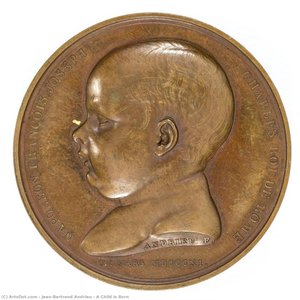
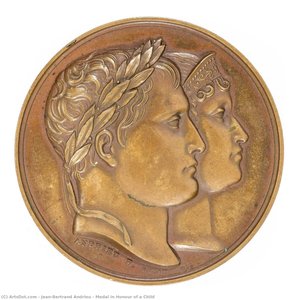
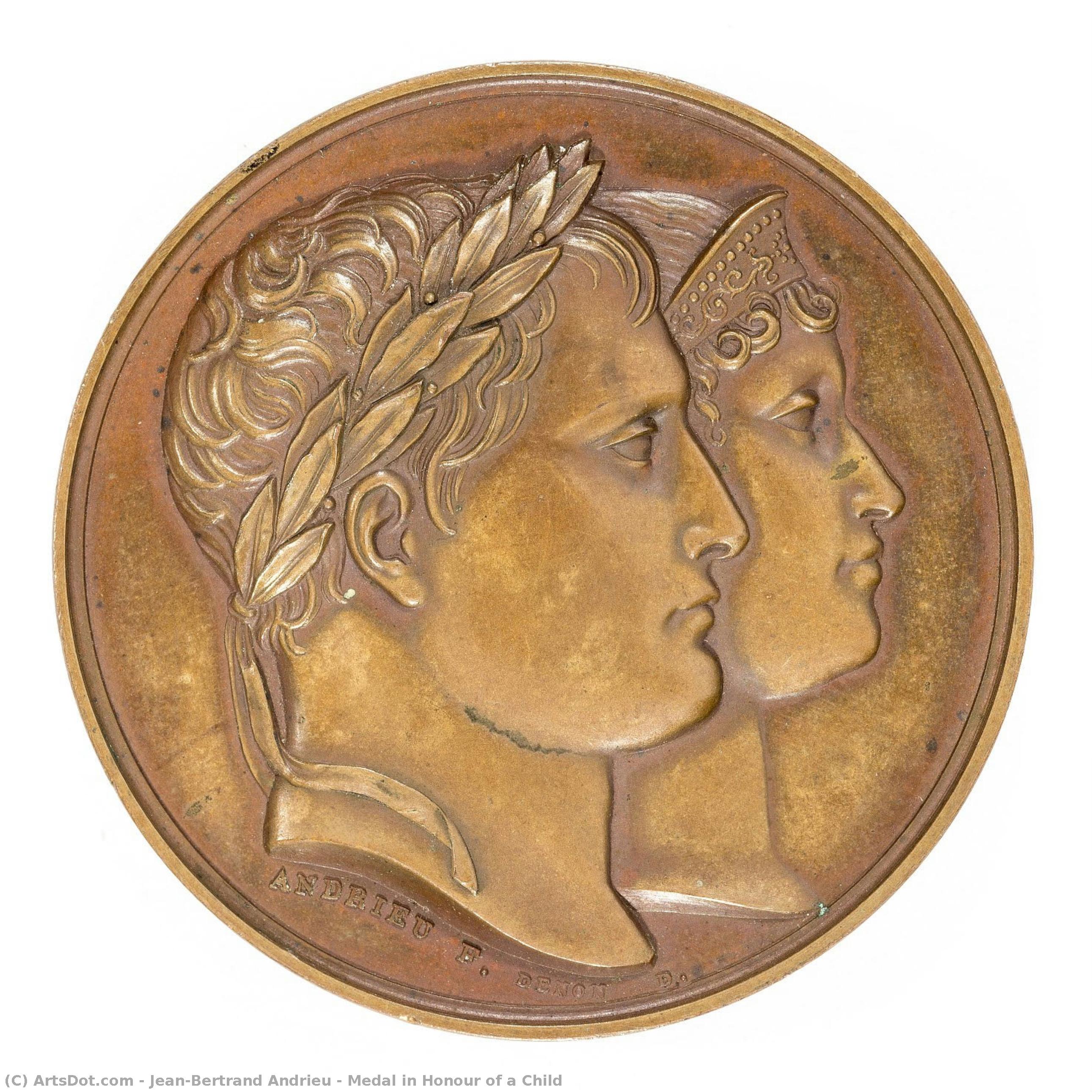
In the delicate interplay of light and shadow captured within the Medal in Honour of a Child, we encounter a profound moment of silent dialogue frozen in time. Created in 1811 by the esteemed French master Jean-Bertrand Andrieu, this exquisite piece transcends its physical form as a bronze coin to become a window into the Neoclassical soul. The composition presents a striking duality: two profiles facing one another in an intimate, eternal gaze. On one side, a man adorned with the dignified laurel wreath of victory and wisdom; on the other, a woman crowned with regal grace. This meeting of figures, rendered with the precision of a master engraver, evokes a sense of balanced harmony that has captivated collectors for centuries.
The artistry of Andrieu is immediately evident in the meticulous texture of the bronze. Every line serves a purpose, from the subtle curvature of the profiles to the weathered, antique patina that lends the piece an air of historical gravity. The stark contrast against a clean, white backdrop allows the warm, metallic tones of the medal to command the viewer's attention, making it a centerpiece of immense sculptural depth. For the discerning interior designer, this work offers a sophisticated touch of classical elegance, providing a focal point that speaks of heritage, permanence, and the enduring beauty of fine craftsmanship.
Symbolism and the Spirit of an Era
Beyond its aesthetic allure, the medal is steeped in the symbolic language of the early 19th century. The laurel wreath, a classical emblem of triumph and honor, suggests a celebration of achievement—perhaps even the purity of innocence represented by the title's tribute to a child. The juxtaposition of the masculine and feminine figures, both crowned in their own right, speaks to a cosmic balance and the interconnectedness of strength and grace. As an object of art, it carries an emotional weight that is both melancholic and celebratory, inviting the observer to contemplate the legacies we leave behind.
To possess a reproduction of such a significant historical artifact is to bring a piece of Parisian artistry into the modern home. Whether integrated into a curated gallery wall or placed as a singular statement piece on a mantle, this work inspires a sense of intellectual curiosity and refined taste. It is more than mere decoration; it is an invitation to engage with the mastery of Jean-Bertrand Andrieu and to surround oneself with the quiet, powerful echoes of history.
Related Artworks
Artist Biography
Gainsborough Dupont: A Legacy of Observation and Detail
Gainsborough Dupont (December 20, 1754 – January 20, 1797) stands as a quietly significant figure in British art history, often overshadowed by his celebrated uncle, Thomas Gainsborough. Yet, Dupont’s contribution lies not merely in imitation but in the development of a distinct artistic voice—one characterized by meticulous observation, a sensitive understanding of light and texture, and a particular fascination with the landscapes and figures of rural England. Born in Sudbury, Suffolk, Dupont's early life was deeply intertwined with the world of art through his apprenticeship under Thomas Gainsborough, an experience that profoundly shaped his approach to painting. He wasn’t simply an assistant; he became a devoted pupil, absorbing not just technique but also his uncle’s profound appreciation for the beauty and character of the English countryside.Early Years and Apprenticeship
Dupont's formal training began at the age of fourteen, entering Gainsborough’s studio in Bath. This period was crucial, providing him with invaluable experience in all aspects of painting – from preparatory sketches and underpainting to the final touches of detail. Crucially, Dupont wasn’t tasked solely with menial tasks; he actively participated in the creation of Gainsborough's most famous works, including the iconic “Wooded Landscape with Riders and Packhorses” (1796), a piece that exemplifies Dupont’s own burgeoning style. The influence is undeniable – the same atmospheric perspective, the careful rendering of foliage, and the evocative portrayal of rural life are all hallmarks of Dupont's work. However, while he undoubtedly learned from his uncle, Dupont gradually developed his own distinct sensibility, moving beyond mere replication to create paintings that possessed a subtle yet palpable sense of individuality.A Specialist in Landscapes and Portraits
Dupont’s artistic output primarily focused on landscapes and portraits, though he also produced numerous mezzotint copies of Gainsborough's paintings – a practice common at the time, intended to preserve and disseminate his uncle’s work. His landscape paintings are particularly noteworthy for their remarkable detail and atmospheric quality. He possessed an extraordinary ability to capture the nuances of light and shadow, creating scenes that feel both realistic and imbued with emotion. His depictions of rural England—rolling hills, meandering streams, and quaint villages—offer a romanticized yet deeply authentic portrayal of the era. Beyond landscapes, Dupont excelled in portraiture, often depicting members of the landed gentry and local figures. These portraits are characterized by their quiet dignity and subtle psychological insight, capturing not just physical likeness but also the character and personality of his subjects.Technique and Influences
Dupont’s technique was rooted in the traditions of Old Master painting, particularly the works of Claude Lorrain and Canaletto. He meticulously studied their use of perspective, composition, and color, adapting these principles to suit his own artistic vision. His brushwork is generally smooth and controlled, with a careful attention to detail that borders on obsessive. However, unlike some of his contemporaries, Dupont avoided excessive ornamentation or dramatic gestures, preferring instead to create paintings that are quietly elegant and understated. While Gainsborough’s influence is undeniable, Dupont also drew inspiration from the works of John Constable, whose emphasis on capturing the changing light and atmosphere of the English countryside resonated deeply with Dupont's own artistic sensibilities.Legacy and Historical Significance
Despite his relatively short career—he died at the young age of 42—Gainsborough Dupont left behind a significant body of work that continues to be appreciated for its technical skill, atmospheric beauty, and subtle emotional depth. His paintings offer a valuable glimpse into the social and cultural landscape of late 18th-century England, capturing the essence of rural life and the changing attitudes towards nature. While he may not enjoy the same level of recognition as his famous uncle, Dupont’s contribution to British art deserves to be celebrated for its quiet elegance and enduring appeal. His work resides in collections such as the Garrick Club in London, a testament to the quality and lasting value of his artistic endeavors. Further research into his life and works continues to reveal new insights into this fascinating artist and his place within the broader context of British art history.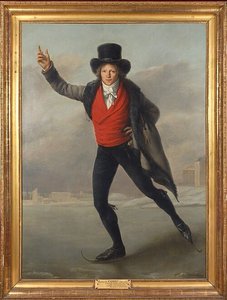
jean-bertrand andrieu
1754 - 1822 , France
Quick Facts
- Artistic Movement Or Style: Gainsborough's manner
- Artists Or Movements Influenced By This Artist: ['']
- Artists Who Influenced This Artist: ['Thomas Gainsborough']
- Date Of Birth: 20 Dec 1754
- Date Of Death: 20 Jan 1797
- Full Name: Gainsborough Dupont
- Nationality: British
- Notable Artworks:
- Wooded Landscape
- Packhorses Riders
- Place Of Birth: Sudbury, Suffolk, UK
Related Articles

The Enduring Legacy of Bronze: A Historical & Artistic Exploration for the Collector
Explore the rich history & enduring appeal of bronze sculpture with expert insights for collectors at ArtsDot. Learn about casting techniques, iconic artists, collecting tips & contemporary interpretations.

Bronze Age to Modern Masters: 10 Sculptures That Redefined Art | ArtsDot
Journey through art history with 10 legendary bronze sculptures – from Michelangelo's David to Rodin’s Thinker. Explore the stories, techniques & timeless beauty of these masterpieces. Find museum-quality reproductions & elevate your home decor on ArtsDot.com.
The Enduring Legacy of Bronze: History, Technique & Artistic Expression for the Collector
Explore the rich history & enduring appeal of bronze sculpture with expert insights for collectors at ArtsDot. Learn about casting techniques, iconic artists, and collecting tips.

The Enduring Legacy of Bronze Sculpture: Technique, Symbolism & Cultural Impact
Explore the rich history & enduring appeal of bronze sculpture with expert insights for collectors. Learn about casting techniques, iconic artists, collecting tips & contemporary interpretations at ArtsDot.
The Enduring Legacy of Bronze Sculpture: A Collector's Guide to Form & Cultural Significance
Explore the rich history & enduring appeal of bronze sculpture with expert insights for collectors at ArtsDot. Learn about casting techniques, iconic artists, and collecting tips to build a discerning art collection.