 Preview
 Send
Send Share
Share
 Details

 Download
 Similars
 X-Ray
X-Ray Diaporama
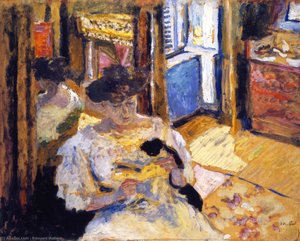
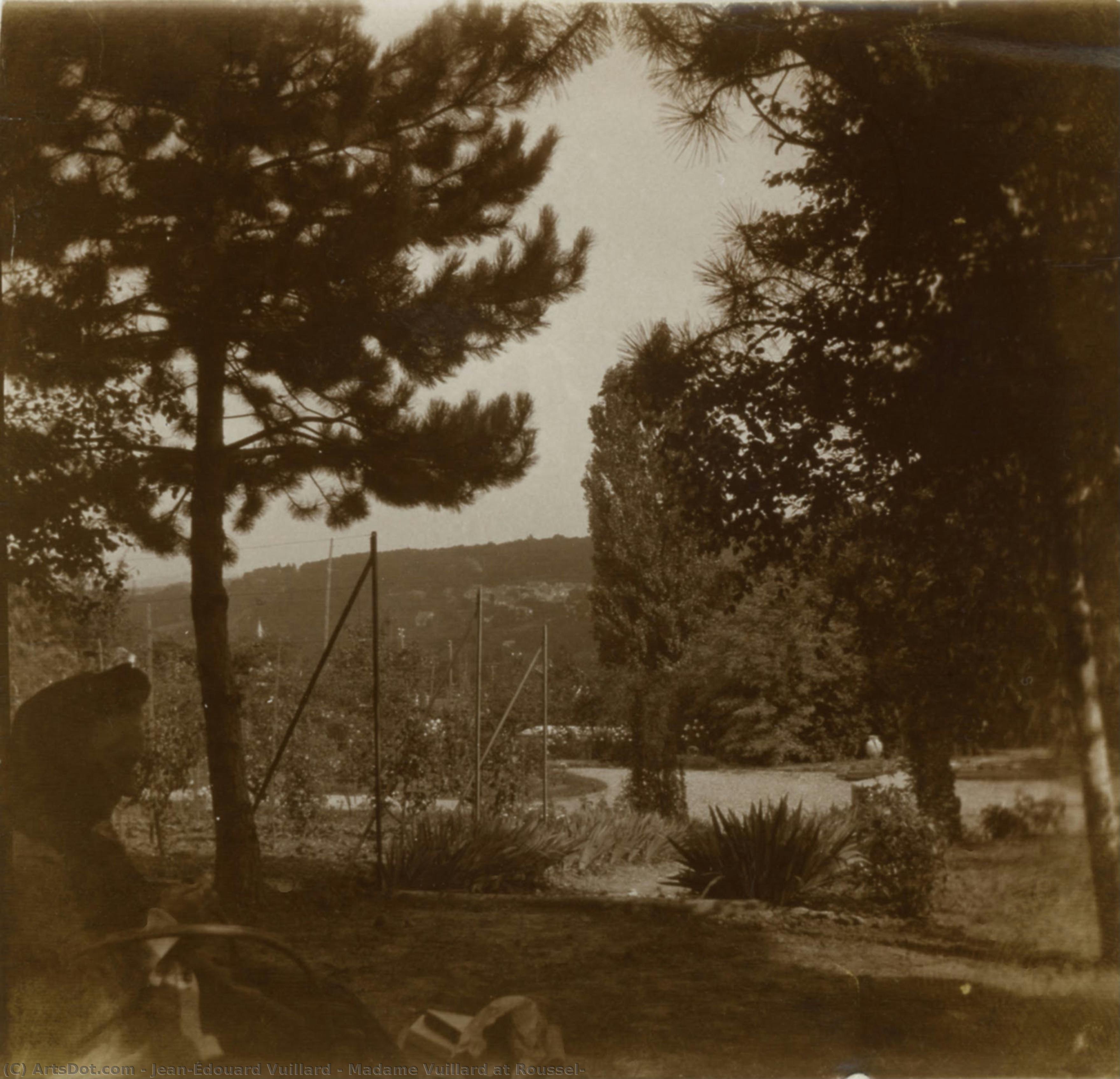
Madame Vuillard at Roussel
 Oil On Canvas
- WallArt
- Cubism
 1920
1920- Modern
 8.0 x 8.0 cm
 Musée des impressionnismes Giverny
 Read More
Hand Made Oil Reproduction
Hand-painted oil on canvas in your size and frame, made to order by our artists. ( Buy Print Buy Image)




P118B $10

P118H $10

P118W $10

P438Z $10

P508JH $12

P508YH $12

P805H $10

P805Z $10

P919BZ $10

P919G $10

P919XJ $10

P959ZH $10

P968JZ $12

W106C $8

W218G $10

W218JH $8

W218Y $10

W307PJ $10

W316G $10

W316PJ $8

W316Y $10

W398PJ $8

W4111J $10

W500HY $15

W500JH $15

W692G $12

W849H $8

W940BG $15

W953PJ $8




Pick from our preset sizes that match the artwork's original proportions.

You may enter your own dimensions to fit a specific frame or space. If your selected size does not match the original image's proportions, we will either crop the artwork or extend the painting with additional hand-painted elements. A digital mockup will be sent for your approval before production begins.
Please note that the on-screen preview does not reflect the actual cropping or extension. Only the mockup will accurately show the final composition.
While custom sizes are available, we recommend selecting a dimension from the predefined list to preserve the original proportions.
After order, ArtsDot.com team will email client for instructions and provide a mockup preview
Worldwide Delivery () in 3/4 weeks instead of standard 5 weeks. (1 September). No compromise on quality.

Free Worldwide Express Shipping

High-Quality Linen Canvas

Full Shipping Insurance

Customs Tax Refund Guarantee

True Color Matching Guarantee

60-Day Return Policy (Defects Only)

100% Money-Back Guarantee

Bulk Discount Offer
 Glass option is only available in size under 110 CM

Madame Vuillard at Roussel
Reproduction Medium
Reproduction Size
-


Total Price
$ 263
A Moment Suspended in Time
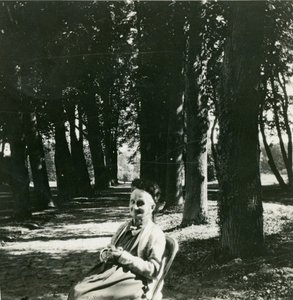
In the quietude of 1920, Jean-Édouard Vuillard captured a scene that transcends mere portraiture, offering instead a profound meditation on stillness and light. Madame Vuillard at Roussel is not simply a depiction of a woman seated outdoors; it is an invitation into a private, serene world where the boundaries between the human spirit and the natural environment begin to blur. As the subject rests upon a bench beneath the dappled shade of a leafy tree, she gazes toward the observer with a look of gentle composure. This direct connection establishes an intimate dialogue, pulling the viewer out of their own reality and into this sun-drenched moment of domestic peace. For the collector or interior designer, this piece serves as a window into a more contemplative way of living, making it an ideal centerpiece for spaces dedicated to relaxation and reflection.
The emotional resonance of the work is deeply rooted in Vuillard’s mastery of the Nabis aesthetic. Moving away from the fleeting, high-contrast energy of Impressionism, Vuillard embraced a more symbolic and atmospheric approach. The painting breathes with a sense of quietude, achieved through a palette that avoids jarring interruptions. Instead, we find ourselves enveloped in soft ochres, muted olive greens, and delicate pale pinks. These subtle tonal variations do not merely describe the landscape; they evoke the very feeling of a warm, diffused afternoon. There is a rhythmic harmony in the way the colors interact, creating a visual lullaby that soothes the eye and settles the mind.
The Artistry of Texture and Form
Technically, the painting is a triumph of layered complexity disguised as simplicity. Vuillard was a master of applying thin, translucent washes of pigment, building layers that allow light to appear as if it is emanating from within the canvas itself. This technique lends a luminous quality to the skin of Madame Vuintard and the foliage above, creating a sense of depth that does not rely on traditional, rigid perspective. Furthermore, his use of fine hatching—delicate lines drawn parallel to the contours of the subjects—adds a tactile, almost woven texture to the surface. This meticulous attention to detail gives the artwork a physical presence, making the materiality of the bench, the grass, and the leaves feel tangible to the touch.
The historical significance of this piece lies in its connection to the avant-garde spirit of Paris. As a key figure in the Les Nabis group, Vuillard utilized influences from Japanese woodblock prints to flatten planes of color and emphasize pattern over photographic realism. This stylistic choice allows the composition to function as much as a decorative element as a narrative one. The interplay of organic shapes and soft colors makes this reproduction a versatile choice for sophisticated interiors, where it can complement both classical and contemporary decor. To possess such a work is to hold a fragment of art history—a piece that celebrates the beauty found in the quiet, unobserved moments of life.
Related Artworks
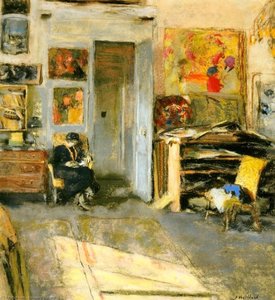
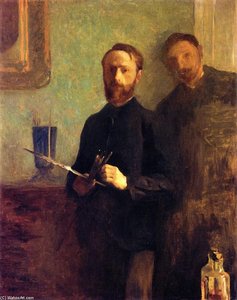
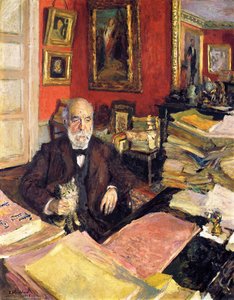
Artist Biography
**early life and artistic beginnings**
jean-édouard vuillard, a french painter, decorative artist, and printmaker, was born on november 11, 1868, in cuiseaux, france. his life's work would later become a cornerstone of the avant-garde artistic group les nabis, alongside fellow visionaries like maurice denis and édouard vuillard. this collective would revolutionize the art world with their innovative approach to color and form.**the nabis movement and its influence**
as a prominent member of les nabis, vuillard's paintings assembled areas of pure color, influenced by japanese prints. his interior scenes explored the spatial effects of flattened planes of color, pattern, and form. this approach would later influence the development of cubism, fauvism, and abstract art.- les nabis, a group of young french artists active in paris from 1888 until 1900, played a large part in the transition from impressionism and academic art to abstract art, symbolism, and the other early movements of modernism.
- their philosophy was based upon the philosophy of positivism, and the writings of auguste comte and hippolyte taine.
**vuillard's later work and legacy**
after 1900, when les nabis disbanded, vuillard adopted a more realistic style, approaching landscapes and interiors with greater detail and vivid colors. in the 1920s and 1930s, he painted portraits of prominent figures in french industry and the arts in their familiar settings. **key works and exhibitions:**- jean-édouard vuillard's paintings can be found in various museums, including the musée de la révolution française (france), which boasts a rich collection of artworks, documents, and objects related to the revolutionary period.
- some of his notable works include "la patrie en danger" by guillaume lethière and "jean de la barre" by jean clouet, which depict a young man condemned to death for blasphemy during the ancien régime.
- vuillard's later work, such as his portraits of french industry and arts figures, can be seen in various galleries, including those at intimism art movement and jean-édouard vuillard's page on ArtsDot.
**conclusion**
jean-édouard vuillard's enigmatic world, characterized by its innovative use of color and form, has left an indelible mark on the art world. as a pioneer of modernism, his work continues to inspire artists and influence various artistic movements. discover more about intimism art movement and explore jean-édouard vuillard's works on ArtsDot.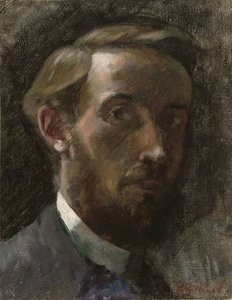
jean-édouard vuillard
1868 - 1940 , France
Quick Facts
- Artistic Movement Or Style: Nabis
- Artists Or Movements Influenced By This Artist:
- Cubism
- Fauvism
- Artists Who Influenced This Artist: ['Paul Gauguin']
- Date Of Birth: November 11, 1868
- Date Of Death: June 21, 1940
- Full Name: Jean-Édouard Vuillard
- Nationality: French
- Notable Artworks:
- Woman Sweeping
- Sunlit Interior
- Place Of Birth: Cuiseaux, France
Related Articles
Édouard Manet's Masterpieces: Explore 25 Iconic Paintings for Your Home Decor
Explore 25 iconic Édouard Manet paintings, from 'Le Déjeuner sur l'herbe' to 'Olympia'. Discover the stories behind these Impressionist masterpieces & find museum-quality art reproductions for your home. Explore the full collection online at ArtsDot.com!
Intimate Interiors & Poetic Ambiguity: Exploring the Vision of Jean-Édouard Vuillard
Discover the captivating world of Jean-Édouard Vuillard, a key figure of the Nabis movement. Explore his intimate interiors, unique style & lasting influence on modern art. Learn more at ArtsDot.
Intimate Interiors: Domestic Life & Artistic Representation from Renaissance to Impressionism
Explore the evolution of domestic life in Western art from the Renaissance to Impressionism. Discover symbolism, realism & artistic techniques shaping intimate interior scenes. Learn more with ArtsDot.

Impressionism's Masterpieces: 10 Paintings That Defined a Movement | ArtsDot
Journey through Impressionism's heart with 10 iconic paintings by Monet, Renoir & Degas. Explore light, color & the stories behind these masterpieces. Find museum-quality art reproductions and elevate your home decor on ArtsDot.com.
Impressionism's Legacy: 10 Masterpieces That Transformed Art & Decor
Journey through Impressionism's radiant world! Explore 10 masterpieces by Monet, Renoir & Degas that revolutionized art. Discover the stories behind these iconic paintings and find museum-quality reproductions for your home at .