 Send
Send Share
Share
 Details

 Download
 Similars
 Diaporama
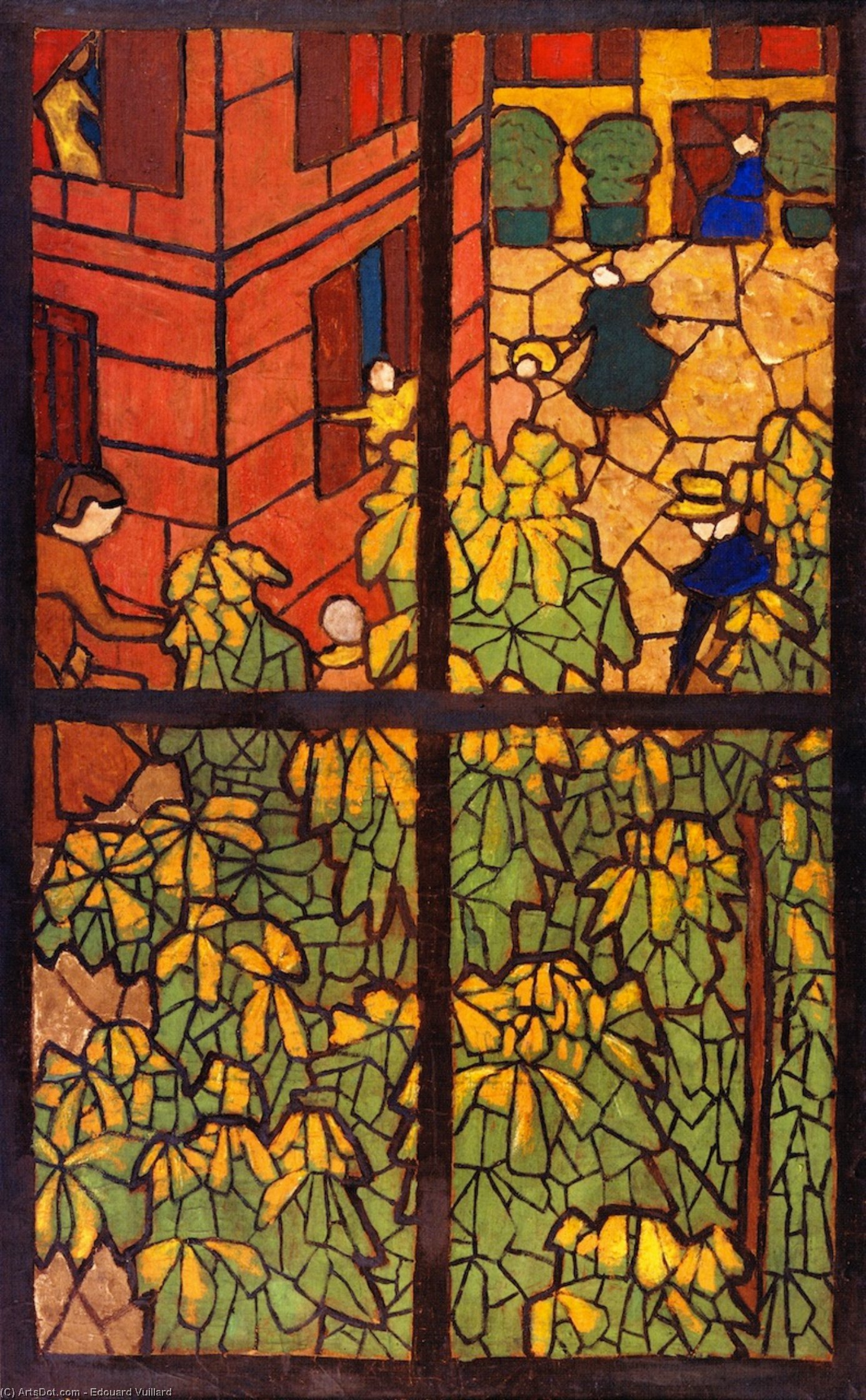
The Chestnut Trees: Project for a Stained-Glass Window


 Read More
Giclée / Art Print
Museum-quality giclée or canvas print with fast production and flexible finish options. ( Buy Hand Made Painting Buy Image)




































Pick from our preset sizes that match the artwork's original proportions.

You may enter your own dimensions to fit a specific frame or space. If your selected size does not match the original image's proportions, we will either crop the artwork or extend the image with a mirrored or solid-fill edge. A digital mockup will be sent for your approval before production begins.
Please note that the on-screen preview does not reflect the actual cropping or extension. Only the mockup will accurately show the final composition.
While custom sizes are available, we recommend selecting a dimension from the predefined list to preserve the original proportions.
Worldwide Delivery () in 2 weeks instead of standard 4/5 weeks. (29 August)

Free Worldwide Express Shipping

High-Quality Linen Canvas

Full Shipping Insurance

Customs Tax Refund Guarantee

True Color Matching Guarantee

60-Day Return Policy (Defects Only)

100% Money-Back Guarantee

Bulk Discount Offer
 Glass option is only available in size under 110 CM

The Chestnut Trees: Project for a Stained-Glass Window
Giclée / Art Print
Reproduction Size
-


Total Price
$ 63
A Tapestry of Light and Pattern: Exploring Vuillard's Vision
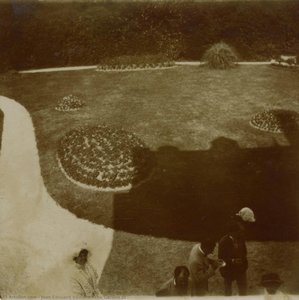
To stand before Jean Edouard Vuillard’s The Chestnut Trees: Project for a Stained-Glass Window is to step into a dream rendered in pigment and pattern. This painting, dating from 1894, is far more than a mere depiction of an outdoor scene; it is a meticulously constructed meditation on color, space, and the interplay between the domestic and the public sphere. Vuillard, a master of capturing intimate moments within the grand sweep of Parisian life, uses this piece to explore how light itself can become a structural element of art. The composition draws the eye through figures meandering along a street, punctuated by the quiet presence of potted plants and the steady gaze of a clock on the left—details that anchor the viewer in a specific, yet timeless, moment.
The Influence of the East and the Avant-Garde Spirit
What elevates this work beyond simple genre painting is Vuillard’s profound engagement with artistic currents sweeping through late 19th-century Paris. His style bears the unmistakable resonance of Japanese prints, an influence that encouraged him to flatten pictorial space and emphasize decorative pattern over deep, illusionistic perspective. This echoes his association with Les Nabis, a group dedicated to exploring art's spiritual and symbolic dimensions. Here, we see Vuillard assembling areas of pure, unadulterated color. The resulting effect is one where the boundaries between the architectural elements, the foliage, and the human forms begin to dissolve into a unified field of patterned beauty. It speaks to an artistic mind restless with convention, always seeking the underlying geometric structure beneath the visible world.
Technique: Flattened Planes and Bold Color
Examining the technique reveals Vuillard’s genius for managing color planes. The painting eschews the delicate gradations of pure Impressionism in favor of bolder blocks of hue and defined shapes. This characteristic use of geometric simplification gives the work a decorative power that is both modern and deeply rooted in tradition. For those considering a reproduction, understanding this technique is key: it is not about mimicking photographic reality, but rather capturing the *feeling* of color vibrating against adjacent colors. The stained-glass motif itself suggests an inherent luminosity, making any high-quality hand-painted reproduction a piece that promises to catch and refract light within your own space.
Symbolism and Emotional Resonance for the Modern Collector
The symbolism woven into The Chestnut Trees is subtle yet rich. The chestnut trees themselves often carry connotations of cyclical life, memory, and enduring connection. Juxtaposed against the transient passage of people—some moving toward us, others receding into the background haze—the work contemplates the nature of time itself, marked by that steadfast clock face. For the collector or interior designer, this piece offers more than mere decoration; it offers a sophisticated mood. It suggests an atmosphere of cultured contemplation—a perfect centerpiece for a drawing-room, gallery wall, or even as a grand focal point in a space designed to inspire thoughtful repose.
Related Artworks
Artist Biography
**early life and artistic beginnings**
jean-édouard vuillard, a french painter, decorative artist, and printmaker, was born on november 11, 1868, in cuiseaux, france. his life's work would later become a cornerstone of the avant-garde artistic group les nabis, alongside fellow visionaries like maurice denis and édouard vuillard. this collective would revolutionize the art world with their innovative approach to color and form.**the nabis movement and its influence**
as a prominent member of les nabis, vuillard's paintings assembled areas of pure color, influenced by japanese prints. his interior scenes explored the spatial effects of flattened planes of color, pattern, and form. this approach would later influence the development of cubism, fauvism, and abstract art.- les nabis, a group of young french artists active in paris from 1888 until 1900, played a large part in the transition from impressionism and academic art to abstract art, symbolism, and the other early movements of modernism.
- their philosophy was based upon the philosophy of positivism, and the writings of auguste comte and hippolyte taine.
**vuillard's later work and legacy**
after 1900, when les nabis disbanded, vuillard adopted a more realistic style, approaching landscapes and interiors with greater detail and vivid colors. in the 1920s and 1930s, he painted portraits of prominent figures in french industry and the arts in their familiar settings. **key works and exhibitions:**- jean-édouard vuillard's paintings can be found in various museums, including the musée de la révolution française (france), which boasts a rich collection of artworks, documents, and objects related to the revolutionary period.
- some of his notable works include "la patrie en danger" by guillaume lethière and "jean de la barre" by jean clouet, which depict a young man condemned to death for blasphemy during the ancien régime.
- vuillard's later work, such as his portraits of french industry and arts figures, can be seen in various galleries, including those at intimism art movement and jean-édouard vuillard's page on ArtsDot.
**conclusion**
jean-édouard vuillard's enigmatic world, characterized by its innovative use of color and form, has left an indelible mark on the art world. as a pioneer of modernism, his work continues to inspire artists and influence various artistic movements. discover more about intimism art movement and explore jean-édouard vuillard's works on ArtsDot.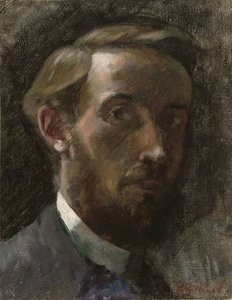
jean-édouard vuillard
1868 - 1940 , France
Quick Facts
- Artistic Movement Or Style: Nabis
- Artists Or Movements Influenced By This Artist:
- Cubism
- Fauvism
- Artists Who Influenced This Artist: ['Paul Gauguin']
- Date Of Birth: November 11, 1868
- Date Of Death: June 21, 1940
- Full Name: Jean-Édouard Vuillard
- Nationality: French
- Notable Artworks:
- Woman Sweeping
- Sunlit Interior
- Place Of Birth: Cuiseaux, France
Related Articles
Beyond Light & Color: Impressionism vs. Post-Impressionism for the Discerning Collector
Explore the nuances of Impressionism & Post-Impressionism with . Expert insights for collectors on style, investment, and acquiring museum-quality reproductions.

Post-Impressionism's 10 Defining Masterpieces: Art for Your Home |
Journey through Post-Impressionism's 10 defining masterpieces – Van Gogh, Monet & more. Explore iconic paintings, art history & find museum-quality reproductions for your home at . Discover all masterpieces online!

Beyond Impressionism: Exploring the Emotional Depth of Post-Impressionist Painting
Explore the profound emotional depth & innovative techniques of Post-Impressionism with ArtsDot. Discover Cézanne, Van Gogh, Gauguin & more – and their lasting impact on modern art.

Impressionism's Masterpieces: 10 Paintings That Defined a Movement | ArtsDot
Journey through Impressionism's heart with 10 iconic paintings by Monet, Renoir & Degas. Explore light, color & the stories behind these masterpieces. Find museum-quality art reproductions and elevate your home decor on ArtsDot.com.
Beyond Impressionism: Exploring Emotional Depth & Formal Innovation in Post-Impressionist Art
Explore the profound emotional depth & formal innovations of Post-Impressionism with our expert guide. Discover Cézanne, Van Gogh, Gauguin & more. Learn about art history, collecting, and investing in this pivotal movement.