 Preview
 Send
Send Share
Share
 Details

 Download
 Similars
 X-Ray
X-Ray Diaporama
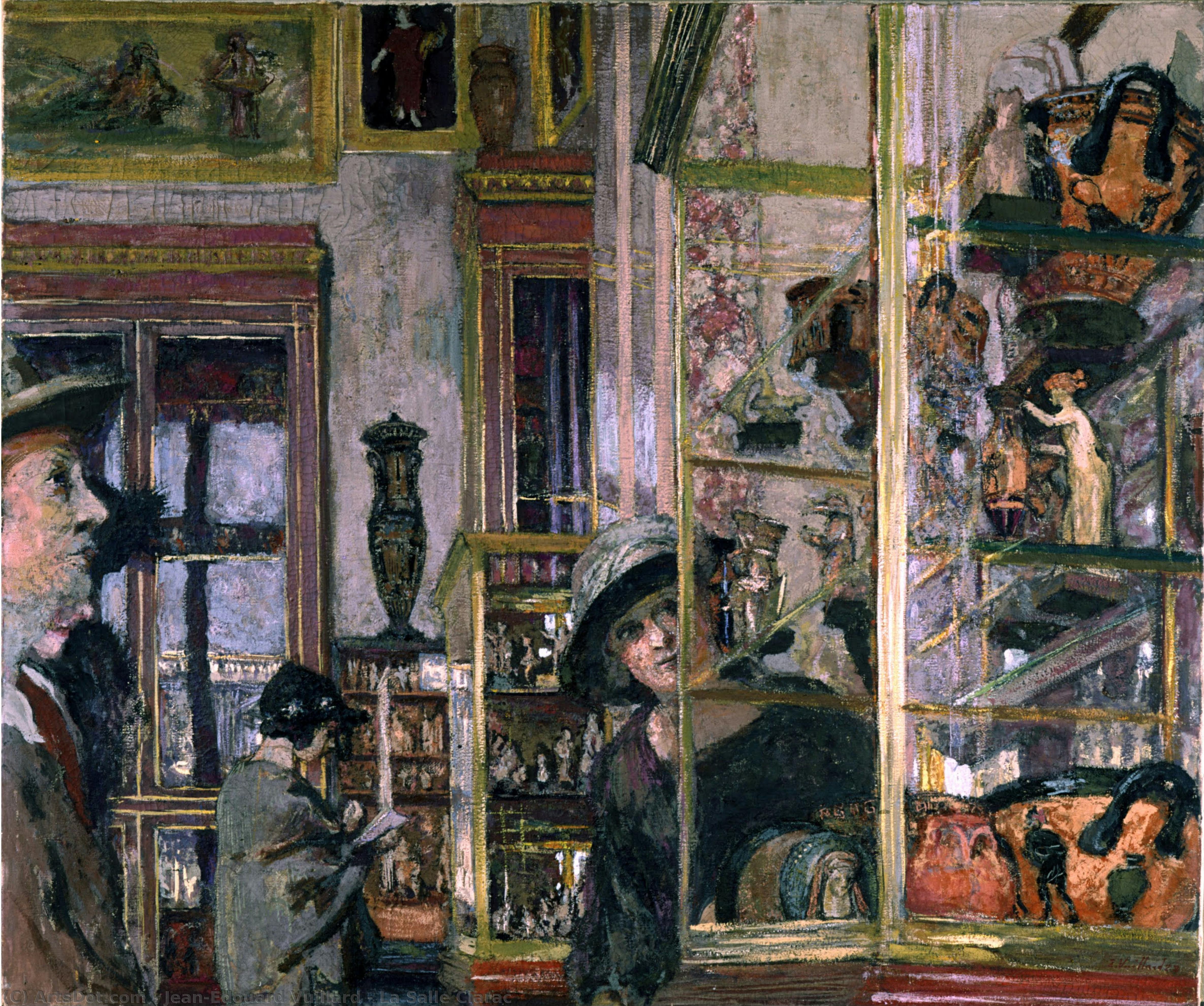
La Salle Clarac
 Oil On Canvas
- WallArt
- Cubism
 1922
1922- 19th Century
 159.0 x 981.0 cm
 Toledo Museum of Art
 Read More
Hand Made Oil Reproduction
Hand-painted oil on canvas in your size and frame, made to order by our artists. ( Buy Print Buy Image)




P118B $10

P118H $10

P118W $10

P438Z $10

P508JH $12

P508YH $12

P805H $10

P805Z $10

P919BZ $10

P919G $10

P919XJ $10

P959ZH $10

P968JZ $12

W106C $8

W218G $10

W218JH $8

W218Y $10

W307PJ $10

W316G $10

W316PJ $8

W316Y $10

W398PJ $8

W4111J $10

W500HY $15

W500JH $15

W692G $12

W849H $8

W940BG $15

W953PJ $8




Pick from our preset sizes that match the artwork's original proportions.

You may enter your own dimensions to fit a specific frame or space. If your selected size does not match the original image's proportions, we will either crop the artwork or extend the painting with additional hand-painted elements. A digital mockup will be sent for your approval before production begins.
Please note that the on-screen preview does not reflect the actual cropping or extension. Only the mockup will accurately show the final composition.
While custom sizes are available, we recommend selecting a dimension from the predefined list to preserve the original proportions.
After order, ArtsDot.com team will email client for instructions and provide a mockup preview
Worldwide Delivery () in 3/4 weeks instead of standard 5 weeks. (16 August). No compromise on quality.

Free Worldwide Express Shipping

High-Quality Linen Canvas

Full Shipping Insurance

Customs Tax Refund Guarantee

True Color Matching Guarantee

60-Day Return Policy (Defects Only)

100% Money-Back Guarantee

Bulk Discount Offer
 Glass option is only available in size under 110 CM

La Salle Clarac
Reproduction Medium
Reproduction Size
-


Total Price
$ 263
Artwork Description
La Salle Clarac: A Window Into Vuillard’s Poetic Interior
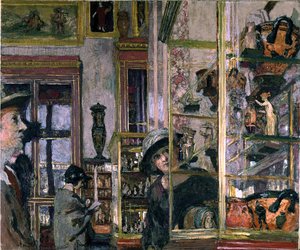
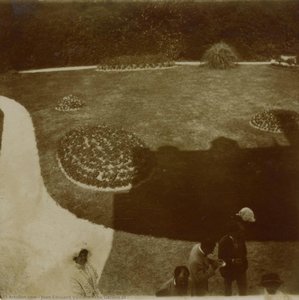
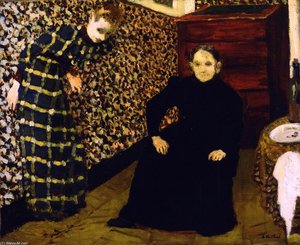
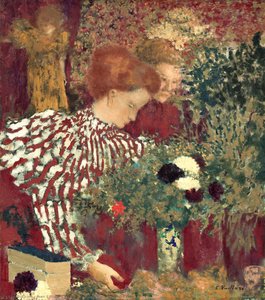
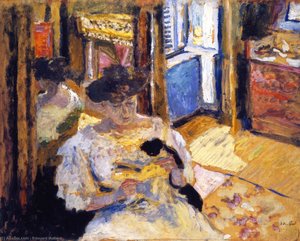
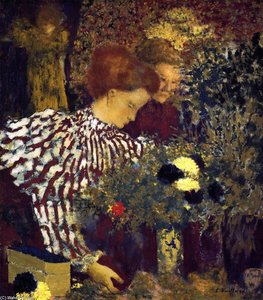
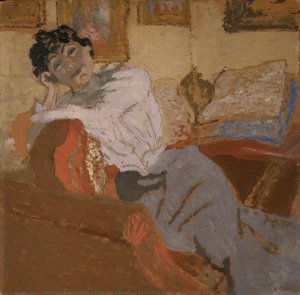
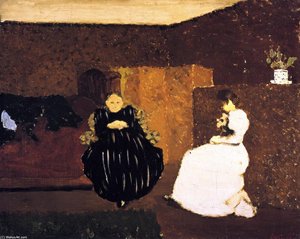
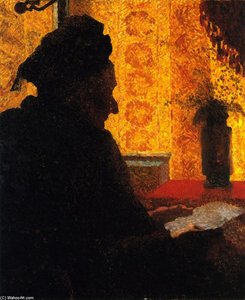
Jean-Édouard Vuillard's “La Salle Clarac,” painted in 1922, stands as a quintessential example of the Nabis movement’s distinctive aesthetic—a celebration of subtle color harmonies and flattened planes that prioritize atmosphere over meticulous realism. Executed in oil on canvas, this artwork captures a quiet moment within a Parisian shop, bathed in diffused light, offering viewers an intimate glimpse into Vuillard's artistic vision.
- Subject Matter: The scene depicts a room filled with vases—a deliberate choice by Vuillard to imbue the composition with floral symbolism. These vases aren’t merely decorative elements; they represent fertility and beauty, mirroring Vuillard’s fascination with capturing fleeting impressions of everyday life.
- Style & Technique: Vuillard employed a technique characterized by “color orchestration,” as Maurice Denis termed it—a method that involved layering translucent washes of color to create luminous surfaces. This approach departs significantly from academic painting traditions, favoring expressive abstraction over detailed representation. The flattened perspective contributes to the artwork’s dreamlike quality.
- Historical Context: Painted during the early years of the Weimar Republic, “La Salle Clarac” reflects the broader artistic currents of its time—the influence of Japanese prints (ukiyo-e) on European artists seeking new visual languages. The Nabis group championed a rejection of traditional conventions and embraced experimentation with color and form as a means of conveying emotion.
- Symbolism: Beyond the floral motif, Vuillard’s use of muted hues—primarily ochre, mauve, and pale greens—creates an emotional resonance that transcends mere visual description. These colors evoke feelings of tranquility and contemplation, inviting viewers to immerse themselves in the stillness of the interior space.
- Emotional Impact: “La Salle Clarac” succeeds in conveying a profound sense of serenity and understated beauty. Vuillard’s masterful manipulation of color and form captures not just what is seen but also what is felt—a testament to his ability to transform ordinary scenes into evocative expressions of artistic sensibility.
The painting's placement within the Musée du Louvre underscores its importance as a cornerstone of modern art history. Its enduring appeal lies in its ability to transport viewers back to a Parisian salon, capturing a moment frozen in time—a testament to Vuillard’s genius and the transformative power of Nabis aesthetics.
Further research into Jean-Édouard Vuillard reveals his formative years spent honing his craft under the guidance of influential mentors like Eugène Delacroix and Robert-Fleury. His dedication to capturing fleeting impressions—a hallmark of Impressionism—evolved into a bolder exploration of color and form, cementing his legacy as one of the pioneers of abstract art.
The Clarac Gallery’s careful curation ensures that “La Salle Clarac” continues to inspire admiration for its delicate beauty and profound artistic vision. It serves as an enduring reminder of Vuillard's contribution to the artistic landscape of the early 20th century—a masterpiece that transcends time and speaks directly to the viewer’s emotions.
Related Artworks
Artist Biography
**early life and artistic beginnings**
jean-édouard vuillard, a french painter, decorative artist, and printmaker, was born on november 11, 1868, in cuiseaux, france. his life's work would later become a cornerstone of the avant-garde artistic group les nabis, alongside fellow visionaries like maurice denis and édouard vuillard. this collective would revolutionize the art world with their innovative approach to color and form.**the nabis movement and its influence**
as a prominent member of les nabis, vuillard's paintings assembled areas of pure color, influenced by japanese prints. his interior scenes explored the spatial effects of flattened planes of color, pattern, and form. this approach would later influence the development of cubism, fauvism, and abstract art.- les nabis, a group of young french artists active in paris from 1888 until 1900, played a large part in the transition from impressionism and academic art to abstract art, symbolism, and the other early movements of modernism.
- their philosophy was based upon the philosophy of positivism, and the writings of auguste comte and hippolyte taine.
**vuillard's later work and legacy**
after 1900, when les nabis disbanded, vuillard adopted a more realistic style, approaching landscapes and interiors with greater detail and vivid colors. in the 1920s and 1930s, he painted portraits of prominent figures in french industry and the arts in their familiar settings. **key works and exhibitions:**- jean-édouard vuillard's paintings can be found in various museums, including the musée de la révolution française (france), which boasts a rich collection of artworks, documents, and objects related to the revolutionary period.
- some of his notable works include "la patrie en danger" by guillaume lethière and "jean de la barre" by jean clouet, which depict a young man condemned to death for blasphemy during the ancien régime.
- vuillard's later work, such as his portraits of french industry and arts figures, can be seen in various galleries, including those at intimism art movement and jean-édouard vuillard's page on ArtsDot.
**conclusion**
jean-édouard vuillard's enigmatic world, characterized by its innovative use of color and form, has left an indelible mark on the art world. as a pioneer of modernism, his work continues to inspire artists and influence various artistic movements. discover more about intimism art movement and explore jean-édouard vuillard's works on ArtsDot.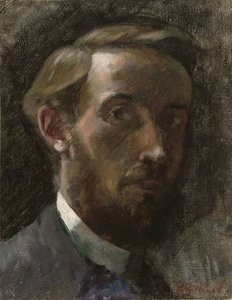
jean-édouard vuillard
1868 - 1940 , France
Quick Facts
- Artistic Movement Or Style: Nabis
- Artists Or Movements Influenced By This Artist:
- Cubism
- Fauvism
- Artists Who Influenced This Artist: ['Paul Gauguin']
- Date Of Birth: November 11, 1868
- Date Of Death: June 21, 1940
- Full Name: Jean-Édouard Vuillard
- Nationality: French
- Notable Artworks:
- Woman Sweeping
- Sunlit Interior
- Place Of Birth: Cuiseaux, France
Related Articles
Intimate Interiors & Poetic Ambiguity: Exploring the Vision of Jean-Édouard Vuillard
Discover the captivating world of Jean-Édouard Vuillard, a key figure of the Nabis movement. Explore his intimate interiors, unique style & lasting influence on modern art. Learn more at ArtsDot.
The Resonance of Place: Contextual Art Design for Harmonious Interior Spaces
Discover how expert art curation transforms interiors into harmonious spaces. Elevate your home with personalized selections & the guidance of a dedicated art concierge at ArtsDot.com.
Chromatic Equilibrium: Leveraging Art as a Tool for Color Balance and Spatial Harmony in Interior Design
Master the art of chromatic equilibrium! Learn how to leverage color & artwork for harmonious interior design. Expert guidance on palettes, psychology, bespoke commissions & spatial balance.
Renoir's Masterpieces: Explore 25 Iconic Paintings & Bring Art Home | ArtsDot
Explore 25 iconic Pierre-Auguste Renoir paintings! Discover the stories behind Impressionist masterpieces like 'Dance at Le Moulin de la Galette' & 'Luncheon of the Boating Party'. Find museum-quality art reproductions and elevate your home decor with ArtsDot.com.
Emotional Resonance in Interior Design: Selecting Paintings for Harmonious Spaces
Discover how to select paintings that evoke specific emotions & create harmonious interiors. Explore the psychology of color, art history insights, & personalized style guides for a space reflecting your wellbeing. Expert advice included.