

 Preview
 Send
Send Share
Share
 Details

 Download
 Similars
 X-Ray
X-Ray Diaporama
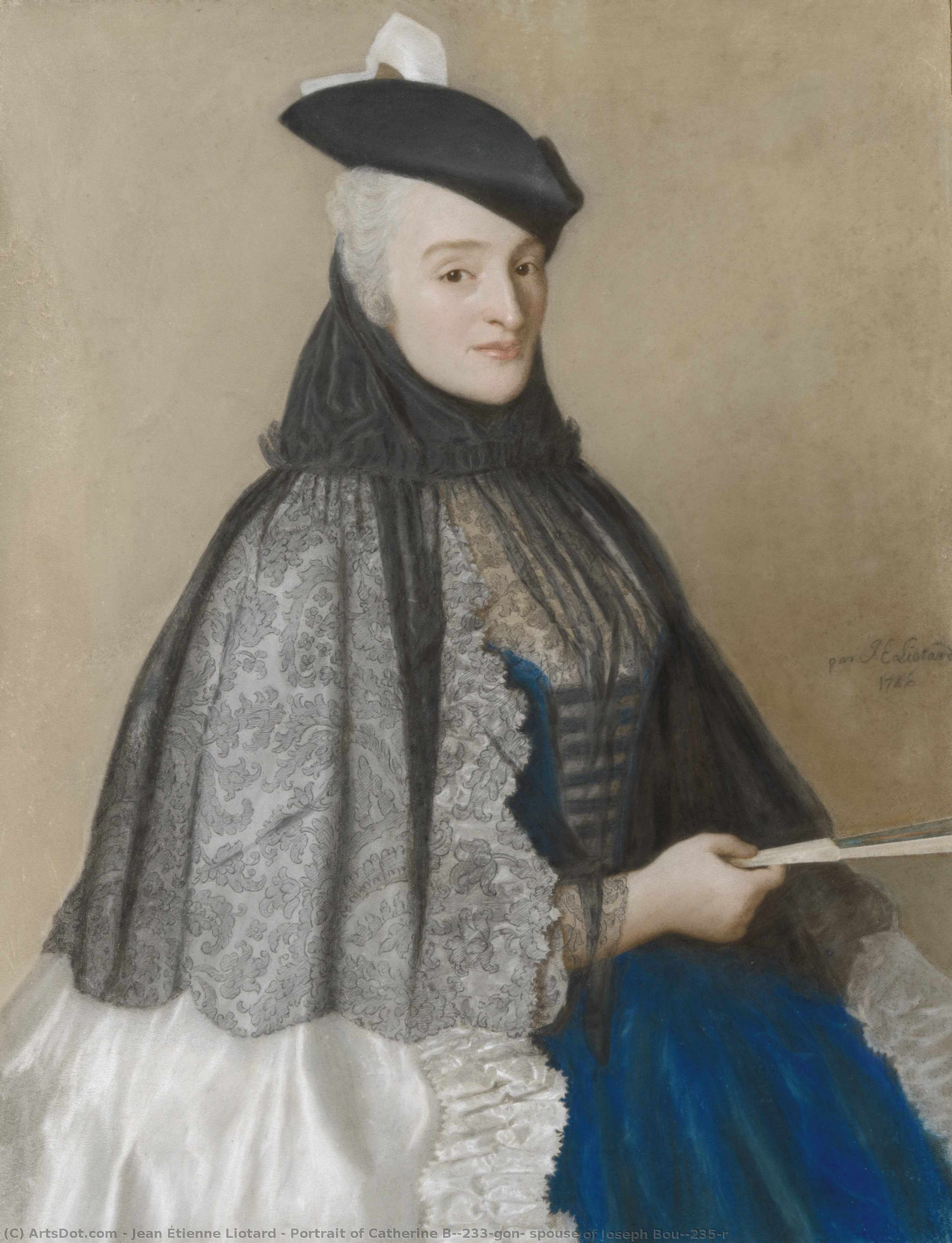
Portrait of Catherine Bégon, spouse of Joseph Bouër


 Read More
Purchase a high-resolution, enhanced digital image, far superior to the online preview.
Each file is meticulously prepared by our in-house specialists using advanced tools and expert manual retouching. We ensure every image has exceptional clarity, precise color accuracy, and fine detail.
The final file is delivered via email within 72 hours, optimized for immediate use in professional, editorial, and print environments. This is the same quality trusted by top-tier design studios, publishers, and galleries.
Digital Image
Download a high-resolution file for personal display, printing, and creative projects. ( Buy Print Buy Hand Made Painting)
Included in Every Digital Image Order
Expert Digital Delivery, Guaranteed
When you choose ArtsDot.com, you're not just getting an image - you're receiving a professionally enhanced digital artwork, crafted with precision and backed by a satisfaction guarantee. Here's everything that comes with your order, automatically:

Fast Email Delivery
Your high-resolution digital image file will be emailed to you within 72 hours of ordering - ready for immediate use.

AI-Enhanced Digital File
Your artwork is professionally optimized using advanced AI tools and manual editing, ensuring maximum detail, clarity, and color accuracy.

Free Lifetime Re-Delivery
Accidentally deleted or lost your file? No worries - we'll resend it to you anytime, free of charge.

No Import Fees - Ever
Enjoy your artwork instantly with zero customs, duties, or delivery fees - digital downloads are always tax-free.

Color Accuracy Guarantee
We ensure your digital image reflects the original colors as closely as possible using professional tools and color management.

60-Day Satisfaction Guarantee
If you're not satisfied with your digital image, we'll revise it or refund 100% within 60 days - no questions asked.

100% Money-Back Guarantee
Not satisfied? Get a full refund within 60 days of receiving your digital file - no questions asked.

Bulk Order Discounts
Buy 3 images, save 10% - Buy 5, save 15% - Buy 10+, save 20%. Great for creative projects, galleries, and agencies.
A Glimpse of Elegance: Catherine Bégon’s Portrait by Liotard
Jean-Étienne Liotard's "Portrait of Catherine Bégon, Spouse of Joseph Bouër," painted in 1746, is more than a simple likeness; it’s an exquisite distillation of Rococo artistry—a shimmering tableau of grace, refinement, and subtle intrigue. This pastel masterpiece, currently residing within the hallowed halls of the Rijksmuseum in Amsterdam, offers a captivating window into the world of 18th-century French aristocracy, revealing not just a woman's beauty but also the delicate dance between social standing and artistic expression.
The portrait immediately draws the eye to Catherine Bégon herself. Dressed in a sumptuous Venetian carnival costume—a deliberate nod to the fashionable masquerades of the era—she embodies an air of poised elegance. The vibrant, layered application of pastel hues creates a remarkable sense of texture and depth; the silk of her gown seems to shimmer with light, while the intricate details of her headdress and jewelry are rendered with breathtaking precision. Liotard’s masterful use of color isn't merely decorative; it’s carefully calibrated to evoke a specific mood—a blend of sophistication, mystery, and quiet confidence.
The Painter’s Technique: Pastel as Poetry
Liotard was renowned for his virtuosity with pastel, a medium he elevated to an art form. Unlike the heavier oils favored by many of his contemporaries, pastel allowed for unparalleled delicacy and luminosity. He employed a technique known as “glazing,” layering thin washes of color upon one another to build up depth and richness. This meticulous approach is particularly evident in the portrait’s delicate rendering of fabric and skin tones—a testament to Liotard's keen eye for detail and his ability to capture the subtle nuances of light and shadow.
Furthermore, Liotard’s use of white pastel was revolutionary. Rather than relying solely on darker pigments to create contrast, he strategically employed white to lift color from the paper, creating a luminous effect that is both ethereal and remarkably realistic. This technique, combined with his masterful blending skills, results in an image that seems to radiate an inner light—a characteristic that defines much of Liotard’s work.
A Window into a World of Intrigue
The portrait's historical context adds another layer of fascination. Catherine Bégon was the wife of Joseph Bouër, a prominent figure in Amsterdam’s merchant community. The choice of a Venetian carnival costume suggests a deliberate attempt to project an image of worldly sophistication and social grace—a fitting representation for a woman navigating the complexities of aristocratic society. The inclusion of a book or scroll hints at her intellectual pursuits, further enriching our understanding of her character.
Interestingly, Liotard’s background as a collector and dealer in art also informs this portrait. He was deeply familiar with the latest fashions and trends, and his ability to capture them with such exquisite detail speaks to his keen eye for beauty and his deep appreciation for the arts. The portrait itself can be viewed as an embodiment of these values—a celebration of elegance, refinement, and artistic skill.
Symbolism and Emotional Resonance
Beyond its technical brilliance, “Portrait of Catherine Bégon” resonates with a profound sense of emotional depth. The woman’s gaze is direct and engaging, inviting the viewer to connect with her on a personal level. There's an underlying serenity in her expression—a quiet confidence that speaks volumes about her character. The pastel medium itself contributes to this effect, lending a softness and intimacy to the image that is rarely achieved with other painting techniques.
Ultimately, Liotard’s portrait transcends mere representation; it captures a fleeting moment of beauty, grace, and sophistication—a timeless testament to the enduring power of art to illuminate the human spirit. It remains a captivating work, offering viewers an intimate glimpse into the world of 18th-century France and the artistry of one of its most celebrated painters.
Related Artworks

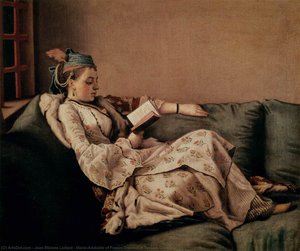
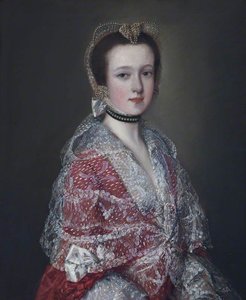
Artist Biography
early life and training
jean-étienne liotard, a renowned genevan painter, art connoisseur, and dealer, was born on december 22, 1702, in geneva, switzerland. his parents, french protestants, had fled to geneva after 1685. liotard's artistic journey began under the guidance of professors daniel gardelle and petitot, whose enamels and miniatures he skillfully replicated.artistic career
liotard's travels took him to various european capitals, including paris, rome, istanbul, and vienna, where his portraits were highly sought after. in 1725, he studied under jean-baptiste massé and françois lemoyne in paris. his time in constantinople (1738-1742) significantly influenced his work, as evident in his numerous pastel depictions of turkish domestic scenes.notable works and style
liotard's mastery of pastel is showcased in works like:- dutch girl at breakfast (ca. 1756, oil on canvas, rijksmuseum), demonstrating his versatility.
- la liseuse, the chocolate girl, and la belle lyonnaise at the dresden gallery, exemplifying his delicate pastel drawings.
- maria frederike van reede-athlone at seven (j. paul getty museum), a testament to his naturalistic portraiture.
legacy and later life
liotard's later years were marked by the publication of his treatise, traité des principes et des règles de la peinture (1781). he continued to paint still lifes and landscapes until his passing on june 12, 1789, in geneva. key links:- jean-étienne liotard | ArtsDot.com (artist page)
- jean-étienne liotard | wikipedia
- a woman in turkish dress | ArtsDot.com (painting)
museums and collections:
- the museum private collection (geneva, switzerland), featuring an impressive array of liotard's works.
- musée d'art et d'histoire (geneva, switzerland), housing a significant collection of liotard's pastels and drawings.
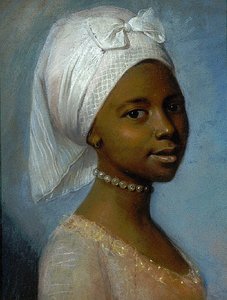
jean-étienne liotard
1702 - 1789 , Switzerland
Quick Facts
- Artistic Movement Or Style: Pastoralism
- Artists Or Movements Influenced By This Artist:
- Jean Baptiste Massé
- François Lemoyne
- Artists Who Influenced This Artist:
- Daniel Gardelle
- Petitot
- Date Of Birth: December 22, 1702
- Date Of Death: June 12, 1789
- Full Name: Jean-Étienne Liotard
- Nationality: Swiss
- Notable Artworks:
- Dutch Girl at Breakfast
- La Liseuse, The Chocolate Girl
- Maria Frederike van Reede-Athlone at Seven
- Place Of Birth: Geneva, Switzerland

