 Preview
 Send
Send Share
Share
 Details

 Download
 Similars
 X-Ray
X-Ray Diaporama
 Stats
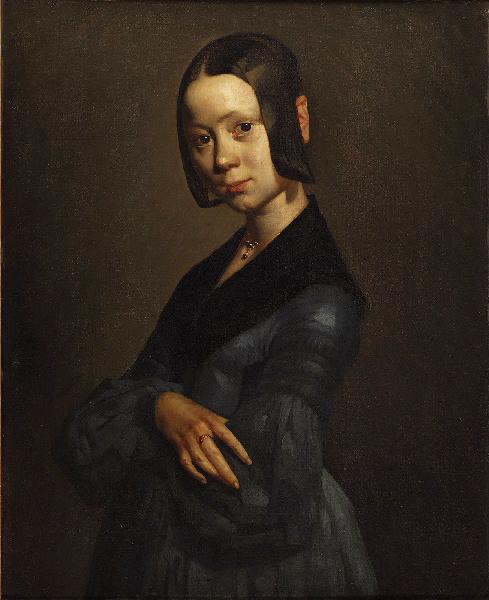
StatsPauline Ono en robe bleue (Première femme de l'artiste.)


 Read More
Giclée / Art Print
Museum-quality giclée or canvas print with fast production and flexible finish options. ( Buy Hand Made Painting Switch to Digital Image)




P118B $10

P118H $10

P118W $10

P438Z $10

P508JH $12

P508YH $12

P805H $10

P805Z $10

P919BZ $10

P919G $10

P919XJ $10

P959ZH $10

P968JZ $12

W106C $8

W218G $10

W218JH $8

W218Y $10

W307PJ $10

W316G $10

W316PJ $8

W316Y $10

W398PJ $8

W4111J $10

W500HY $15

W500JH $15

W692G $12

W849H $8

W940BG $15

W953PJ $8




Pick from our preset sizes that match the artwork's original proportions.

You may enter your own dimensions to fit a specific frame or space. If your selected size does not match the original image's proportions, we will either crop the artwork or extend the image with a mirrored or solid-fill edge. A digital mockup will be sent for your approval before production begins.
Please note that the on-screen preview does not reflect the actual cropping or extension. Only the mockup will accurately show the final composition.
While custom sizes are available, we recommend selecting a dimension from the predefined list to preserve the original proportions.
Worldwide Delivery () in 2 weeks instead of standard 4/5 weeks. (8 September)

Free Worldwide Express Shipping

High-Quality Linen Canvas

Full Shipping Insurance

Customs Tax Refund Guarantee

True Color Matching Guarantee

100-Day Return Policy (Defects Only)

100% Money-Back Guarantee

Bulk Discount Offer
 Glass option is only available in size under 110 CM

Pauline Ono en robe bleue (Première femme de l'artiste.)
Giclée / Art Print
Reproduction Size
-


Total Price
$ 63
A Portrait of Quiet Dignity: The Soul of Pauline Ono
In the quietude of Jean-François Millet’s “Pauline Ono en robe bleue,” we encounter more than just a likeness; we enter a profound meditation on intimacy and the enduring grace of the human spirit. Painted between 1841 and 1842, this portrait captures the artist's first wife, Pauline, in a moment of serene contemplation. While Millet is globally celebrated for his monumental depictions of the French peasantry and the rugged toil of the Barbizon School, this particular work reveals a more tender, private dimension of his genius. It is a piece that transcends the boundaries of mere portraiture, offering a window into a personal history marked by both deep affection and the poignant shadows of loss.
The painting serves as a masterful bridge between the fading echoes of Romanticism and the emerging honesty of Realism. Within its frame, the subject is presented with a dignity that feels both timeless and deeply grounded. There is no theatrical artifice here—no grand gestures or sweeping landscapes to distract the eye. Instead, Millet directs our focus inward, toward the subtle nuances of Pauline’s expression and the soft, luminous quality of her presence. For the collector or the lover of fine art, this work offers a rare sense of stillness, making it an ideal centerpiece for spaces designed for reflection and quiet elegance.
Mastery of Light and the Barbizon Aesthetic
Technically, the portrait is a triumph of light and texture, showcasing the meticulous skill that would later define the Realist movement. Millet employs a dramatic, almost chiaroscuro-like lighting technique, where a strong light source from the upper left corner sculpts Pauline’s features against an impenetrable, dark background. This deliberate use of contrast does more than create depth; it breathes life into the subject, casting highlights upon her skin and the delicate folds of her blue gown, while allowing shadows to pool in the contours of her face, suggesting a hidden complexity of emotion.
The artist’s hand is visible in the rich, tactile quality of the oil paint. Through careful hatching and cross-hatching, Millet defines the organic curves of the subject's face and the structured arrangement of her hair with remarkable precision. The palette is masterfully subdued, dominated by earthy tones and the singular, evocative blue of the dress, which acts as a focal point of calm amidst the surrounding darkness. This controlled use of color and texture creates an atmospheric depth that draws the viewer into the painting's intimate orbit, inviting a lingering gaze that rewards the observant eye.
A Timeless Addition to the Refined Interior
For interior designers and connoisseurs of classical art, “Pauline Ono en robe bleue” represents a pinnacle of sophisticated decor. The painting’s composition—centered, balanced, and profoundly intimate—possesses a versatile grandeur that complements both traditional and contemporary settings. Its somber yet luminous character allows it to anchor a room, providing a sense of historical weight and intellectual depth. Whether placed in a sunlit gallery or a moody, library-style study, the artwork brings with it an aura of prestige and a connection to the rich heritage of 19th-century French art.
Beyond its aesthetic value, the piece carries a symbolic resonance that speaks to the universal human experience. The subtle details, such as the glint of a ring or the soft tilt of a head, hint at stories of status, devotion, and the quiet strength found in simplicity. To possess a high-quality reproduction of this masterpiece is to invite a sense of history and emotional resonance into one's home—a permanent tribute to the beauty of the unadorned truth and the lasting power of a single, captured moment.
Related Artworks
Artist Biography
A Life Rooted in the Soil: The World of Jean-François Millet
Jean-François Millet, a name synonymous with the dignity of rural life and the burgeoning Realist movement in 19th-century France, was born not into artistic privilege but into the very world he would immortalize on canvas. October 4, 1814, found him arriving in Gruchy, a small Norman village steeped in agricultural tradition. This upbringing wasn’t merely a backdrop to his life; it *was* his life, shaping his vision and imbuing his art with an authenticity that resonated deeply with a society undergoing rapid change. His parents, Jean-Louis-Nicolas and Aimée-Henriette-Adélaïde Henry Millet, were farmers themselves, instilling in young Jean-François a profound connection to the land and its laborers. Early education came not only from formal schooling—facilitated by local priests who recognized his intellectual promise—but also from the rhythms of farm work: sowing, reaping, threshing, tasks that would later become central motifs in his paintings. This intimate knowledge wasn’t simply observational; it was experiential, a visceral understanding of hardship and resilience.From Academic Aspirations to Rural Revelation
Millet's artistic journey began with formal training, first under portrait painter Bon Du Mouchel in Cherbourg, then with Théophile Langlois de Chèvreville, a student of Baron Gros. In 1837, he ventured to Paris and enrolled at the prestigious École des Beaux-Arts, studying under Paul Delaroche. However, the academic expectations of the Salon system proved stifling. Initial successes were followed by rejections, and Millet found himself grappling with artistic disillusionment. A turning point came in the 1840s, marked by personal tragedy – the loss of his wife, Pauline-Virginie Ono – and a growing dissatisfaction with the prevailing romanticized depictions of peasant life. He began to reject idealized pastoral scenes, seeking instead to portray rural existence with unflinching honesty. This shift was further solidified by his association with artists like Constant Troyon, Narcisse Diaz, Charles Jacque, and Théodore Rousseau, who formed the core of the Barbizon school. These painters shared a commitment to *plein air* painting – working directly from nature – and a rejection of academic artifice. Millet’s move to Barbizon in 1849 marked a decisive break with Parisian conventions and an embrace of his artistic destiny, deeply rooted in the landscapes and lives surrounding him.The Poetry of Labor: Themes and Techniques
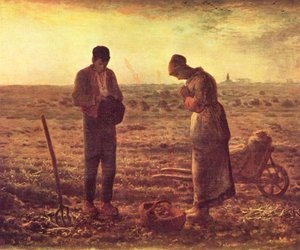
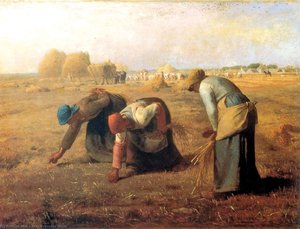
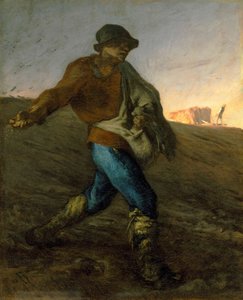
Millet's oeuvre is characterized by its profound empathy for the working class, particularly peasant farmers. He didn’t merely depict their labor; he elevated it to a level of dignity and spiritual significance previously unseen in art. His paintings are not sentimental idealizations but rather honest portrayals of hardship, resilience, and quiet devotion. The Gleaners (1857), perhaps one of his most iconic works, exemplifies this approach. The three women depicted gathering leftover grain after the harvest aren’t romanticized figures; they are laborers, bent double by toil, yet possessing a quiet dignity that commands respect. The Angelus (1850-1861), another masterpiece, captures a moment of profound spirituality – a peasant couple pausing for prayer at sunset – transforming an everyday act into something sacred. The Sower (1850) is arguably his most recognizable image, representing the cyclical nature of agricultural labor and humanity’s connection to the land. Technically, Millet drew inspiration from the Dutch Masters, particularly their masterful use of light and shadow, and from classical sculpture, evident in the monumental quality of his figures. He employed a limited palette, focusing on earthy tones that reflected the colors of the countryside, and built up layers of paint to create a sense of texture and depth.A Lasting Legacy: Millet’s Influence and Historical Significance
Jean-François Millet died in Barbizon on January 20, 1875, leaving behind a body of work that profoundly impacted the course of modern art. He played a pivotal role in establishing Realism as a dominant force in painting, challenging the conventions of academic art and paving the way for future movements like Impressionism and Social Realism. His focus on everyday life and social issues resonated with artists who sought to depict the world around them with honesty and authenticity. His influence extended beyond painting; his images became symbols of rural virtue and working-class solidarity, inspiring writers, poets, and political thinkers. Artists such as Correa Benito Rebolledo continued to explore themes of rural life and social justice, directly influenced by Millet’s example. Today, Millet's paintings continue to captivate audiences with their timeless beauty, emotional depth, and enduring message of human dignity. His work serves as a powerful reminder that even in the face of hardship, there is grace, resilience, and profound spiritual meaning to be found in the simplest of lives.Major Works
- The Gleaners (1857): A poignant depiction of women gathering leftover grain.
- The Angelus (1850-1861): A symbol of rural piety and a moment of quiet devotion.
- The Sower (1850): An iconic image representing the cycle of agricultural labor.
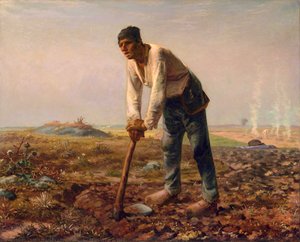
- Man with a Hoe: A powerful representation of physical toil and human endurance.
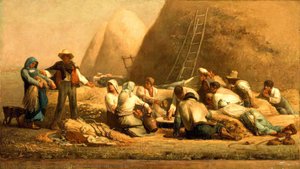
- Harvesters Resting: Capturing a moment of respite amidst arduous work.
- Woman Baking Bread: A depiction of domestic labor imbued with dignity.
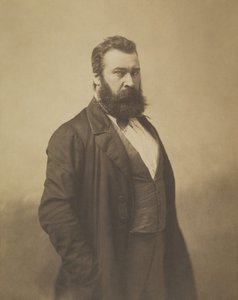
Jean-François Millet
1814 - 1875 , France
Quick Facts
- Artistic Movement Or Style: Realism, Barbizon school
- Artists Or Movements Influenced By This Artist:
- Impressionism
- Social Realism
- Artists Who Influenced This Artist:
- Dutch Masters
- Paul Delaroche
- Date Of Birth: October 4, 1814
- Date Of Death: January 20, 1875
- Full Name: Jean-François Millet
- Nationality: French
- Notable Artworks:
- The Gleaners
- The Angelus
- The Sower
- Man with a Hoe
- Place Of Birth: Gruchy, France
Related Articles
Charles-François Daubigny: Pioneering Atmospheric Light & Barbizon Realism
Explore the life & art of Charles-François Daubigny, a pivotal Barbizon School painter. Discover his innovative landscapes, mastery of light, and influence on Impressionism. High-quality reproductions available.
The Barbizon School: Pioneering Realism & the Pastoral Vision in 19th-Century French Painting
Explore the Barbizon School's pivotal role in 19th-century French painting. Discover how these artists revolutionized landscape art with their commitment to Realism and a profound connection to nature. Learn about key figures like Rousseau, Millet & Corot.
Jean-Baptiste-Camille Corot: A Poetic Realism – Bridging the Barbizon School and Early Impressionism
Explore the life & art of Camille Corot, a pivotal figure bridging the Barbizon School & Impressionism. Discover his poetic realism, signature style, and lasting influence on landscape painting. Learn more at ArtsDot.
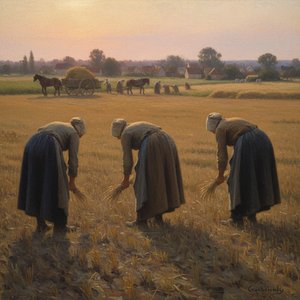
Jean-François Millet: Realism, Rural Life & the Poetic Depiction of Labor
Explore the life & work of Jean-François Millet, a founder of Realism. Discover his poignant depictions of rural France, iconic paintings like 'The Angelus,' and lasting influence on art history. Learn more at ArtsDot.
Echoes of Rural Life: Art's Enduring Representations of the Countryside
Explore the rich history of rural life in art! Discover masterpieces from Millet to Mauve & beyond. Learn about Realism, Barbizon School & find inspiration for your home with ArtsDot.