 Preview
 Send
Send Share
Share
 Details

 Download
 Similars
 X-Ray
X-Ray Diaporama
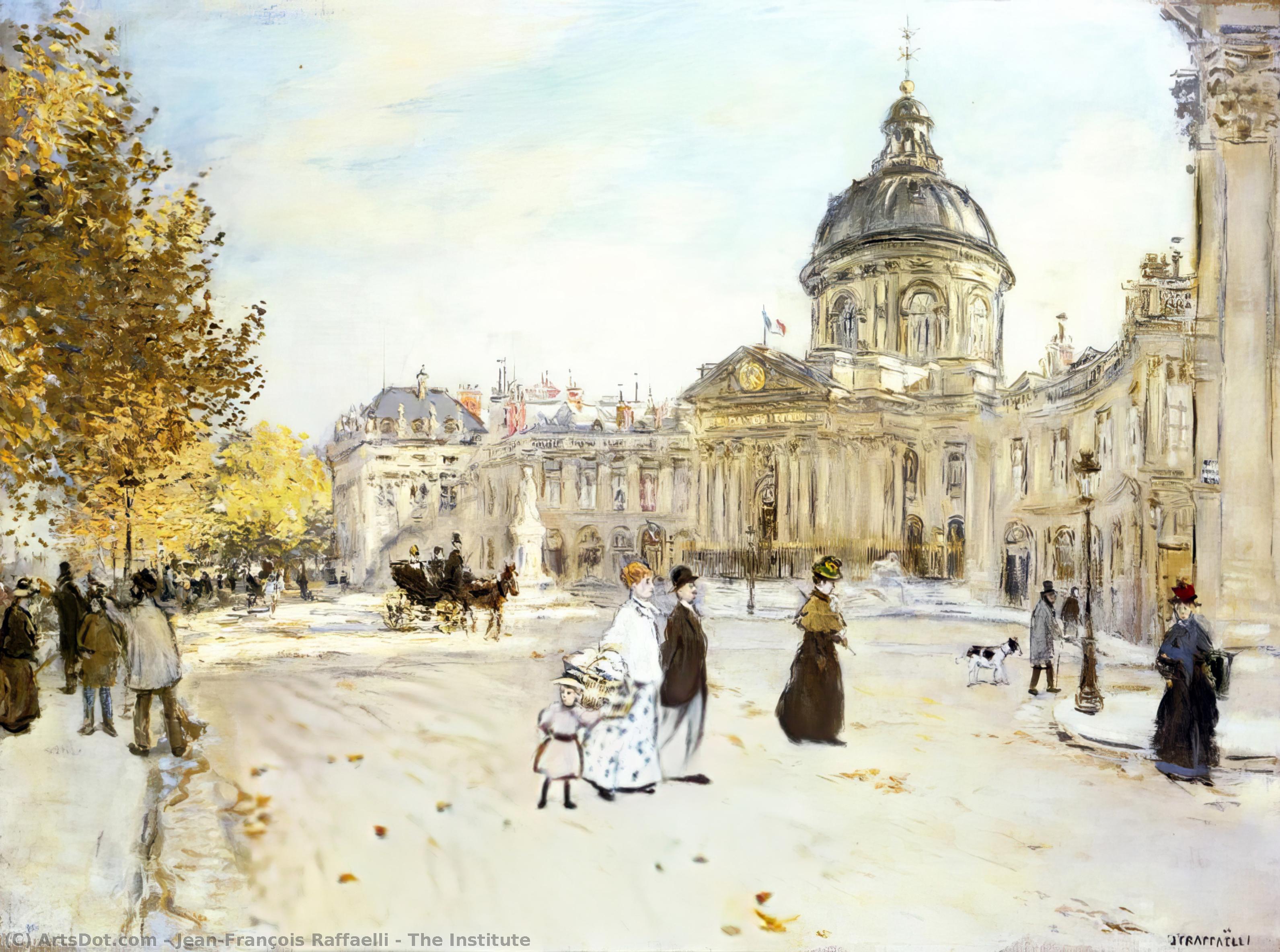
The Institute
 Oil On Canvas
- WallArt
- Impressionism
 1897
1897 59.0 x 80.0 cm
 Carnavalet Museum
 Read More
Giclée / Art Print
Museum-quality giclée or canvas print with fast production and flexible finish options. ( Buy Hand Made Painting Buy Image)




P118B $10

P118H $10

P118W $10

P438Z $10

P508JH $12

P508YH $12

P805H $10

P805Z $10

P919BZ $10

P919G $10

P919XJ $10

P959ZH $10

P968JZ $12

W106C $8

W218G $10

W218JH $8

W218Y $10

W307PJ $10

W316G $10

W316PJ $8

W316Y $10

W398PJ $8

W4111J $10

W500HY $15

W500JH $15

W692G $12

W849H $8

W940BG $15

W953PJ $8




Pick from our preset sizes that match the artwork's original proportions.

You may enter your own dimensions to fit a specific frame or space. If your selected size does not match the original image's proportions, we will either crop the artwork or extend the image with a mirrored or solid-fill edge. A digital mockup will be sent for your approval before production begins.
Please note that the on-screen preview does not reflect the actual cropping or extension. Only the mockup will accurately show the final composition.
While custom sizes are available, we recommend selecting a dimension from the predefined list to preserve the original proportions.
Worldwide Delivery () in 2 weeks instead of standard 4/5 weeks. (23 August)

Free Worldwide Express Shipping

High-Quality Linen Canvas

Full Shipping Insurance

Customs Tax Refund Guarantee

True Color Matching Guarantee

60-Day Return Policy (Defects Only)

100% Money-Back Guarantee

Bulk Discount Offer
 Glass option is only available in size under 110 CM

The Institute
Giclée / Art Print
Reproduction Size
-


Total Price
$ 63
Collectible Description
A Winter’s Gaze: Jean-François Raffaëlli's "The Institute"
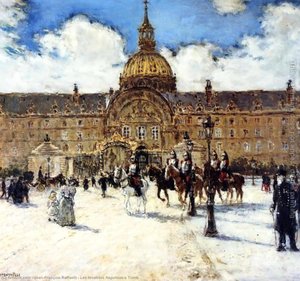
Jean-François Raffaëlli’s “The Institute,” painted in 1897, isn’t merely a depiction of a Parisian winter scene; it’s a carefully constructed tableau brimming with quiet observation and subtle social commentary. Captured during the twilight years of Impressionism, this work offers a poignant glimpse into the heart of late 19th-century Paris – a city grappling with rapid modernization while clinging fiercely to its historical grandeur. The painting immediately draws the eye to the Place de la Concorde and the imposing silhouette of the Louvre, anchoring the scene within the very fabric of French identity. Yet, Raffaëlli doesn’t present these monumental structures as static symbols; instead, he imbues them with a sense of lived experience, suggesting the constant flow of humanity beneath their watchful gaze.
Impressionistic Technique and the Language of Light
Raffaëlli's approach to painting is distinctly Impressionistic, though tempered by his commitment to realism – a philosophy he termed “caractérisme.” He eschews photographic precision in favor of capturing fleeting moments and atmospheric effects. The brushstrokes are loose and visible, creating a textured surface that vibrates with movement. Notice how the snow itself isn’t rendered as a uniform white; instead, it's built up from layers of blues, grays, and even hints of violet, conveying its coldness and reflectivity. Light plays a crucial role – diffused and muted by an overcast sky, it casts long shadows across the cobblestones and illuminates patches of foliage with a warm, golden glow. This careful manipulation of light isn’t simply decorative; it's integral to the painting’s emotional resonance, evoking a sense of melancholy beauty and the transient nature of winter.
A Portrait of Parisian Life
The scene is populated with figures engaged in everyday activities – pedestrians hurrying along the sidewalks, carriages clattering across the square, and a woman pushing a baby carriage. Raffaëlli’s skill lies not just in depicting these individuals but in imbuing them with personality. Each figure seems to possess a story, a brief moment of existence captured within the larger composition. The inclusion of this bustling Parisian scene speaks to Raffaëlli's interest in portraying the lives of ordinary people – a theme central to his artistic practice. The clothing worn by the figures offers subtle clues about their social standing and the era’s fashion trends, adding another layer of visual richness to the painting.
Symbolism and Historical Context
Beyond its immediate depiction of a winter scene, “The Institute” carries symbolic weight. The Place de la Concorde, with its ancient Egyptian obelisk, represents the continuity of French history – a link between antiquity and modernity. The Louvre, as a repository of artistic treasures and national heritage, symbolizes power, legacy, and the enduring influence of the past. Raffaëlli’s choice to frame these monumental structures within a winter landscape suggests a reflection on the relationship between tradition and progress, highlighting the challenges of navigating change while preserving cultural identity. Painted in 1897, the work reflects a period of significant social and political upheaval in France – the rise of industrialization, growing urbanization, and increasing social inequality. Raffaëlli’s art offers a quiet but powerful commentary on these transformations.
Further research into Jean-François Raffaëlli's life and work reveals a dedicated artist deeply committed to portraying the realities of everyday Parisian life with remarkable detail and sensitivity. The “Knife Sharpener” (AQQN54), for example, showcases his ability to capture intimate moments of human interaction with striking realism. And "The Institute" (AQQN5C) exemplifies his mastery of Impressionistic technique, creating a visually arresting and emotionally resonant depiction of a winter’s day in Paris. Consider commissioning a high-quality reproduction – a tangible reminder of this evocative work of art.
Related Artworks
Artist Biography
Jean-François Raffaëlli: A Life in Realism
Born on April 20, 1850, in Paris, France, Jean-François Raffaëlli was a pivotal figure bridging Realism and Impressionism. Of Tuscan descent through his paternal grandparents, he carved a unique path as a painter, sculptor, and printmaker, deeply invested in portraying the lives of ordinary people.
Early Life and Training
Before dedicating himself to art, Raffaëlli explored interests in music and theatre. He began his painting career in 1870, quickly gaining recognition with an exhibited landscape at the Salon that same year. His formal artistic training was brief but impactful – three months under Jean-Léon Gérôme at the École des Beaux-Arts in Paris. However, he soon diverged from traditional academic styles to forge his own distinctive approach.
Artistic Style and Influences
Raffaëlli’s style is characterized by a profound commitment to realism, which he termed “caractérisme.” This theory emphasized meticulous observation of individuals within their social context. He sought not merely to depict appearances but to capture the essence of human experience. While influenced by Gérôme's technical skill, Raffaëlli found champions in influential critics like J.-K. Huysmans and Edgar Degas, who recognized his unique vision.
Artistic Development & Major Works
Initially focused on costume pictures, Raffaëlli’s work underwent a significant shift in 1876. He began to depict the lives of peasants, workers, and marginalized individuals – particularly ragpickers – in the suburbs of Paris. This focus reflected his interest in social commentary and the human condition.
- Les buveurs d'absinthe (The Absinthe Drinkers) - 1881: Perhaps his most famous work, originally titled *Les déclassés*, this painting offered a stark portrayal of societal alienation and is now housed in the California Palace of Legion of Honor.
- At the Caster's (1886): This piece exemplifies his focus on everyday life and is part of the collection at the Musée des Beaux-Arts in Lyon.
Exhibitions & Recognition
Raffaëlli participated in the Impressionist exhibitions of 1880 and 1881, invited by Degas despite not being strictly an Impressionist himself. This inclusion sparked debate within the group, as Monet resented the broadening scope of the exhibition. He received the Légion d'honneur in 1889, marking a significant milestone in his career.
Later Life and Legacy
Following his recognition, Raffaëlli shifted his focus to city scenes, continuing to explore themes of urban life and social dynamics. He also experimented with sculpture (though few examples survive today) and color printmaking in his later years. He passed away on February 11, 1924, leaving behind a body of work that continues to resonate for its honest portrayal of Parisian society.
Historical Significance
Jean-François Raffaëlli’s contribution lies in his ability to blend Realist principles with an empathetic understanding of human experience. His “caractérisme” offered a nuanced approach to social observation, influencing subsequent generations of artists interested in depicting the complexities of modern life. He remains a significant figure in 19th-century French art, bridging the gap between academic tradition and the emerging avant-garde.
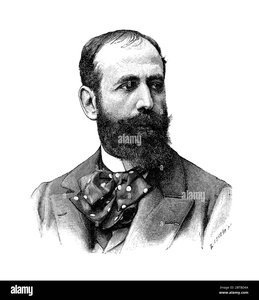
jean-françois raffaelli
1850 - 1924 , France
Quick Facts
- Birth Date: April 20, 1850
- Birth Place: Paris, France
- Death Date: February 11, 1924
- Influenced: None, 'influenced by': 'Jean-Léon Gérôme', 'movement': 'Realism, Impressionism', 'name': 'Jean-François Raffaëlli', 'nationality': 'French', 'notable works':
Related Articles

Impressionism's Masterpieces: 10 Paintings That Defined a Movement | ArtsDot
Journey through Impressionism's heart with 10 iconic paintings by Monet, Renoir & Degas. Explore light, color & the stories behind these masterpieces. Find museum-quality art reproductions and elevate your home decor on ArtsDot.com.

Cézanne's Masterpieces: 25 Iconic Artworks to Transform Your Space
Journey through 25 iconic artworks by Paul Cézanne – a master of Impressionism and Post-Impressionism. Explore his landscapes, still lifes, and the stories behind these timeless masterpieces. Discover museum-quality reproductions & curated decor at ArtsDot.com.
Impressionism's Legacy: 10 Masterpieces That Transformed Art & Decor
Journey through Impressionism's radiant world! Explore 10 masterpieces by Monet, Renoir & Degas that revolutionized art. Discover the stories behind these iconic paintings and find museum-quality reproductions for your home at .
Beyond Light & Color: Impressionism vs. Post-Impressionism for the Discerning Collector
Explore the nuances of Impressionism & Post-Impressionism with . Expert insights for collectors on style, investment, and acquiring museum-quality reproductions.
Jean-François Millet: Realism, Rural Life & the Poetic Depiction of Labor
Explore the life & work of Jean-François Millet, a founder of Realism. Discover his poignant depictions of rural France, iconic paintings like 'The Angelus,' and lasting influence on art history. Learn more at ArtsDot.