 Preview
 Send
Send Share
Share
 Details

 Download
 Similars
 X-Ray
X-Ray Diaporama
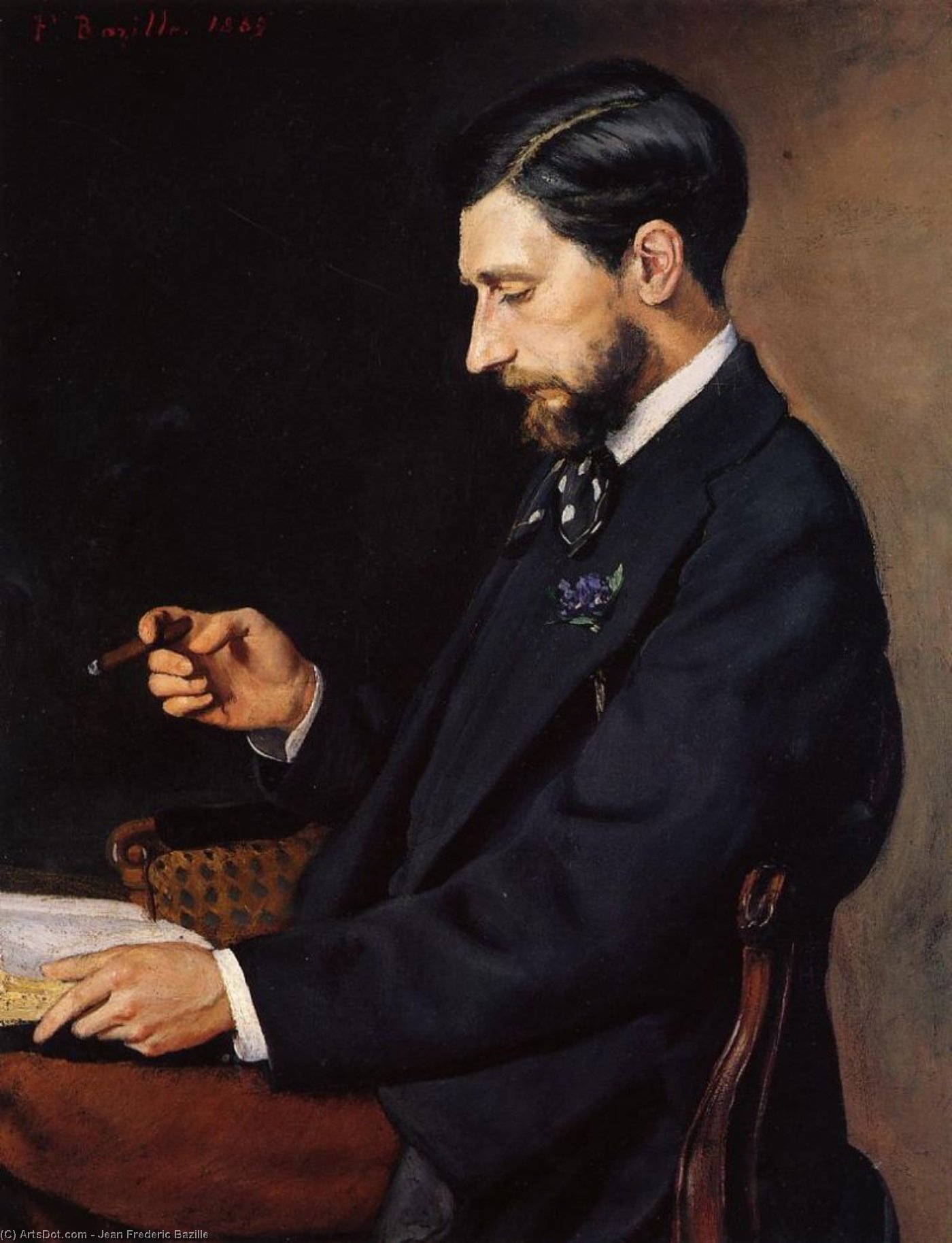
Portrait of Edmond Maitre


 Read More
Giclée / Art Print
Museum-quality giclée or canvas print with fast production and flexible finish options. ( Buy Hand Made Painting Buy Image)




P118B $10

P118H $10

P118W $10

P438Z $10

P508JH $12

P508YH $12

P805H $10

P805Z $10

P919BZ $10

P919G $10

P919XJ $10

P959ZH $10

P968JZ $12

W106C $8

W218G $10

W218JH $8

W218Y $10

W307PJ $10

W316G $10

W316PJ $8

W316Y $10

W398PJ $8

W4111J $10

W500HY $15

W500JH $15

W692G $12

W849H $8

W940BG $15

W953PJ $8




Pick from our preset sizes that match the artwork's original proportions.

You may enter your own dimensions to fit a specific frame or space. If your selected size does not match the original image's proportions, we will either crop the artwork or extend the image with a mirrored or solid-fill edge. A digital mockup will be sent for your approval before production begins.
Please note that the on-screen preview does not reflect the actual cropping or extension. Only the mockup will accurately show the final composition.
While custom sizes are available, we recommend selecting a dimension from the predefined list to preserve the original proportions.
Worldwide Delivery () in 2 weeks instead of standard 4/5 weeks. (24 August)

Free Worldwide Express Shipping

High-Quality Linen Canvas

Full Shipping Insurance

Customs Tax Refund Guarantee

True Color Matching Guarantee

60-Day Return Policy (Defects Only)

100% Money-Back Guarantee

Bulk Discount Offer
 Glass option is only available in size under 110 CM

Portrait of Edmond Maitre
Giclée / Art Print
Reproduction Size
-


Total Price
$ 63
Collectible Description
A Study in Quiet Dignity: The Soul of Edmond Maitre
In the quiet corners of art history, certain works possess the power to halt time, offering a window into a moment of profound stillness. Jean Frédéric Bazille’s “Portrait of Edmond Maitre,” completed in 1869, is precisely such a masterpiece. It is not merely a formal depiction of a man; it is an evocative exploration of intellect, solitude, and a subtly conveyed melancholy that resonates deeply with the viewer. As we gaze upon the profile of Maitre, we are drawn into a world where the boundaries between Realism and the burgeoning Impressionist movement blur, creating a portrait that feels both grounded in physical reality and elevated by emotional depth.
The painting captures a man lost in thought, his presence defined by a dignified composure. Bazille masterfully centers the figure, utilizing a strong vertical axis to guide our eyes upward toward the subject's face—the undeniable focal point of this composition. There is an unmistakable sense of gravity here; the way Maitre sits, perhaps engaged in writing or deep contemplation, suggests a life of intellectual rigor and quiet introspection. For the collector or the interior designer, this piece offers a sophisticated anchor for a room, bringing a sense of scholarly calm and timeless elegance to any curated space.
The Mastery of Light, Shadow, and Texture
Technically, the work is a triumph of 19 مت century oil painting. Bazille employs a sophisticated interplay of light and shadow, often referred to as chiaroscuro, to sculpt the subject's features and create a palpable sense of three-dimensional form. The lighting is dramatic yet controlled, illuminating the contours of Maitre’s face and the crisp edges of his attire while allowing deep, velvety shadows to recede into the background. This contrast does more than just create depth; it imbues the portrait with a psychological weight, mirroring the complexity of the human spirit.
A closer inspection reveals Bazille's meticulous commitment to material truth. The artist’s brushwork, while smooth in the rendering of skin tones, becomes wonderfully textured when depicting the heavy fabric of the subject's coat. One can almost feel the weight and weave of the cloth through the layered application of oil paint. This attention to detail is complemented by a somber, sophisticated color palette dominated by blacks, navy blues, and deep greys, punctuated only by the most subtle hints of color—a touch of purple in a tie or a delicate floral accent—which prevents the composition from feeling heavy and instead lends it an air of refined grace.
A Legacy of Brilliance and Transition
To understand this portrait is to understand a pivotal moment in the evolution of modern art. Created on the cusp of the Impressionist revolution, the work sits at a fascinating crossroads. While Bazille’s technique retains the precision and formal structure of the Realist tradition, his sensitivity to light and atmosphere foreshadows the radical shifts brought about by his contemporaries, such as Monet and Renoir. There is a palpable sense of vulnerability in this work, perhaps a reflection of Bazille’s own life; the artist would tragically pass away at the young age of 28, leaving behind a legacy that was as brilliant as it was brief.
For those seeking to adorn their homes with art that tells a story, “Portrait of Edmond Maitre” serves as an exquisite choice. It is a piece that invites conversation and contemplation, offering a sense of historical continuity and emotional resonance. Whether placed in a private library, a formal study, or a contemporary living area, this reproduction brings with it the quiet strength of a bygone era, reminding us of the enduring power of the human intellect and the beauty found in moments of silent reflection.
Related Artworks
Artist Biography
The Brief Radiance of Jean Frédéric Bazille
Jean Frédéric Bazille’s story is one of immense promise tragically cut short, a fleeting yet significant contribution to the burgeoning Impressionist movement. Born in Montpellier, France, on December 6, 1841, into a prosperous Protestant family involved in wine production, Bazille initially seemed destined for a life far removed from the world of art. His parents, while supportive, insisted he pursue medical studies alongside his artistic inclinations – a compromise reflecting the societal expectations of the time and their desire for his financial security. This duality would shape his early years, dividing his attention between anatomical dissection and the captivating allure of color and light. However, it was within the vibrant atmosphere of Paris, where he relocated in 1862 to continue his medical training, that Bazille’s artistic path truly began to unfold.
Forging a Path Amongst Giants
Paris proved to be a crucible for young Bazille. He quickly fell in with a circle of artists who would become synonymous with Impressionism: Claude Monet, Pierre-Auguste Renoir, and Alfred Sisley. Studying under Charles Gleyre provided him with formal training, but it was the shared passion and radical ideas exchanged amongst these friends that truly ignited his artistic vision. Bazille’s financial stability – a fortunate contrast to the often precarious existence of his companions – allowed him to generously support them, offering studio space and materials. This generosity wasn't merely practical; it stemmed from a deep camaraderie and belief in their collective potential. He became a vital hub for this emerging group, fostering an environment of experimentation and mutual encouragement. His early works, like The Pink Dress (c. 1864), already demonstrate a keen eye for capturing fleeting moments and the effects of light – hallmarks that would define Impressionism. He wasn’t simply mimicking established styles; he was actively participating in the creation of something entirely new.
A Style Defined by Light and Friendship
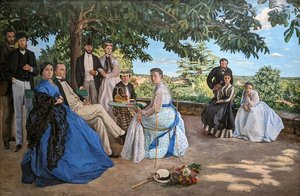
Bazille's artistic style, though developing rapidly, possessed a unique character within the broader Impressionist aesthetic. While sharing their fascination with *plein air* painting – working outdoors to directly capture the nuances of natural light – his compositions often exhibited a more structured quality than Monet’s or Renoir’s. He frequently combined figure painting with landscape, placing his subjects thoughtfully within their environment, as seen in masterpieces like Family Reunion (1867-1868). This work is not merely a depiction of familial gathering; it's an exploration of light filtering through the trees, animating the scene and imbuing it with a sense of warmth and intimacy. His paintings weren’t just about *what* he saw, but *how* he saw it – the emotional resonance evoked by color, form, and light. He was deeply influenced by Eugène Delacroix, whose vibrant use of color resonated with his own artistic sensibilities, yet he moved beyond academic conventions to embrace a more modern sensibility.
A Life Interrupted: Legacy and Remembrance
The blossoming career of Jean Frédéric Bazille was brutally interrupted by the Franco-Prussian War in 1870. Driven by a sense of patriotic duty, he joined a Zouave regiment just months after the conflict erupted. Tragically, he was killed in action on November 28, 1870, at the young age of 28, near Beaune-la-Rolande. His death sent shockwaves through the artistic community, robbing them of a talented friend and generous benefactor. His premature demise meant his work remained relatively unknown for many years. However, in recent decades, Bazille’s contributions have been increasingly recognized and celebrated. Today, his paintings are held in prestigious museums like the Musée d'Orsay in Paris, and reproductions allow art lovers worldwide to experience the beauty and innovation of his vision. Bazille’s legacy extends beyond his artistic output; he embodies the spirit of youthful idealism, unwavering dedication, and the power of friendship that defined the early days of Impressionism. He remains a poignant reminder of the potential lost, yet also a testament to the enduring impact of a brief but brilliant career.
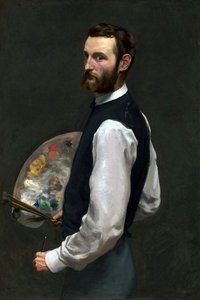
Frédéric Bazille
1841 - 1870 , France
Quick Facts
- Artistic Movement Or Style: Impressionism
- Artists Or Movements Influenced By This Artist: ['Impressionism']
- Artists Who Influenced This Artist: ['Eugène Delacroix']
- Date Of Birth: December 6, 1841
- Date Of Death: November 28, 1870
- Full Name: Jean Frédéric Bazille
- Nationality: French
- Notable Artworks:
- The Pink Dress
- Family Reunion
- Studio in Rue de Furstenberg
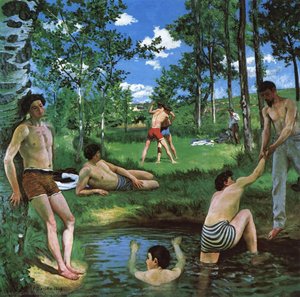
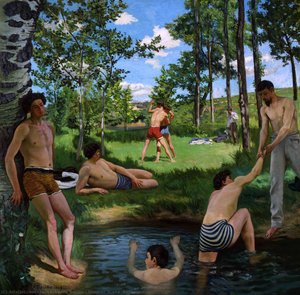
- Bathers (Summer Scene)
- Place Of Birth: Montpellier, France
Related Articles
19th Century Masterpieces: 10 Paintings That Defined an Era | ArtsDot
Journey through 19th century art with ArtsDot! Explore 10 iconic paintings – from Monet & Renoir to Courbet – and discover the stories behind Romanticism, Realism & Impressionism. Find museum-quality reproductions for your home decor. Explore the full collection online!
Émile Jean Horace Vernet: Romantic Realism & Depicting 19th-Century Life
Explore the life & art of Émile Jean Horace Vernet, a master of Romantic Realism. Discover his captivating battle scenes, portraits, and Orientalist works – a window into 19th-century France. Learn about his techniques & enduring legacy.
Realism's Revolution: 10 Masterpieces That Changed Art |
Explore 10 defining Realism masterpieces – Courbet, Millet & more. Discover the stories behind these iconic paintings and their impact on art history. Find museum-quality reproductions for your home at !
Jean-Léon Gérôme: Academic Rigor & Orientalist Visions Shaping 19th-Century French Painting
Explore the captivating world of Jean-Léon Gérôme, a master of 19th-century academic painting & orientalism. Discover his historical works, artistic techniques, and lasting influence on art history.
The Gaze of Reality: Exploring Themes & Techniques in 19th-Century Realist Painting
Explore the captivating world of 19th-century Realist painting! Discover key artists like Courbet & Manet, groundbreaking techniques, and the powerful social commentary that defined this influential art movement. Expert insights at ArtsDot.