 Preview
 Send
Send Share
Share
 Details

 Download
 Similars
 X-Ray
X-Ray Diaporama
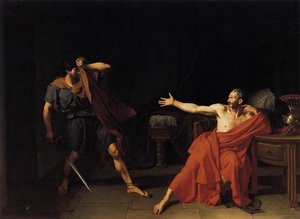
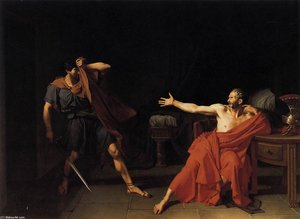
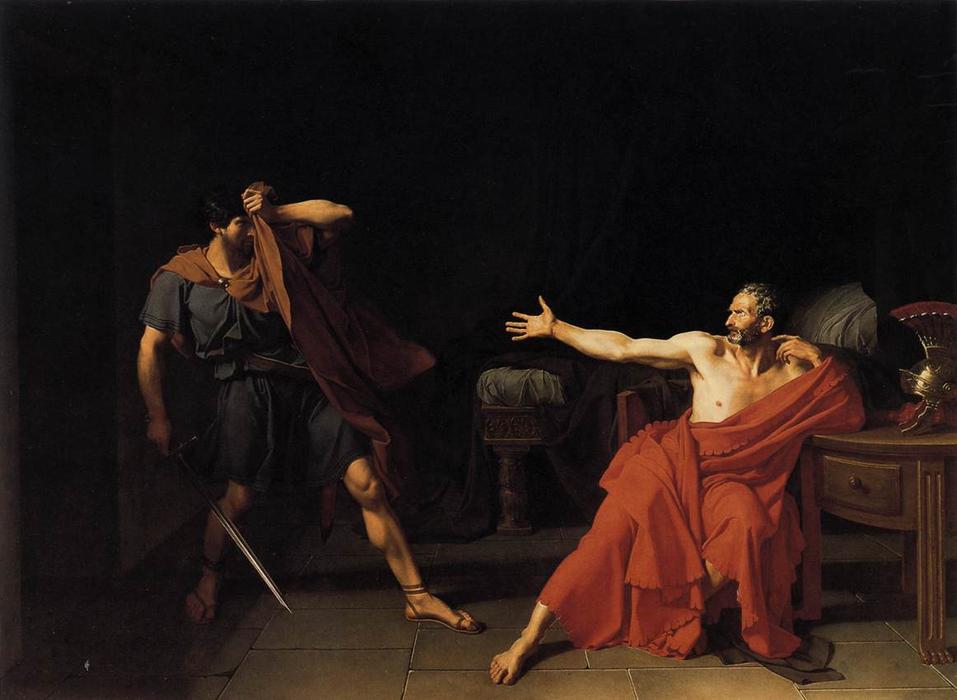
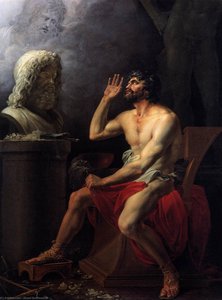
Marius at Minturnae
 Oil On Canvas
- WallArt
- Neo Classical Painting
 1786
1786- Early Modern
 271.0 x 365.0 cm
 The Louvre
 Read More
Hand Made Oil Reproduction
Hand-painted oil on canvas in your size and frame, made to order by our artists. ( Buy Print Buy Image)




P118B $10

P118H $10

P118W $10

P438Z $10

P508JH $12

P508YH $12

P805H $10

P805Z $10

P919BZ $10

P919G $10

P919XJ $10

P959ZH $10

P968JZ $12

W106C $8

W218G $10

W218JH $8

W218Y $10

W307PJ $10

W316G $10

W316PJ $8

W316Y $10

W398PJ $8

W4111J $10

W500HY $15

W500JH $15

W692G $12

W849H $8

W940BG $15

W953PJ $8




Pick from our preset sizes that match the artwork's original proportions.

You may enter your own dimensions to fit a specific frame or space. If your selected size does not match the original image's proportions, we will either crop the artwork or extend the painting with additional hand-painted elements. A digital mockup will be sent for your approval before production begins.
Please note that the on-screen preview does not reflect the actual cropping or extension. Only the mockup will accurately show the final composition.
While custom sizes are available, we recommend selecting a dimension from the predefined list to preserve the original proportions.
After order, ArtsDot.com team will email client for instructions and provide a mockup preview
Worldwide Delivery () in 3/4 weeks instead of standard 5 weeks. (20 August). No compromise on quality.

Free Worldwide Express Shipping

High-Quality Linen Canvas

Full Shipping Insurance

Customs Tax Refund Guarantee

True Color Matching Guarantee

60-Day Return Policy (Defects Only)

100% Money-Back Guarantee

Bulk Discount Offer
 Glass option is only available in size under 110 CM

Marius at Minturnae
Reproduction Medium
Reproduction Size
-


Total Price
$ 263
Artwork Description
A Dramatic Encounter Between Courage and Fate
In the grand tradition of Neoclassical history painting, Jean Germain Drouais’ “Marius at Minturnae” stands as a monumental achievement of dramatic tension and psychological depth. Completed in 1786, this sweeping canvas captures a high-stakes moment from Roman antiquity: the confrontation between the legendary general Gaius Marius and his rival, Quintus Sertorius. The scene is not merely a record of historical conflict but a profound study of human character under extreme duress. As Marius stands with an outstretched arm, embodying an unyielding resolve, he faces the seated figure of Sertorius, whose presence attempts to intimidate through sheer psychological weight. The composition masterfully balances the physical stillness of the figures with the underlying electricity of their confrontation, inviting the viewer into a world where political destiny and personal honor collide.
The technical execution of the work reflects the rigorous standards of the late 18th-century French school. Drouais, a brilliant pupil of Jacques-Louis David, employs a meticulous approach to light and texture that breathes life into the classical forms. The artist utilizes a subdued color palette, characteristic of the Neoclassical movement, which directs the eye away from superficial flamboyance and toward the essential clarity of the narrative. Through precise brushwork, the heavy folds of Roman attire and the subtle nuances of skin tones are rendered with a realism that feels both idealized and tangibly present. The dark, atmospheric background serves as a theatrical void, pushing the central figures into the light and heightening the sense of isolation and gravity inherent in their struggle.
The Spirit of Neoclassicism and Historical Resonance
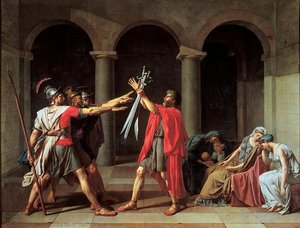
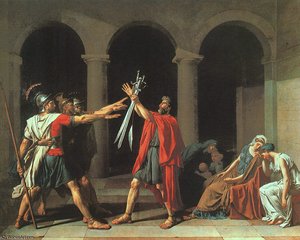
To understand “Marius at Minturnae,” one must look to the intellectual ferment of the Enlightenment. This era was defined by a renewed fascination with classical antiquity, viewing the virtues of ancient Rome as a mirror for contemporary political struggles. Drouais’ work emerged during a period of profound instability in France, and the themes of leadership, defiance, and the heavy burden of authority would have resonated deeply with his contemporaries. The painting even served as a stylistic precursor to David’s own iconic Oath of the Horatii, showcasing a shared language of geometric balance and moral seriousness. By stripping away the decorative excesses of the preceding Rococo period, Drouais achieved a sense of timelessness that allows the painting to speak to modern audiences about the enduring complexities of power.
For the discerning collector or interior designer, this masterpiece offers more than just historical interest; it provides a commanding focal point for any sophisticated space. The sheer scale of the original—measuring an impressive 271 by 365 cm—is matched by its emotional scale. A high-quality reproduction of this work brings a sense of academic prestige and dramatic elegance to a room, acting as a window into a lost era of heroism. Whether placed in a library, a formal study, or a grand gallery, the painting’s interplay of shadow and light creates an atmosphere of contemplative strength, making it an incomparable piece for those who seek art that inspires both intellect and emotion.
Related Artworks
Artist Biography
George Morland: A Life of Rustic Charm and Scandalous Excess
George Morland (1763-1804) remains a captivating figure in British art, simultaneously celebrated for his deceptively simple scenes of rural life and shadowed by a reputation for dissolute living. Born in London to Henry Morland, a successful painter specializing in portraits and fantastical subjects alongside a lucrative forgery business, George’s artistic journey was shaped by both privilege and hardship. His early years were marked by prodigious talent – he began painting at the age of eight – nurtured within a family deeply involved in the art trade, yet ultimately constrained by his father's gambling debts and precarious financial situation.
Morland’s style is instantly recognizable: small-scale genre paintings depicting scenes from the lives of ordinary people, primarily those found in taverns, stables, and rural landscapes. Unlike many of his contemporaries who focused on idealized pastoral settings, Morland captured a more gritty reality – the boisterous gatherings of pub patrons, the weary animals awaiting their fate, and the everyday routines of working-class life. His technique is characterized by loose, expressive brushwork, a vibrant use of color, and an uncanny ability to convey atmosphere and mood. He wasn’t interested in grand narratives or heroic figures; instead, he found beauty and interest in the mundane details of human interaction and animal behavior.
- Early Influences: Morland's artistic development was undoubtedly influenced by his father’s diverse practice, exposing him to a wide range of subjects and techniques. However, it is believed that he also drew inspiration from artists like William Hogarth, whose satirical scenes offered a critical commentary on society, and the Dutch masters, particularly their masterful use of light and shadow.
- A Turbulent Life: Despite his artistic success, Morland’s life was marked by instability and financial difficulties. He frequently found himself in debt, imprisoned for unpaid bills, and even resorting to hiding from creditors. This tumultuous existence fueled rumors about his excessive drinking habits and a generally dissolute lifestyle – stories that would later contribute significantly to his posthumous reputation.
- Popularity and Imitation: During his lifetime, Morland’s paintings enjoyed immense popularity, both with the public and within artistic circles. His work was widely reproduced in prints, often by his brother-in-law William Ward, leading to a proliferation of forgeries and imitations. This widespread dissemination undoubtedly contributed to his fame but also cast a shadow over his artistic integrity.
The Morland Aesthetic: Detail, Observation, and Emotional Resonance
What distinguishes Morland’s work is not simply the subject matter, but the way he approached it. He was a meticulous observer of detail, capturing the textures of rough-hewn wood, the sheen of wet fur, and the expressions on the faces of his subjects with remarkable accuracy. His paintings are filled with small, seemingly insignificant details that collectively create a vivid sense of place and atmosphere. He wasn’t striving for photographic realism; rather, he aimed to evoke an emotional response in the viewer through carefully rendered observation.
Morland's use of color is particularly noteworthy. He employed a bright, often slightly garish palette – reds, yellows, and greens dominate his compositions – creating a sense of immediacy and vitality. His brushwork is loose and expressive, conveying movement and energy. He masterfully used light to create dramatic effects, highlighting key elements within the scene and casting shadows that add depth and dimension.
Despite the often-chaotic scenes depicted, Morland’s paintings possess a remarkable sense of harmony and balance. He skillfully arranged his figures and objects within the frame, creating compositions that are both visually engaging and emotionally resonant. His ability to capture the essence of everyday life – the joy, the hardship, and the simple pleasures – is what continues to captivate viewers today.
Connections and Influences: Girtin and Beyond
George Morland’s work had a significant impact on his contemporary artist, Thomas Girtin. Girtin, known for his meticulously detailed landscapes and scenes of urban life, was deeply influenced by Morland's approach to depicting figures within a landscape setting. Evidence suggests that they collaborated on several projects, including the etching *The Earth Stopper*, where Girtin’s landscape elements are combined with Morland’s figure compositions.
Furthermore, Morland’s popularity led to numerous printmakers attempting to replicate his style, resulting in a vast number of imitations circulating throughout England. This widespread reproduction undoubtedly contributed to the development of a distinct “Morland School” of painting, characterized by its small scale, loose brushwork, and focus on rural life.
The story of Morland’s relationship with Girtin is particularly intriguing, involving tales of shared experiences in the north east and collaborative efforts. While some details remain shrouded in speculation, it highlights the complex interplay between artists and their influences within the British art world of the late 18th and early 19th centuries.
Legacy and Historical Significance
Despite his scandalous reputation and the prevalence of forgeries, George Morland’s work has endured as a significant contribution to British genre painting. His paintings offer a valuable glimpse into the lives of ordinary people during a period of rapid social and economic change. Morland's ability to capture the spirit of everyday life – the humor, the hardship, and the simple pleasures – continues to resonate with viewers today.
His work is now recognized for its technical skill, emotional depth, and unique artistic vision. Morland’s legacy extends beyond his individual paintings; he helped to establish a new genre of British art that focused on depicting the lives of ordinary people in a realistic and engaging manner. He remains a fascinating and enduring figure in the history of British painting, a testament to the power of observation, skill, and a touch of scandalous charm.
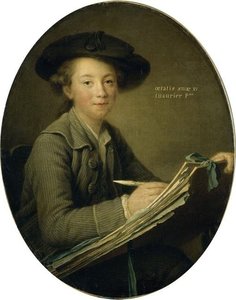
jean germain drouais
1763 - 1788 , France
Quick Facts
- Artistic Movement Or Style: Genre painting
- Artists Or Movements Influenced By This Artist: ['Thomas Girtin']
- Artists Who Influenced This Artist: ['Henry Morland']
- Date Of Birth: June 26, 1763
- Date Of Death: Oct. 29, 1804
- Full Name: George Morland
- Nationality: English
- Notable Artworks:
- Mail Coach in a Storm
- Dogs Hesitating
- Place Of Birth: London, England
Related Articles
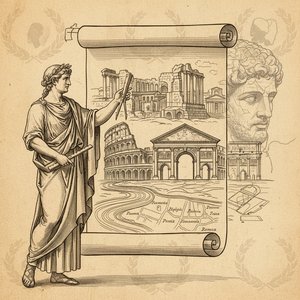
Bartolomeo Pinelli: Neoclassical Linearity & Roman Topography of Memory
Explore the captivating world of Bartolomeo Pinelli, a master Italian engraver renowned for his evocative Roman scenes & historical narratives. Discover his art and legacy with ArtsDot.
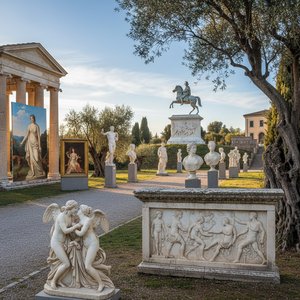
Neoclassical Art: 10 Masterpieces That Shaped History |
Explore 10 defining Neoclassical masterpieces by David, Ingres & Canova. Discover the history, symbolism & artistry behind these iconic paintings and sculptures. Find museum-quality art reproductions at – elevate your home with timeless beauty.
The Revival of Antiquity: Exploring the Neoclassical Movement & its Enduring Legacy
Explore the revival of classical art with our deep dive into Neoclassicism! Discover key artists like Jacques-Louis David, Enlightenment influences & lasting impact on art history. High-quality reproductions at ArtsDot.
The Revival of Antiquity: Exploring Neoclassical Art's Ideals & Enduring Legacy
Explore the revival of classical ideals in Neoclassical art! Discover Jacques-Louis David & the movement's impact on painting, sculpture & architecture. Expert insights & high-quality reproductions at ArtsDot.
The Enduring Legacy of Neoclassical Art: Order, Reason & Antiquity's Revival
Explore the enduring legacy of Neoclassical art! Discover masterpieces by David, Girodet & Garnier. Expert analysis, custom reproductions & art appraisal at ArtsDot.