 Preview
 Send
Send Share
Share
 Details

 Download
 Similars
 X-Ray
X-Ray Diaporama
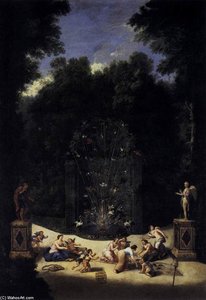
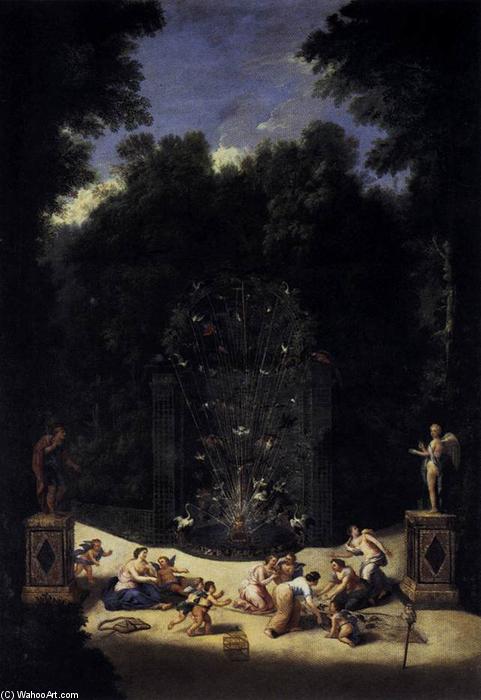
Entrance to the Maze
 Oil On Canvas
- WallArt
- Baroque Classical Painting
 1688
1688 200.0 x 140.0 cm
 Musée National du Château
 Read More
Giclée / Art Print
Museum-quality giclée or canvas print with fast production and flexible finish options. ( Buy Hand Made Painting Buy Image)




P118B $10

P118H $10

P118W $10

P438Z $10

P508JH $12

P508YH $12

P805H $10

P805Z $10

P919BZ $10

P919G $10

P919XJ $10

P959ZH $10

P968JZ $12

W106C $8

W218G $10

W218JH $8

W218Y $10

W307PJ $10

W316G $10

W316PJ $8

W316Y $10

W398PJ $8

W4111J $10

W500HY $15

W500JH $15

W692G $12

W849H $8

W940BG $15

W953PJ $8




Pick from our preset sizes that match the artwork's original proportions.

You may enter your own dimensions to fit a specific frame or space. If your selected size does not match the original image's proportions, we will either crop the artwork or extend the image with a mirrored or solid-fill edge. A digital mockup will be sent for your approval before production begins.
Please note that the on-screen preview does not reflect the actual cropping or extension. Only the mockup will accurately show the final composition.
While custom sizes are available, we recommend selecting a dimension from the predefined list to preserve the original proportions.
Worldwide Delivery () in 2 weeks instead of standard 4/5 weeks. (26 August)

Free Worldwide Express Shipping

High-Quality Linen Canvas

Full Shipping Insurance

Customs Tax Refund Guarantee

True Color Matching Guarantee

60-Day Return Policy (Defects Only)

100% Money-Back Guarantee

Bulk Discount Offer
 Glass option is only available in size under 110 CM

Entrance to the Maze
Giclée / Art Print
Reproduction Size
-


Total Price
$ 63
Collectible Description
Entrance to the Maze by COTELLE, Jean II
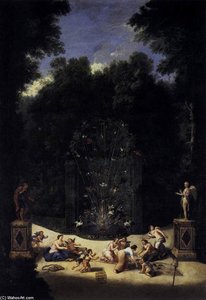
Jean Cotelle’s “Entrance to the Maze,” completed in 1688, stands as a testament to the Baroque aesthetic's fascination with grandeur and illusion—a captivating panorama commissioned by Louis XIV to commemorate the expansive grounds of Versailles. More than just a depiction of scenery, this monumental oil painting on canvas embodies a profound exploration of artistic technique, symbolic representation, and emotional resonance, offering viewers an immersive experience into the spirit of its time. The artwork presents a meticulously crafted vista showcasing the formal gardens surrounding the royal palace. Dominating the composition is a towering birdcage overflowing with vibrant plumage—a striking focal point that immediately draws the eye inward. Surrounding this central element are figures arranged in a graceful semicircle, reflecting the aristocratic sensibilities prevalent during Louis XIV’s reign and emphasizing an atmosphere of contemplative serenity. Flanking the scene on either side are imposing statues perched atop pedestals, anchoring the composition with classical formality and reinforcing the grandeur inherent in the Baroque tradition. Lush trees and foliage intertwine to form a dense backdrop, creating depth and framing the vista—a masterful use of perspective that transports the viewer into the heart of Versailles’s meticulously planned landscape. Cotelle's mastery lies not merely in capturing visual accuracy but in skillfully manipulating light and color to evoke specific emotions. The subdued lighting—suggestive of twilight—casts gentle shadows across the figures and foliage, enhancing the scene’s dramatic atmosphere without overwhelming it with harshness. A palette dominated by earthy hues—browns, greens, ochres—creates a harmonious blend that aligns perfectly with the naturalistic setting. Subtle gradations of blues and purples adorn the sky, adding to the painting's ethereal quality and conveying a sense of melancholic beauty. Cotelle’s technique is characterized by traditional oil painting methods, evident in the delicate blending of colors and the subtle rendering of textures—brushstrokes are visible but carefully integrated into a smooth overall finish. Beyond its aesthetic merits, “Entrance to the Maze” carries significant symbolic weight. The birdcage itself serves as a potent emblem—representing both confinement and liberation—a motif frequently employed by Baroque artists to convey complex ideas about human existence and spiritual aspiration. Similarly, the maze—a timeless symbol of life’s challenges and uncertainties—invites contemplation on the path toward enlightenment. Cotelle's deliberate inclusion of these elements elevates the painting beyond a mere topographical record, transforming it into an evocative meditation on themes of beauty, mystery, and philosophical inquiry. Ultimately, “Entrance to the Maze” succeeds in capturing the emotional core of its era—a period defined by royal patronage, artistic innovation, and a fervent belief in the power of art to inspire awe and elevate the human spirit. It remains a remarkable achievement of Baroque painting, demonstrating Cotelle’s unwavering commitment to realism, balanced composition, and meticulous attention to detail—qualities that continue to resonate with audiences today who appreciate the enduring legacy of classical artistry.Related Artworks



Artist Biography
A Parisian Legacy: The Life and Art of Jean II Cotelle
Born in the vibrant heart of Paris in 1642, Jean II Cotelle emerged as a defining voice within the sweeping grandeur of the Baroque era. His artistic journey was one deeply rooted in tradition, yet propelled by an insatiable curiosity for the new. The foundations of his craft were laid under the watchful eye of his father, Jean Cotelle I, a distinguished ornamental painter who had served the court of Louis XIII. From this early tutelage, the younger Cotelle inherited a profound respect for meticulous detail and the opulent decorative language that characterized the French royal aesthetic. This upbringing instilled in him an appreciation for the fine nuances of line and ornament, which would later serve as the structural backbone for his more expansive and dramatic compositions.
The trajectory of Cotelle’s career underwent a transformative shift during the mid-1670s when he embarked on extensive travels through Italy. Immersed in the artistic fervor of Rome and Florence, he encountered the lingering shadows of Caravaggio and the psychological depth of Rembrandt. This exposure to the Italian masters introduced him to the power of chiaroscuro—the dramatic interplay of light and shadow—and a heightened sense of emotional realism. Upon his return to France, Cotelle’s work began to pulse with a new theatricality. He moved beyond mere ornamentation to embrace historical narratives, imbuing his canvases with a palpable immediacy that sought to capture the very essence of the human experience through light, movement, and drama.
Mastery of Scale: From Intimate Miniatures to Royal Grandeur
Cotelle’s versatility was perhaps his most remarkable attribute, allowing him to navigate seamlessly between the delicate and the monumental. He gained significant acclaim as a master of miniatures, producing exquisite, small-scale works that demanded intense focus and precision. Yet, simultaneously, he proved himself capable of commanding the vast architectural spaces of the French monarchy. His membership in the prestigious Académie Royale de peinture et de sculpture in 1672 solidified his status among the elite, providing him with the platform to undertake significant royal commissions.
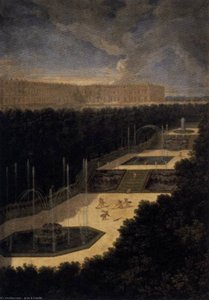
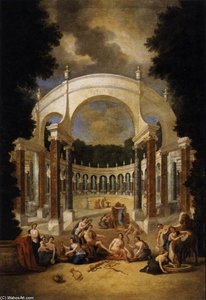
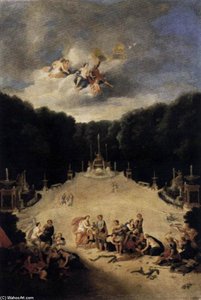
His contributions to the visual identity of Versailles are particularly noteworthy. Through a series of breathtaking views of the palace gardens, Cotelle captured the curated majesty of the French court. His works, such as "View of the Three-Fountain Grove" and "Entrance to the Maze," serve as windows into a world of engineered splendor. In these paintings, he masterfully blended the organic fluidity of nature with the rigid geometry of Baroque landscape design. He utilized a sophisticated palette of deep forest greens and shimmering blues, employing light to create a sense of three-dimensionality that made the lush foliage and tranquil waters feel almost tangible to the viewer.
A Lasting Impression on Art History
The pinnacle of Cotelle’s artistic achievement remains his monumental work, "The Marriage at Cana," completed in 1681 for the Notre-Dame Cathedral in Paris. This masterpiece stands as a cornerstone of Baroque religious art, showcasing his ability to weave complex historical and spiritual narratives into a cohesive, breathtaking visual spectacle. Through this work, he demonstrated that he could handle the weight of sacred tradition with the same technical brilliance he applied to secular landscapes.
Beyond his paintings, Cotelle’s legacy is preserved through his skill as an engraver and draughtsman. His etchings, including scenes from the history of Venus and religious meditations like "Our Lord on the Mount of Olives," reveal an artist dedicated to the exploration of form and storytelling across various media. As a figure who bridged the gap between the decorative traditions of the early 17th century and the dramatic intensity of the high Baroque, Jean II Cotelle remains a vital subject for those seeking to understand the artistic soul of France during one of its most culturally significant epochs.
Jean II Cotelle
1642 - 1708 , France
Quick Facts
- Artistic Movement Or Style: Baroque
- Artists Or Movements Influenced By This Artist: ['François de Poilly']
- Artists Who Influenced This Artist: ['Jean Cotelle I']
- Date Of Birth: Paris, France (1642)
- Date Of Death: Villers-sur-Marne (1708)
- Full Name: Jean II Cotelle
- Nationality: French
- Notable Artworks:
- Marriage at Cana
- View of the Colonnade at Versailles
- View of the Three-Fountain Grove
- Place Of Birth: Paris
Related Articles
Charles Le Brun: Master of French Baroque Classicism & His Enduring Legacy
Explore the life & art of Charles Le Brun, master of French Baroque Classicism. Discover his royal commissions, influence on Versailles, and enduring legacy through detailed analysis & stunning artworks.
Simon Vouet: A Baroque Master's Journey from Italian Influence to French Classicism
Explore the life & art of Simon Vouet, a pivotal French Baroque painter who introduced Italian styles to France. Discover his masterpieces and lasting influence on 17th-century art.

Baroque Classicism: Reconciling Drama & Order in 17th-Century Art
Explore the captivating world of Baroque Classicism! Discover its history, key artists like Caravaggio & Rubens, and defining characteristics. Expert insights & high-quality reproductions at ArtsDot.

Baroque Drama: Bringing Opulence & Emotion into Contemporary Interiors
Explore the opulent world of Baroque interior design! Discover key elements, modern applications & how to bring dramatic elegance into your home with 's authentic reproductions.
Neo-Classicism's Greatest Hits: 10 Masterpieces for Your Home |
Journey through Neo-Classicism's finest! Explore 10 iconic masterpieces by David, Ingres & Canova. Discover art history, techniques & timeless beauty – perfect for inspiring your home decor. Find museum-quality reproductions at