 Preview
 Send
Send Share
Share
 Details

 Download
 Similars
 X-Ray
X-Ray Diaporama
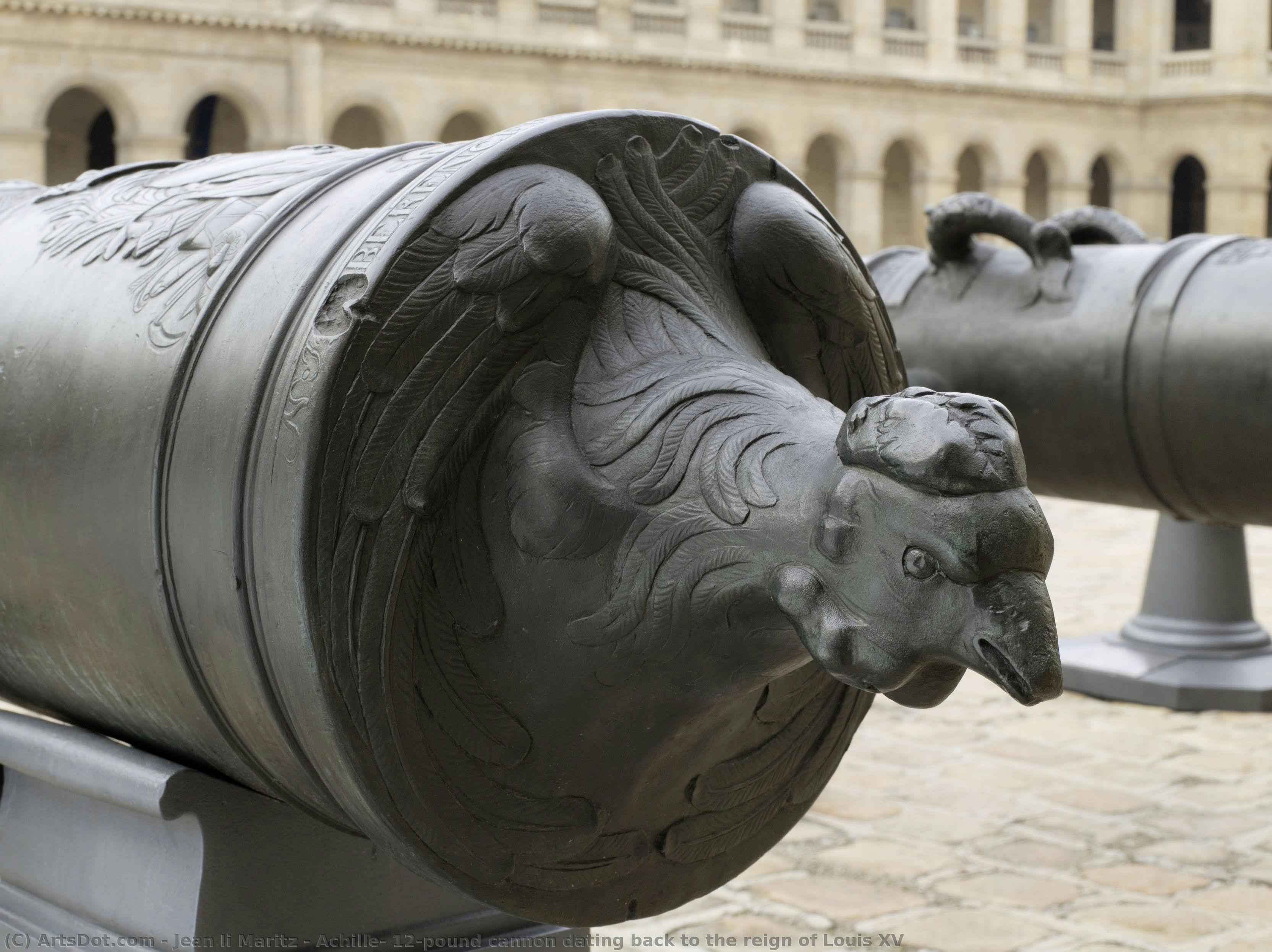
Achille, 12-pound cannon dating back to the reign of Louis XV


 Read More
Giclée / Art Print
Museum-quality giclée or canvas print with fast production and flexible finish options. ( Buy Hand Made Painting Buy Image)




































Pick from our preset sizes that match the artwork's original proportions.

You may enter your own dimensions to fit a specific frame or space. If your selected size does not match the original image's proportions, we will either crop the artwork or extend the image with a mirrored or solid-fill edge. A digital mockup will be sent for your approval before production begins.
Please note that the on-screen preview does not reflect the actual cropping or extension. Only the mockup will accurately show the final composition.
While custom sizes are available, we recommend selecting a dimension from the predefined list to preserve the original proportions.
Worldwide Delivery () in 2 weeks instead of standard 4/5 weeks. (29 August)

Free Worldwide Express Shipping

High-Quality Linen Canvas

Full Shipping Insurance

Customs Tax Refund Guarantee

True Color Matching Guarantee

60-Day Return Policy (Defects Only)

100% Money-Back Guarantee

Bulk Discount Offer
 Glass option is only available in size under 110 CM

Achille, 12-pound cannon dating back to the reign of Louis XV
Giclée / Art Print
Reproduction Size
-


Total Price
$ 63
Related Artworks



Artist Biography
Jean II Maritz: The Silent Revolution of Cannonmaking
The name Jean II Maritz might not resonate with the general public, yet his contributions to the technological landscape of 18th-century Europe were nothing short of revolutionary. Born in Berne, Switzerland, around 1680 – a time of burgeoning scientific inquiry and military innovation – Maritz wasn’t a painter or sculptor, but rather a brilliant mechanic whose meticulous inventions fundamentally altered the way cannons were produced. His story is one of quiet ingenuity, strategic placement within a complex political landscape, and ultimately, a pivotal role in shaping the very foundations of modern machine tool development.
Maritz's early life remains somewhat shrouded in mystery, though he eventually settled in France, taking on the title of “Commissaire des Fontes” – Commissioner of the King’s Foundry – at Strasbourg. This position placed him at the heart of a critical military operation: the production of cannons for Louis XIV’s formidable army. Prior to Maritz's arrival, cannon construction relied heavily on traditional methods—a laborious process involving hand-carving and shaping within clay molds. These techniques were inherently imprecise, leading to inconsistencies in barrel dimensions and ultimately, reduced effectiveness. Maritz recognized this inefficiency and set about devising solutions that would dramatically improve the speed, accuracy, and quality of cannon production.
The Birth of Precision: Vertical and Horizontal Boring
Maritz’s most significant contributions revolved around two groundbreaking inventions: a vertical boring machine and a horizontal drilling machine. His initial vertical boring method, developed in 1713, involved slowly lowering the cannon barrel over a rotating drill – a delicate process that demanded considerable skill and patience. While innovative, it was prone to errors due to the instability of the setup. However, Maritz didn’t abandon his vision; he subsequently developed a horizontal boring technique around 1734, which proved far more reliable. This method utilized a solid-cast cannon mounted on a rotating lathe, allowing for precise and consistent drilling.
The significance of these inventions cannot be overstated. Traditional methods resulted in cannons with inconsistent bore diameters, leading to inaccurate shots. Maritz’s machines produced perfectly straight bores that precisely matched the diameter of the projectiles, dramatically enhancing cannon effectiveness. This wasn't merely an improvement; it represented a fundamental shift in manufacturing philosophy – moving from handcrafting to mechanized precision.
The Vallière and Gribeauval Systems: A Technological Bridge
Maritz’s inventions played a crucial role within the complex framework of the Vallière and Gribeauval systems, two ambitious cannon production programs undertaken during the reign of Louis XIV. The Vallière system, initiated by Jean-Florent de Vallière, aimed to standardize cannon design and production across France. However, it faced significant challenges due to inconsistencies in manufacturing techniques. Maritz’s machines provided a critical component – precise boring – that helped to overcome these hurdles. His work became an integral part of the Vallière system, laying the groundwork for the subsequent Gribeauval system, overseen by the brilliant but eccentric Jean-Baptiste Vaquette de Gribeauval.
Gribeauval, a former artillery officer, recognized the need for further refinement and implemented sweeping changes to the cannon production process. Maritz’s horizontal boring machine was particularly vital in this transformation, allowing for mass production of high-quality cannons with remarkable consistency. The Gribeauval system ultimately became renowned for its efficiency and effectiveness, demonstrating the power of standardized design and mechanized manufacturing.
Legacy and Recognition
Jean II Maritz died in Geneva in 1743, leaving behind a legacy that extended far beyond his immediate time. While he remained largely uncelebrated during his lifetime, his inventions were recognized as a pivotal step towards the development of machine tools – precursors to the industrial revolution. Museums across Europe, including the Musée des Beaux-Arts de Strasbourg and the Musée d’art et d'histoire neuchatel in Switzerland, proudly display works related to Maritz’s contributions, showcasing both his machines and the cannons they produced. His story serves as a testament to the impact of quiet innovation and the often-overlooked figures who shaped the course of technological history.
The “Achille,” a stunning 1746 bronze cannon adorned with eagle motifs and French royal emblems, exemplifies Maritz’s work – a tangible reminder of his revolutionary contributions. His legacy continues to inspire engineers and inventors today, demonstrating that even seemingly small advancements can have profound and lasting consequences.

jean ii maritz
1680 - 1743 , Switzerland
Quick Facts
- Artistic Movement Or Style: Machine tools history”
- Artists Or Movements Influenced By This Artist: ['Vallière system”, “Gribeauval system”']
- Date Of Death: 1743, Geneva, Switzerland
- Frigate D. Fernando Ii E Glória"
],
"Artists Who Influenced This Artist:
- John Wilkinson
- Keller
- Full Name: Jean II Maritz”
- Industrial Revolution: Notable artworks": [ "Achille (1746)
- Jean Maritz: Date of birth": "1680, Berne, Switzerland
- Nationality: Swiss
- Place Of Birth: Berthoud, Switzerland
Related Articles

The Enduring Legacy of Bronze: A Historical & Artistic Exploration for the Collector
Explore the rich history & enduring appeal of bronze sculpture with expert insights for collectors at ArtsDot. Learn about casting techniques, iconic artists, collecting tips & contemporary interpretations.

Bronze Age to Modern Masters: 10 Sculptures That Redefined Art | ArtsDot
Journey through art history with 10 legendary bronze sculptures – from Michelangelo's David to Rodin’s Thinker. Explore the stories, techniques & timeless beauty of these masterpieces. Find museum-quality reproductions & elevate your home decor on ArtsDot.com.
The Enduring Legacy of Bronze: History, Technique & Artistic Expression for the Collector
Explore the rich history & enduring appeal of bronze sculpture with expert insights for collectors at ArtsDot. Learn about casting techniques, iconic artists, and collecting tips.

The Enduring Legacy of Bronze Sculpture: Technique, Symbolism & Cultural Impact
Explore the rich history & enduring appeal of bronze sculpture with expert insights for collectors. Learn about casting techniques, iconic artists, collecting tips & contemporary interpretations at ArtsDot.

The Enduring Legacy of Bronze Sculpture: A Collector's Guide to Form & Cultural Significance
Explore the rich history & enduring appeal of bronze sculpture with expert insights for collectors at ArtsDot. Learn about casting techniques, iconic artists, and collecting tips to build a discerning art collection.