 Preview
 Send
Send Share
Share
 Details

 Download
 Similars
 X-Ray
X-Ray Diaporama
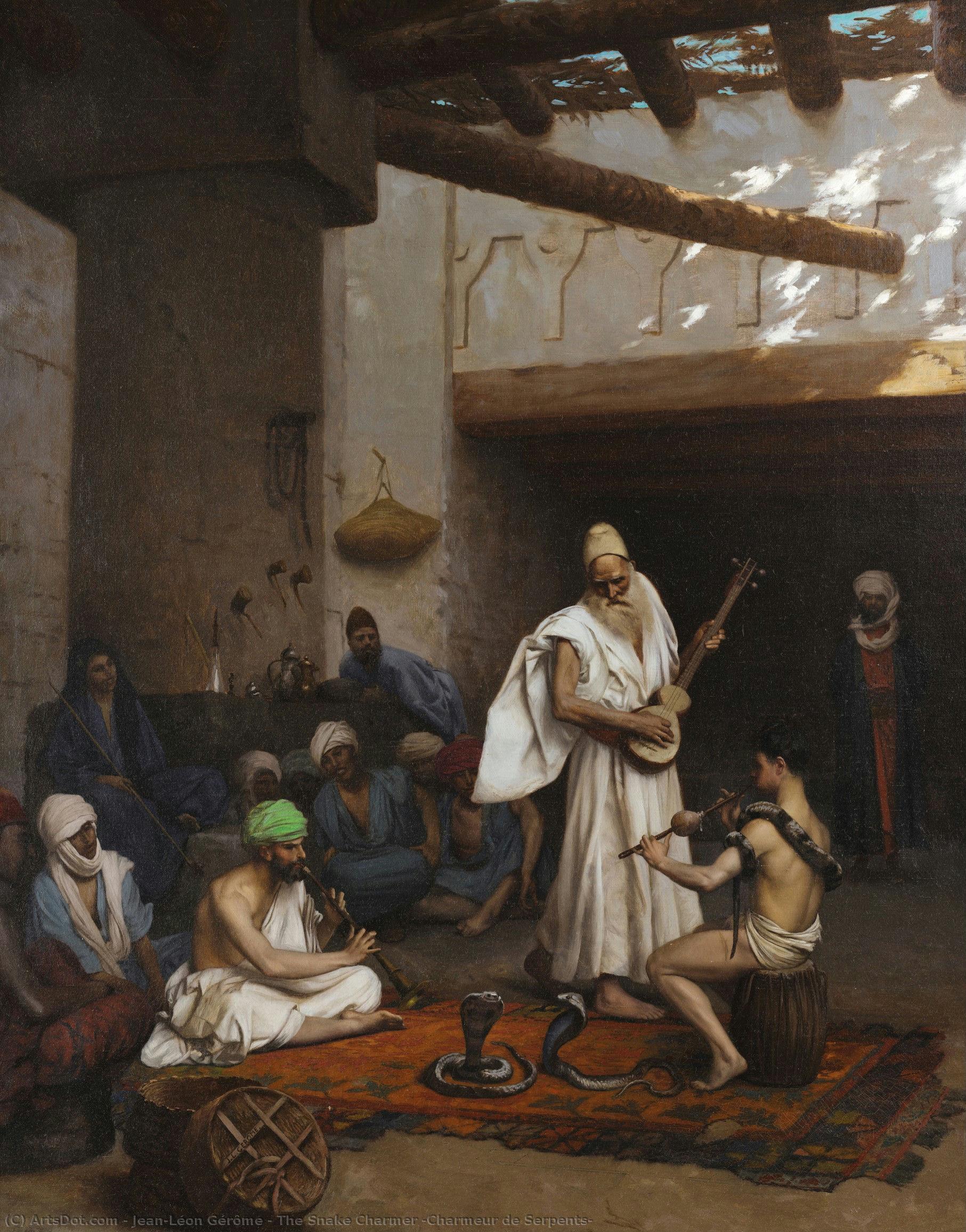
The Snake Charmer (Charmeur de Serpents)
 Acrylic
- WallArt
- Academic Narrative Painting
 1890
1890 126.0 x 108.0 cm
 New Orleans Museum of Art
 Read More
Hand Made Oil Reproduction
Hand-painted oil on canvas in your size and frame, made to order by our artists. ( Buy Print Buy Image)




P118B $10

P118H $10

P118W $10

P438Z $10

P508JH $12

P508YH $12

P805H $10

P805Z $10

P919BZ $10

P919G $10

P919XJ $10

P959ZH $10

P968JZ $12

W106C $8

W218G $10

W218JH $8

W218Y $10

W307PJ $10

W316G $10

W316PJ $8

W316Y $10

W398PJ $8

W4111J $10

W500HY $15

W500JH $15

W692G $12

W849H $8

W940BG $15

W953PJ $8




Pick from our preset sizes that match the artwork's original proportions.

You may enter your own dimensions to fit a specific frame or space. If your selected size does not match the original image's proportions, we will either crop the artwork or extend the painting with additional hand-painted elements. A digital mockup will be sent for your approval before production begins.
Please note that the on-screen preview does not reflect the actual cropping or extension. Only the mockup will accurately show the final composition.
While custom sizes are available, we recommend selecting a dimension from the predefined list to preserve the original proportions.
After order, ArtsDot.com team will email client for instructions and provide a mockup preview
Worldwide Delivery () in 3/4 weeks instead of standard 5 weeks. (16 August). No compromise on quality.

Free Worldwide Express Shipping

High-Quality Linen Canvas

Full Shipping Insurance

Customs Tax Refund Guarantee

True Color Matching Guarantee

60-Day Return Policy (Defects Only)

100% Money-Back Guarantee

Bulk Discount Offer
 Glass option is only available in size under 110 CM

The Snake Charmer (Charmeur de Serpents)
Reproduction Medium
Reproduction Size
-


Total Price
$ 263
Artwork Description
A Window into Moroccan Life: Jean-Léon Gérôme’s “The Snake Charmer”
Jean-Léon Gérôme's *The Snake Charmer*, completed in 1890, isn’t merely a depiction of an exotic spectacle; it’s a masterful distillation of academic painting’s ambition to capture the essence of human experience within meticulously crafted historical narratives. Executed with breathtaking precision and imbued with palpable drama, this monumental canvas transports viewers back to North Africa, specifically into the courtyard of a Moroccan dwelling—a space brimming with observation and fascination.- Subject Matter: The painting portrays a captivating tableau of daily life – ten individuals intently watching two snake charmers skillfully manipulating venomous serpents while accompanied by a musician playing a flute. This juxtaposition of performers and spectators elevates the scene beyond simple visual representation, inviting contemplation on themes of entertainment, ritual, and human interaction.
- Style & Technique: Gérôme’s signature style exemplifies the Beaux-Arts tradition, prioritizing anatomical accuracy and realistic detail above all else. He employs a technique characterized by smooth brushstrokes and subtle tonal gradations—a hallmark of academic painting—to achieve an astonishing level of realism that convincingly recreates the textures of fabric, skin, and musical instruments.
- Historical Context: Created during the Belle Époque, *The Snake Charmer* reflects the Victorian fascination with Orientalism – a genre fueled by European travelers’ accounts of distant lands and cultures. However, Gérôme transcends mere exoticism; he presents a nuanced portrayal of Moroccan society, capturing not just its visual splendor but also its social dynamics and traditions.
Symbolism Beyond the Surface
The painting's symbolism extends far beyond its immediate subject matter. The snake charmers themselves represent mastery over instinct and danger—a motif prevalent in Western art throughout history, symbolizing both pagan rituals and spiritual enlightenment. The musician’s flute symbolizes harmony and eloquence, contrasting with the perceived barbarity of the snakes. Furthermore, the positioning of the figures within the courtyard underscores the importance of social hierarchy and observation – a deliberate choice reflecting the cultural values of the time.Emotional Resonance: Capturing Atmosphere
Perhaps most powerfully, *The Snake Charmer* succeeds in conveying an atmosphere of palpable excitement and wonder. Gérôme’s masterful use of light and shadow sculpts the figures and illuminates the courtyard, creating a sense of immediacy that draws the viewer into the scene. The vibrant colors—particularly the rich reds of the carpet and the greens of the turban—further amplify the visual impact, transporting us to a distant land and immersing us in the experience of witnessing this extraordinary performance.A Legacy of Detail: Reproductions for Today’s Collector
Today's art enthusiasts can appreciate Gérôme’s genius through high-quality reproductions crafted by ArtsDot.com, allowing them to bring the grandeur and intricacy of *The Snake Charmer* into their homes—a testament to an artist who perfected the art of storytelling through unwavering dedication to realism and a profound understanding of human psychology.Related Artworks
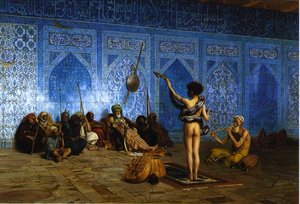

Artist Biography
A Master of Narrative Detail: The Life and Art of Jean-Léon Gérôme
Jean-Léon Gérôme, a name synonymous with the academic painting of 19th-century France, was more than just a skilled technician; he was a storyteller who captivated audiences with meticulously rendered scenes brimming with drama and exotic allure. Born in Vesoul in 1824, his artistic journey began under the guidance of local artist Claude-Basile Cariage, laying the foundation for a career that would see him become arguably the most celebrated painter of his time. Moving to Paris at sixteen, he initially studied under Paul Delaroche, a master of historical painting, and later attended the École des Beaux-Arts, absorbing the principles of classical training. However, Gérôme quickly distinguished himself not through slavish imitation but through an innovative blend of meticulous realism and dramatic narrative—a combination that would define his unique style. His early success with *The Cock Fight* in 1847 catapulted him to fame, establishing him as a leading figure within the Neo-Grec movement, which sought to revive classical themes with a newfound attention to archaeological detail.From Historical Grandeur to Orientalist Visions
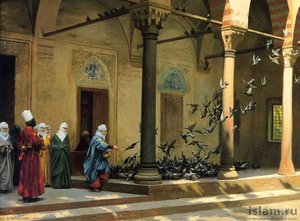
Gérôme’s artistic range was remarkably broad. He tackled historical subjects with an almost cinematic flair, imbuing them with a sense of immediacy and psychological depth. His large-scale mural commission, *The Age of Augustus, the Birth of Christ*, intended as a flattering allegory for Napoleon III, showcased his ability to handle complex compositions and grand narratives. Yet, it was perhaps in his Orientalist paintings that Gérôme truly captured the public imagination. Inspired by travels to Turkey, Egypt, and North Africa, he depicted scenes of harems, bustling marketplaces, and desert landscapes with an exoticism that both fascinated and, viewed through a modern lens, sometimes perpetuated problematic stereotypes. Paintings like *Harem Women Feeding Pigeons in a Courtyard* became immensely popular, offering European audiences a glimpse into a world perceived as mysterious and sensual. These works weren’t simply copies of what he saw; they were carefully constructed fantasies, blending observation with imagination to create compelling visual narratives. He wasn't merely documenting the Orient; he was *creating* it for Western consumption, a practice that would later draw criticism but undeniably contributed to his widespread appeal.A Pedagogue and Influential Teacher
Beyond his own artistic output, Gérôme exerted considerable influence as a teacher at the École des Beaux-Arts. His atelier became a breeding ground for future generations of artists, attracting students from across Europe and America. Among his most notable pupils were Thomas Eakins, John Singer Sargent, and Mary Cassatt—artists who would go on to forge their own distinct paths but whose foundations were undoubtedly shaped by Gérôme’s rigorous training and emphasis on technical skill. He instilled in them a dedication to draftsmanship, composition, and the importance of studying from life. While his conservative artistic views sometimes clashed with the emerging avant-garde movements, his impact on the development of American art, in particular, was profound. His students carried his principles back across the Atlantic, establishing their own ateliers and perpetuating the academic tradition.Legacy and Controversy: A Complex Artistic Inheritance
Jean-Léon Gérôme died in Paris in 1904, leaving behind a vast body of work that continues to provoke discussion and debate. While his technical mastery is undeniable, his artistic legacy remains complex. His meticulous realism, once celebrated as the pinnacle of academic achievement, came to be seen by some as stifling and overly concerned with surface appearances. The Orientalist paintings, while visually stunning, have been criticized for their exoticizing gaze and perpetuation of colonial stereotypes. However, it is crucial to understand Gérôme within his historical context. He was a product of his time, reflecting the prevailing attitudes and interests of 19th-century European society. His work offers valuable insights into the cultural anxieties and fantasies of that era, even as it challenges us to critically examine its underlying assumptions. Today, Gérôme’s paintings are admired not only for their technical brilliance but also for their ability to transport viewers to another time and place, inviting them to contemplate the complexities of history, culture, and representation.Key Moments in a Remarkable Career
- 1824: Born in Vesoul, France.
- 1840: Moves to Paris to study under Paul Delaroche.
- 1847: Achieves early recognition with *The Cock Fight* at the Paris Salon.
- 1852-1854: Receives commission for *The Age of Augustus, the Birth of Christ* and travels to Constantinople, Greece, and Turkey.
- Late Career: Transitions to sculpture, creating polychrome works inspired by classical antiquity.
- 1904: Dies in Paris, leaving behind a significant artistic legacy.
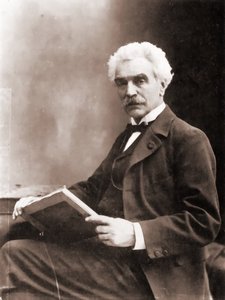
Jean-Léon Gérôme
1824 - 1904 , France
Quick Facts
- Artistic Movement Or Style: Academicism, Orientalism
- Artists Or Movements Influenced By This Artist:
- Thomas Eakins
- John Singer Sargent
- Mary Cassatt
- Artists Who Influenced This Artist: ['Paul Delaroche']
- Date Of Birth: May 11, 1824
- Date Of Death: January 10, 1904
- Full Name: Jean-Léon Gérôme
- Nationality: French
- Notable Artworks:
- The Cock Fight
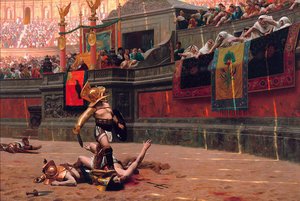
- Pollice Verso
- Snake Charmer
- Place Of Birth: Vesoul, France
Related Articles
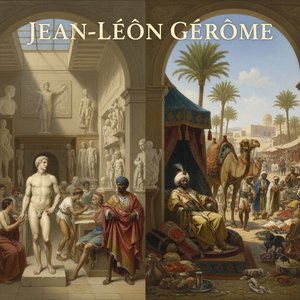
Jean-Léon Gérôme: Academic Rigor & Orientalist Visions Shaping 19th-Century French Painting
Explore the captivating world of Jean-Léon Gérôme, a master of 19th-century academic painting & orientalism. Discover his historical works, artistic techniques, and lasting influence on art history.
Academic Realism's Finest: 10 Masterpieces for Art Lovers & Home Decor
Explore 10 defining Academic Realism masterpieces by Bouguereau, Gérôme & Cabanel. Discover the stories behind these iconic paintings and bring timeless art into your home with museum-quality reproductions from ArtsDot.com. Explore the full collection online!
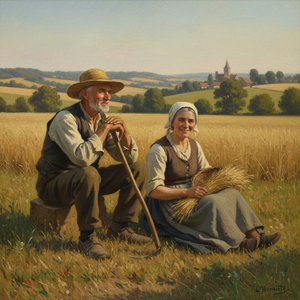
Léon Augustin L'Hermitte: Capturing the Soul of French Rural Life
Discover the captivating realist paintings of Léon Augustin L'Hermitte, masterfully depicting French rural life. Explore his technique, influences & legacy – a cornerstone of 19th-century art.
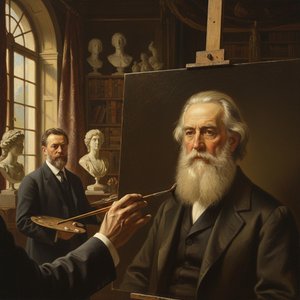
Léon Bonnat: Realism, Academic Mastery & the Depths of Portraiture
Explore the life & work of Léon Bonnat, a leading French Realist painter renowned for his masterful portraits and Spanish Baroque influence. Discover his academic legacy & pursuit of psychological depth in 19th-century art.
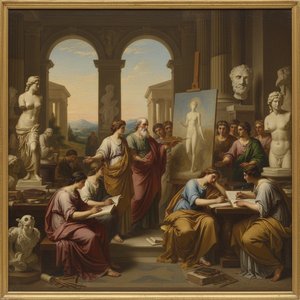
Academic Art: Tradition, Technique & the Pursuit of Ideal Form in the 19th Century
Explore the world of Academic Art! Discover its history, key artists like Ingres & Bouguereau, defining techniques, and lasting influence on 19th-century painting. Learn about the Salon system and its legacy.