 Preview
 Send
Send Share
Share
 Details

 Download
 Similars
 X-Ray
X-Ray Diaporama
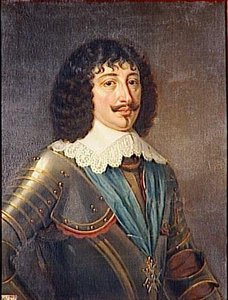
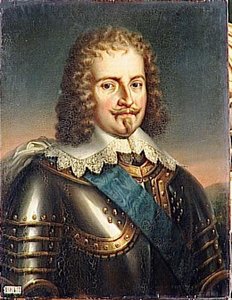
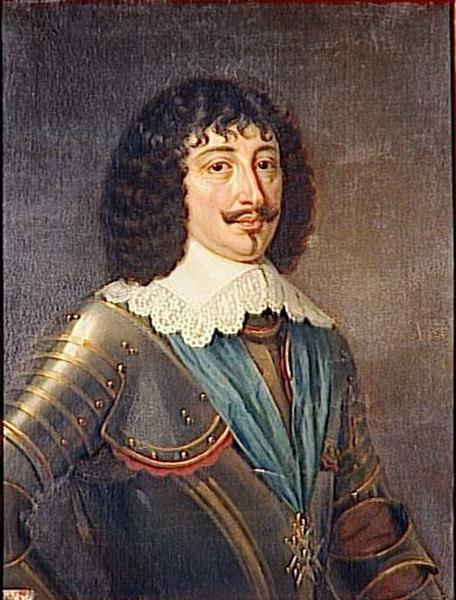
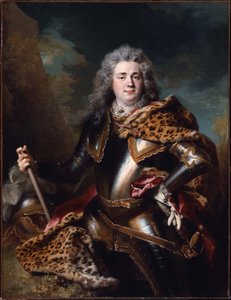
URBAIN DE MAILLE, MARQUIS DE BREZE, MARECHAL DE FRANCE (1597 1650)


 Read More
Giclée / Art Print
Museum-quality giclée or canvas print with fast production and flexible finish options. ( Buy Hand Made Painting Buy Image)




P118B $10

P118H $10

P118W $10

P438Z $10

P508JH $12

P508YH $12

P805H $10

P805Z $10

P919BZ $10

P919G $10

P919XJ $10

P959ZH $10

P968JZ $12

W106C $8

W218G $10

W218JH $8

W218Y $10

W307PJ $10

W316G $10

W316PJ $8

W316Y $10

W398PJ $8

W4111J $10

W500HY $15

W500JH $15

W692G $12

W849H $8

W940BG $15

W953PJ $8




Pick from our preset sizes that match the artwork's original proportions.

You may enter your own dimensions to fit a specific frame or space. If your selected size does not match the original image's proportions, we will either crop the artwork or extend the image with a mirrored or solid-fill edge. A digital mockup will be sent for your approval before production begins.
Please note that the on-screen preview does not reflect the actual cropping or extension. Only the mockup will accurately show the final composition.
While custom sizes are available, we recommend selecting a dimension from the predefined list to preserve the original proportions.
Worldwide Delivery () in 2 weeks instead of standard 4/5 weeks. (23 August)

Free Worldwide Express Shipping

High-Quality Linen Canvas

Full Shipping Insurance

Customs Tax Refund Guarantee

True Color Matching Guarantee

60-Day Return Policy (Defects Only)

100% Money-Back Guarantee

Bulk Discount Offer
 Glass option is only available in size under 110 CM

URBAIN DE MAILLE, MARQUIS DE BREZE, MARECHAL DE FRANCE (1597 1650)
Giclée / Art Print
Reproduction Size
-


Total Price
$ 63
Collectible Description
A Portrait of Power and Grace: Urbain de Maillé, Marquis de Brézé
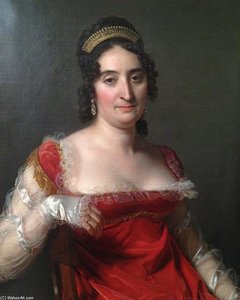
Jérôme Martin Langlois’s 1835 painting, “Urbain de Maillé, Marquis de Brézé, Maréchal de France,” is more than a simple likeness; it's a carefully constructed tableau of authority, wealth, and the measured dignity of a seasoned military leader. The portrait captures Urbain de Maillé-Brézé, a pivotal figure in 17th-century French history – a Marshal of France, an ambassador to Sweden, and a Viceroy of Catalonia – with a remarkable blend of realism and classical restraint. Langlois, deeply influenced by the Neoclassical ideals championed by Jacques-Louis David, has rendered Maillé not merely as a man, but as a symbol of his station and accomplishments.
The composition immediately establishes a sense of formal grandeur. The subject’s bust dominates the frame, turned slightly to the right, inviting the viewer into an intimate yet controlled exchange. This deliberate positioning draws attention to his face – a study in quiet strength and considered expression – while the dark, muted background serves as a powerful counterpoint, emphasizing the figure's presence and highlighting the intricate details of his attire and armor. The restrained palette—earthy browns, grays, and subtle blues—contributes to an atmosphere of solemnity and timelessness, reflecting the enduring legacy he sought to embody.
The Language of Armor and Status
Langlois’s mastery is particularly evident in his depiction of Maillé's armor. Far from a mere decorative element, it speaks volumes about his military rank and achievements. The meticulously rendered plates are not simply painted; they appear to possess a tangible weight and texture, reflecting the artist’s keen eye for detail and understanding of materials. Each curve, each rivet, is precisely observed, conveying both the formidable protection afforded by the armor and its symbolic association with victory and command. The sash draped across his chest, adorned with intricate embroidery, further underscores his status and wealth – a visual testament to his diplomatic successes and administrative responsibilities.
Beyond the material splendor, the portrait offers subtle clues about Maillé’s character. His posture is upright and dignified, reflecting a sense of self-assurance and composure. The slight tilt of his head suggests an air of contemplation, hinting at the strategic mind that guided him through numerous campaigns. The careful attention to the details of his facial features – the furrowed brow, the steady gaze – reveals a man accustomed to leadership and burdened by responsibility.
Neoclassical Precision and Historical Context
Painted in the style of Neoclassicism, this portrait reflects the artistic sensibilities of early 19th-century France. Inspired by the art and architecture of ancient Greece and Rome, Neoclassicism emphasized order, clarity, and idealized forms. Langlois’s work embodies these principles through its balanced composition, precise draftsmanship, and restrained color palette. The influence of Jacques-Louis David is palpable in the meticulous rendering of form and the emphasis on capturing a sense of timelessness.
The portrait was commissioned during a period of significant political and military upheaval in France – the aftermath of the Fronde rebellions and the rise of Louis XIV. Maillé’s career, marked by both military triumphs and diplomatic challenges, reflects this turbulent era. The painting serves as a commemoration of his distinguished service to the crown, solidifying his place within the annals of French history.
A Timeless Reflection
“Urbain de Maillé, Marquis de Brézé” is more than just a portrait; it’s a window into a bygone era. Langlois's skillful rendering captures not only the physical likeness of a prominent military figure but also his character, status, and the historical context in which he lived. The painting’s enduring appeal lies in its ability to evoke a sense of grandeur, dignity, and timelessness – qualities that continue to resonate with viewers today. It stands as a testament to the power of art to immortalize individuals and preserve their legacies for generations to come.
Related Artworks
![Vida De Miguel De Cervantes Saavedra (life Of Miguel De Cervantes Saavedra). Book V Of The Edition Of Don Quixote (biblioteca Nacional De España)\n\n[7] — Martín Fernández De Navarrete Y Ximénez De Tejada, Academic Art](/media/artworks/images-thumb/8c/b6/8cb67a4dd450447373a546c8dd039e57.jpg)
Artist Biography
A Parisian Beginnings and the Embrace of Neoclassicism
Jérôme-Martin Langlois, born in Paris in 1779, emerged as a significant voice within the refined world of French Neoclassical painting. His artistic journey began under the tutelage of Jacques-Louis David, the preeminent figurehead of the movement and a master whose influence would indelibly shape Langlois’s aesthetic sensibilities. David quickly recognized a spark of talent in the young artist, welcoming him as one of his favored pupils. This mentorship proved invaluable, providing Langlois with a rigorous foundation in draftsmanship, composition, and the ideals of classical beauty that defined the era. The studio of Jacques-Louis David was not merely a place of technical instruction; it was an immersion into a philosophy of art rooted in order, reason, and the emulation of ancient Greek and Roman models. Langlois absorbed these principles wholeheartedly, setting the stage for his own distinguished career.Collaboration with a Master: Early Commissions and Artistic Growth
The early years of Langlois’s career were marked by close collaboration with David on several ambitious projects. He wasn't simply an assistant; he was a contributing artist whose skills were actively sought after. A notable example is his contribution to the monumental painting, Napoleon Crossing the Alps, now housed in Vienna’s Kunsthistorisches Museum. Langlois skillfully rendered the magnificent horse upon which Napoleon is depicted, demonstrating a remarkable ability to capture both anatomical accuracy and dynamic movement. He further honed his skills assisting David on Leonidas at Thermopylae, a powerful depiction of Spartan valor currently displayed in the Musée du Louvre. These experiences were formative, allowing Langlois to learn from a master while simultaneously establishing his own reputation within artistic circles. His dedication and talent did not go unnoticed; he competed for – and achieved recognition through – prestigious awards, including securing the second prize at the Prix de Rome in 1805, followed by the coveted first prize in 1809. This latter achievement granted him a period of study in Rome during the 1810s, an opportunity to immerse himself directly in the classical art and architecture that inspired his artistic vision. A preparatory drawing for his winning Prix de Rome piece, Priam aux pieds d'Achilles, remains preserved at the Musée Magnin in Dijon, offering a glimpse into his creative process. From 1806 onwards, Langlois consistently exhibited his work at the Salon in Paris until 1837, earning further accolades including second prize in 1817 and first prize in 1819.A Flourishing Career: Commissions, Honors, and Artistic Style
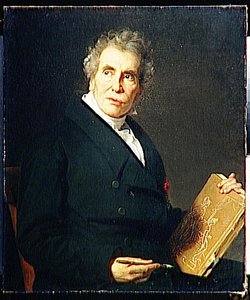
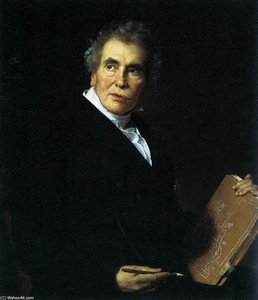
Langlois’s career blossomed with a steady stream of commissions that showcased his growing reputation and artistic maturity. In 1822, he was honored with knighthood in the Legion of Honour, a testament to his contributions to French art and culture. His talent extended beyond historical and mythological subjects; he also excelled in portraiture, capturing the likenesses of prominent figures with dignity and grace. A particularly noteworthy commission came while he was in Brussels in 1824: a portrait of Jacques-Louis David himself, which was exhibited in 1831. This work is not merely a depiction of a man; it’s a poignant tribute from one artist to another, revealing the deep respect and admiration Langlois held for his mentor. He became a nominated member of the Académie des Beaux-Arts, solidifying his position within the artistic establishment. Notable works include L'Enlèvement de Déjanire (Museum of Fine Arts, Angers), Le Peintre David (Musée du Louvre), and portraits of influential figures like Urbain de Maillé, Marquis de Brézé, and François Annibal, Duc d’Estrées (Palace of Versailles). Langlois's artistic style remained firmly rooted in Neoclassicism. His paintings are characterized by their emphasis on order, clarity, and idealized forms. He possessed a meticulous attention to detail and a refined sense of composition, creating works that were both visually striking and intellectually engaging.Legacy and Historical Significance
Jérôme-Martin Langlois passed away in Paris in 1838, leaving behind a body of work that continues to resonate with admirers of Neoclassical art. While perhaps not as widely celebrated as his mentor Jacques-Louis David, Langlois played a crucial role in perpetuating the artistic traditions of the era. His paintings offer valuable insights into the cultural values and aesthetic tastes of early 19th-century France. He wasn’t simply imitating David; he was building upon that foundation, adding his own unique voice to the Neoclassical chorus. His dedication to classical principles, combined with his technical skill and artistic sensitivity, ensured that the ideals of order, reason, and beauty continued to flourish in French painting. The enduring appeal of his works lies not only in their aesthetic qualities but also in their ability to transport viewers back to a time when art was seen as a vehicle for moral instruction and civic virtue. His legacy is one of quiet dedication, skillful execution, and a steadfast commitment to the principles that defined a pivotal moment in art history.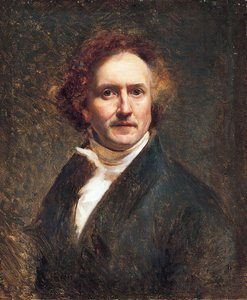
Jérôme Martin Langlois
1779 - 1838 , France
Quick Facts
- Artistic Movement Or Style: Neoclassicism
- Artists Who Influenced This Artist: ['Jacques-Louis David']
- Date Of Birth: 1779
- Date Of Death: 1838
- Full Name: Jérôme-Martin Langlois
- Nationality: French
- Notable Artworks:
- Napoleon Crossing the Alps
- L'Enlèvement de Déjanire
- Le Peintre David
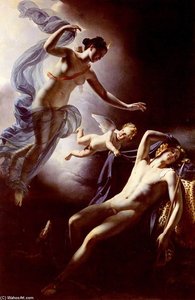
- Diana and Endymion
- Place Of Birth: Paris, France
Related Articles

Goya's Masterpieces: Explore 25 Iconic Paintings & Art Prints | ArtsDot
Delve into the world of Francisco Goya with ArtsDot. Explore 25 iconic paintings – from 'The Third of May' to his haunting Black Paintings. Discover the stories, techniques & emotions behind these Spanish masterpieces. Find museum-quality art reproductions for your home at ArtsDot.com!

About Us
Discover our story! We bring world-class art into your life through expert curation, personalized creations, and free previews. Trusted by individuals and businesses since 2000.
Pierre Puvis de Chavannes: Symbolism, Mural Painting, and the Pursuit of Ideal Beauty
Explore the life & work of Pierre Puvis de Chavannes, a pivotal Symbolist painter renowned for his monumental murals. Discover his aesthetic principles, key artworks like 'Hope,' and lasting influence on modern art. A deep dive into 19th-century French painting.
Pieter de Hooch: Illuminating Dutch Domestic Life & Golden Age Charm
Explore the captivating world of Pieter de Hooch, a master of Dutch Golden Age painting. Discover his innovative use of light, intimate domestic scenes, and lasting influence on art history. Learn more at ArtsDot.
Masterpieces of the 17th Century: Art, History & Decor Inspiration | ArtsDot
Journey through 17th century art with masterpieces by Rembrandt, Vermeer & Caravaggio. Explore Baroque paintings, Dutch Golden Age techniques & timeless beauty. Find museum-quality reproductions and elevate your home decor on ArtsDot.com.