 Preview
 Send
Send Share
Share
 Details

 Download
 Similars
 X-Ray
X-Ray Diaporama
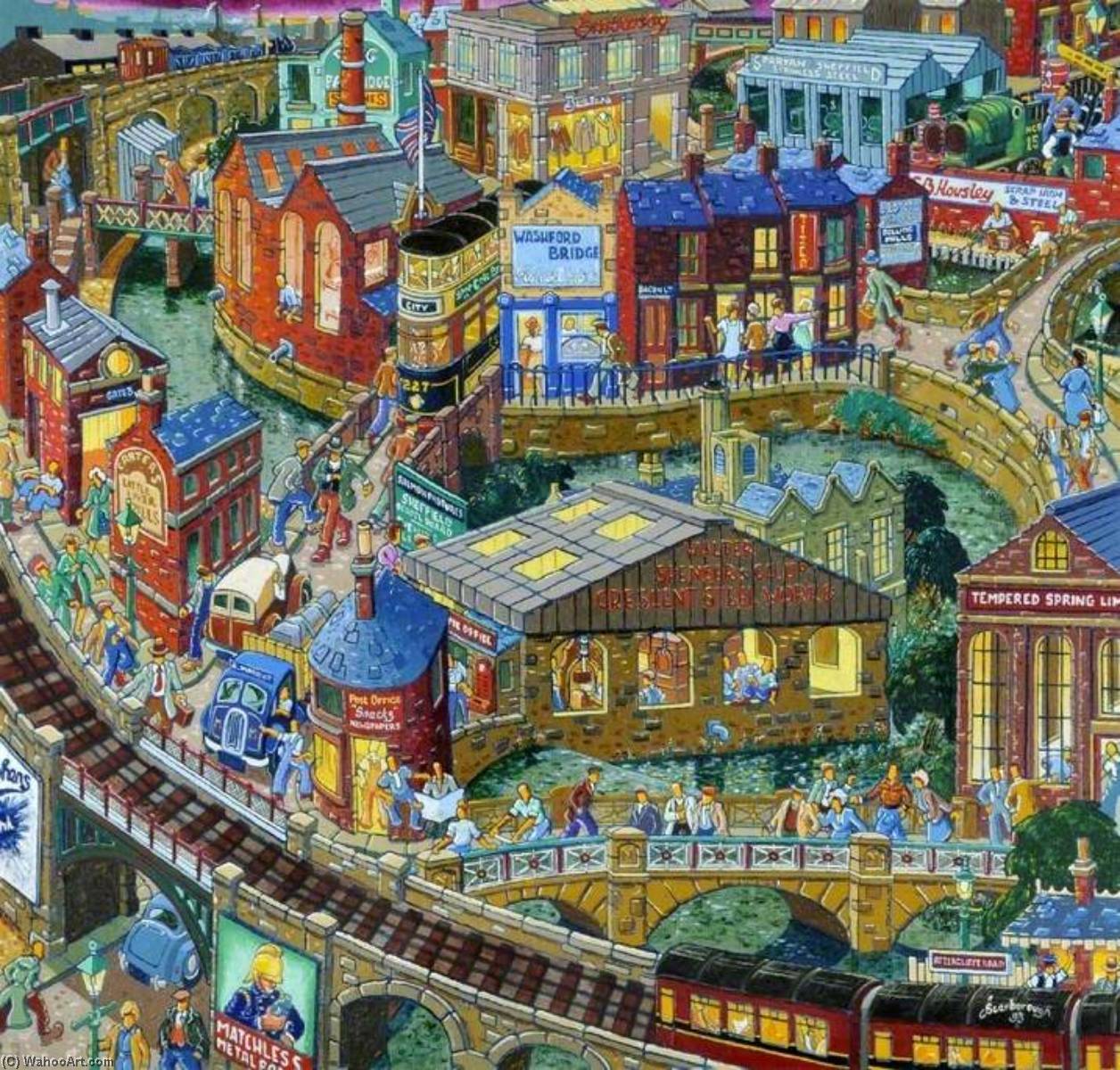
Steel and Steelworkers
 Oil On Canvas
- WallArt
- Contemporary Realism
 1993
1993 100.0 x 110.0 cm
 Sheffield Hallam University
 Read More
Hand Made Oil Reproduction
Hand-painted oil on canvas in your size and frame, made to order by our artists. ( Buy Print Buy Image)




P118B $10

P118H $10

P118W $10

P438Z $10

P508JH $12

P508YH $12

P805H $10

P805Z $10

P919BZ $10

P919G $10

P919XJ $10

P959ZH $10

P968JZ $12

W106C $8

W218G $10

W218JH $8

W218Y $10

W307PJ $10

W316G $10

W316PJ $8

W316Y $10

W398PJ $8

W4111J $10

W500HY $15

W500JH $15

W692G $12

W849H $8

W940BG $15

W953PJ $8




Pick from our preset sizes that match the artwork's original proportions.

You may enter your own dimensions to fit a specific frame or space. If your selected size does not match the original image's proportions, we will either crop the artwork or extend the painting with additional hand-painted elements. A digital mockup will be sent for your approval before production begins.
Please note that the on-screen preview does not reflect the actual cropping or extension. Only the mockup will accurately show the final composition.
While custom sizes are available, we recommend selecting a dimension from the predefined list to preserve the original proportions.
After order, ArtsDot.com team will email client for instructions and provide a mockup preview
Worldwide Delivery () in 3/4 weeks instead of standard 5 weeks. (23 August). No compromise on quality.

Free Worldwide Express Shipping

High-Quality Linen Canvas

Full Shipping Insurance

Customs Tax Refund Guarantee

True Color Matching Guarantee

60-Day Return Policy (Defects Only)

100% Money-Back Guarantee

Bulk Discount Offer
 Glass option is only available in size under 110 CM

Steel and Steelworkers
Reproduction Medium
Reproduction Size
-


Total Price
$ 263
Artwork Description
The Pulse of Urban Life in Joe Scarborough's "Steel and Steelworkers"
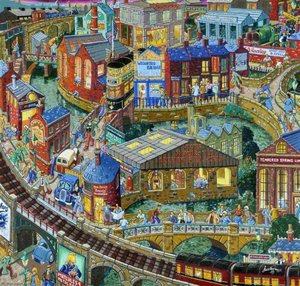
To stand before Joe Scarborough’s "Steel and Steelworkers" is to be enveloped by the very breath of the modern metropolis. This painting, executed in 1993, is not merely a depiction of a cityscape; it is an immersive sensory experience—a vibrant chronicle of human industry and ceaseless movement. The canvas pulses with the energy of daily routine, capturing that exhilarating, sometimes overwhelming, rhythm found at the heart of any bustling urban core. Scarborough masterfully composes a scene where the monumental architecture meets the intimate ballet of pedestrian life.
A Symphony of Motion and Material
The eye is immediately drawn into the confluence of steel, steam, and humanity. A train slices through the composition, its passage suggesting unstoppable momentum, while surrounding automobiles and trucks weave through the thoroughfare like metallic tributaries. This interplay between fixed structures—the imposing buildings punctuated by a visible clock face that seems to measure not just time, but the very pace of existence—and transient elements creates a dynamic tension. Scarborough’s technique allows these disparate elements to coexist without chaos; instead, they form a cohesive, almost choreographed dance. One can almost hear the hiss of brakes and the murmur of countless conversations drifting from the canvas.
Symbolism Woven into the Concrete Jungle
Beyond the literal depiction of trains and shoppers carrying handbags, the painting resonates with deeper symbolic currents. The steel itself speaks to human ingenuity, our relentless drive to build, connect, and progress. The people—the pedestrians moving purposefully across the pavement—represent the individual spirit navigating the grand machinery of society. It is a meditation on modern existence: are we propelled by necessity, or by choice? Scarborough invites us to consider our own place within this vast, intricate urban mechanism. The contrast between the cold permanence of the steel and the fleeting warmth of human interaction lends the piece a profound emotional depth.
Bringing the Cityscape Home
For collectors and designers alike, "Steel and Steelworkers" offers more than just decoration; it offers an atmosphere. Reproducing this work allows one to infuse a space with sophisticated, energetic vitality. Imagine this painting anchoring a loft living area or a modern office reception—it acts as a visual anchor, grounding the room in a narrative of enduring human endeavor. The rich tonality and detailed execution ensure that even at reproduction scale, the vibrancy and depth remain palpable, inviting contemplation every time one passes it.
Related Artworks
Artist Biography
Georg Baselitz: A Life Forged in Destruction and Rebirth
Born Hans-Georg Kern in Deutschbaselitz, a small village in the desolate landscape of Upper Lusatia, Germany, on January 23, 1938, Georg Baselitz’s life has been inextricably linked to themes of loss, displacement, and the struggle for artistic expression. His early years were profoundly shaped by the devastation wrought by World War II – a period marked by widespread destruction, forced migrations, and the lingering trauma of occupation. This experience wasn't merely biographical; it became the very bedrock upon which his entire artistic vision was built, informing a deeply personal and often unsettling exploration of identity, memory, and the nature of representation.
Baselitz’s childhood was far from idyllic. His father, a schoolteacher, instilled in him a love for literature and a critical perspective on societal norms. However, the pervasive atmosphere of destruction and uncertainty profoundly impacted his development. The concept of order—both social and artistic—was shattered, leading Baselitz to question established conventions and forge his own unique path. This formative period fueled a desire to break free from traditional modes of expression, ultimately manifesting in his revolutionary approach to painting.
The Emergence of the Upside-Down Figure
Baselitz’s artistic journey began with conventional figurative painting in the late 1950s and early 1960s. Initially influenced by artists like Wyndham Lewis and the Expressionists, his work reflected a growing dissatisfaction with the representational constraints of traditional art. A pivotal moment arrived in 1969 when he began to paint his subjects upside down – a radical departure that would define his signature style. This seemingly arbitrary decision was not a random act; it represented a deliberate attempt to dismantle the viewer’s expectations and challenge the inherent authority of the image.
As explained in his own words, “I was born into a destroyed order, a destroyed landscape, a destroyed people, a destroyed society. And I didn't want to reestablish an order: I had seen enough of so-called order. I was forced to question everything, to be ‘naive’, to start again.” By inverting his figures and stripping away the illusion of depth, Baselitz sought to expose the artifice of painting itself – to reveal the act of creation as a process of construction rather than imitation. This technique served as a powerful metaphor for confronting the trauma of his past and rejecting the imposed narratives of history.
Influences and Artistic Language
Baselitz’s artistic language is remarkably eclectic, drawing inspiration from a diverse range of sources. He cites influences ranging from Soviet-era illustration art – particularly its bold lines and simplified forms – to the Mannerist period with its elongated figures and distorted perspectives, as well as African sculptures for their expressive power and primal energy. These disparate elements coalesce into a distinctly personal style characterized by energetic brushwork, fragmented compositions, and a sense of raw emotion.
The artist’s work is often described as “neo-expressionist,” although he himself rejects this label. While sharing certain characteristics with the movement—such as its focus on subjective experience and emotional intensity—Baselitz's approach is fundamentally different. His paintings are not simply representations of reality; they are expressions of a deeply felt inner world, filtered through the lens of his personal history and artistic experimentation.
Major Achievements and Legacy
Georg Baselitz’s impact on contemporary art has been profound. His groundbreaking technique of inverting figures revolutionized painting, challenging established conventions and opening up new possibilities for expression. Throughout his career, he has exhibited extensively around the world, receiving numerous awards and accolades, including the Golden Lion at the Venice Biennale (1997) and the Knight Commander’s Cross of the Order of Merit in Germany (2018).
Baselitz's work continues to be exhibited in major museums and galleries worldwide. His paintings are valued for their emotional intensity, technical virtuosity, and enduring relevance. He remains a vital force in contemporary art, inspiring artists with his willingness to challenge the status quo and explore the boundaries of artistic expression. His legacy lies not only in his distinctive style but also in his courageous refusal to conform—a testament to the power of individual vision in the face of adversity.

joe scarborough
1938 - , United Kingdom
Quick Facts
- Artistic Movement Or Style: Neo-Expressionism
- Artists Or Movements Influenced By This Artist: ['Gerhard Richter']
- Artists Who Influenced This Artist:
- Soviet illustration art
- Mannerist period
- African sculptures
- Date Of Birth: January 23, 1938
- Full Name: Georg Baselitz
- Nationality: German
- Notable Artworks:
- Where is the Yellow Milkjug?
- Mrs Bird?
- Place Of Birth: Deutschbaselitz, Germany
Related Articles
Concrete Narratives: Exploring Urban Life in Modern & Contemporary Art
Explore the evolution of cityscape painting with ArtsDot. Discover key artists from Realism to contemporary movements & invest in timeless urban visions. Expert guidance, museum-quality reproductions.
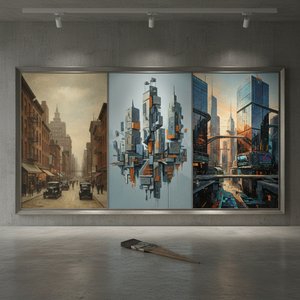
Concrete Visions: Exploring the Urban Landscape in Painting – From Realism to Contemporary Art
Explore the evolution of cityscape painting from Realism to contemporary art with ArtsDot. Discover key artists & invest in timeless urban visions. Expert guidance, museum-quality reproductions.
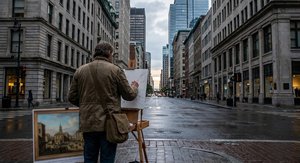
Urban Visions: A Historical & Artistic Exploration of the Cityscape in Painting
Explore the evolution of cityscape painting from historical maps to Impressionist masterpieces. Discover artists like Caillebotte & Utrillo. Find museum-quality reproductions at ArtsDot.
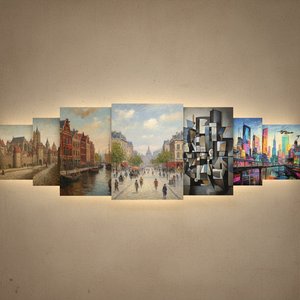
Urban Visions: A Historical & Artistic Exploration of the Cityscape in Painting
Explore the evolution of cityscape painting from historical maps to Impressionist masterpieces. Discover artists like Caillebotte, Utrillo & Matsumoto Shunsuke. Find museum-quality reproductions at ArtsDot.

Concrete Visions: Exploring Representations of Urban Life in Modern & Contemporary Art
Explore the evolution of cityscape painting from Realism to contemporary art. Discover key artists & invest in timeless urban visions with ArtsDot's expert guidance and museum-quality reproductions.