

 Preview
 Send
Send Share
Share
 Details

 Download
 Similars
 X-Ray
X-Ray Diaporama
 Stats
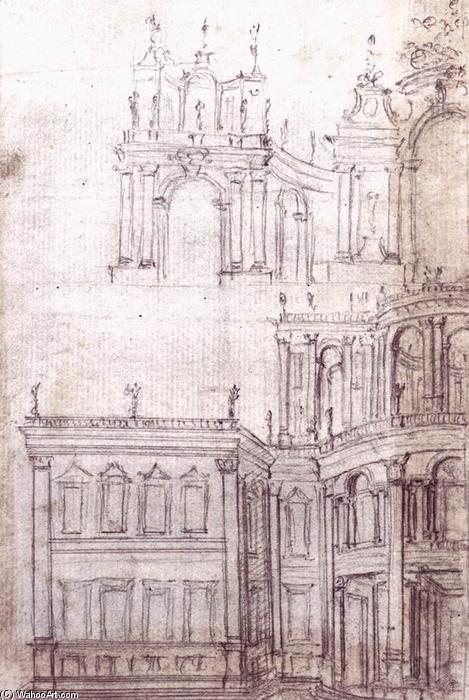
StatsView of the Façade of a Pleasure Garden Pavilion


 Read More
Purchase a high-resolution, enhanced digital image, far superior to the online preview.
Each file is meticulously prepared by our in-house specialists using advanced tools and expert manual retouching. We ensure every image has exceptional clarity, precise color accuracy, and fine detail.
The final file is delivered via email within 72 hours, optimized for immediate use in professional, editorial, and print environments. This is the same quality trusted by top-tier design studios, publishers, and galleries.
Digital Image
Download a high-resolution file for personal display, printing, and creative projects. ( Switch to Print Buy Hand Made Painting)
Included in Every Digital Image Order
Expert Digital Delivery, Guaranteed
When you choose ArtsDot.com, you're not just getting an image - you're receiving a professionally enhanced digital artwork, crafted with precision and backed by a satisfaction guarantee. Here's everything that comes with your order, automatically:

Fast Email Delivery
Your high-resolution digital image file will be emailed to you within 72 hours of ordering - ready for immediate use.

AI-Enhanced Digital File
Your artwork is professionally optimized using advanced AI tools and manual editing, ensuring maximum detail, clarity, and color accuracy.

Free Lifetime Re-Delivery
Accidentally deleted or lost your file? No worries - we'll resend it to you anytime, free of charge.

No Import Fees - Ever
Enjoy your artwork instantly with zero customs, duties, or delivery fees - digital downloads are always tax-free.

Color Accuracy Guarantee
We ensure your digital image reflects the original colors as closely as possible using professional tools and color management.

100-Day Satisfaction Guarantee
If you're not satisfied with your digital image, we'll revise it or refund 100% within 100 days - no questions asked.

100% Money-Back Guarantee
Not satisfied? Get a full refund within 100 days of receiving your digital file - no questions asked.

Bulk Order Discounts
Buy 3 images, save 10% - Buy 5, save 15% - Buy 10+, save 20%. Great for creative projects, galleries, and agencies.
A Vision of Elegant Order: Exploring Johann Bernhard Fischer von Erlach’s ‘View of the Façade of a Pleasure Garden Pavilion’
Johann Bernhard Fischer von Erlach (1656-1723), a towering figure in Austrian Baroque architecture and sculpture, bequeathed to posterity not merely buildings but also an enduring legacy of artistic innovation. Among his prolific output is ‘View of the Façade of a Pleasure Garden Pavilion,’ completed in 1687 – a deceptively simple monochrome drawing that encapsulates the spirit of its era and reveals profound insights into Renaissance ideals translated into Baroque execution.
- Subject Matter: The artwork focuses entirely on architectural design, meticulously depicting the façade of what would have been a lavish pleasure garden pavilion. This deliberate choice underscores Erlach’s commitment to capturing idealized forms of beauty and grandeur – reflecting the aspirations of aristocratic patrons during the late 17th century.
- Style & Influence: ‘View of the Façade…’ firmly establishes itself within the Renaissance tradition, albeit imbued with Baroque stylistic nuances. The geometric precision characteristic of the Renaissance is skillfully blended with expressive shading techniques reminiscent of Baroque art, creating a harmonious balance between rationality and emotion.
The drawing’s technique speaks volumes about Erlach's mastery. Primarily executed in hatching and cross-hatching—a method favored by artists like Nicolas de Largillière—the monochrome palette emphasizes structural elements while subtly conveying volume and depth. Linear perspective guides the viewer’s eye upwards, diminishing size and intensifying detail as it progresses, mirroring the visual conventions of the time.
- Technique: The artist's meticulous attention to detail is evident in every line—straight and curved—contributing to the overall geometric structure. Hatching and crosshatching create tonal variations that simulate light and shadow, enhancing realism and conveying a sense of spatial illusion.
Beyond its formal qualities, ‘View of the Façade…’ carries symbolic weight. It embodies human ambition—the desire to construct magnificent spaces reflecting intellectual and artistic ideals—and celebrates the power of architectural art to inspire awe and contemplation. The image serves as a testament to Erlach’s contribution to shaping the visual landscape of his time, cementing his place among the most influential architects of the Baroque period.
- Symbolism: Representing human aspiration and artistic skill, the drawing embodies the grandeur of religious or civic architecture. It reflects the Renaissance's emphasis on proportion and harmony—values that continued to resonate throughout the Baroque era.
A reproduction of ‘View of the Façade of a Pleasure Garden Pavilion’ offers an exceptional opportunity to appreciate Erlach’s artistic vision and bring a touch of timeless elegance into any interior space. Its understated beauty—combined with its masterful execution—makes it a captivating choice for discerning collectors and designers alike.
Related Artworks
Artist Biography
Nicolas de Largillière: The Master of Subtle Grace
Born in Paris in 1656 and passing away in the same city in 1746, Nicolas de Largillière stands as a pivotal figure in the history of French portraiture. While often overshadowed by his more flamboyant contemporaries like Rigaud, Largillière cultivated a unique style characterized by an exquisite sensitivity to light, texture, and the quiet dignity of his subjects. His career spanned nearly fifty years, during which he established himself as one of the leading portraitists of his time, particularly renowned for capturing the refined elegance of the French middle class – a demographic largely overlooked by the grander commissions favored by the aristocracy.
Largillière’s early artistic development unfolded in Antwerp and London. He began his training with Antoine Goubeau in Antwerp, absorbing the Flemish tradition of meticulous detail and realistic representation. A subsequent period working for Lely in England exposed him to the burgeoning influence of Caravaggio's dramatic use of light and shadow, a technique that would profoundly shape his own artistic approach. This early exposure to both Flemish realism and Italian drama provided a rich foundation upon which he built his distinctive style.
A Portraitist for the Rising Middle Class
Returning to Paris in 1679, Largillière swiftly established himself as a sought-after portraitist. Unlike many of his contemporaries who primarily catered to royal and aristocratic clientele, Largillière focused on depicting members of the wealthy merchant class – individuals whose fortunes were rising alongside the prosperity of Louis XIV’s France. This shift in focus offered him a steady stream of commissions and allowed him to develop a nuanced understanding of his subjects' personalities and social standing. His portraits weren’t merely representations of appearance; they aimed to convey character, refinement, and a sense of inner composure.
His success was remarkable, particularly considering the competitive landscape of Parisian art at the time. Largillière’s ability to capture subtle expressions – a fleeting smile, a thoughtful gaze – set him apart. He employed a technique of *sfumato*, softening outlines and blending colors to create an atmosphere of hazy beauty and intimacy. This approach, combined with his masterful use of light, resulted in portraits that possess a remarkable sense of realism and psychological depth.
Technique and Artistic Influences
Largillière’s technical skill was honed through years of diligent observation and practice. He meticulously studied the anatomy of the human form, paying particular attention to the play of light on skin and fabric. His brushwork is characterized by a delicate layering of colors, creating a sense of texture and volume that brings his subjects to life. The influence of Caravaggio is undeniable in Largillière’s use of chiaroscuro – the dramatic contrast between light and shadow – which he employed not for theatrical effect but to heighten the emotional impact of his portraits.
Furthermore, Largillière drew inspiration from Flemish masters like Anthony van Dyck, whose elegant compositions and refined portraiture served as a model for many French artists. However, Largillière’s style evolved beyond mere imitation; he synthesized these influences into a uniquely personal vision, characterized by an understated elegance and a profound sensitivity to human emotion.
Legacy and Historical Significance
Throughout his long career, Largillière produced an astonishing number of portraits – contemporary sources estimate around 1,500. While he also engaged in religious works, still lifes, and landscapes, it is his portraiture that remains his most enduring legacy. He was appointed director of the Académie Royale in his eighties (1734–5 and 1738–42), a testament to his continued influence and respect within the artistic community.
Largillière’s portraits offer a valuable glimpse into the social and cultural landscape of 18th-century France. They reveal the aspirations, values, and anxieties of the rising middle class – a group that played an increasingly important role in shaping the nation's destiny. His work continues to be admired for its exquisite beauty, technical mastery, and profound understanding of human nature. He is often considered the French equivalent of Van Dyck, a title he certainly deserved.
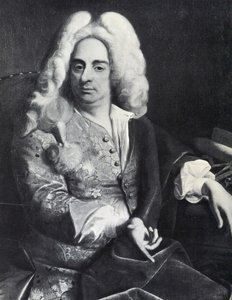
johann bernhard fischer von erlach
1656 - 1723 , Austria
Quick Facts
- Artistic Movement Or Style: Portraiture
- Artists Or Movements Influenced By This Artist: ['Van Dyck']
- Artists Who Influenced This Artist:
- Lely
- Verrio
- Date Of Birth: 1656
- Date Of Death: 1746
- Full Name: Nicolas de Largillière
- Nationality: French
- Notable Artworks:
- The Apotheosis of Homer
- Portrait of a Young Man
- Portrait of a Woman
- Place Of Birth: Paris, France