 Preview
 Send
Send Share
Share
 Details

 Download
 Similars
 X-Ray
X-Ray Diaporama
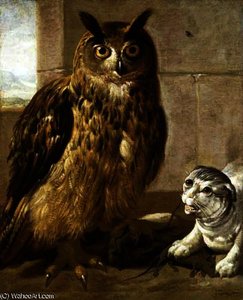
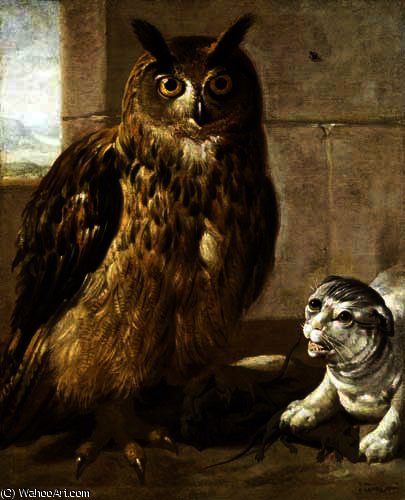
Eagle Owl and Cat with Dead Rats

 Read More
Hand Made Oil Reproduction
Hand-painted oil on canvas in your size and frame, made to order by our artists. ( Buy Print Buy Image)




































Pick from our preset sizes that match the artwork's original proportions.

You may enter your own dimensions to fit a specific frame or space. If your selected size does not match the original image's proportions, we will either crop the artwork or extend the painting with additional hand-painted elements. A digital mockup will be sent for your approval before production begins.
Please note that the on-screen preview does not reflect the actual cropping or extension. Only the mockup will accurately show the final composition.
While custom sizes are available, we recommend selecting a dimension from the predefined list to preserve the original proportions.
After order, ArtsDot.com team will email client for instructions and provide a mockup preview
Worldwide Delivery () in 3/4 weeks instead of standard 5 weeks. (19 August). No compromise on quality.

Free Worldwide Express Shipping

High-Quality Linen Canvas

Full Shipping Insurance

Customs Tax Refund Guarantee

True Color Matching Guarantee

60-Day Return Policy (Defects Only)

100% Money-Back Guarantee

Bulk Discount Offer
 Glass option is only available in size under 110 CM

Eagle Owl and Cat with Dead Rats
Reproduction Medium
Reproduction Size
-


Total Price
$ 288
Related Artworks
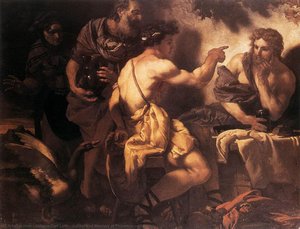

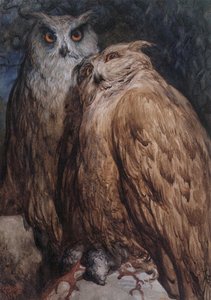
Artist Biography
Johann Heinrich Roos (1631-1685): A Shepherd’s Dream in Baroque Color
Johann Heinrich Roos, born in Otterberg, Germany around 1631, stands as a pivotal figure within the German Baroque landscape tradition. His artistic journey unfolded amidst turbulent times – the Thirty Years' War reshaping Europe – and ultimately culminated in a tragically premature death in Frankfurt am Main in 1685. Despite lacking formal academic training like Rembrandt, Roos achieved renown for his masterful depictions of pastoral scenes infused with humanist ideals and imbued with an undeniable sensitivity to animal life.- Early Life & Training: Roos’s family emigrated to Amsterdam in 1640 due to the ongoing conflict, exposing him to the vibrant artistic milieu of the Dutch Republic. Recognizing his talent, he apprenticed under prominent painters such as Guillaume du Gardijn, Cornelis de Bie and Barent Graat, absorbing techniques and stylistic influences that would shape his future endeavors. However, it was the landscapes of Nicolaes Berchem and Karel Dujardin who truly captivated him, fostering a profound appreciation for atmospheric perspective and idealized representations of nature.
- Amsterdam Years & Rembrandt Influence: Roos’s time in Amsterdam (1647-1653) proved formative. Notably, he meticulously copied Rembrandt's “The Return from Pilgrimage,” demonstrating an astute understanding of chiaroscuro and compositional dynamism—a testament to Rembrandt’s enduring impact on the artistic consciousness of his era.
- Royal Commissions & Hesse Commission: Roos gained considerable acclaim through commissions for Ernst, Landgrave of Hesse-Rheinfels (son of Maurice), producing a portrait of Prince Ludwig August in 1654 and contributing to religious iconography. His collaboration with Theodor Roos on the decoration of Mainz Cathedral further cemented his reputation as a skilled craftsman and artist.
- Frankfurt & Artistic Success: Following Ernst’s death, Roos relocated to Frankfurt in 1667 where he experienced considerable prosperity. He established himself as a respected portraitist capturing the likenesses of prominent figures from Frankfurt's burgeoning middle class. Tragically, however, his fortunes crumbled when a devastating fire consumed his studio and possessions in 1685—a final act of defiance against fate.
- Legacy & Artistic Style: Roos’s sons continued his artistic lineage, producing accomplished painters who upheld the traditions established by their father. His distinctive style characterized by luminous color palettes, meticulous attention to detail, and a preoccupation with animal subjects—particularly shepherds depicting biblical narratives—solidifies his place as one of Germany's foremost Baroque landscape artists. His works reside in collections spanning Europe including the Kunsthistorisches Museum in Vienna and Städelsches Kunstinstitut in Frankfurt.
Key Characteristics & Artistic Vision
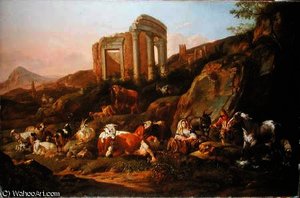
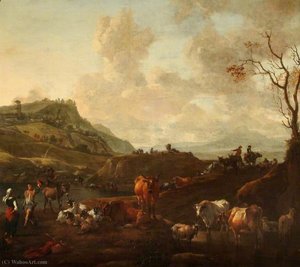
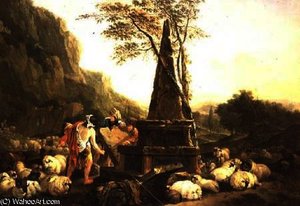
Roos’s artistic vision centered on conveying a harmonious relationship between humanity and the natural world. He skillfully employed techniques honed by Berchem and Dujardin, prioritizing atmospheric perspective to create immersive landscapes that evoked feelings of tranquility and contemplation. Recurring motifs included ruined temples—symbols of decay juxtaposed with enduring beauty—and idealized depictions of animals rendered with remarkable realism. His canvases frequently portrayed biblical scenes featuring shepherds tending flocks, reflecting a humanist belief in the sanctity of rural life and the importance of moral virtue.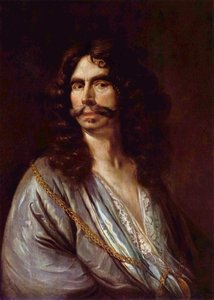
Johann Heinrich Roos
1631 - 1631 , Germany
Quick Facts
- Artistic Movement Or Style: Baroque
- Artists Or Movements Influenced By This Artist: ['Rembrandt']
- Artists Who Influenced This Artist:
- Nicolaes Berchem
- Karel Dujardin
- Date Of Birth: 1631
- Date Of Death: 1685
- Full Name: Johann Heinrich Roos
- Nationality: German
- Notable Artworks:
- Landscape with a ruin
- Lovers in a Classical Landscape with Animals
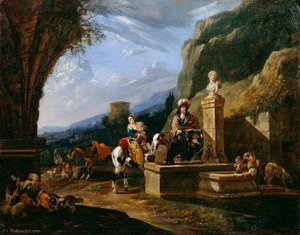
- Halting of Mountain Travellers at a Fountain
- Place Of Birth: Otterberg, Germany
Related Articles

Baroque Drama: Bringing Opulence & Emotion into Contemporary Interiors
Explore the opulent world of Baroque interior design! Discover key elements, modern applications & how to bring dramatic elegance into your home with 's authentic reproductions.

The Enduring Power of Painting: A Historical & Contemporary Exploration of Form and Emotion
Explore the rich history & enduring techniques of oil painting with ArtsDot. Discover masterpieces, learn about art collecting, and find authentic handmade reproductions crafted by skilled artists.

The Enduring Legacy of Oil on Canvas: Technique, History & Aesthetic Impact
Explore the rich history & techniques of oil painting – from Renaissance masters to Impressionism. Discover pigments, layering methods, and why this timeless medium endures. Expert insights for artists & art enthusiasts.

The Dramatic Flourish: Exploring the Baroque Movement's Enduring Legacy in Art History
Explore the dramatic world of Baroque art! Discover iconic artists like Caravaggio & Rubens, defining techniques, and its lasting impact on art history. Expert insights for collectors & enthusiasts at ArtsDot.

Baroque Masterpieces: 10 Paintings That Defined an Era |
Journey through the drama & grandeur of Baroque art! Explore 10 masterpieces by Caravaggio, Rembrandt, Rubens & more. Discover stunning oil paintings, rich colors & timeless stories. Find museum-quality reproductions at .