 Preview
 Send
Send Share
Share
 Details

 Download
 Similars
 X-Ray
X-Ray Diaporama
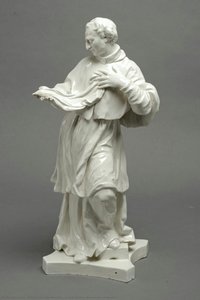
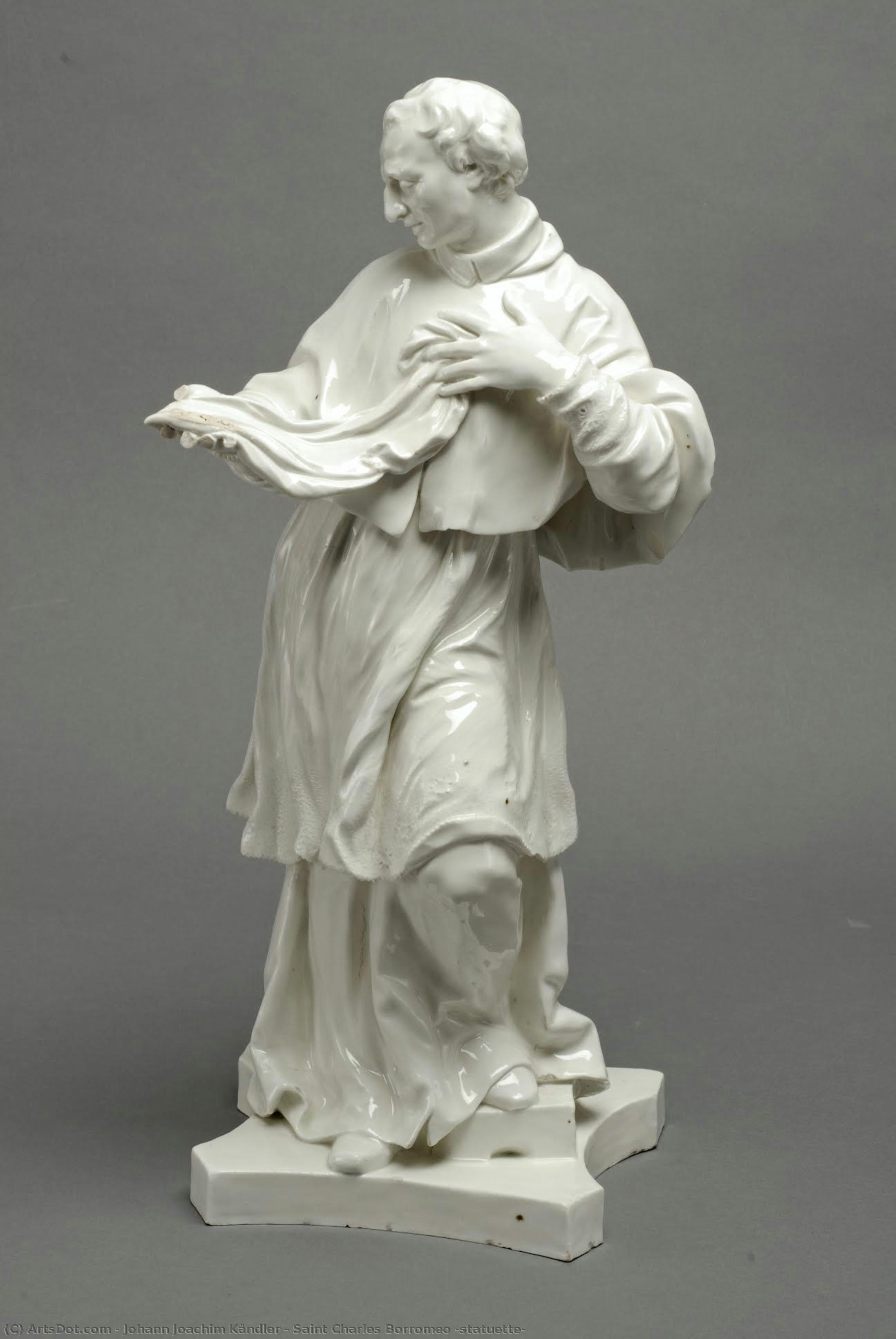
Saint Charles Borromeo (statuette)
 1740
1740 6.0 x 16.0 cm
 Museum of Applied Arts
 Read More
Hand Made Oil Reproduction
Hand-painted oil on canvas in your size and frame, made to order by our artists. ( Buy Print Buy Image)




































Pick from our preset sizes that match the artwork's original proportions.

You may enter your own dimensions to fit a specific frame or space. If your selected size does not match the original image's proportions, we will either crop the artwork or extend the painting with additional hand-painted elements. A digital mockup will be sent for your approval before production begins.
Please note that the on-screen preview does not reflect the actual cropping or extension. Only the mockup will accurately show the final composition.
While custom sizes are available, we recommend selecting a dimension from the predefined list to preserve the original proportions.
After order, ArtsDot.com team will email client for instructions and provide a mockup preview
Worldwide Delivery () in 3/4 weeks instead of standard 5 weeks. (23 August). No compromise on quality.

Free Worldwide Express Shipping

High-Quality Linen Canvas

Full Shipping Insurance

Customs Tax Refund Guarantee

True Color Matching Guarantee

60-Day Return Policy (Defects Only)

100% Money-Back Guarantee

Bulk Discount Offer
 Glass option is only available in size under 110 CM

Saint Charles Borromeo (statuette)
Reproduction Medium
Reproduction Size
-


Total Price
$ 263
Artwork Description
Related Artworks









Artist Biography
Johann Joachim Kändler: The Architect of European Porcelain
Born in Fischbach, Germany, in 1706, Johann Joachim Kändler’s life was inextricably linked to the burgeoning world of Meissen porcelain. His early exposure to classical art and mythology—a legacy from his pastor father—would profoundly shape his artistic vision. He began his apprenticeship under Johann Benjamin Thomae, a prominent Dresden sculptor, absorbing not only technical skills but also a deep appreciation for Greco-Roman aesthetics. This foundation proved crucial as he would later become the most influential modeller of Meissen porcelain, arguably shaping the entire landscape of European ceramics during the 18th century.
Kändler’s journey to Meissen began in 1731, where he joined the prestigious factory and quickly rose through the ranks. Initially assisting Johann Jacob Kirchner, he assumed leadership in 1733, a position he held until his death in 1775. This remarkable forty-year tenure wasn’t merely a job; it was a period of intense creative exploration and systematic refinement. He didn't just sculpt; he engineered an entire aesthetic for the factory, establishing standards that would define Meissen’s reputation for elegance and detail for decades to come.
The Sculptor’s Palette: Technique and Influences
Kändler’s work is characterized by a remarkable blend of observation, technical mastery, and artistic sensibility. He initially drew inspiration from the natural world, creating animal groups—jays with squirrels, woodpeckers with cockchafers—that were celebrated for their accuracy and a subtle, poignant beauty. These early pieces demonstrated a keen eye for detail and a sensitivity to texture and form, qualities that would remain central to his style.
However, Kändler’s artistic trajectory shifted dramatically as he became increasingly involved in court life under Frederick the Great of Prussia. This engagement led him to explore new themes—particularly the world of commedia dell'arte—resulting in a series of charming and evocative figurines that captured the spirit of theatrical performance. The “Monkey Band,” created in 1753, stands as a testament to this shift, embodying Enlightenment ideals of freedom and reason through its playful depiction of a musical ensemble.
Crucially, Kändler’s influence extended beyond mere aesthetic choices. He meticulously oversaw the entire process of porcelain production, from initial modelling to mould creation and quality control. His appointment as arcanist—a role encompassing technical expertise and secret knowledge—demonstrates his profound understanding of the materials and processes involved in creating this delicate art form. The Swan Service for Heinrich von Brühl, a lavish table setting featuring exquisitely detailed figures, exemplifies Kändler’s mastery of both design and production.
A Legacy Forged in Porcelain
Kändler's impact on European porcelain is immeasurable. He didn’t simply produce beautiful objects; he established a system—a style—that dominated the industry for over half a century. His early sculptures, with their emphasis on naturalism and emotional depth, set a new standard of excellence. The shift towards theatrical figures reflected a broader cultural trend, demonstrating Kändler's ability to adapt his artistic vision to changing tastes.
His work is found in the world’s most prestigious museums, including the Metropolitan Museum of Art in New York and the British Museum in London. The enduring popularity of Meissen porcelain—and its continued association with Kändler’s name—testifies to his lasting legacy as the architect of European porcelain art. He remains a pivotal figure in the history of sculpture and ceramics, a testament to the power of observation, skill, and artistic vision.
Further Exploration
- Salt Cellar in the Shape of the Turks
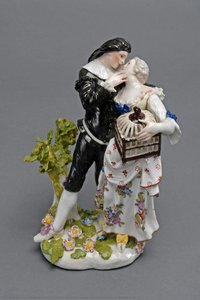
- Dallying Couple (Scaramouche and Columbine)
- Saint Charles Borromeo (Statuette)
For more information, you can explore these resources:

johann joachim kändler
1706 - 1775 , Germany
Quick Facts
- Artistic Movement Or Style: Baroque, Meissen porcelain
- Artists Or Movements Influenced By This Artist: ['Rococo']
- Artists Who Influenced This Artist: ['Johann Benjamin Thomae']
- Date Of Birth: June 15, 1706
- Date Of Death: May 18, 1775
- Full Name: Johann Joachim Kändler
- Nationality: German
- Notable Artworks:
- Dallying couple (Scaramouche)
- Saint Charles Borromeo
- Salt cellar (Turks)
- Place Of Birth: Fischbach, Germany