 Preview
 Send
Send Share
Share
 Details

 Download
 Similars
 X-Ray
X-Ray Diaporama
George III


 Read More
Hand Made Oil Reproduction
Hand-painted oil on canvas in your size and frame, made to order by our artists. ( Buy Print Buy Image)




P118B $10

P118H $10

P118W $10

P438Z $10

P508JH $12

P508YH $12

P805H $10

P805Z $10

P919BZ $10

P919G $10

P919XJ $10

P959ZH $10

P968JZ $12

W106C $8

W218G $10

W218JH $8

W218Y $10

W307PJ $10

W316G $10

W316PJ $8

W316Y $10

W398PJ $8

W4111J $10

W500HY $15

W500JH $15

W692G $12

W849H $8

W940BG $15

W953PJ $8




Pick from our preset sizes that match the artwork's original proportions.

You may enter your own dimensions to fit a specific frame or space. If your selected size does not match the original image's proportions, we will either crop the artwork or extend the painting with additional hand-painted elements. A digital mockup will be sent for your approval before production begins.
Please note that the on-screen preview does not reflect the actual cropping or extension. Only the mockup will accurately show the final composition.
While custom sizes are available, we recommend selecting a dimension from the predefined list to preserve the original proportions.
After order, ArtsDot.com team will email client for instructions and provide a mockup preview
Worldwide Delivery () in 3/4 weeks instead of standard 5 weeks. (16 August). No compromise on quality.

Free Worldwide Express Shipping

High-Quality Linen Canvas

Full Shipping Insurance

Customs Tax Refund Guarantee

True Color Matching Guarantee

60-Day Return Policy (Defects Only)

100% Money-Back Guarantee

Bulk Discount Offer
 Glass option is only available in size under 110 CM

George III
Reproduction Medium
Reproduction Size
-


Total Price
$ 263
Artwork Description
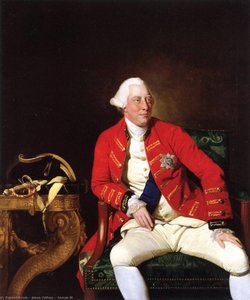
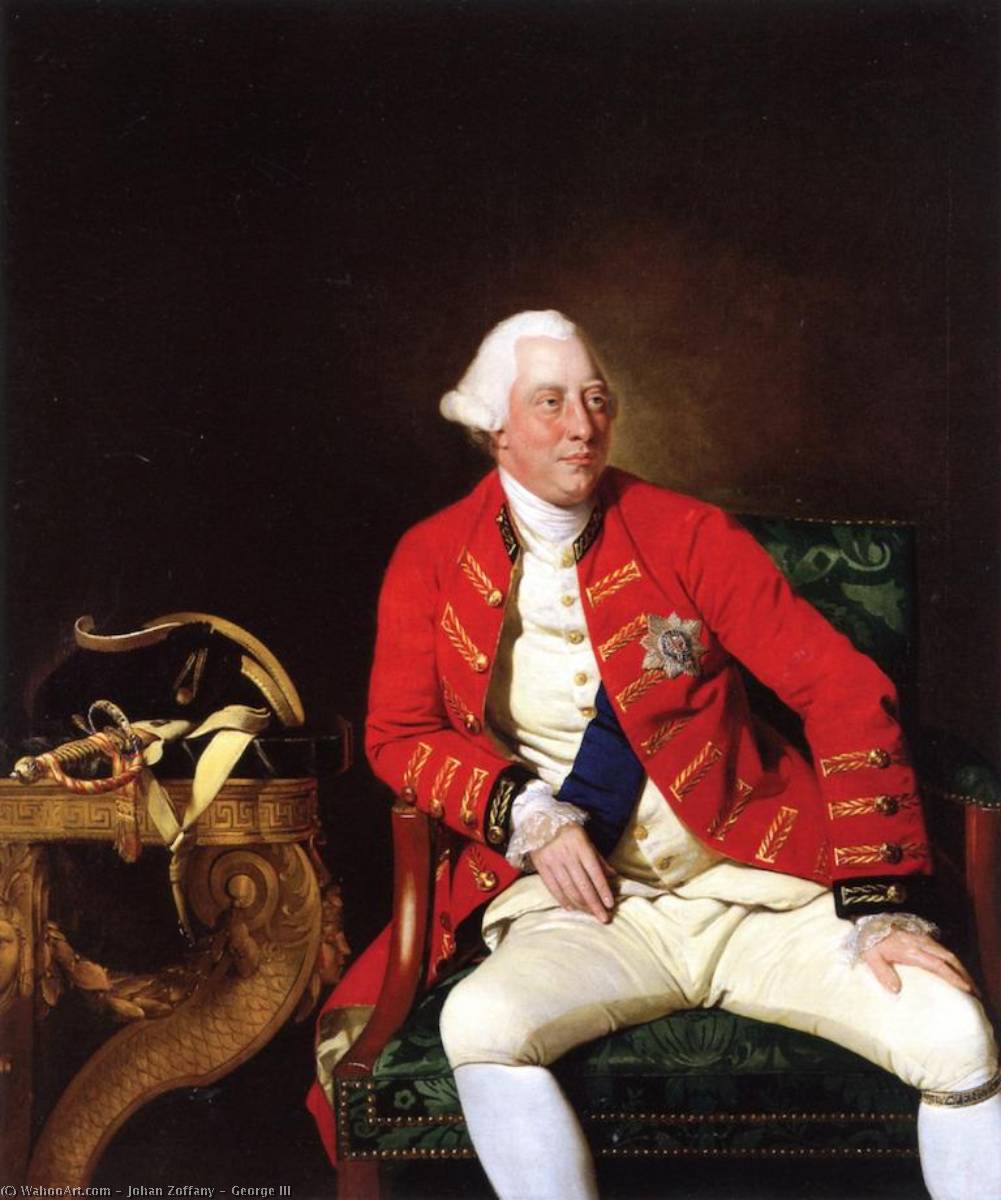
The Majesty of a King: An Exploration of Zoffany’s ‘George III’
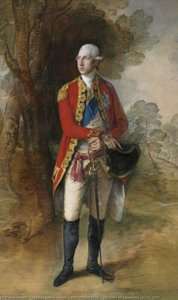
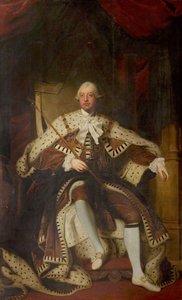
Johann Zoffany's “George III” is more than just a portrait; it’s a meticulously constructed tableau vivant, a frozen moment brimming with historical significance and subtle theatricality. Completed in 1771, this oil on canvas painting offers a rare glimpse into the life of King George III during a period of profound political and personal upheaval. Zoffany, a German-born artist who found his most enduring success in England, masterfully blended elements of Italian portraiture with the burgeoning conventions of the ‘conversation piece’ – a genre that favored informal group settings and layered symbolism.
The painting immediately commands attention through its opulent setting. The King is seated within a richly appointed room, reminiscent of an Italian villa or a grand salon, complete with a meticulously rendered violoncello, a symbol of musical refinement and aristocratic leisure. However, the true brilliance lies in the details – the intricate patterns on the wallpaper, the carefully chosen objects adorning the walls, each contributing to a complex web of meaning. This isn’t merely a depiction of royalty; it's an assertion of power, a visual declaration of George III’s status as both a sovereign and a cultivated gentleman.
A Stage for Power: Symbolism and Context
Zoffany was acutely aware of the political climate surrounding his subject. George III inherited a throne beset by challenges – a fragile peace following the Seven Years' War, mounting debts, and growing tensions with the American colonies. The King’s posture, his gaze directed towards an unseen observer (often interpreted as a young boy), conveys a sense of both authority and vulnerability. He is dressed in the formal attire of a General, complete with medals and a sash – emblems of military prowess and royal rank. The inclusion of the Order of the Garter, one of the most prestigious chivalric orders in Britain, further reinforces his position as a key figure within the nation’s elite.
Beyond the obvious symbols of power, Zoffany employs subtle visual cues to suggest the complexities of George III's reign. The presence of the violoncello, for instance, is not simply decorative; it alludes to the King’s musical interests and his patronage of artists and musicians – a carefully cultivated image designed to project an aura of sophistication and refinement. The inclusion of a young boy in the painting has been interpreted as representing the future of the monarchy, but also perhaps hinting at the challenges George III faced in securing a legitimate heir.
Technique and Artistic Legacy
Zoffany’s skill lies not only in his ability to capture likenesses with remarkable accuracy but also in his masterful use of light and shadow. The dramatic lighting highlights the King's face, emphasizing his features and conveying a sense of gravitas. The artist employs a technique reminiscent of both Italian portraiture and Dutch genre painting, creating a rich, textured surface that is both visually engaging and historically informative. His attention to detail is astonishing – from the folds in the fabric to the reflections on the polished surfaces – demonstrating a deep understanding of his subject matter and a commitment to realism.
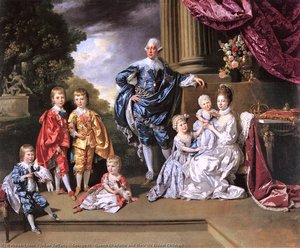
“George III” stands as one of Zoffany’s most celebrated works, alongside “Queen Charlotte and Her Six Eldest Children.” Reproductions of this iconic painting continue to captivate art lovers today, offering a window into the world of Georgian England and the complex personality of its King. The Royal Collection Trust holds the original, ensuring that this remarkable piece of history remains accessible for generations to come.
Further Information:
Related Artworks
Artist Biography
Johann Zoffany: Life and Legacy
Early Life and Training
Johann Zoffany, born Johannes Josephus Zaufallij in 1733 in Freiburg, Germany, was a painter who achieved renown primarily in England and Italy. Details of his early childhood remain scarce, but it is known he received artistic training from a young age. He initially apprenticed with a sculptor, possibly Melchior Paulus in Ellwangen, before studying with Martin Speer in Regensburg. This foundational period laid the groundwork for his future career.
Journey to Italy and England
In 1750, Zoffany traveled to Rome, entering the studio of Agostino Masucci where he honed his skills within the Italian artistic tradition. He later moved to England in 1760, initially supporting himself by creating decorative designs for clocks made by Stephen Rimbault. This period marked a turning point as he began to establish connections and gain recognition within London’s art scene.
Royal Patronage and Artistic Development
Zoffany quickly attracted the attention of King George III and Queen Charlotte, becoming a favored portraitist of the royal family. His ability to capture informal moments – such as Queen Charlotte and Her Two Eldest Children (1765) – distinguished him from more formal court painters. He was also popular with Austrian imperial family and created a baron of the Holy Roman Empire in 1776 by Empress Maria Theresa.
The Master of ‘Conversation Pieces’
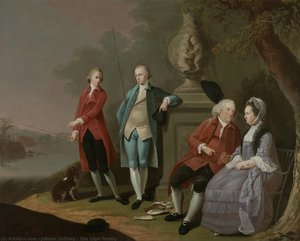
Zoffany became celebrated for his “conversation pieces,” or *conversazione* – informal group portraits depicting social gatherings. He excelled at capturing the personalities and interactions within these scenes, often featuring prominent figures from society, theatre, and literature. His works like The Cope Family (1775) exemplify this style, offering glimpses into the lives of his patrons.
Major Achievements and Notable Works
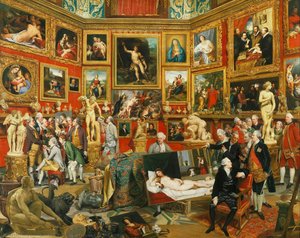
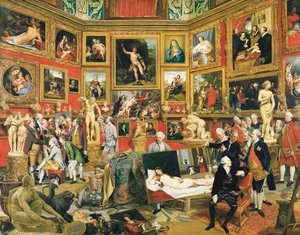
- Tribuna of the Uffizi (1772-1778): Perhaps his most famous work, a meticulously detailed depiction of the Uffizi Gallery in Florence.
- Dr William Hunter Teaching Anatomy at the Royal Academy (1779): A fascinating portrayal of medical education and scientific inquiry.
- George III (1771): A regal portrait showcasing the King’s power and elegance.
- Colonel Mordaunt's Cock Match (1784-1786): A vibrant depiction of colonial life in India, capturing a unique cultural event.
Years in India and Later Life
From 1783 to 1789, Zoffany resided in India, where he painted portraits of prominent figures like Warren Hastings and Asaf-ud-Daula. His experiences there influenced his artistic style and subject matter. A remarkable story from this period involves a shipwreck off the Andaman Islands, where survivors resorted to extreme measures for survival.
Influences and Legacy
Zoffany’s work reflects influences from both German precision and Italian artistry. He was influenced by artists like Agostino Masucci and drew inspiration from the Baroque tradition. His style, in turn, influenced contemporaries and later artists interested in portraiture and social commentary. He bridged artistic traditions and left a lasting impact on 18th-century art.
Historical Significance
Johann Zoffany’s paintings provide valuable insights into the social customs, intellectual life, and cultural values of his time. His “conversation pieces” offer intimate portraits of prominent individuals and their world, while his depictions of India contribute to our understanding of colonial history. He remains a significant figure in the history of art, celebrated for his technical skill, insightful observations, and unique artistic vision.
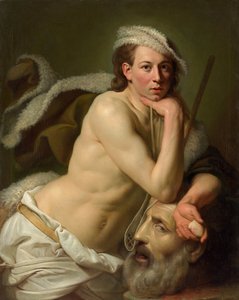
johann zoffany
1733 - 1810 , Germany
Quick Facts
- Birth Date: 1733
- Birth Place: Frankfurt, Germany
- Death Date: 1810
- Movement:
- Neoclassicism
- Realism
- Expressionism
- Name: Johann Zoffany
- Nationality: German
- Notable Works:
- Tribuna of the Uffizi
- Dr William Hunter Teaching Anatomy at the Royal Academy
- George III
- The Flower Girl
- Colonel Mordaunt's Cock Match
Related Articles
Georges Braque's Masterpieces: 25 Paintings That Defined Cubism & Modern Art | ArtsDot
Explore 25 iconic Georges Braque paintings that revolutionized Cubism & modern art. Discover the stories behind his masterpieces, from Fauvism to Analytical Cubism. Find museum-quality reproductions & elevate your home decor with ArtsDot.com.
Georges Seurat's Masterpieces: 25 Paintings That Defined Pointillism | ArtsDot
Explore 25 iconic Georges Seurat paintings & discover the brilliance of Pointillism. From 'La Grande Jatte' to his harbor scenes, delve into art history with ArtsDot.com. Find museum-quality reproductions for your home decor. Explore the full collection online!
Johann Zoffany: Capturing Georgian Society with Brushstrokes of Cosmopolitan Flair
Explore the captivating world of Johann Zoffany, master portraitist of Georgian society. Discover his unique 'conversation pieces,' imperial commissions & lasting legacy. A guide for discerning collectors.
George Stubbs: Anatomical Precision & Romantic Vision in 18th-Century British Art
Explore the captivating world of George Stubbs, the 18th-century master renowned for his anatomical precision & Romantic animal paintings. Discover his legacy and investment potential.
Sir George Clausen: Capturing Edwardian Life & British Impressionism's Nuances
Explore the luminous world of Sir George Clausen, a leading British Impressionist painter. Discover his captivating scenes of Edwardian life, rural England & poignant war art. Learn about his legacy and find high-quality reproductions at ArtsDot.