 Preview
 Send
Send Share
Share
 Details

 Download
 Similars
 X-Ray
X-Ray Diaporama
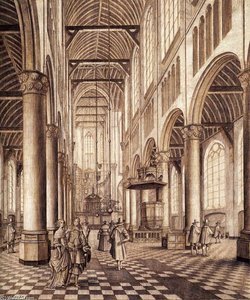
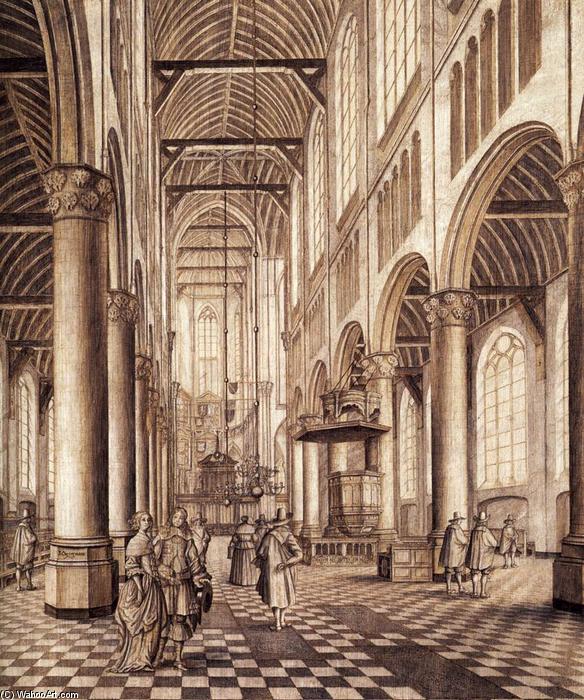
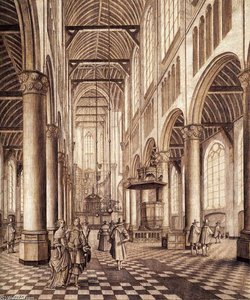
Interior of the Nieuwe Kerk, Delft
 1663
1663 52.0 x 45.0 cm
 Read More
Hand Made Oil Reproduction
Hand-painted oil on canvas in your size and frame, made to order by our artists. ( Buy Print Buy Image)




































Pick from our preset sizes that match the artwork's original proportions.

You may enter your own dimensions to fit a specific frame or space. If your selected size does not match the original image's proportions, we will either crop the artwork or extend the painting with additional hand-painted elements. A digital mockup will be sent for your approval before production begins.
Please note that the on-screen preview does not reflect the actual cropping or extension. Only the mockup will accurately show the final composition.
While custom sizes are available, we recommend selecting a dimension from the predefined list to preserve the original proportions.
After order, ArtsDot.com team will email client for instructions and provide a mockup preview
Worldwide Delivery () in 3/4 weeks instead of standard 5 weeks. (30 August). No compromise on quality.

Free Worldwide Express Shipping

High-Quality Linen Canvas

Full Shipping Insurance

Customs Tax Refund Guarantee

True Color Matching Guarantee

60-Day Return Policy (Defects Only)

100% Money-Back Guarantee

Bulk Discount Offer
 Glass option is only available in size under 110 CM

Interior of the Nieuwe Kerk, Delft
Reproduction Medium
Reproduction Size
-


Total Price
$ 263
Related Artworks

Artist Biography
Johannes Coesermans: A Pioneer of Dutch Interior Painting
Johannes Coesermans (c. 1594 – 1678) stands as a pivotal figure in the history of Dutch art, particularly renowned for his groundbreaking depictions of church interiors—a genre he essentially established and elevated to unprecedented artistic heights. Born in Delft, Coesermans’s formative years coincided with the flourishing Golden Age of Dutch painting, an era characterized by intellectual curiosity, humanist ideals, and a fervent embrace of scientific observation. This environment profoundly shaped his artistic vision and fueled his dedication to capturing the spiritual essence of sacred spaces with remarkable realism and psychological depth.- Early Life & Training: Coesermans received his initial artistic training from Hendrick van Balen, a prominent Antwerp painter who championed Mannerism—a stylistic movement that prioritized elegance, stylized forms, and expressive brushwork over naturalistic representation. This exposure to Mannerist principles instilled in him a sophisticated understanding of compositional techniques and color palettes that would inform his subsequent work.
- Delft & The Nieuwe Kerk Commission: Coesermans’s career gained considerable momentum when he relocated to Delft, where he became associated with Willem van Haeringen—a wealthy patron who commissioned him to decorate the Nieuwe Kerk (New Church), Delft. This monumental undertaking proved transformative for Coesermans's artistic trajectory and cemented his reputation as a master of interior painting.
The Nieuwe Kerk Interior: A Revolutionary Achievement
Coesermans’s depiction of the Nieuwe Kerk is considered one of the most ambitious and influential church interiors of its time. Unlike previous artists who approached sacred spaces with idealized grandeur, Coesermans sought to portray them with unflinching accuracy—capturing not only architectural details but also the subtle nuances of light, atmosphere, and human emotion. He meticulously studied the effects of natural illumination on surfaces and textures, employing innovative techniques to convey a sense of palpable realism.
- Technique & Innovation: Coesermans’s masterful use of chiaroscuro—the dramatic interplay between light and shadow—became his signature style. He painstakingly layered thin glazes of paint to achieve luminous surfaces that seemed to radiate warmth and depth, creating an immersive experience for the viewer.
- Psychological Insight: Beyond mere visual fidelity, Coesermans’s paintings conveyed profound psychological insight into the human condition. His figures—often depicted in moments of contemplation or prayer—were rendered with remarkable sensitivity, capturing subtle expressions of emotion and conveying a sense of spiritual solemnity.
Influences & Artistic Legacy
Coesermans’s artistic vision was deeply rooted in humanist ideals that emphasized observation and rational inquiry. He drew inspiration from Leonardo da Vinci—a celebrated Renaissance polymath who championed scientific experimentation—and embraced the principles of perspectival projection developed by Filippo Brunelleschi—the architect of Florence Cathedral.
- Mannerist Roots: Coesermans’s stylistic preferences reflected the enduring influence of Mannerism, which prioritized elegance and stylized forms over naturalistic representation.
- Impact on Subsequent Artists: Coesermans's pioneering approach to interior painting profoundly impacted subsequent generations of artists—inspiring them to explore new techniques for conveying psychological depth and capturing the ethereal beauty of sacred spaces. His legacy continues to resonate in contemporary art, demonstrating the enduring power of observation and artistic innovation.
Notable Works
Among Coesermans’s most celebrated paintings are “Interior of St. Pancras Church” (1648), “The Visitation” (1653) and “St. Mary's Church, Delft” (1660). These masterpieces exemplify his mastery of chiaroscuro, psychological insight, and meticulous attention to detail—establishing him as a cornerstone of Dutch Baroque art.
Quick Facts
- Artistic Movement Or Style: Renaissance Painting
- Full Name: Johannes Coesermans
- Nationality: Dutch
- Notable Artworks: ['Interior of the Nieuwe Kerk']
- Place Of Birth: Delft, Netherlands