 Preview
 Send
Send Share
Share
 Details

 Download
 Similars
 X-Ray
X-Ray Diaporama
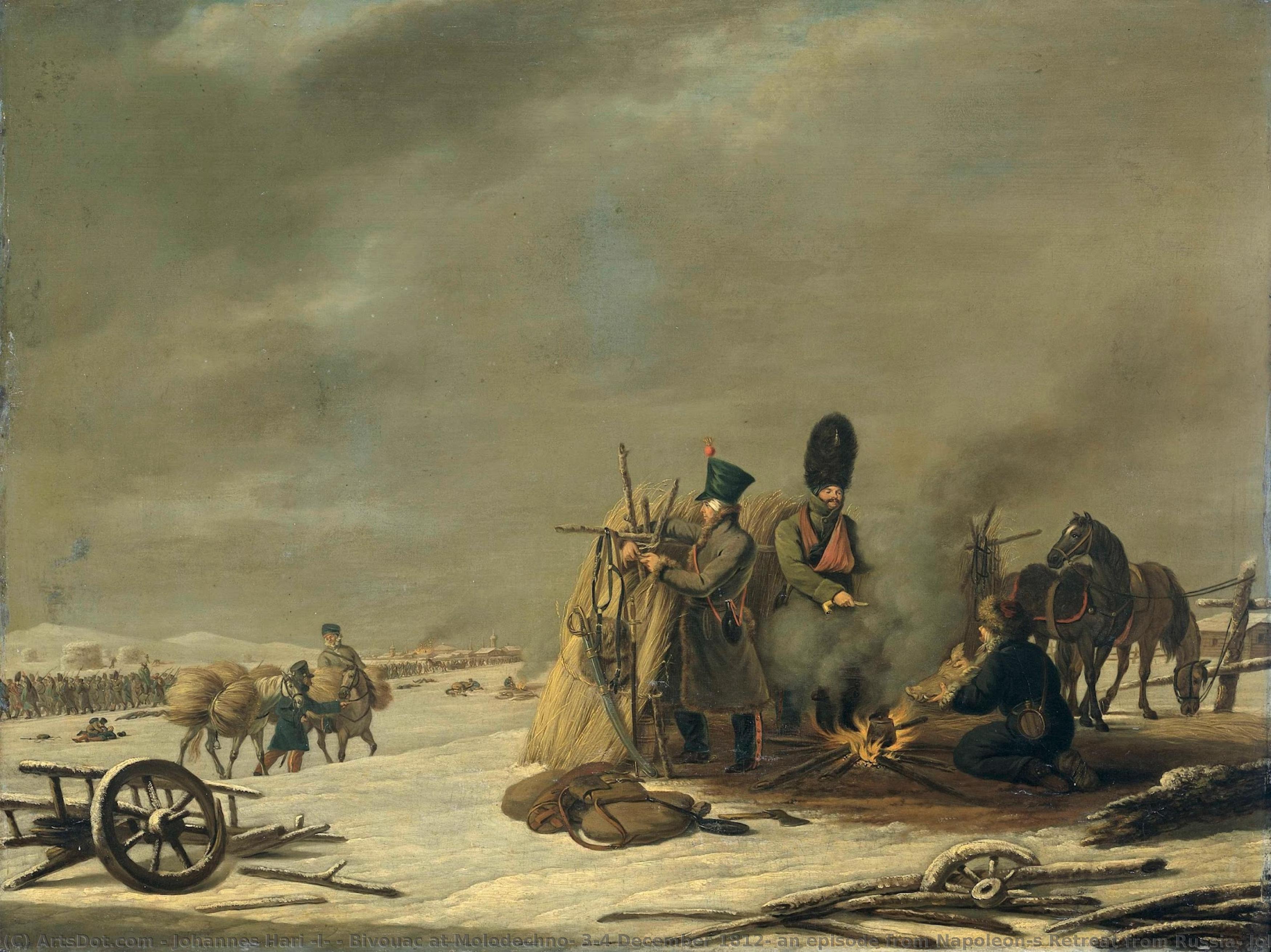
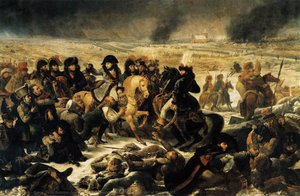
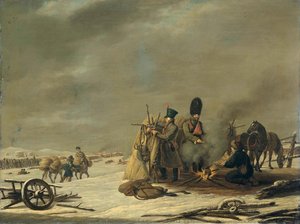
Bivouac at Molodechno, 3-4 December 1812: an episode from Napoleon"s Retreat from Russia, Johannes Hari (I), 1816
 Historical Painting
 1816
1816 49.0 x 64.0 cm
 Read More
Hand Made Oil Reproduction
Hand-painted oil on canvas in your size and frame, made to order by our artists. ( Buy Print Buy Image)




































Pick from our preset sizes that match the artwork's original proportions.

You may enter your own dimensions to fit a specific frame or space. If your selected size does not match the original image's proportions, we will either crop the artwork or extend the painting with additional hand-painted elements. A digital mockup will be sent for your approval before production begins.
Please note that the on-screen preview does not reflect the actual cropping or extension. Only the mockup will accurately show the final composition.
While custom sizes are available, we recommend selecting a dimension from the predefined list to preserve the original proportions.
After order, ArtsDot.com team will email client for instructions and provide a mockup preview
Worldwide Delivery () in 3/4 weeks instead of standard 5 weeks. (21 August). No compromise on quality.

Free Worldwide Express Shipping

High-Quality Linen Canvas

Full Shipping Insurance

Customs Tax Refund Guarantee

True Color Matching Guarantee

60-Day Return Policy (Defects Only)

100% Money-Back Guarantee

Bulk Discount Offer
 Glass option is only available in size under 110 CM

Bivouac at Molodechno, 3-4 December 1812: an episode from Napoleon"s Retreat from Russia, Johannes Hari (I), 1816
Reproduction Medium
Reproduction Size
-


Total Price
$ 313
Artwork Description
Related Artworks
Artist Biography
Johannes Hari (I): Shaping the Dutch Landscape Tradition
Johannes Hari (I), born in The Hague in 1772, stands as a pivotal figure within the Dutch landscape painting movement of the late 18th and early 19th centuries. Though overshadowed by contemporaries like Jacob Maris and Anton Mauve during his lifetime, Hari’s prolific output – exceeding 1200 works – cemented his place as one of the most productive artists of his era and profoundly impacted the stylistic trajectory of Dutch art.
- Early Life & Training: Little is known about Hari's formative years beyond confirmation that he studied under Johann Friedrich Overbeck, a prominent German landscape painter who championed Romantic ideals. This influence undoubtedly shaped Hari’s artistic sensibilities and commitment to capturing the grandeur of nature with meticulous detail.
- The Hofschilder Legacy: Hari ascended to the role of hofschilder (royal court painter) in 1807, securing commissions from influential patrons and allowing him access to privileged views of Dutch estates and landscapes. This patronage fostered a distinctive artistic style characterized by atmospheric perspective and an unwavering dedication to realism.
- Notable Landscapes: Hari’s oeuvre is dominated by breathtaking depictions of Dutch countryside – windmills dotting serene meadows, dramatic mountain vistas bathed in twilight hues, and meticulously rendered scenes of rural life. His canvases resonate with the spirit of Romanticism while retaining a grounding in observation and technical mastery.
Exploring Hari's Artistic Style & Techniques
Hari’s artistic approach distinguished him from many of his peers. He prioritized capturing subtle nuances of light and color, employing techniques honed through extensive experimentation with oil paints to achieve unparalleled luminosity and textural richness. His landscapes weren’t merely representations of scenery; they were imbued with emotion—a palpable sense of solitude, contemplation, and reverence for the natural world.
- Atmospheric Perspective: Hari skillfully utilized atmospheric perspective – a technique pioneered by Leonardo da Vinci – to convey depth and realism. He subtly modulated tonal values to simulate haze and distance, creating convincing illusions of spatial recession.
- Detailed Observation: Hari’s paintings are testament to his meticulous attention to detail. From the individual blades of grass to the weathered surfaces of stone walls, every element was rendered with painstaking accuracy, reflecting a deep engagement with the subject matter.
Key Works & Recognition
Among Hari's celebrated paintings are “Bivouac at Molodechno,” depicting Napoleon’s retreat from Russia in 1812—a dramatic portrayal of hardship and resilience that exemplifies his Romantic fervor. Furthermore, he contributed significantly to the decoration of Stiftskirche St. Johann in Regensburg and Propsteikirche Dortmund – UNESCO World Heritage Sites – showcasing his artistic versatility and commitment to documenting architectural grandeur.
- “Bivouac at Molodechno” (1816): This monumental canvas captures the bleak realities of wartime, demonstrating Hari’s ability to convey psychological depth alongside visual splendor.
- Stiftskirche St. Johann & Propsteikirche Dortmund: Hari's involvement in these projects underscores his role as a cultural ambassador and his dedication to preserving architectural heritage.
Legacy & Influence
Johannes Hari (I)’s enduring legacy resides not only in the sheer volume of his output but also in his contribution to establishing Dutch landscape painting as a cornerstone of Romantic art. His meticulous observation, masterful technique, and profound appreciation for nature continue to inspire artists today. Though largely forgotten during his lifetime, Hari’s work has been rediscovered by scholars and collectors alike, ensuring that his artistic vision persists as a testament to the brilliance of the Dutch Golden Age.
johannes hari (i)
1772 - 1849 , Netherlands
Quick Facts
- Artistic Movement Or Style: Landscape Painting
- Date Of Birth: The Hague, Netherlands
- Date Of Death: 1849
- Full Name: Johannes Hari (I)
- Nationality: Dutch
- Notable Artworks: ['Bivouac at Molodechno']
- Place Of Birth: Netherlands
Related Articles

Dutch Masters: 10 Golden Age Paintings That Still Inspire |
Journey into the Dutch Golden Age! Explore 10 iconic paintings by Rembrandt, Vermeer & Hals. Discover the stories behind these Baroque masterpieces and find museum-quality art reproductions to elevate your home decor on .
Snowy Masterpieces: 10 Famous Paintings & Art for a Winter Aesthetic
Explore 10 famous snow paintings by Monet, Degas & more! Discover the stories behind these serene winter landscapes and iconic artworks. Find museum-quality art reproductions for your home at ArtsDot.com.
Sergey Solomko: Rediscovering the Poetic Landscape of Old Russia
Explore the captivating world of Sergey Solomko (1867-1928), a master of Russian Art Nouveau. Discover his stunning paintings, illustrations & designs capturing Old Russia's beauty. Hand-painted reproductions available at ArtsDot.
Johannes Bosboom: Light, Landscape & the Dutch Realist Tradition
Explore the captivating world of Johannes Bosboom, a master of Dutch Realism renowned for his evocative church interiors & landscapes. Discover his life, techniques, and enduring legacy with ArtsDot.
Johann Zoffany: Capturing Georgian Society with Brushstrokes of Cosmopolitan Flair
Explore the captivating world of Johann Zoffany, master portraitist of Georgian society. Discover his unique 'conversation pieces,' imperial commissions & lasting legacy. A guide for discerning collectors.