 Preview
 Send
Send Share
Share
 Details

 Download
 Similars
 X-Ray
X-Ray Diaporama
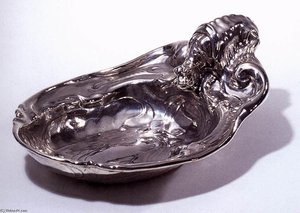
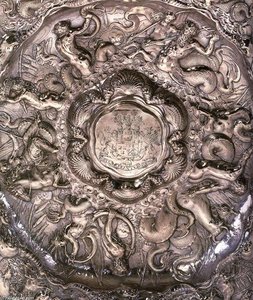
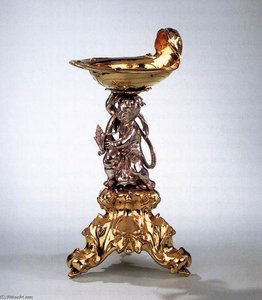
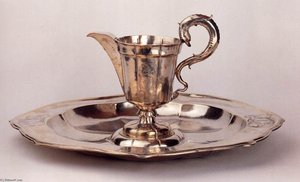
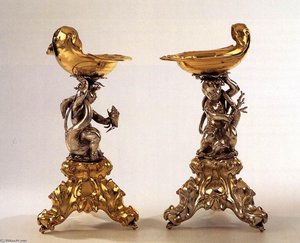
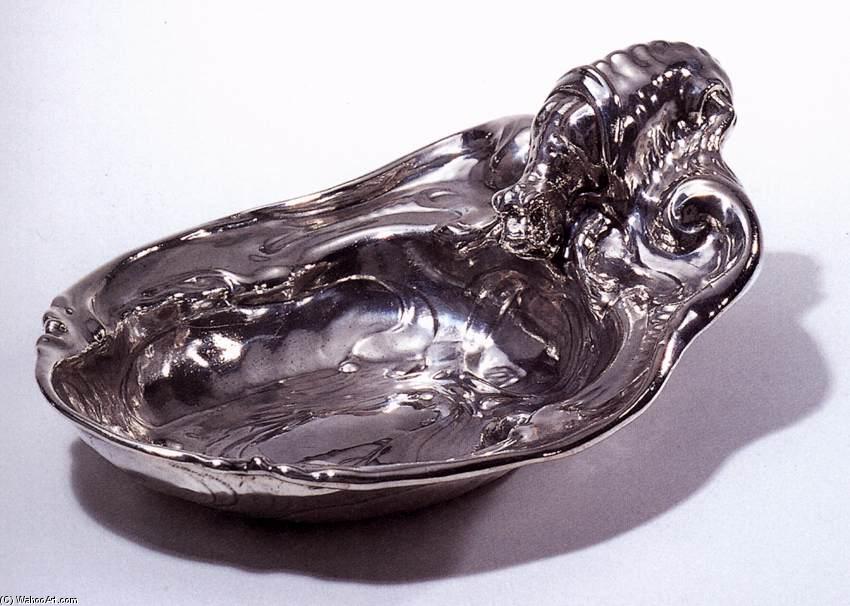
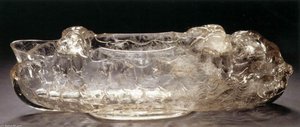
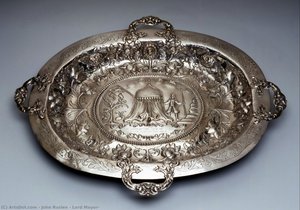
Dish


 Read More
Hand Made Oil Reproduction
Hand-painted oil on canvas in your size and frame, made to order by our artists. ( Buy Print Buy Image)




P118B $10

P118H $10

P118W $10

P438Z $10

P508JH $12

P508YH $12

P805H $10

P805Z $10

P919BZ $10

P919G $10

P919XJ $10

P959ZH $10

P968JZ $12

W106C $8

W218G $10

W218JH $8

W218Y $10

W307PJ $10

W316G $10

W316PJ $8

W316Y $10

W398PJ $8

W4111J $10

W500HY $15

W500JH $15

W692G $12

W849H $8

W940BG $15

W953PJ $8




Pick from our preset sizes that match the artwork's original proportions.

You may enter your own dimensions to fit a specific frame or space. If your selected size does not match the original image's proportions, we will either crop the artwork or extend the painting with additional hand-painted elements. A digital mockup will be sent for your approval before production begins.
Please note that the on-screen preview does not reflect the actual cropping or extension. Only the mockup will accurately show the final composition.
While custom sizes are available, we recommend selecting a dimension from the predefined list to preserve the original proportions.
After order, ArtsDot.com team will email client for instructions and provide a mockup preview
Worldwide Delivery () in 3/4 weeks instead of standard 5 weeks. (17 August). No compromise on quality.

Free Worldwide Express Shipping

High-Quality Linen Canvas

Full Shipping Insurance

Customs Tax Refund Guarantee

True Color Matching Guarantee

60-Day Return Policy (Defects Only)

100% Money-Back Guarantee

Bulk Discount Offer
 Glass option is only available in size under 110 CM

Dish
Reproduction Medium
Reproduction Size
-


Total Price
$ 263
Related Artworks
Artist Biography
Johannes the Elder Lutma: Master of Auricular Silver
Johannes Lutma the elder (born c. 1584 in Emden, Germany; died January 1669 in Amsterdam) stands as a pivotal figure in the late 17th-century Dutch goldsmithing scene – a period marked by unprecedented artistic innovation and opulent craftsmanship. Often overshadowed by his more famous contemporaries like Rembrandt, Lutma’s legacy lies in his pioneering work with “auricular” style silver, a technique that redefined decorative possibilities and profoundly influenced subsequent generations of artisans. His life was one of constant movement and adaptation, beginning in the German Rhineland before settling permanently in Amsterdam, where he established himself as a leading designer for wealthy patrons and ecclesiastical institutions.
Lutma’s early training remains somewhat shrouded in mystery, though it is generally accepted that he studied under Paulus van Vianen, a master known for his distinctive “auricular” style – characterized by smooth, ear-like forms. This stylistic approach, emphasizing flowing curves and subtle ornamentation, became the foundation of Lutma's own artistic vocabulary. Following a period in Paris around 1615, where he likely honed his skills amidst the burgeoning artistic scene, Lutma arrived in Amsterdam in 1621, marrying Mayken Roelants shortly thereafter, and later Saera de Bie. His time in the bustling commercial center of Amsterdam proved to be fertile ground for his creative development, offering access to a wealthy clientele eager for luxurious objects.
The Auricular Style and its Development
Lutma’s most significant contribution to the art world was undoubtedly his mastery of the auricular style. This technique involved creating flowing, undulating surfaces on silver that mimicked the shape of an ear – hence the name. It wasn't merely a stylistic choice; Lutma elevated it into a sophisticated design principle, utilizing it to create intricate patterns and dynamic compositions. He skillfully combined this smooth, organic form with sharp angles, geometric shapes, and elaborate embellishments, resulting in a remarkably versatile aesthetic. His designs weren’t simply decorative; they possessed a sense of movement and rhythm that captivated viewers.
Crucially, Lutma didn't invent the auricular style entirely. It had roots in earlier German goldsmithing traditions, but Lutma refined it, pushing its boundaries and establishing a distinct visual language. He employed techniques like chasing (hammering metal to create raised designs) and repoussé (pushing metal from the back to create raised designs), combined with meticulous engraving, to achieve his desired effects. His work demonstrated an exceptional command of materials and a deep understanding of how light interacted with surface textures.
Major Works and Commissions
Lutma’s career produced a remarkable body of work, encompassing a diverse range of objects – from elaborate salt dishes and ewers to monumental choir screens and decorative cartouches. His most celebrated achievement is arguably the choir-screen for the Nieuwe Kerk (New Church) in Amsterdam, a breathtaking example of his artistic vision. This massive panel, executed around 1638, features intricate scenes depicting biblical narratives interwoven with classical motifs, showcasing Lutma’s ability to seamlessly blend different stylistic influences.
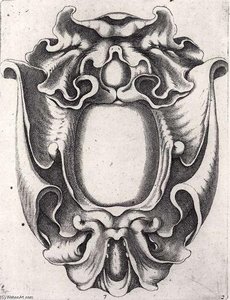
Beyond the choir-screen, Lutma created numerous exquisite salt containers, often adorned with mythological creatures and floral designs. These objects are prized for their exceptional craftsmanship and delicate detailing. His work also includes a series of cartouches – decorative frames used to enclose inscriptions or coats of arms – which demonstrate his mastery of miniature design and intricate engraving. The Rijksmuseum in Amsterdam houses several significant examples of Lutma’s oeuvre, offering invaluable insights into the breadth and depth of his artistic talent.
Legacy and Influence
Despite not achieving widespread fame during his lifetime, Johannes Lutma's influence on subsequent generations of Dutch goldsmiths is undeniable. His innovative use of the auricular style paved the way for new approaches to decorative design, inspiring artists like his son, Johannes Lutma the Younger (Jan Lutma), who continued to develop and refine his father’s techniques. Lutma’s designs were also widely disseminated through printed series of engravings, ensuring their enduring popularity and influence.
Furthermore, Lutma's work reflects a broader cultural shift in 17th-century Europe – a move towards greater individualism and artistic experimentation. His willingness to challenge established conventions and embrace new stylistic approaches cemented his place as a key figure in the development of Dutch goldsmithing and a testament to the enduring power of artistic innovation.
johannes the elder lutma
1587 - 1669 , Germany
Quick Facts
- Artistic Movement Or Style: Auricular Style
- Artists Or Movements Influenced By This Artist: ['Rembrandt']
- Artists Who Influenced This Artist: ['Paulus van Vianen']
- Date Of Birth: c. 1584
- Date Of Death: 1669
- Full Name: Johannes Lutma the Elder
- Nationality: German
- Notable Artworks:
- Choir-screen (Nieuwe Kerk)
- Salt containers
- Drinking bowl
- Place Of Birth: Emden, Germany
Related Articles
German Expressionism's 10 Defining Masterpieces | Art for Your Home
Explore 10 defining German Expressionism masterpieces – from Munch's 'The Scream' to Kandinsky’s abstracts. Discover the artists, stories & bold colors behind this powerful art movement. Find museum-quality reproductions at ArtsDot.com.
Silver Leaf Masterpieces: 10 Iconic Paintings & Timeless Home Decor Ideas
Explore 10 iconic paintings dominated by stunning silver leaf! Discover the history, artists & techniques behind these gilded masterpieces. Find museum-quality art reproductions and elevate your home decor with . Explore the full collection online.
The Refined Aesthetic of Victorian Illustration: A Study in Narrative & Technique
Explore the captivating world of Victorian illustration! Discover Pre-Raphaelite influences, key artists like Rossetti & Stephens, and the era's rich narrative detail. A deep dive for art enthusiasts.
William Powell Frith: Narratives of Victorian Society & the Rise of Realist Painting
Explore the life & works of William Powell Frith, the 'greatest British painter of social scenes.' Discover his iconic Victorian genre paintings and learn about his lasting impact on realist art. Hand-painted reproductions available.
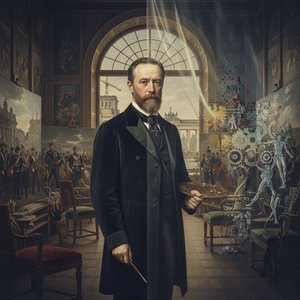
Anton von Werner: Imperial Painter, Historical Witness & Shifting German Identity
Explore the life & work of Anton von Werner, Imperial Germany's leading painter. Discover his dramatic depictions of war, unification, and court life – a fascinating insight into 19th-century German history & art.