 Preview
 Send
Send Share
Share
 Details

 Download
 Similars
 X-Ray
X-Ray Diaporama
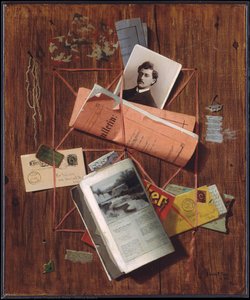
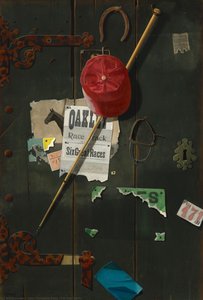
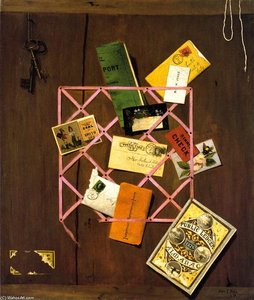
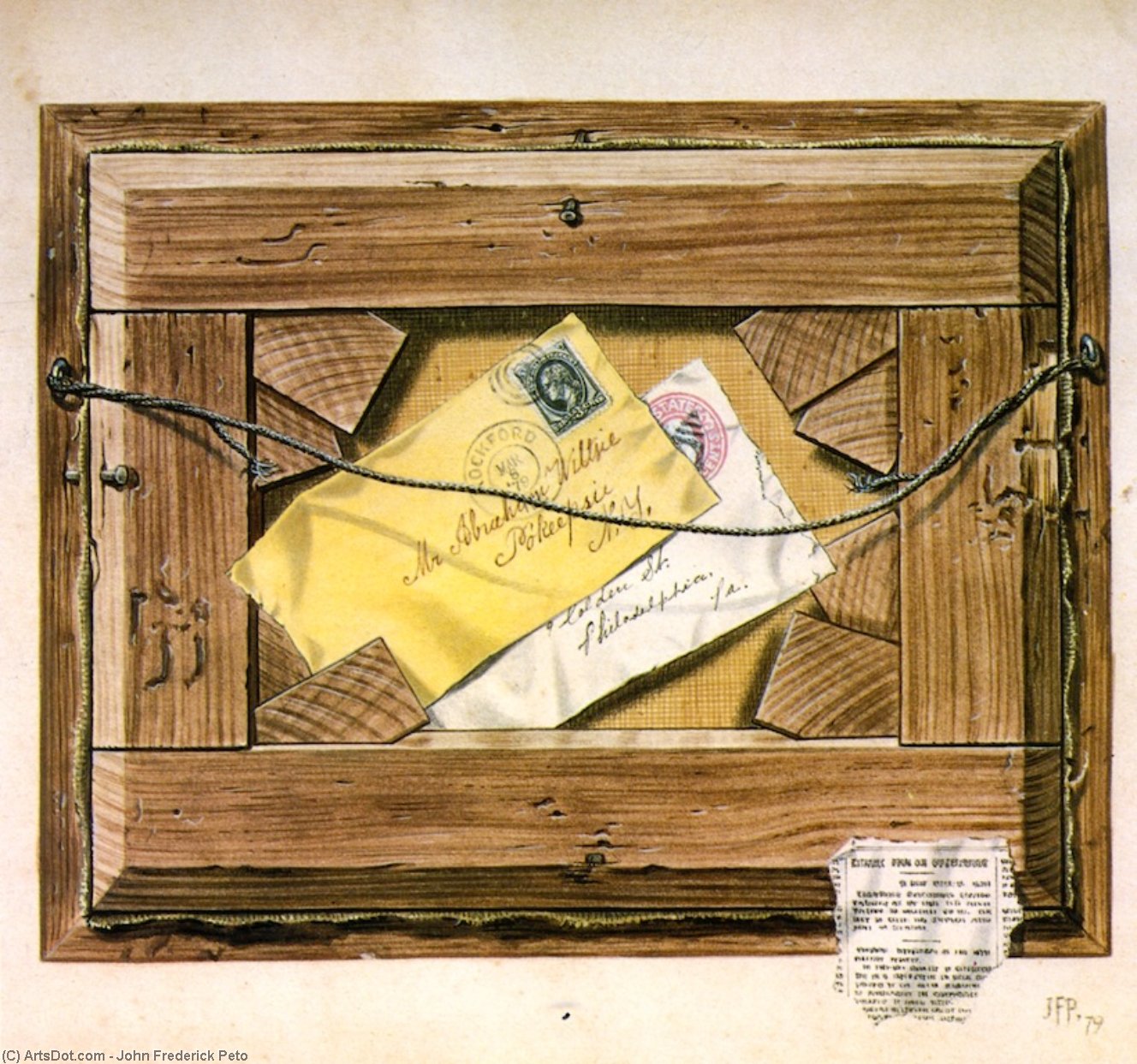
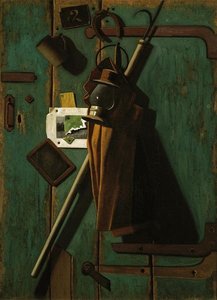
Mr. Abraham Wiltsie's Rack Picture


 Read More
Hand Made Oil Reproduction
Hand-painted oil on canvas in your size and frame, made to order by our artists. ( Buy Print Buy Image)




P118B $10

P118H $10

P118W $10

P438Z $10

P508JH $12

P508YH $12

P805H $10

P805Z $10

P919BZ $10

P919G $10

P919XJ $10

P959ZH $10

P968JZ $12

W106C $8

W218G $10

W218JH $8

W218Y $10

W307PJ $10

W316G $10

W316PJ $8

W316Y $10

W398PJ $8

W4111J $10

W500HY $15

W500JH $15

W692G $12

W849H $8

W940BG $15

W953PJ $8




Pick from our preset sizes that match the artwork's original proportions.

You may enter your own dimensions to fit a specific frame or space. If your selected size does not match the original image's proportions, we will either crop the artwork or extend the painting with additional hand-painted elements. A digital mockup will be sent for your approval before production begins.
Please note that the on-screen preview does not reflect the actual cropping or extension. Only the mockup will accurately show the final composition.
While custom sizes are available, we recommend selecting a dimension from the predefined list to preserve the original proportions.
After order, ArtsDot.com team will email client for instructions and provide a mockup preview
Worldwide Delivery () in 3/4 weeks instead of standard 5 weeks. (21 August). No compromise on quality.

Free Worldwide Express Shipping

High-Quality Linen Canvas

Full Shipping Insurance

Customs Tax Refund Guarantee

True Color Matching Guarantee

60-Day Return Policy (Defects Only)

100% Money-Back Guarantee

Bulk Discount Offer
 Glass option is only available in size under 110 CM

Mr. Abraham Wiltsie's Rack Picture
Reproduction Medium
Reproduction Size
-


Total Price
$ 263
Artwork Description
A Window into the Past: The Delicate Charm of Peto's Trompe l'oeil
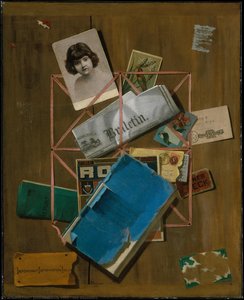
In the quiet corners of art history, few techniques possess the magical ability to blur the line between reality and illusion quite like trompe l'oeil. John Frederick Peto, a master of this deceptive art, invites us into a moment of profound stillness with his 1879 masterpiece, Mr. Abraham Wiltsie's Rack Picture. At first glance, the viewer is presented with a simple, unassuming wooden rack holding two humble envelopes—one a soft yellow, the other a crisp white. Yet, beneath this surface simplicity lies a sophisticated command of light and texture that breathes life into the inanimate. The painting does not merely depict objects; it captures the very essence of their physical presence, making the paper feel tactile and the wood feel weathered by time.
The technique employed in this watercolor piece is nothing short of enchanting. Peto utilizes soft, muted colors and delicate brushstrokes to cultivate an atmosphere of serenity and nostalgia. There is a dreamy, almost ethereal quality to the way the envelopes rest upon the rack, as if they are suspended in a moment of eternal waiting. This mastery of light allows the edges of the objects to blend seamlessly into the background, creating a sense of depth that draws the eye inward. Much like the innovative spirit found in the works of Georges Pierre Seurat or the structural explorations of Paul Cezanne, Peto uses his medium to experiment with perception, turning a mundane domestic scene into a captivating study of form and shadow.
Historical Resonance and the Beauty of the Everyday
Beyond its technical brilliance, Mr. Abraham Wiltsie's Rack Picture serves as a poignant historical document of the late 19th century. The inclusion of specific details, such as the handwritten names on the envelopes and the presence of vintage stamps, provides a window into an era when mail communication was a vital, tactile connection between souls. These small, ephemeral objects—the very tools of human connection in 1879—imbue the painting with a sense of historical weight and intimacy. Peto captures the material culture of his time with the same precision that artists like Albert Edelfelt applied to their depictions of daily life, ensuring that even the most ordinary items are treated with reverence.
For the discerning collector or interior designer, this artwork offers much more than mere decoration; it provides a soulful focal point that evokes a sense of timelessness. The painting’s ability to evoke emotion through simplicity makes it an ideal centerpiece for spaces that value quiet elegance and historical depth. Whether placed in a sunlit study or a sophisticated gallery setting, a high-quality reproduction of this work brings with it the warmth of the past and the enduring allure of Peto's rediscovered genius. It is an invitation to slow down, to observe the beauty in the overlooked, and to cherish the delicate fragments of history that remain preserved within the strokes of a master's brush.
Related Artworks

Artist Biography
John Frederick Peto: A Rediscovered Master of American Trompe l'oeil
- Born: Philadelphia, United States of America (1854)
- Died: 1907
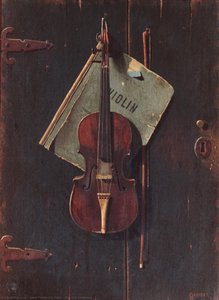
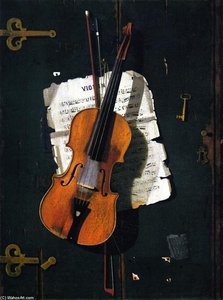
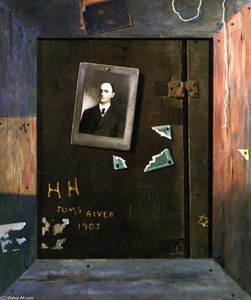
John Frederick Peto was an American artist renowned for his mastery of *trompe l'oeil* painting – a technique that aims to deceive the viewer into believing that painted objects are real. For many years, Peto’s work remained largely forgotten until it was rediscovered in the late 20th century alongside that of fellow trompe l'oeil artist William Harnett. His paintings offer a unique glimpse into everyday life and material culture of the late 19th century.
Early Life and Artistic Training
- Peto received his early artistic training at the Pennsylvania Academy of the Fine Arts, where he studied alongside William Harnett.
- He regularly submitted works to the annual exhibitions at the Philadelphia Academy during his early career.
- In 1889, Peto relocated to Island Heights, New Jersey, a pivotal moment that significantly shaped his artistic style and subject matter.
Artistic Style and Characteristics
- Trompe l'oeil Technique: Peto’s defining characteristic was his exceptional skill in *trompe l'oeil*. He meticulously rendered ordinary objects – pistols, horseshoes, scraps of paper, keys, books – creating an illusion of three-dimensionality on a two-dimensional surface.
- Shallow Space and Composition: His paintings typically feature arrangements of these objects within a shallow space, enhancing the sense of depth and realism.
- Emphasis on Shadow and Texture: Peto paid close attention to shadow play and texture, further contributing to the deceptive quality of his work. He used subtle gradations of light and shade to create the illusion of tangible surfaces.
- Color Palette & Technique: Peto's mature works are characterized by an opaque and powdery texture, often compared to that of Jean-Baptiste-Siméon Chardin, a renowned 18th-century French painter. His color palettes were generally muted and earthy, reflecting the tones of aged objects and worn surfaces.
Rediscovery and Legacy
- Forgotten Years: After moving to Island Heights, Peto largely withdrew from the mainstream art world. He lived a quiet life, supplementing his income with painting for tourists and playing music at local events. His work was essentially forgotten for decades.
- Posthumous Recognition: The rediscovery of Peto’s paintings in the late 20th century brought renewed attention to his talent. Scholars began to recognize his unique contribution to American art.
- Comparison with Harnett: While often compared to William Harnett, Peto's style is generally considered more abstract and emotionally resonant than Harnett's technically brilliant but sometimes rigid approach. Peto’s compositions are less formal, and his objects tend to be older and more worn.
- Museums and Collections: Today, Peto’s paintings can be found in prominent museums across the United States, including the John F. Peto Studio Museum, dedicated to preserving his legacy.
Notable Works
- Take Your Choice (1885)
- Reminiscences of 1865 (1901)
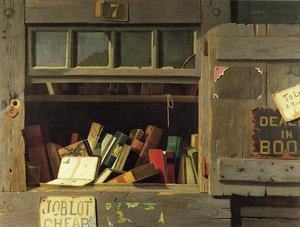
- Job Lot Cheap (1901)
- Still Life with Mug, Pipe and Book (1870)
- Still Life with Oranges and Banana (c. 1880)
For further information on John Frederick Peto's life and work, please visit ArtsDot.com.
John Frederick Peto
1854 - 1907 , United States of America
Quick Facts
- Artistic Movement Or Style: Trompe-l'oeil, Realism
- Artists Who Influenced This Artist: ['Jean-Baptiste-Siméon Chardin']
- Date Of Birth: May 21, 1854
- Date Of Death: November 23, 1907
- Full Name: John Frederick Peto
- Nationality: American
- Notable Artworks:
- Take Your Choice
- Reminiscences of 1865
- Job Lot Cheap
- Still Life with Mug, Pipe and Book
- Still Life with Oranges and Banana
- Place Of Birth: Philadelphia, United States
Related Articles

Echoes of Time: Nostalgia, Technique & Cultural Significance in Vintage Paintings
Explore the captivating world of vintage paintings! Discover key styles, cultural significance & collecting tips from art experts at ArtsDot. Find authentic reproductions and elevate your home décor.

Echoes of Time: Exploring the Enduring Appeal of Vintage Artwork
Explore the captivating world of vintage art! Discover its history, enduring appeal, & how to build your own collection. Expert advice, custom reproductions & museum-quality prints at ArtsDot.

Echoes of Time: Exploring the Enduring Appeal & Historical Context of Vintage Art Prints
Explore the captivating world of vintage art prints! Discover their history, collecting tips & enduring appeal. Expert insights on chromolithography and building a legacy collection with ArtsDot.
William Michael Harnett: Still Life, Realism & the American Pursuit of Materiality
Explore the captivating still lifes of William Michael Harnett, a master of American realism and trompe l'oeil painting. Discover his technique, legacy & the cultural context behind his iconic works.

Echoes of Eras Past: Exploring Themes & Techniques in Vintage Art Collections
Explore the captivating world of vintage art! Discover historical movements, iconic themes & collecting tips. Find handmade reproductions & expert appraisal at ArtsDot.