 Preview
 Send
Send Share
Share
 Details

 Download
 Similars
 X-Ray
X-Ray Diaporama
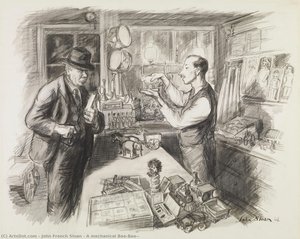
A mechanical Baa-Baa!
 Acrylic
- WallArt
- American Realism
 1906
1906 41.0 x 32.0 cm
 Amon Carter Museum of American Art
 Read More
Hand Made Oil Reproduction
Hand-painted oil on canvas in your size and frame, made to order by our artists. ( Buy Print Buy Image)




P118B $10

P118H $10

P118W $10

P438Z $10

P508JH $12

P508YH $12

P805H $10

P805Z $10

P919BZ $10

P919G $10

P919XJ $10

P959ZH $10

P968JZ $12

W106C $8

W218G $10

W218JH $8

W218Y $10

W307PJ $10

W316G $10

W316PJ $8

W316Y $10

W398PJ $8

W4111J $10

W500HY $15

W500JH $15

W692G $12

W849H $8

W940BG $15

W953PJ $8




Pick from our preset sizes that match the artwork's original proportions.

You may enter your own dimensions to fit a specific frame or space. If your selected size does not match the original image's proportions, we will either crop the artwork or extend the painting with additional hand-painted elements. A digital mockup will be sent for your approval before production begins.
Please note that the on-screen preview does not reflect the actual cropping or extension. Only the mockup will accurately show the final composition.
While custom sizes are available, we recommend selecting a dimension from the predefined list to preserve the original proportions.
After order, ArtsDot.com team will email client for instructions and provide a mockup preview
Worldwide Delivery () in 3/4 weeks instead of standard 5 weeks. (17 August). No compromise on quality.

Free Worldwide Express Shipping

High-Quality Linen Canvas

Full Shipping Insurance

Customs Tax Refund Guarantee

True Color Matching Guarantee

60-Day Return Policy (Defects Only)

100% Money-Back Guarantee

Bulk Discount Offer
 Glass option is only available in size under 110 CM

A mechanical Baa-Baa!
Reproduction Medium
Reproduction Size
-


Total Price
$ 288
Artwork Description
A Mechanical Baa-Baa!: A Glimpse into Victorian Curiosity
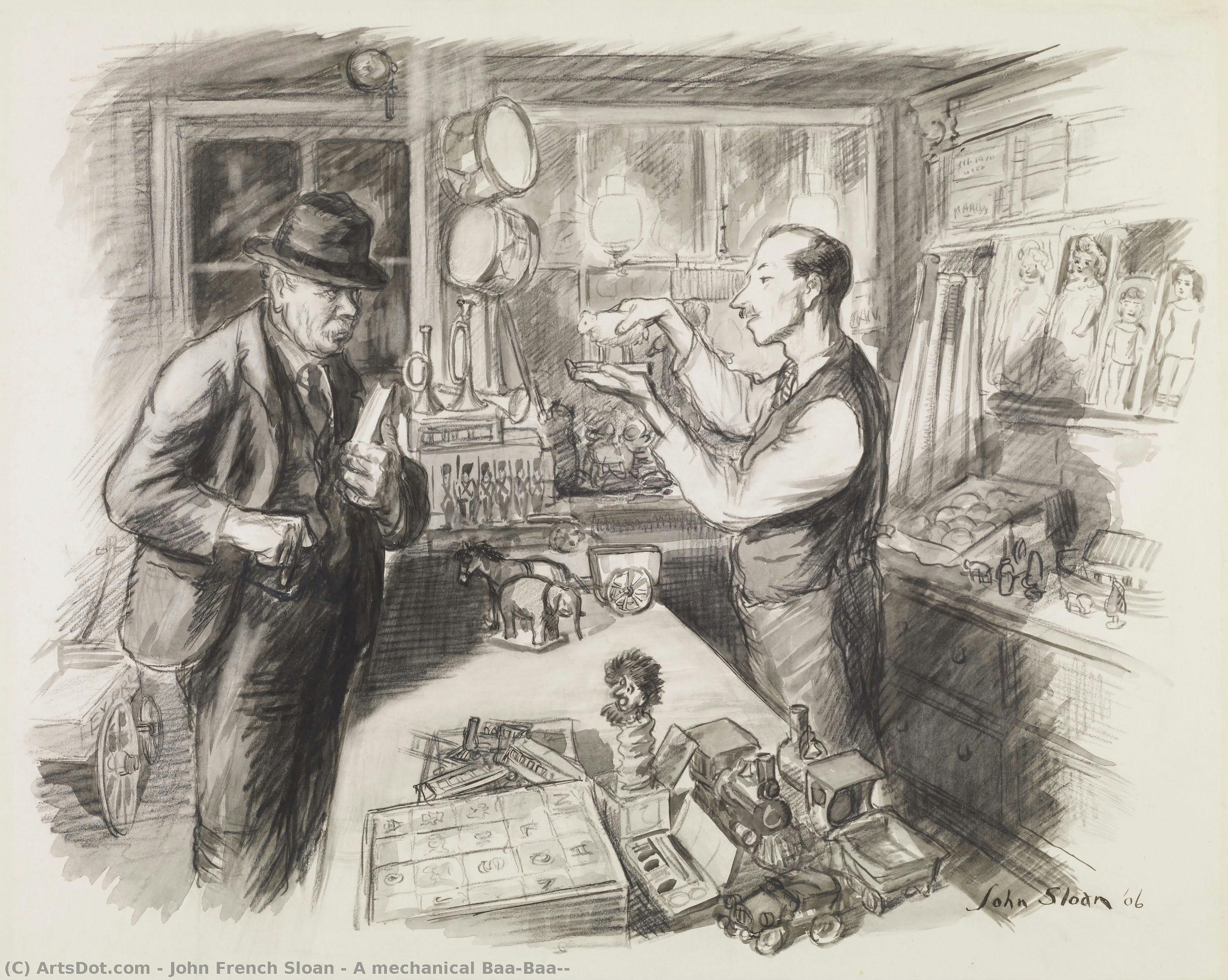
John French Sloan’s “A Mechanical Baa-Baa!” isn't merely a depiction of an antique shop; it’s a meticulously crafted narrative frozen in time, offering a poignant window into the burgeoning fascination with industrial innovation and the quiet rhythms of everyday life at the turn of the 20th century. Painted in 1906, during his tenure as a key figure within the Ashcan School movement – an American realist style that championed the gritty realities of urban existence – Sloan masterfully captures a scene brimming with both mechanical wonder and subtle human connection. The artwork immediately draws the viewer into a densely packed interior, dominated by shelves overflowing with intricate automata, gleaming brass instruments, and curious mechanical toys. Two men, their faces partially obscured yet radiating an air of animated conversation, are positioned at the heart of this captivating tableau, suggesting a shared appreciation for the wonders before them.
A Study in Draftsmanship and Texture
Sloan’s technique is remarkably detailed, relying almost entirely on the skillful manipulation of pencil shading to build up an astonishingly rich tapestry of textures. Hatching, cross-hatching, and stippling are employed with precision, creating a palpable sense of volume and form within each object – from the rough grain of the wooden furniture to the polished sheen of the mechanical components. The artist’s mastery lies in his ability to render these disparate surfaces with convincing realism, inviting the viewer to almost reach out and touch the cool metal or feel the worn texture of the aged wood. The deliberate flattening of perspective, a characteristic of illustrative drawings, serves not as a limitation but rather as a strategic device, directing our attention towards the central figures and immersing us within the scene’s contained world.
Symbolism and the Echoes of Nostalgia
Beyond its technical brilliance, “A Mechanical Baa-Baa!” resonates with layers of symbolic meaning. The title itself – a playful juxtaposition of pastoral imagery (“baa-baa,” evoking sheep) and industrial innovation – hints at a broader commentary on the changing landscape of American society. The antique shop, a repository of forgotten technologies and bygone eras, becomes a symbol of nostalgia, prompting reflection on childhood memories and the enduring allure of intricate mechanisms. The two men engaged in conversation likely discuss these objects, perhaps reminiscing about their own youthful fascination with such wonders. There’s an undeniable sense of mystery surrounding their dialogue; what are they debating? What shared experience connects them to this collection of mechanical marvels?
Historical Context and the Rise of Modernity
To fully appreciate “A Mechanical Baa-Baa!” it’s crucial to consider its historical context. The late 19th and early 20th centuries witnessed an unprecedented surge in technological innovation, fueled by advancements in steam power, electricity, and mass production. Automata, mechanical toys, and intricate clocks became increasingly popular status symbols, reflecting a growing fascination with efficiency, precision, and the promise of a mechanized future. Sloan’s artwork captures this spirit of progress while simultaneously acknowledging the sentimental value associated with traditional craftsmanship and the fading allure of simpler times. The painting stands as a testament to a pivotal moment in history – a transition from a largely agrarian society to an increasingly industrialized world.
This meticulously rendered reproduction offers a captivating glimpse into Sloan’s artistic vision and the social landscape of early 20th-century America. Its rich textures, evocative composition, and subtle symbolism make it a compelling addition to any collection or a striking focal point for interior design, transporting viewers back in time to a world brimming with mechanical wonders and quiet contemplation.
Related Artworks

Artist Biography
Early Life and Artistic Awakening
John French Sloan, born August 2, 1871, in Lock Haven, Pennsylvania, emerged from humble beginnings that profoundly shaped his artistic vision. His childhood was marked by a familial need for support; his father’s struggles with mental health necessitated young John taking on responsibilities beyond his years. This early exposure to the realities of working-class life—a world often overlooked by the established art circles—would become a defining characteristic of his oeuvre. He moved with his family to Philadelphia, where he honed his skills initially not through formal academic training, but as an assistant cashier at Porter and Coates, a bookstore brimming with prints and illustrations. This environment proved formative; it allowed him to study masters like Dürer and Rembrandt, fostering a deep appreciation for draftsmanship and etching techniques. It was here, amidst the commerce of printed images, that Sloan began creating his own art, quietly developing a style rooted in observation and meticulous detail. His early work wasn’t born from privilege or leisure, but from necessity and a keen eye for the world around him—a foundation upon which he would build a remarkable career.The Ashcan School and Urban Realism
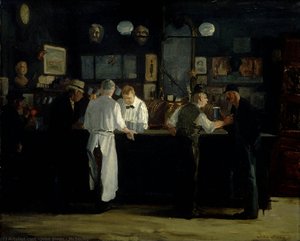
Sloan's trajectory shifted dramatically with his encounter with Robert Henri, a charismatic painter who championed artistic independence and a commitment to portraying everyday life. This connection led Sloan to the heart of what became known as the Ashcan School—a group of artists dedicated to depicting the gritty realities of turn-of-the-century New York City. Alongside William Glackens, George Luks, Everett Shinn, and others, Sloan rejected the idealized landscapes and portraits favored by many of their contemporaries, instead turning their attention to the bustling streets, crowded tenements, and vibrant social life of the city’s poorer neighborhoods. His work became a visual chronicle of this often-ignored world—capturing scenes from McSorley's Bar to women drying their hair on rooftops. Sloan wasn’t merely documenting; he was imbuing these scenes with a sense of empathy and dignity, elevating the lives of ordinary people onto the canvas. He possessed an uncanny ability to capture the *essence* of neighborhood life, the subtle gestures and fleeting moments that revealed the character of a place and its inhabitants. This commitment to realism wasn’t simply aesthetic; it was also informed by his socialist leanings, though he always maintained a distinction between his art and his political beliefs.Style and Influences
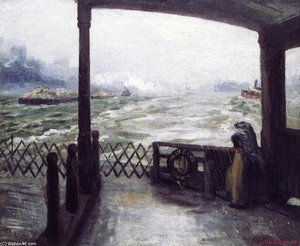
Sloan's artistic style is characterized by a distinctive blend of influences. While rooted in realism, his work wasn’t devoid of stylistic nuance. He employed dark, rich hues—often emphasizing the contrast between light and shadow—to create a sense of drama and atmosphere. His compositions were carefully constructed, often utilizing strong diagonals to draw the viewer's eye into the scene. The influence of etching is evident in his precise linework and attention to detail, even in his paintings. Beyond Henri, Sloan drew inspiration from European masters like Edgar Degas and Honoré Daumier, admiring their ability to capture movement and social commentary. However, he forged a uniquely American voice, one that resonated with the energy and dynamism of New York City. His work wasn’t about grand narratives or historical events; it was about the small moments, the everyday experiences that constituted the fabric of urban life. He found beauty in the mundane, transforming ordinary scenes into compelling works of art. Wake of the Ferry, for example, exemplifies his ability to imbue a seemingly simple scene with emotional depth and symbolic resonance.Legacy and Lasting Impact
John French Sloan’s legacy extends far beyond his contributions to the Ashcan School. He was a prolific artist who worked in various mediums—painting, etching, lithography, drawing—and consistently explored themes of urban life, social justice, and human connection. His commitment to portraying the realities of working-class America paved the way for future generations of artists who sought to challenge conventional artistic norms and engage with social issues. He was a dedicated teacher, sharing his knowledge and passion with countless students throughout his career. Even as artistic tastes evolved, Sloan remained true to his vision, continuing to paint scenes that reflected his deep connection to New York City and its people. His work continues to resonate today, offering a poignant glimpse into a bygone era and reminding us of the enduring power of art to illuminate the human condition. His paintings are not merely historical documents; they are timeless portraits of life, love, and loss. Sloan’s influence can be seen in the works of subsequent realist painters and continues to inspire artists who seek to find beauty and meaning in the everyday world.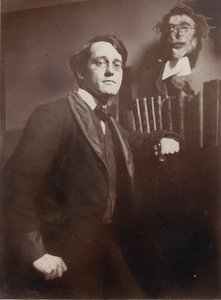
John French Sloan
1871 - 1951 , United States of America
Quick Facts
- Artistic Movement Or Style: Ashcan School, Realism
- Artists Or Movements Influenced By This Artist: ['Future generations of artists']
- Artists Who Influenced This Artist: ['Robert Henri']
- Date Of Birth: August 2, 1871
- Date Of Death: September 7, 1951
- Full Name: John French Sloan
- Nationality: American
- Notable Artworks:
- A mechanical Baa-Baa!
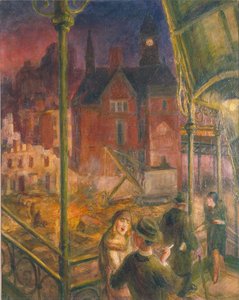
- Fall of the Greenwich Village Bastille
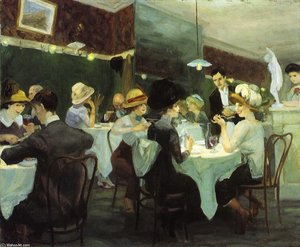
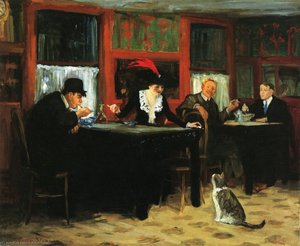
- Chinese Restaurant
- Place Of Birth: Lock Haven, USA
Related Articles
John Sloan: Capturing the Soul of American Urban Life – A Realist Master
Explore the life & art of John Sloan, a key figure of American Realism and the Ashcan School. Discover his evocative NYC scenes, socialist influences, and lasting impact on modern art. Learn more at ArtsDot.
John Singer Sargent's 25 Masterpieces: Portraits & Beyond | ArtsDot
Explore 25 iconic John Singer Sargent paintings – from dazzling portraits to Impressionist landscapes. Discover the stories behind Madame X, El Jaleo & more! Find museum-quality art reproductions and elevate your home decor with ArtsDot.com.

John Constable's Masterpieces: Explore 25 Iconic Landscapes for Your Home
Journey through John Constable's 25 most celebrated landscapes. Explore Romanticism, Dedham Vale & his masterful use of light in iconic paintings like 'Hay Wain'. Find museum-quality art reproductions and elevate your home decor on ArtsDot.com.
The Ashcan School: Realism, Urban Life & the Democratization of American Art
Explore the revolutionary Ashcan School! Discover how artists like Henri & Sloan challenged tradition with gritty realism, capturing urban life in early 20th-century America. Learn about their impact on American art history.
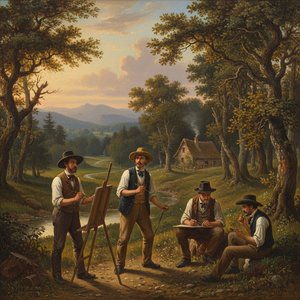
The Barbizon School: Pioneering Realism & the Pastoral Vision in 19th-Century French Painting
Explore the Barbizon School's pivotal role in 19th-century French painting. Discover how these artists revolutionized landscape art with their commitment to Realism and a profound connection to nature. Learn about key figures like Rousseau, Millet & Corot.