 Preview
 Send
Send Share
Share
 Details

 Download
 Similars
 X-Ray
X-Ray Diaporama
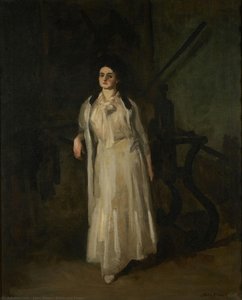
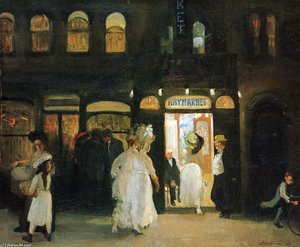
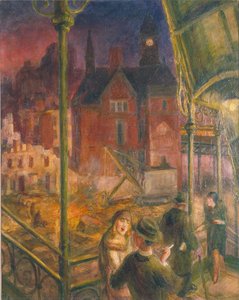
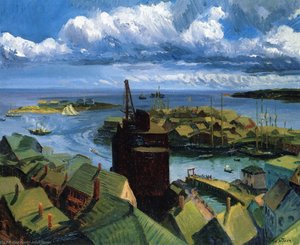
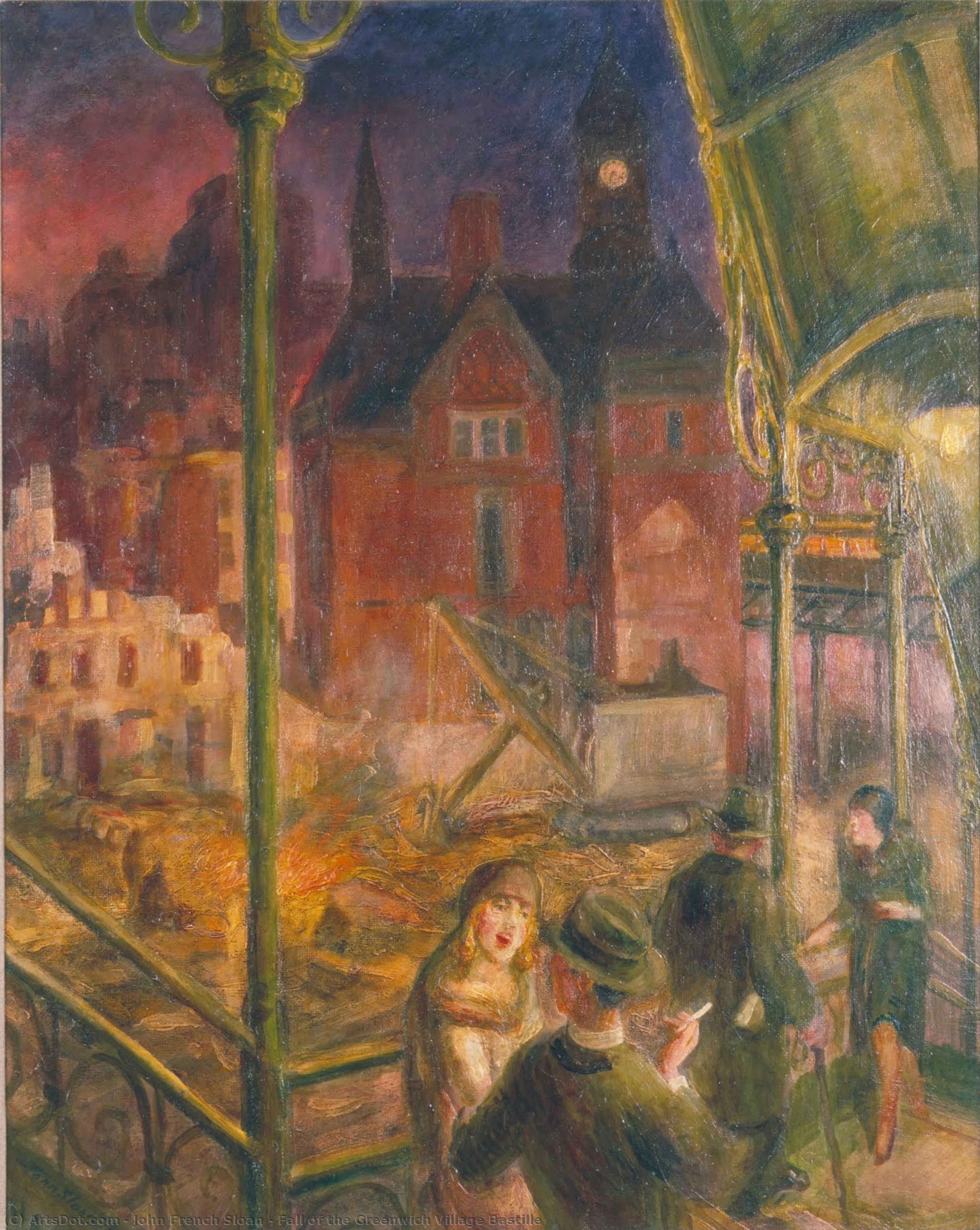
Fall of the Greenwich Village Bastille
 Acrylic On Canvas
- WallArt
- Realism
 1929
1929- 19th Century
 76.0 x 61.0 cm
 Nagoya City Art Museum
 Read More
Hand Made Oil Reproduction
Hand-painted oil on canvas in your size and frame, made to order by our artists. ( Buy Print Buy Image)




P118B $10

P118H $10

P118W $10

P438Z $10

P508JH $12

P508YH $12

P805H $10

P805Z $10

P919BZ $10

P919G $10

P919XJ $10

P959ZH $10

P968JZ $12

W106C $8

W218G $10

W218JH $8

W218Y $10

W307PJ $10

W316G $10

W316PJ $8

W316Y $10

W398PJ $8

W4111J $10

W500HY $15

W500JH $15

W692G $12

W849H $8

W940BG $15

W953PJ $8




Pick from our preset sizes that match the artwork's original proportions.

You may enter your own dimensions to fit a specific frame or space. If your selected size does not match the original image's proportions, we will either crop the artwork or extend the painting with additional hand-painted elements. A digital mockup will be sent for your approval before production begins.
Please note that the on-screen preview does not reflect the actual cropping or extension. Only the mockup will accurately show the final composition.
While custom sizes are available, we recommend selecting a dimension from the predefined list to preserve the original proportions.
After order, ArtsDot.com team will email client for instructions and provide a mockup preview
Worldwide Delivery () in 3/4 weeks instead of standard 5 weeks. (3 September). No compromise on quality.

Free Worldwide Express Shipping

High-Quality Linen Canvas

Full Shipping Insurance

Customs Tax Refund Guarantee

True Color Matching Guarantee

60-Day Return Policy (Defects Only)

100% Money-Back Guarantee

Bulk Discount Offer
 Glass option is only available in size under 110 CM

Fall of the Greenwich Village Bastille
Reproduction Medium
Reproduction Size
-


Total Price
$ 263
John Sloan's "Fall of the Greenwich Village Bastille": A Chronicle of Urban Disquiet
John Sloan’s “Fall of the Greenwich Village Bastille,” painted in 1929, is more than just a depiction of a street scene; it’s a poignant snapshot of early 20th-century New York – a city grappling with rapid industrialization, social unrest, and the evolving role of the individual within an increasingly complex urban landscape. Sloan, a master of capturing the nuances of everyday life, particularly focused on the lives of ordinary people, offering a rare glimpse into the experiences of those often marginalized by the art world’s established hierarchies. This work, rendered in stark black and white, vibrates with a palpable tension, reflecting the anxieties simmering beneath the surface of a city undergoing dramatic transformation.
- Subject Matter: The painting portrays a moment of apparent chaos – a “fall” (likely referencing the storming of the Bastille) unfolding in Greenwich Village. However, Sloan doesn’t present a heroic narrative; instead, he focuses on the reactions and observations of ordinary citizens caught within this event.
- Style: Sloan's style is firmly rooted in Realism, yet infused with a distinctly Modernist sensibility. He meticulously observed his subjects, translating their gestures and expressions onto the canvas with remarkable accuracy.
- Technique: Sloan’s masterful use of light and shadow – hallmarks of his technique – dramatically shapes the scene, guiding the viewer's eye and intensifying the emotional impact. The sharp contrasts heighten the sense of unease and anticipation.
A Window into a Changing Metropolis
"Fall of the Greenwich Village Bastille" is inextricably linked to the historical context of 1929 New York. The decade was marked by significant social and economic shifts, including the rise of labor movements, increased immigration, and growing urban poverty. Sloan’s work reflects these realities, offering a critical commentary on the challenges faced by working-class communities. The inclusion of the clock tower is particularly noteworthy; it symbolizes both time – relentlessly marching forward – and the potential for disruption and change. The building itself represents the established order, now facing an uncertain future.
- Historical Context: Painted just before the onset of the Great Depression, the painting foreshadows the economic hardship that would soon engulf the nation.
- Social Commentary: Sloan’s focus on ordinary people highlights the social inequalities prevalent in early 20th-century America.
Symbolism and Emotional Resonance
Beyond its historical significance, the painting is rich in symbolic detail. The woman seated near the center, seemingly detached from the commotion, represents a sense of weary resignation – perhaps reflecting the disillusionment felt by many during this period. The umbrella, a subtle yet powerful element, suggests both protection and vulnerability, hinting at the unpredictable nature of life and the potential for disruption. The overall composition evokes a feeling of unease and anticipation, inviting viewers to contemplate the complexities of urban life and the human condition.
- The Umbrella: Symbolizes protection from the elements or perhaps a shield against the chaos unfolding around it.
- Compositional Elements: The arrangement of figures – some observing, others participating – creates a dynamic tension that draws the viewer into the scene.
Dimensions and Reproduction
This hand-painted reproduction faithfully captures the essence of Sloan’s original masterpiece. Measuring 76 x 61 cm, it is ideally suited for a variety of interior spaces, from formal living rooms to contemporary studios. The meticulous attention to detail – the textures of clothing, the expressions on faces, the play of light and shadow – ensures that this reproduction will be a captivating addition to any collection. Code: JS-001
Related Artworks



Artist Biography
Early Life and Artistic Awakening
John French Sloan, born August 2, 1871, in Lock Haven, Pennsylvania, emerged from humble beginnings that profoundly shaped his artistic vision. His childhood was marked by a familial need for support; his father’s struggles with mental health necessitated young John taking on responsibilities beyond his years. This early exposure to the realities of working-class life—a world often overlooked by the established art circles—would become a defining characteristic of his oeuvre. He moved with his family to Philadelphia, where he honed his skills initially not through formal academic training, but as an assistant cashier at Porter and Coates, a bookstore brimming with prints and illustrations. This environment proved formative; it allowed him to study masters like Dürer and Rembrandt, fostering a deep appreciation for draftsmanship and etching techniques. It was here, amidst the commerce of printed images, that Sloan began creating his own art, quietly developing a style rooted in observation and meticulous detail. His early work wasn’t born from privilege or leisure, but from necessity and a keen eye for the world around him—a foundation upon which he would build a remarkable career.The Ashcan School and Urban Realism
Sloan's trajectory shifted dramatically with his encounter with Robert Henri, a charismatic painter who championed artistic independence and a commitment to portraying everyday life. This connection led Sloan to the heart of what became known as the Ashcan School—a group of artists dedicated to depicting the gritty realities of turn-of-the-century New York City. Alongside William Glackens, George Luks, Everett Shinn, and others, Sloan rejected the idealized landscapes and portraits favored by many of their contemporaries, instead turning their attention to the bustling streets, crowded tenements, and vibrant social life of the city’s poorer neighborhoods. His work became a visual chronicle of this often-ignored world—capturing scenes from McSorley's Bar to women drying their hair on rooftops. Sloan wasn’t merely documenting; he was imbuing these scenes with a sense of empathy and dignity, elevating the lives of ordinary people onto the canvas. He possessed an uncanny ability to capture the *essence* of neighborhood life, the subtle gestures and fleeting moments that revealed the character of a place and its inhabitants. This commitment to realism wasn’t simply aesthetic; it was also informed by his socialist leanings, though he always maintained a distinction between his art and his political beliefs.Style and Influences
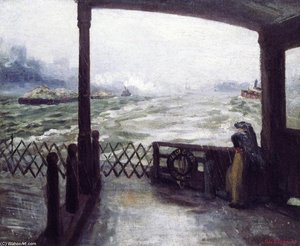
Sloan's artistic style is characterized by a distinctive blend of influences. While rooted in realism, his work wasn’t devoid of stylistic nuance. He employed dark, rich hues—often emphasizing the contrast between light and shadow—to create a sense of drama and atmosphere. His compositions were carefully constructed, often utilizing strong diagonals to draw the viewer's eye into the scene. The influence of etching is evident in his precise linework and attention to detail, even in his paintings. Beyond Henri, Sloan drew inspiration from European masters like Edgar Degas and Honoré Daumier, admiring their ability to capture movement and social commentary. However, he forged a uniquely American voice, one that resonated with the energy and dynamism of New York City. His work wasn’t about grand narratives or historical events; it was about the small moments, the everyday experiences that constituted the fabric of urban life. He found beauty in the mundane, transforming ordinary scenes into compelling works of art. Wake of the Ferry, for example, exemplifies his ability to imbue a seemingly simple scene with emotional depth and symbolic resonance.Legacy and Lasting Impact
John French Sloan’s legacy extends far beyond his contributions to the Ashcan School. He was a prolific artist who worked in various mediums—painting, etching, lithography, drawing—and consistently explored themes of urban life, social justice, and human connection. His commitment to portraying the realities of working-class America paved the way for future generations of artists who sought to challenge conventional artistic norms and engage with social issues. He was a dedicated teacher, sharing his knowledge and passion with countless students throughout his career. Even as artistic tastes evolved, Sloan remained true to his vision, continuing to paint scenes that reflected his deep connection to New York City and its people. His work continues to resonate today, offering a poignant glimpse into a bygone era and reminding us of the enduring power of art to illuminate the human condition. His paintings are not merely historical documents; they are timeless portraits of life, love, and loss. Sloan’s influence can be seen in the works of subsequent realist painters and continues to inspire artists who seek to find beauty and meaning in the everyday world.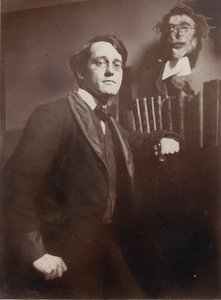
John French Sloan
1871 - 1951 , United States of America
Quick Facts
- Artistic Movement Or Style: Ashcan School, Realism
- Artists Or Movements Influenced By This Artist: ['Future generations of artists']
- Artists Who Influenced This Artist: ['Robert Henri']
- Date Of Birth: August 2, 1871
- Date Of Death: September 7, 1951
- Full Name: John French Sloan
- Nationality: American
- Notable Artworks:
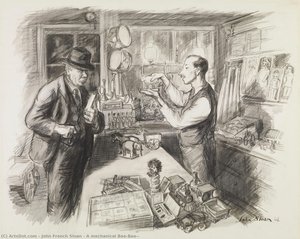
- A mechanical Baa-Baa!
- Fall of the Greenwich Village Bastille
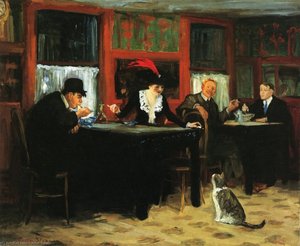
- Chinese Restaurant
- Place Of Birth: Lock Haven, USA
Related Articles

Giclée Prints: Archival Quality & Aesthetic Nuances for the Discerning Collector
Explore the world of giclée prints with ArtsDot. Learn about archival quality, aesthetic nuances & investment potential. Expert guidance for discerning art collectors seeking museum-quality reproductions and lasting value.

Dark Masterpieces: 10 Iconic Paintings Dominated by Black Tones |
Explore 10 iconic paintings dominated by black tones, from Rembrandt’s chiaroscuro to Goya's dark expressions. Discover the stories behind these masterpieces & find museum-quality art reproductions for your home at .

The Enduring Legacy of Fine Art Prints: Technique, History & Aesthetic Impact
Explore the rich history & techniques of fine art prints. Discover investment potential, assess authenticity, and learn how to preserve your collection with expert guidance. Trusted insights for discerning collectors.

Echoes of Time: Exploring the Enduring Appeal & Historical Context of Vintage Art Prints
Explore the captivating world of vintage art prints! Discover their history, collecting tips & enduring appeal. Expert insights on chromolithography and building a legacy collection with ArtsDot.

The Enduring Legacy of Printmaking: Techniques, Themes & Artistic Innovation Across Centuries
Explore the rich history of printmaking with ArtsDot. Discover techniques from intaglio to lithography, learn about collecting valuable prints & find museum-quality reproductions. Expert insights for art enthusiasts and collectors.