 Preview
 Send
Send Share
Share
 Details

 Download
 Similars
 X-Ray
X-Ray Diaporama
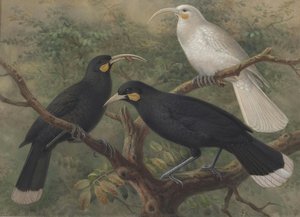
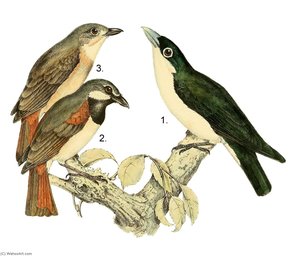
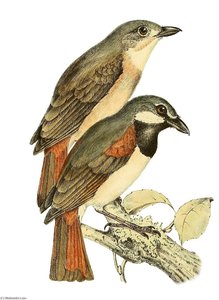
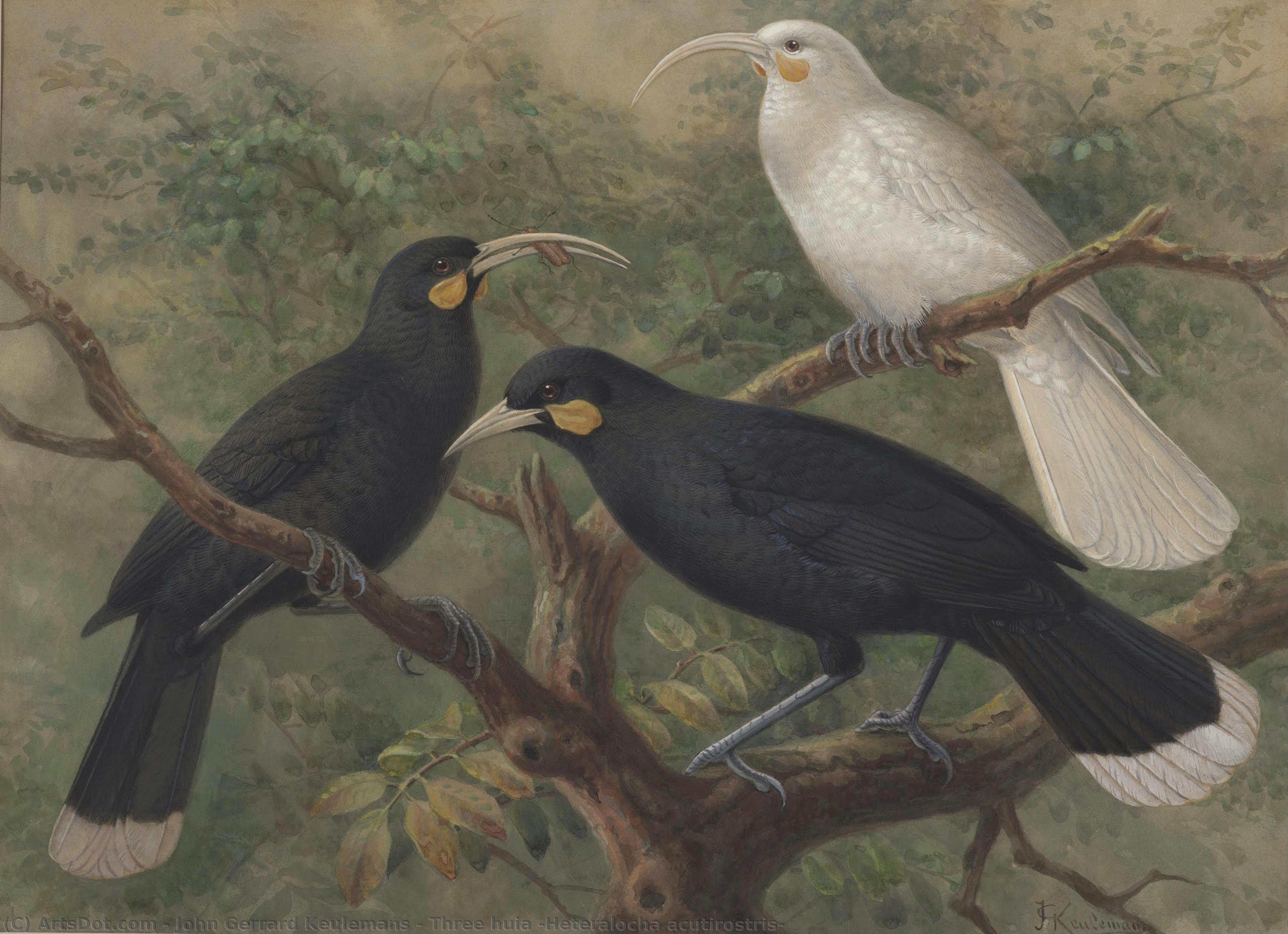
Three huia (Heteralocha acutirostris)


 Read More
Hand Made Oil Reproduction
Hand-painted oil on canvas in your size and frame, made to order by our artists. ( Buy Print Buy Image)




P118B $10

P118H $10

P118W $10

P438Z $10

P508JH $12

P508YH $12

P805H $10

P805Z $10

P919BZ $10

P919G $10

P919XJ $10

P959ZH $10

P968JZ $12

W106C $8

W218G $10

W218JH $8

W218Y $10

W307PJ $10

W316G $10

W316PJ $8

W316Y $10

W398PJ $8

W4111J $10

W500HY $15

W500JH $15

W692G $12

W849H $8

W940BG $15

W953PJ $8




Pick from our preset sizes that match the artwork's original proportions.

You may enter your own dimensions to fit a specific frame or space. If your selected size does not match the original image's proportions, we will either crop the artwork or extend the painting with additional hand-painted elements. A digital mockup will be sent for your approval before production begins.
Please note that the on-screen preview does not reflect the actual cropping or extension. Only the mockup will accurately show the final composition.
While custom sizes are available, we recommend selecting a dimension from the predefined list to preserve the original proportions.
After order, ArtsDot.com team will email client for instructions and provide a mockup preview
Worldwide Delivery () in 3/4 weeks instead of standard 5 weeks. (17 August). No compromise on quality.

Free Worldwide Express Shipping

High-Quality Linen Canvas

Full Shipping Insurance

Customs Tax Refund Guarantee

True Color Matching Guarantee

60-Day Return Policy (Defects Only)

100% Money-Back Guarantee

Bulk Discount Offer
 Glass option is only available in size under 110 CM

Three huia (Heteralocha acutirostris)
Reproduction Medium
Reproduction Size
-


Total Price
$ 263
Artwork Description
Johannes Gerardus Keulemans: A Life in Feather and Brush
Johannes Gerardus Keulemans (1842-1912) was a Dutch bird illustrator who achieved international renown during the Victorian era, leaving an indelible mark on ornithological art. Born in Rotterdam, his fascination with the natural world began early, nurtured by mentorship from Hermann Schlegel, director of Leiden’s Natural History Museum, who recognized and championed Keulemans' artistic talent. This formative relationship propelled him towards a distinguished career, culminating in a lifetime dedicated to capturing the beauty and intricacies of avian life through meticulously crafted watercolor paintings and lithograph prints.- Early Life & Education: From a young age, Keulemans exhibited an unwavering passion for animal specimens, fueling his artistic inclinations. Schlegel’s guidance proved pivotal, encouraging him to pursue illustration as a vocation and sending him on the transformative 1864 expedition to West Africa – an experience that profoundly shaped his observational skills and broadened his understanding of diverse ecosystems.
- Move to England & Artistic Development: In 1869, Richard Bowdler Sharpe skillfully persuaded Keulemans to relocate to London, securing him a position within the burgeoning British ornithological community. This pivotal move cemented his artistic trajectory, establishing him as a sought-after illustrator and fostering collaborations that would produce some of the most celebrated works in Victorian natural history.
- Distinctive Style: Keulemans’ artistic style was characterized by an unwavering commitment to scientific accuracy blended seamlessly with lyrical sensitivity. He approached each illustration with meticulous detail, striving to faithfully represent avian morphology while simultaneously conveying a profound appreciation for their aesthetic qualities.
The Creation of “Three Huia”
Keulemans’ masterpiece, “Three Huia,” exemplifies this unique artistic vision. Commissioned by Sir Walter Lawry Buller for his monumental *A History of the Birds of New Zealand*, Keulemans undertook a remarkable undertaking – to depict three male huia (Heteralocha acutirostris) perched on branches within a dense foliage setting without ever venturing to New Zealand itself. Instead, he relied upon stuffed birds and specimens provided by Buller, skillfully translating observation into artistic representation. The process began with preliminary sketches for Buller’s approval, followed by the creation of a watercolor painting – which served as the basis for the lithograph print. This painstaking technique ensured that the final product adhered to the highest standards of scientific precision while simultaneously capturing the ethereal beauty of these extinct birds.Scientific Accuracy Meets Artistic Lyricism
Keulemans’ artistic philosophy reflected a deliberate paradox: he recognized that faithfully reproducing birds in color was inherently challenging, stating that “you cannot draw them true to life and at the same time perfectly in harmony with the rules of the art of painting.” Yet, he persevered in blending scientific description with evocative artistry. The resulting watercolor captures the distinctive plumage of three huia – a male and two females distinguished by their elongated, curved bills – rendered with remarkable detail and subtle tonal variations. Furthermore, the inclusion of a snowy white female huia—a rare albino—adds an element of serendipitous beauty to the composition.Historical Context & Significance
“Three Huia” emerged during the Victorian era’s fascination with scientific exploration and artistic representation. Its creation coincided with Buller's ambitious project to document New Zealand’s avian fauna, highlighting the collaborative spirit of the time. While Keulemans’ work initially garnered acclaim for its scientific rigor, it gained belated recognition in the twentieth century as a testament to his ability to elevate observation into art—a rare accomplishment that continues to inspire admiration and appreciation among collectors and connoisseurs alike. The painting's enduring legacy resides not only in its meticulous depiction of ornithological detail but also in its subtle infusion of lyrical emotion, capturing the essence of New Zealand’s vanished avian treasures.Related Artworks

Artist Biography
Johannes Gerardus Keulemans: A Life in Feather and Brush
Early Life and Education
- Born: June 8, 1842, Rotterdam, Netherlands.
- From a young age, Keulemans demonstrated an interest in the natural world, collecting animal specimens.
- This early passion led him to connect with Hermann Schlegel, director of the Natural History Museum in Leiden, who became a crucial mentor.
- Schlegel encouraged Keulemans’s artistic talent and sent him on an expedition to West Africa in 1864, providing invaluable field experience.
Move to England and Artistic Development
- In 1869, Richard Bowdler Sharpe persuaded Keulemans to move to England to illustrate his monumental work, *Monograph of the Alcedinidae*, or Family of Kingfishers.
- This marked a turning point in Keulemans’s career, establishing him within the British ornithological community.
- He remained in England for the rest of his life, becoming a highly sought-after illustrator.
- Keulemans developed a distinctive style characterized by meticulous detail and accuracy, essential qualities for scientific illustration.
Major Works and Collaborations
- Keulemans illustrated numerous significant ornithological publications throughout his career.
- Notable works include:
- Buller’s *A History of the Birds of New Zealand* (1873, 1888): Showcasing the unique avian fauna of New Zealand.
- Legge’s *History of the Birds of Ceylon* (1880): A comprehensive study of Sri Lankan birds.
- Elliot’s *Monograph of the Bucerotidae* (Hornbills) (1887–1892): Detailed illustrations of hornbill species.
- Seebohm’s *Monograph of the Turdidae* (Thrushes) (1902): A thorough examination of thrush varieties.
- Godman’s *Monograph of the Petrels* (1907–1910): Featuring over one hundred plates contributed by Keulemans.
- He regularly provided illustrations for journals like The Ibis and Proceedings of the Zoological Society.
Artistic Style and Techniques
- Keulemans’s work is renowned for its consistency, maintaining a high level of detail throughout his career.
- He primarily employed lithography, allowing for the creation of vivid and lifelike depictions through depth and tone.
- The finished prints were often hand-colored by skilled artisans, though the accuracy of these colorations sometimes faced criticism.
- His ability to capture accurate representations of birds earned him prominence in the field of scientific illustration.
Personal Life and Later Years
- Keulemans married twice and had fifteen children, though only nine reached adulthood.
- He also pursued interests beyond ornithology, writing on topics related to spirituality and claiming to experience premonitions.
- Death: March 29, 1912, Ilford, Essex (now Greater London). He is buried in Buckingham Road Cemetery, Ilford, in an unmarked grave.
Legacy and Historical Significance
- Keulemans produced an estimated 4,000-5,000 published illustrations throughout his career.
- His work remains highly valued for its scientific accuracy and artistic merit.
- He is credited with describing the Cape Verde swamp-warbler (*Calamodyta brevipennis*).
- Keulemans’s illustrations continue to be studied and admired by ornithologists, artists, and collectors alike, solidifying his place as a significant figure in 19th-century natural history art.
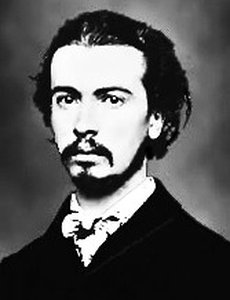
John Gerrard Keulemans
1842 - 1912
Quick Facts
- Birth Date: 1842-06-08
- Birth Place: Rotterdam, Netherlands
- Death Date: 1912-03-29
- Influenced: None, 'influenced by': 'Hermann Schlegel, Richard Bowdler Sharpe', 'movement': 'Scientific Illustration, Ornithological Art', 'name': 'John Gerrard Keulemans', 'nationality': 'Dutch', 'notable works': [
Related Articles
Kay Rasmus Nielsen: A Golden Age Illustrator's Enchanting Legacy of Symbolism & Narrative
Explore the captivating world of Kay Rasmus Nielsen, a celebrated Golden Age illustrator renowned for his Art Nouveau fairy tale art & Disney contributions. Discover his unique style, enduring legacy, and how to collect his enchanting works.

Angelo Chiacchio: A Mid-Century American Illustration Master & the Rise of Commercial Art
Explore the captivating world of Angelo Chiacchio, a master of mid-century American illustration. Discover his evolution, signature style, and lasting impact on commercial art & design. Learn about his legacy at the Museum of American Illustration.
Edmund Dulac: A Master of Golden Age Illustration – Exploring Myth, Symbolism & Art Nouveau Legacy
Explore the captivating world of Edmund Dulac, a master of Golden Age illustration! Discover his enchanting fairy tales, Art Nouveau style, and lasting influence on art & design. Learn about *The Rubaiyat* and more.
The Refined Aesthetic of Victorian Illustration: A Study in Narrative & Technique
Explore the captivating world of Victorian illustration! Discover Pre-Raphaelite influences, key artists like Rossetti & Stephens, and the era's rich narrative detail. A deep dive for art enthusiasts.
Feathered Visions: A Historical & Artistic Exploration of Birds in Painting
Explore the rich history of birds in painting! Discover symbolism, artistic movements & master artists like Audubon. High-quality reproductions available at ArtsDot.