 Preview
 Send
Send Share
Share
 Details

 Download
 Similars
 X-Ray
X-Ray Diaporama
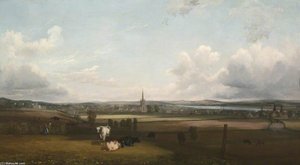
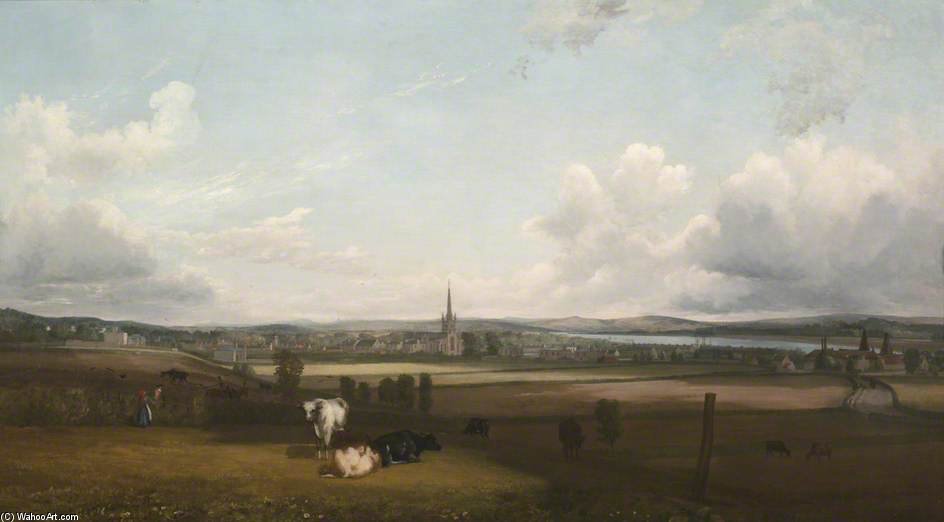
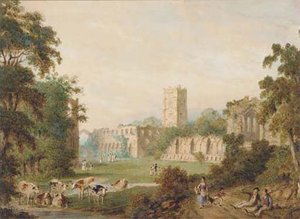
A Prospect Of Alloa, Clackmannanshire From The North Looking Towards The River Forth

 Read More
Hand Made Oil Reproduction
Hand-painted oil on canvas in your size and frame, made to order by our artists. ( Buy Print Buy Image)




P118B $10

P118H $10

P118W $10

P438Z $10

P508JH $12

P508YH $12

P805H $10

P805Z $10

P919BZ $10

P919G $10

P919XJ $10

P959ZH $10

P968JZ $12

W106C $8

W218G $10

W218JH $8

W218Y $10

W307PJ $10

W316G $10

W316PJ $8

W316Y $10

W398PJ $8

W4111J $10

W500HY $15

W500JH $15

W692G $12

W849H $8

W940BG $15

W953PJ $8




Pick from our preset sizes that match the artwork's original proportions.

You may enter your own dimensions to fit a specific frame or space. If your selected size does not match the original image's proportions, we will either crop the artwork or extend the painting with additional hand-painted elements. A digital mockup will be sent for your approval before production begins.
Please note that the on-screen preview does not reflect the actual cropping or extension. Only the mockup will accurately show the final composition.
While custom sizes are available, we recommend selecting a dimension from the predefined list to preserve the original proportions.
After order, ArtsDot.com team will email client for instructions and provide a mockup preview
Worldwide Delivery () in 3/4 weeks instead of standard 5 weeks. (24 August). No compromise on quality.

Free Worldwide Express Shipping

High-Quality Linen Canvas

Full Shipping Insurance

Customs Tax Refund Guarantee

True Color Matching Guarantee

60-Day Return Policy (Defects Only)

100% Money-Back Guarantee

Bulk Discount Offer
 Glass option is only available in size under 110 CM

A Prospect Of Alloa, Clackmannanshire From The North Looking Towards The River Forth
Reproduction Medium
Reproduction Size
-


Total Price
$ 263
Related Artworks
Artist Biography
A Romantic Vision of the British Landscape
The annals of nineteenth-century art are graced by figures who sought to capture not merely the physical reality of the world, but its very soul. John Heaviside Clark (1771–1863) was such an artist, a master of the Romantic era whose brushstrokes breathed life into the rugged terrains of Britain and beyond. Born in Alloa, Clackmannanshire, Scotland, Clark’s early life was steeped in the atmospheric beauty of his homeland, a foundation that would later inform his profound connection to the natural world. His artistic journey began with formal training under William Nisbet Payne at the Edinburgh Academy, yet his true education occurred amidst the windswept hills and tranquil valleys he so loved. As he matured, Clark ventured into Europe, absorbing the classical grandeur of masters like Claude Lorrain and Nicolas Poussin, whose use of light and structured composition would become pillars of his own aesthetic language.
Clark’s reputation was not merely built upon his ability to replicate scenery, but on his capacity to evoke emotion through the medium of watercolor and aquatint. He possessed a rare, meticulous precision, particularly in his mastery of watercolor pigments, which allowed him to achieve subtle tonal gradulations and a luminous depth that seemed to radiate from within the paper itself. His landscapes often featured a delicate balance between the wildness of nature and the quiet presence of humanity. In many of his most celebrated works, one finds small, carefully placed figures—shepherds or farmers—who act as silent witnesses to the vastness of the landscape. These figures were never mere ornaments; they served as symbols of a harmonious existence, representing the symbiotic relationship between man and the earth that defined the Romantic spirit.
The Legacy of Waterloo Clark
Beyond the serene vistas of his studio work, Clark’s life was marked by moments of extraordinary historical proximity. He earned the evocative moniker "Waterloo Clark" due to his presence on the battlefield following the Battle of Waterloo, where he captured sketches of the aftermath. This ability to transition from the quietude of a Scottish glen to the visceral reality of historical upheaval speaks to the breadth of his artistic vision. His technical versatility extended into the realm of printmaking, where his skill as an aquatint engraver allowed him to disseminate his visions of seascapes and landscapes to a wider audience, bridging the gap between fine art and accessible print culture.
His contributions to the art world were both creative and pedagogical. Clark was not only a practitioner but also a scholar of his craft, having designed and written Elements of Drawing and Painting in Water Colours, a work that reflected his deep understanding of light, shadow, and medium. His published collections, such as Views in Scotland, released under the patronage of George IV, solidified his status as a chronicler of national beauty. Through his eyes, we see a Britain defined by its atmospheric perspective—where distant mountains dissolve into soft blues and foreground textures are rendered with breathtaking clarity.
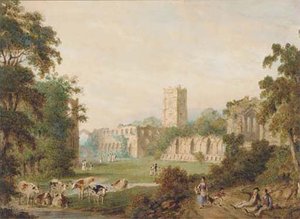
The enduring significance of John Heaviside Clark lies in his ability to marry the classical discipline of the past with the emotional intensity of the Romantic movement. His works remain vital touchstones for anyone seeking to understand the nineteenth-century fascination with the sublime. Whether depicting the haunting ruins of Fountains Abbey or the pastoral tranquility of Alloa, Clark’s legacy is one of light, memory, and an eternal reverence for the landscape.
john heaviside clark
1771 - 1863 , United Kingdom
Quick Facts
- Artistic Movement Or Style: Romanticism
- Date Of Birth: 1771
- Full Name: John Heaviside Clark
- Nationality: British
- Notable Artworks:
- Fountains Abbey, Yorkshire
- A Prospect Of Alloa, Clackmannanshire From The North Looking Towards The River Forth
- Field Sports
- Place Of Birth: United Kingdom
Related Articles

John Constable's Masterpieces: Explore 25 Iconic Landscapes for Your Home
Journey through John Constable's 25 most celebrated landscapes. Explore Romanticism, Dedham Vale & his masterful use of light in iconic paintings like 'Hay Wain'. Find museum-quality art reproductions and elevate your home decor on ArtsDot.com.
Evoking Nature's Sublime: A Comprehensive Exploration of 19th-Century Landscape Painting
Explore the captivating world of 19th-century landscape painting! Discover renowned artists like Friedrich & Monet, key movements, and find the perfect artwork to bring nature's serenity into your home. Expert insights at ArtsDot.
Cultivating Visions: A Historical Journey Through Rural Landscapes in Art
Explore the rich history of rural landscape painting with ArtsDot. Discover Impressionist masterpieces, key artists & movements. Find your perfect serene artwork and bring nature's beauty home.

Romantic Landscapes: 10 Masterpieces for Your Home | ArtsDot
Journey through 10 Romantic landscape masterpieces by Friedrich, Turner & Cole. Explore emotional art, sublime nature scenes & iconic 19th-century paintings. Find museum-quality reproductions for your home at ArtsDot.com – discover the full collection online!

Evocations of Place: A Historical Journey Through Landscape Art
Explore the rich history of landscape art with ArtsDot. Discover renowned artists, movements like Impressionism & Romanticism, and expert guidance for collecting timeless pieces. Find your perfect serene escape today!