 Preview
 Send
Send Share
Share
 Details

 Download
 Similars
 X-Ray
X-Ray Diaporama
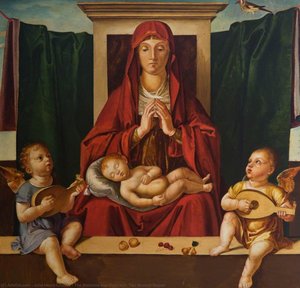
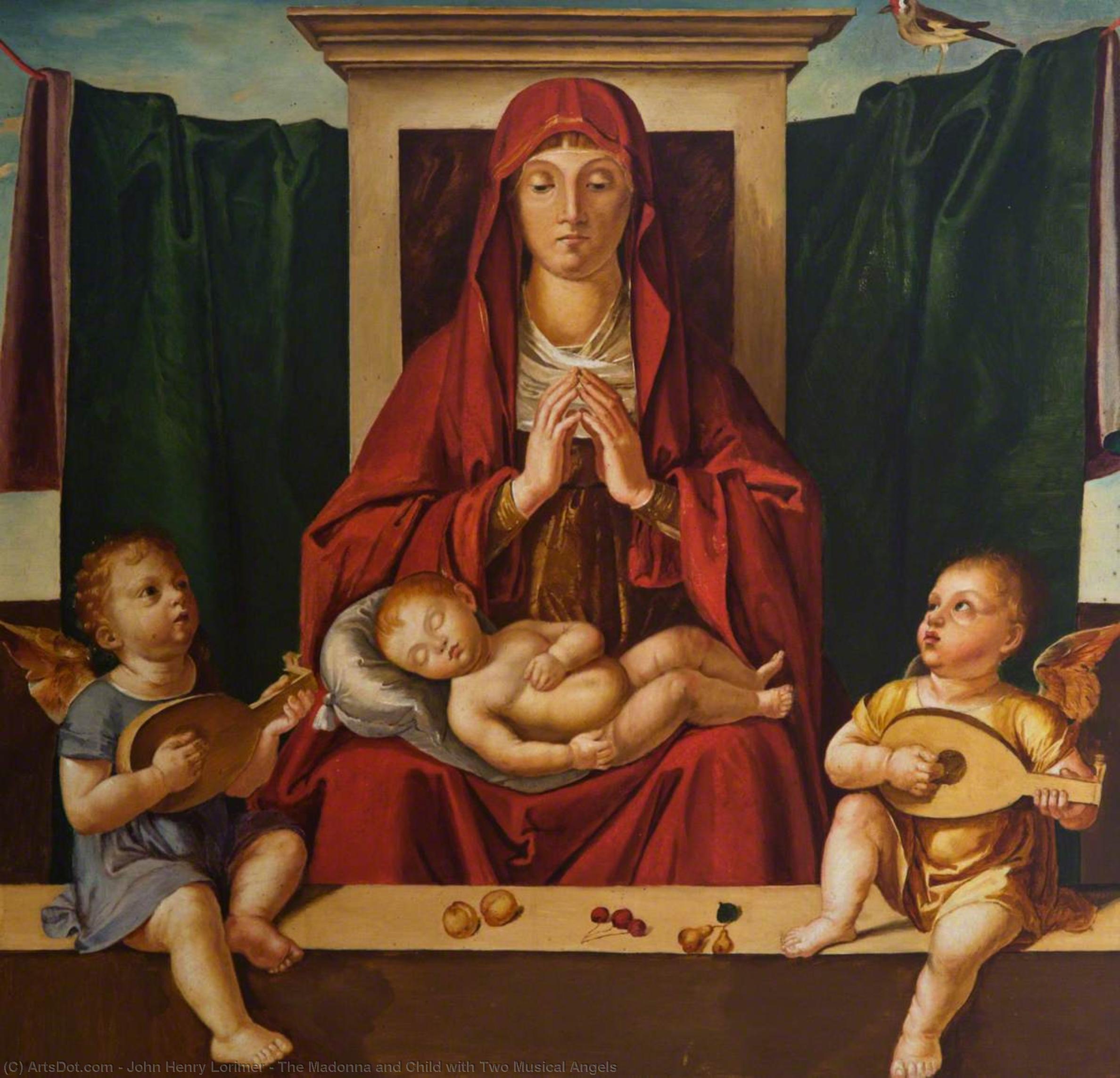
The Madonna and Child with Two Musical Angels
 Oil
Oil- WallArt
 19th Century
 78.0 x 81.0 cm
 The National Trust For Scotland
 Read More
Hand Made Oil Reproduction
Hand-painted oil on canvas in your size and frame, made to order by our artists. ( Buy Print Buy Image)




P118B $10

P118H $10

P118W $10

P438Z $10

P508JH $12

P508YH $12

P805H $10

P805Z $10

P919BZ $10

P919G $10

P919XJ $10

P959ZH $10

P968JZ $12

W106C $8

W218G $10

W218JH $8

W218Y $10

W307PJ $10

W316G $10

W316PJ $8

W316Y $10

W398PJ $8

W4111J $10

W500HY $15

W500JH $15

W692G $12

W849H $8

W940BG $15

W953PJ $8




Pick from our preset sizes that match the artwork's original proportions.

You may enter your own dimensions to fit a specific frame or space. If your selected size does not match the original image's proportions, we will either crop the artwork or extend the painting with additional hand-painted elements. A digital mockup will be sent for your approval before production begins.
Please note that the on-screen preview does not reflect the actual cropping or extension. Only the mockup will accurately show the final composition.
While custom sizes are available, we recommend selecting a dimension from the predefined list to preserve the original proportions.
After order, ArtsDot.com team will email client for instructions and provide a mockup preview
Worldwide Delivery () in 3/4 weeks instead of standard 5 weeks. (25 August). No compromise on quality.

Free Worldwide Express Shipping

High-Quality Linen Canvas

Full Shipping Insurance

Customs Tax Refund Guarantee

True Color Matching Guarantee

60-Day Return Policy (Defects Only)

100% Money-Back Guarantee

Bulk Discount Offer
 Glass option is only available in size under 110 CM

The Madonna and Child with Two Musical Angels
Reproduction Medium
Reproduction Size
-


Total Price
$ 263
Artwork Description
A Celestial Symphony in Color
In the tender embrace of The Madonna and Child with Two Musical Angels, we are invited into a realm where the divine meets the earthly through a breathtaking display of devotion and melody. This exquisite work by the Scottish master John Henry Lorimer captures a moment of profound serenity, centered around the Virgin Mary as she gazes downward with maternal tenderness toward her child. Flanking this sacred trio are two celestial beings, their presence announced not by words, but by the rhythmic pulse of a drum and the lyrical weeping of a violin. The composition creates a visual harmony that mirrors the auditory sweetness of the music being played, drawing the viewer into a meditative state of peace.
The artist employs a masterful use of color contrast to direct the eye and evoke emotion. The Virgin Mary is draped in a rich, vibrant red dress—a hue that symbolizes both her passion and her sacrificial role—which stands in striking opposition to the ethereal, luminous white garments worn by the angels. This interplay of light and shadow, characteristic of Lorimer’s refined technique, lends a sculptural quality to the figures, making them appear almost tangible within their heavenly setting. Scattered throughout the scene, unexpected elements such as apples, oranges, and bananas introduce a touch of earthly abundance, grounding the celestial event in a sense of tangible, tactile reality.
Symbolism and the Art of Domestic Grace
Beyond its immediate beauty, the painting is a tapestry of symbolic meaning. The inclusion of fruit—the apple, the orange, and the banana—serves as a complex metaphor; while the apple often represents the fall of man, its placement alongside such joyful music suggests a theme of redemption and the sweetness of life found through divine grace. Even the small birds perched on either side of the composition act as silent witnesses to this holy moment, representing the soul's connection to nature and the omnipresence of the divine in the smallest details of creation.
For the discerning collector or interior designer, this piece offers more than mere decoration; it provides a focal point of profound emotional depth. The painting’s ability to blend the grandeur of religious iconography with the intimate warmth of a domestic scene makes it an incredibly versatile masterpiece. Whether placed in a grand gallery setting or used to anchor the quiet elegance of a private study, The Madonna and Child with Two Musical Angels radiates a timeless sophistication. It is a work that does not simply occupy space on a wall but breathes life into a room, offering a continuous invitation to contemplate beauty, music, and the enduring power of love.
Related Artworks


Artist Biography
The Soul of the Scottish Canvas: The Life and Legacy of John Henry Lorimer
In the golden age of late Victorian and Edwardian painting, few artists captured the quiet dignity of domesticity and the architectural grandeur of Scotland with as much grace as John Henry Lorimer. Born in Edinburgh in 1856 into a family of profound intellectual prestige, Lorimer was destined for a life shaped by both academic rigor and creative passion. As the son of James Lorimer, a distinguished professor at Edinburgh University, his early years were steeped in the scholarly atmosphere of Scotland’s capital. This foundation of discipline and observation would later become the bedrock of his artistic technique, allowing him to approach his subjects with a meticulous eye for detail and a deep respect for the historical weight of his surroundings.
Lorimer’s formal training was as much a journey through tradition as it was an exploration of modern light. Educated at the Edinburgh Academy and later at Edinburgh University, he sought refinement through the prestigious halls of the Royal Scottish Academy. Under the mentorship of masters such as Frank McTaggart and William Chalmers, Lorimer began to master the delicate balance between classical realism and the emerging influence of Impressionism. His brushwork learned to dance with light, capturing not just the physical form of a subject but the very atmosphere that enveloped it. This period of development was further enriched by his extensive travels across Europe; from the sun-drenched landscapes of Spain and Italy to the vibrant, culturally diverse vistas of Algeria, Lorimer absorbed a global visual vocabulary that he would later weave into the fabric of his Scottish scenes.
A Symbiosis of Art and Architecture
One of the most enchanting aspects of Lorimer’s career was the profound creative synergy he shared with his brother, the celebrated architect Robert Lorimer. Their relationship transcended mere familial bond, evolving into a collaborative legacy that helped define the aesthetic of their era. Nowhere is this more evident than in the magnificent restoration of Kellie Castle. While Robert worked to transform the dilapidated ruin into a triumph of architectural heritage, John was there to breathe life into its walls through his paintings. His depictions of the castle and its surrounding estates were not merely records of stone and mortar, but poetic celebrations of a revitalized Scottish identity.
This partnership allowed John Henry Lorimer to explore themes of permanence and nostalgia. Through his eyes, we see the intersection of man-made grandeur and the natural world. His ability to render the textures of ancient masonry alongside the soft, ephemeral light of a domestic interior created a sense of timelessness that remains captivating to modern viewers. This unique position—at the heart of both architectural revival and genre painting—ensured his place in the historical narrative of Scottish art.
Mastery of Portraiture and Genre Scenes
Beyond the grand landscapes and architectural studies, Lorimer was a master of the human narrative. He possessed a rare ability to capture the psychological depth of his sitters, making him a sought-after portraitist for some of the most notable figures of his time. His portraits, including those of Lyon Playfair and the pioneering surgeon Joseph Lister, are characterized by a profound sense of character and dignity. He did not merely paint faces; he painted legacies.
In his genre paintings, Lorimer turned his attention to the intimate rhythms of everyday life. These works often feature:
- Domestic Intimacy: Scenes that evoke the warmth and quietude of the Scottish home.
- Lyrical Realism: A technique that combines precise anatomical and structural accuracy with a soft, emotive light.
- Cultural Documentation: Capturing the social nuances and fashions of the late 19th century.
The sheer volume of his contributions to the art world is evidenced by his frequent exhibitions at the Royal Scottish Academy and the Royal Academy in London. With over one hundred works showcased at the former, Lorimer established himself as a pillar of the Scottish art community. His death in 1936 marked the end of an era, yet his influence persists through the enduring beauty of his canvases, which continue to serve as windows into a vanished world of elegance, tradition, and profound artistic devotion.
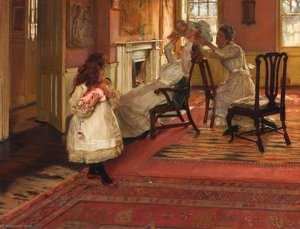
john henry lorimer
1856 - 1936
Quick Facts
- Artistic Movement Or Style: Victorian Realism
- Artists Or Movements Influenced By This Artist: ['Robert Lorimer']
- Artists Who Influenced This Artist: ['Charles Durand']
- Date Of Death: 1936
- Full Name: John Henry Lorimer
- Nationality: Scottish
- Notable Artworks:
- The Ordination of Elders in a Scottish Kirk
- A Peaceful Art and Kellie Castle Garden
- Portrait of Lyon Playfair
- Portrait of Joseph Lister
- Portrait of Peter Hately Waddell
- Place Of Birth: Edinburgh, Scotland
Related Articles

Crimson Threads of Narrative: Exploring Symbolism & Representation in Artworks Featuring the Red Dress
Explore the rich symbolism of the red dress in art history! From ancient power displays to iconic portraits like Cézanne’s 'Madame Cezanne', discover the cultural and artistic significance behind this captivating color. Expert analysis & insights.
Celestial Messengers: A Comprehensive Exploration of Angelic Representation in Art History
Explore the captivating history of angels in art! Discover symbolism, iconic Renaissance masterpieces & renowned artists. Expert insights for art lovers & collectors at ArtsDot.
Celestial Messengers: Angels in Painting – A Historical & Artistic Exploration
Explore the captivating history of angels in painting! Discover symbolism, iconic Renaissance & Byzantine masterpieces, and renowned artists. Expert insights for art lovers & collectors at ArtsDot.
Harmonies on Canvas: Exploring the Visual Representation of Music in Art History
Explore the fascinating history of music's visual representation in art! From ancient symbolism to modern abstraction, discover how artists have captured sound and emotion on canvas. Expert insights & stunning examples.
Raphael's Masterpieces: 25 Iconic Paintings & Renaissance Art for Your Home
Explore 25 breathtaking Raphael paintings! Journey through the Italian Renaissance with masterpieces like 'School of Athens' & iconic Madonnas. Find museum-quality art reproductions and elevate your home decor on ArtsDot.com.