

 Preview
 Send
Send Share
Share
 Details

 Download
 Similars
 X-Ray
X-Ray Diaporama
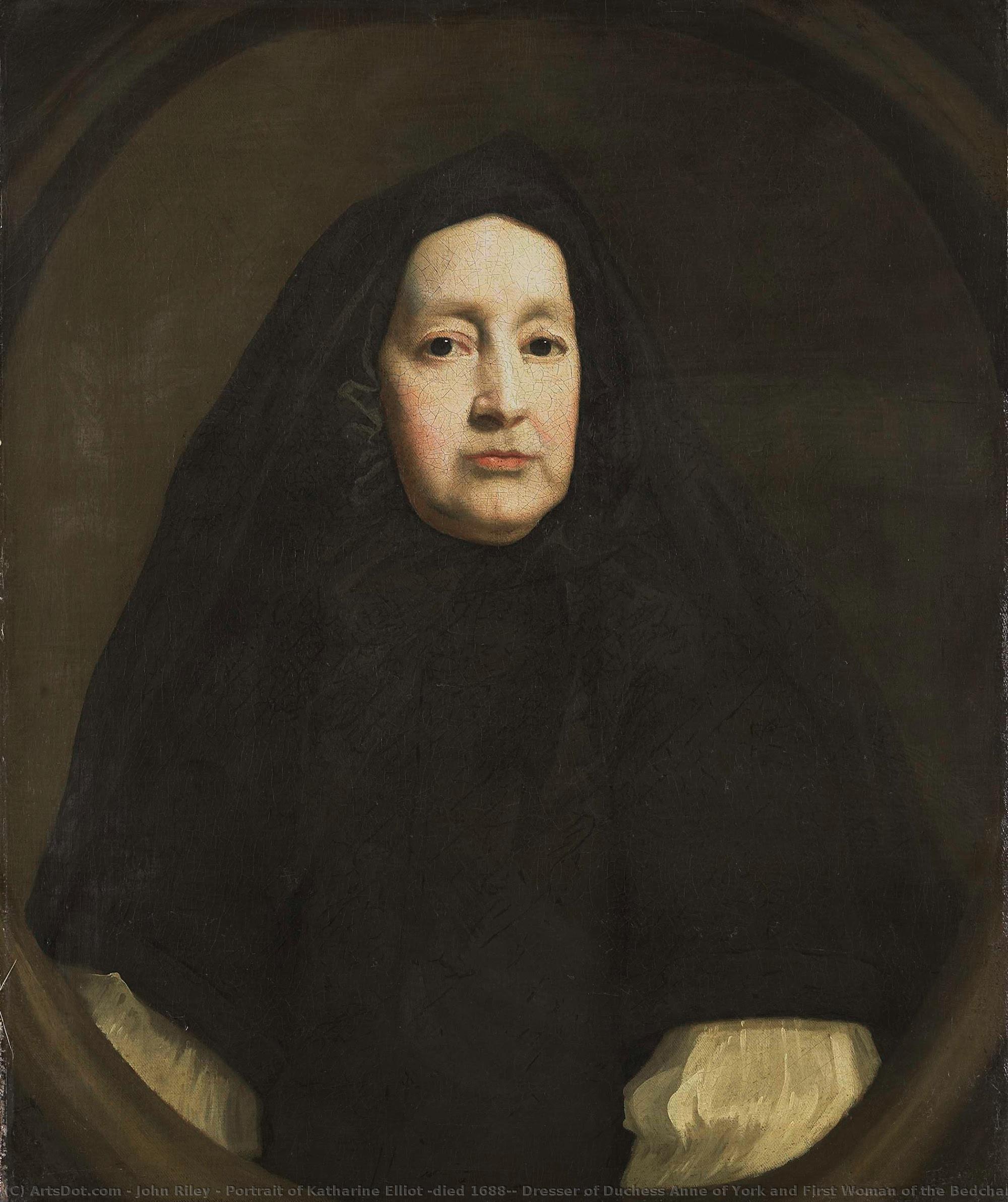
Portrait of Katharine Elliot (died 1688), Dresser of Duchess Anne of York and First Woman of the Bedchamber of Queen Mary of Modena, the first and second Wives of James II of England, respectively, John Riley (copy after), c. 1680 - c. 1700
 1700
1700 76.0 x 63.0 cm
 Read More
Purchase a high-resolution, enhanced digital image, far superior to the online preview.
Each file is meticulously prepared by our in-house specialists using advanced tools and expert manual retouching. We ensure every image has exceptional clarity, precise color accuracy, and fine detail.
The final file is delivered via email within 72 hours, optimized for immediate use in professional, editorial, and print environments. This is the same quality trusted by top-tier design studios, publishers, and galleries.
Digital Image
Download a high-resolution file for personal display, printing, and creative projects. ( Buy Print Buy Hand Made Painting)
Included in Every Digital Image Order
Expert Digital Delivery, Guaranteed
When you choose ArtsDot.com, you're not just getting an image - you're receiving a professionally enhanced digital artwork, crafted with precision and backed by a satisfaction guarantee. Here's everything that comes with your order, automatically:

Fast Email Delivery
Your high-resolution digital image file will be emailed to you within 72 hours of ordering - ready for immediate use.

AI-Enhanced Digital File
Your artwork is professionally optimized using advanced AI tools and manual editing, ensuring maximum detail, clarity, and color accuracy.

Free Lifetime Re-Delivery
Accidentally deleted or lost your file? No worries - we'll resend it to you anytime, free of charge.

No Import Fees - Ever
Enjoy your artwork instantly with zero customs, duties, or delivery fees - digital downloads are always tax-free.

Color Accuracy Guarantee
We ensure your digital image reflects the original colors as closely as possible using professional tools and color management.

100-Day Satisfaction Guarantee
If you're not satisfied with your digital image, we'll revise it or refund 100% within 100 days - no questions asked.

100% Money-Back Guarantee
Not satisfied? Get a full refund within 100 days of receiving your digital file - no questions asked.

Bulk Order Discounts
Buy 3 images, save 10% - Buy 5, save 15% - Buy 10+, save 20%. Great for creative projects, galleries, and agencies.
Related Artworks







Artist Biography
Early Life and Artistic Awakening
The story of Other Names, a figure shrouded in intentional mystery, begins not with dates and places readily available, but with an ethos – a deliberate rejection of the conventional artist’s biography. Emerging onto the contemporary art scene in the early 2010s, Other Names quickly became known for their large-scale abstract paintings that evoke primordial landscapes and deeply personal emotional states. The artist actively resists providing details about their background, preferring instead to let the work speak for itself. What *can* be gleaned is a sense of formative experiences rooted in nature; hints suggest a childhood spent immersed in remote environments, possibly coastal regions or expansive forests. This connection to the natural world is palpable in their canvases, which often feature layered textures and a muted palette reminiscent of earth tones, weathered stone, and twilight skies. The initial impetus for Other Names’ artistic practice wasn't formal training but rather an urgent need for visual expression – a way to process complex emotions and explore the intangible realms of memory and feeling. Early works, though less refined than their later pieces, already demonstrated a remarkable sensitivity to color and composition, hinting at a natural talent honed through self-directed exploration. These formative paintings were rarely exhibited, existing primarily as private explorations within the artist’s studio – a space described by those few who have glimpsed it as both sanctuary and laboratory.The Development of a Unique Visual Language
Other Names' artistic development is characterized by a gradual refinement of their abstract vocabulary. Initially working with acrylics on canvas, they soon began experimenting with mixed media, incorporating natural pigments, sand, and other organic materials into their compositions. This shift wasn’t merely about texture; it was about grounding the work in the very elements that inspired it. The artist's technique is notably physical – layers are built up over time through a process of addition and subtraction, scraping back paint to reveal underlying colors and forms.- Layering & Texture: A hallmark of Other Names’ style, creating depth and complexity.
- Muted Palette: Predominantly earth tones, grays, blues, and ochres evoke natural landscapes.
- Organic Materials: Incorporation of sand, pigments, and other elements connects the work to the physical world.
