 Preview
 Send
Send Share
Share
 Details

 Download
 Similars
 X-Ray
X-Ray Diaporama
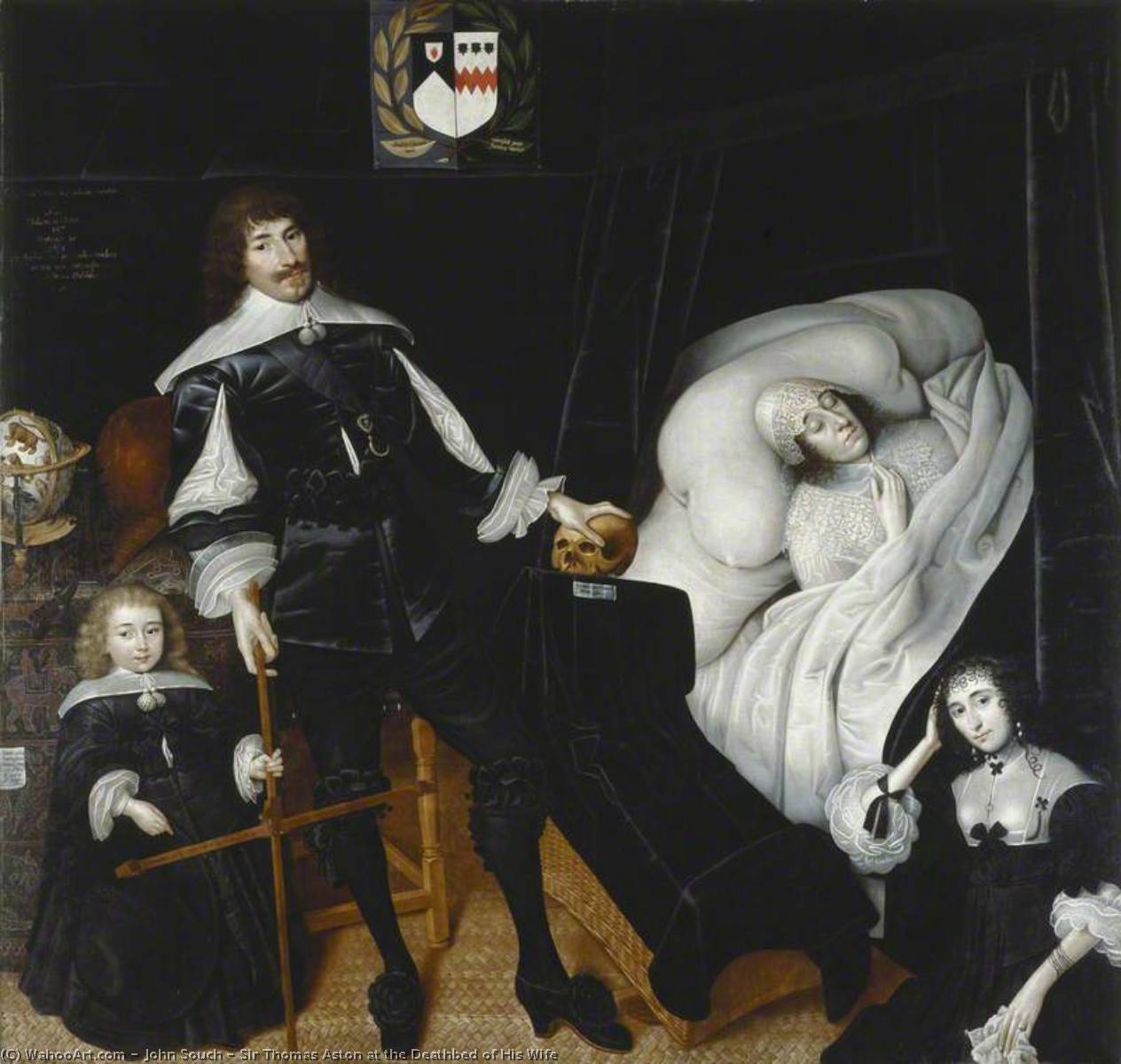
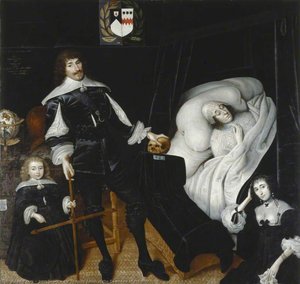
Sir Thomas Aston at the Deathbed of His Wife


 Read More
Giclée / Art Print
Museum-quality giclée or canvas print with fast production and flexible finish options. ( Buy Hand Made Painting Buy Image)




































Pick from our preset sizes that match the artwork's original proportions.

You may enter your own dimensions to fit a specific frame or space. If your selected size does not match the original image's proportions, we will either crop the artwork or extend the image with a mirrored or solid-fill edge. A digital mockup will be sent for your approval before production begins.
Please note that the on-screen preview does not reflect the actual cropping or extension. Only the mockup will accurately show the final composition.
While custom sizes are available, we recommend selecting a dimension from the predefined list to preserve the original proportions.
Worldwide Delivery () in 2 weeks instead of standard 4/5 weeks. (28 August)

Free Worldwide Express Shipping

High-Quality Linen Canvas

Full Shipping Insurance

Customs Tax Refund Guarantee

True Color Matching Guarantee

60-Day Return Policy (Defects Only)

100% Money-Back Guarantee

Bulk Discount Offer
 Glass option is only available in size under 110 CM

Sir Thomas Aston at the Deathbed of His Wife
Giclée / Art Print
Reproduction Size
-


Total Price
$ 63
Related Artworks

Artist Biography
The Heraldic Legacy of John Souch
In the quiet, storied landscapes of early seventeenth-century England, few artists captured the intersection of social prestige and human vulnerability as poignantly as John Souch. Born around 1593 in the region of Lancashire, Souch emerged not merely as a painter of faces, but as a chronicler of identity. His life and work represent a vital bridge between the rigid, symbolic traditions of heraldic art and the burgeoning emotional depth of the Baroque movement. To look upon a Souch portrait is to witness a moment where the formal requirements of lineage meet the tender, often tragic, realities of mortal existence.
Souch’s artistic journey began in the disciplined atmosphere of a master's workshop. In 1607, at the tender age of fourteen, he was apprenticed to Randle Holme I, the renowned Chester herald painter and antiquary. This apprenticeship was far more than a technical education; it was an immersion into the visual language of power. Under Holme’s guidance, Souch mastered the intricate art of heraldry—the meticulous rendering of coats of arms, lozenges, and hatchments that served as the essential shorthand for nobility and status in the North West of England. This foundation in precision and symbolic detail would later infuse his portraiture with a unique sense of gravity and historical weight.
A Wandering Eye and the Baroque Spirit
While his training was rooted in the stationary traditions of the Chester painters' guild, Souch himself possessed a nomadic spirit. He did not confine his talents to a single studio but instead traversed a wide expanse of the English Northwest, from the borders of Shropshire to the rugged reaches of Yorkshire. This itinerant lifestyle allowed him to encounter a diverse array of patrons and artistic currents, most notably the subtle yet profound influences of Dutch painting. As he traveled, Souch began to move beyond the flat, decorative requirements of heraldic banners toward a more sophisticated exploration of light, shadow, and psychological depth.
This evolution is perhaps most breathtakingly realized in his ability to infuse Baroque drama into intimate settings. His masterpiece, 'Sir Thomas Aston at the Deathbed of His Wife' (1635), stands as a testament to this mastery. In this work, Souch transcends the role of a mere craftsman; he becomes a dramatist of the human condition. Through the use of chiaroscuro—the dramatic interplay of light and dark—he captures the heavy atmosphere of grief, the stillness of loss, and the profound dignity of a family in mourning. The painting is not just a record of an event, but an emotional landscape that utilizes rich textures and symbolic elements to evoke a visceral response from the viewer.
Artistic Significance and Enduring Memory
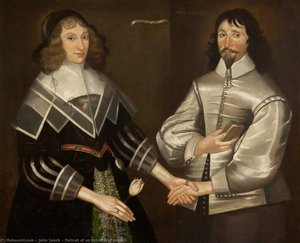
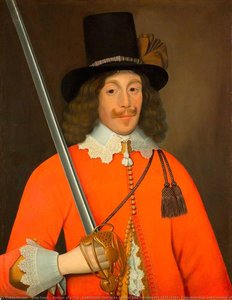
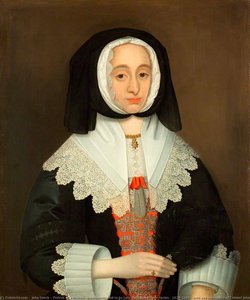
The significance of John Souch lies in his ability to embody the role of art within the local life of the seventeenth century. He was a painter who understood that a portrait was both a personal keepsake and a public statement of continuity. His works, ranging from the 'Portrait of an Unknown Couple' to more specific historical likenesses like those attributed to the Hutchinson family, served to anchor families within their own histories. He captured the very essence of the English gentry, documenting births, betrothals, and deaths with a reverence that honored both the individual and their lineage.
Though his life ended in 1645, leaving behind a legacy etched into the annals of British Baroque, Souch’s influence remains palpable. He represents a pivotal era where the technical rigors of the medieval guild system met the expressive possibilities of the modern age. His ability to blend the heraldic precision learned from Holme with a burgeoning interest in naturalism and emotion ensures his place as a vital figure in the history of English portraiture. Through his brush, the fleeting moments of life were granted a permanent, dignified, and deeply moving immortality.
john souch
1593 - 1645
Quick Facts
- Artistic Movement Or Style: Dutch Influence Art
- Artists Who Influenced This Artist: ['Randle Holme I']
- Date Of Birth: 1593
- Date Of Death: 1645
- Full Name: John Souch
- Nationality: English
- Notable Artworks:
- Deathbed of Wife
- Sir Thomas Aston at the Deathbed of His Wife
- Portrait of a Woman (traditionally said to be Lucy Hutchinson)
- Portrait of a Man (traditionally said to be Colonel John Hutchinson)
- Place Of Birth: Ormskirk, Lancashire
Related Articles

John Singer Sargent's 25 Masterpieces: Portraits & Beyond | ArtsDot
Explore 25 iconic John Singer Sargent paintings – from dazzling portraits to Impressionist landscapes. Discover the stories behind Madame X, El Jaleo & more! Find museum-quality art reproductions and elevate your home decor with ArtsDot.com.

John Constable's Masterpieces: Explore 25 Iconic Landscapes for Your Home
Journey through John Constable's 25 most celebrated landscapes. Explore Romanticism, Dedham Vale & his masterful use of light in iconic paintings like 'Hay Wain'. Find museum-quality art reproductions and elevate your home decor on ArtsDot.com.
Decoding Baroque Grandeur: A Guide to the Drama and Emotion of 17th-Century Art
Explore the breathtaking drama of 17th-century Baroque art. Our expert guide decodes the use of chiaroscuro, emotional intensity, and historical grandeur to help you appreciate and curate timeless masterpieces for your collection.

The Dramatic Flourish: Exploring the Baroque Movement's Enduring Legacy in Art History
Explore the dramatic world of Baroque art! Discover iconic artists like Caravaggio & Rubens, defining techniques, and its lasting impact on art history. Expert insights for collectors & enthusiasts at ArtsDot.

Baroque Classicism: Reconciling Drama & Order in 17th-Century Art
Explore the captivating world of Baroque Classicism! Discover its history, key artists like Caravaggio & Rubens, and defining characteristics. Expert insights & high-quality reproductions at ArtsDot.